

This article was automatically translated from the original Turkish version.
+1 More
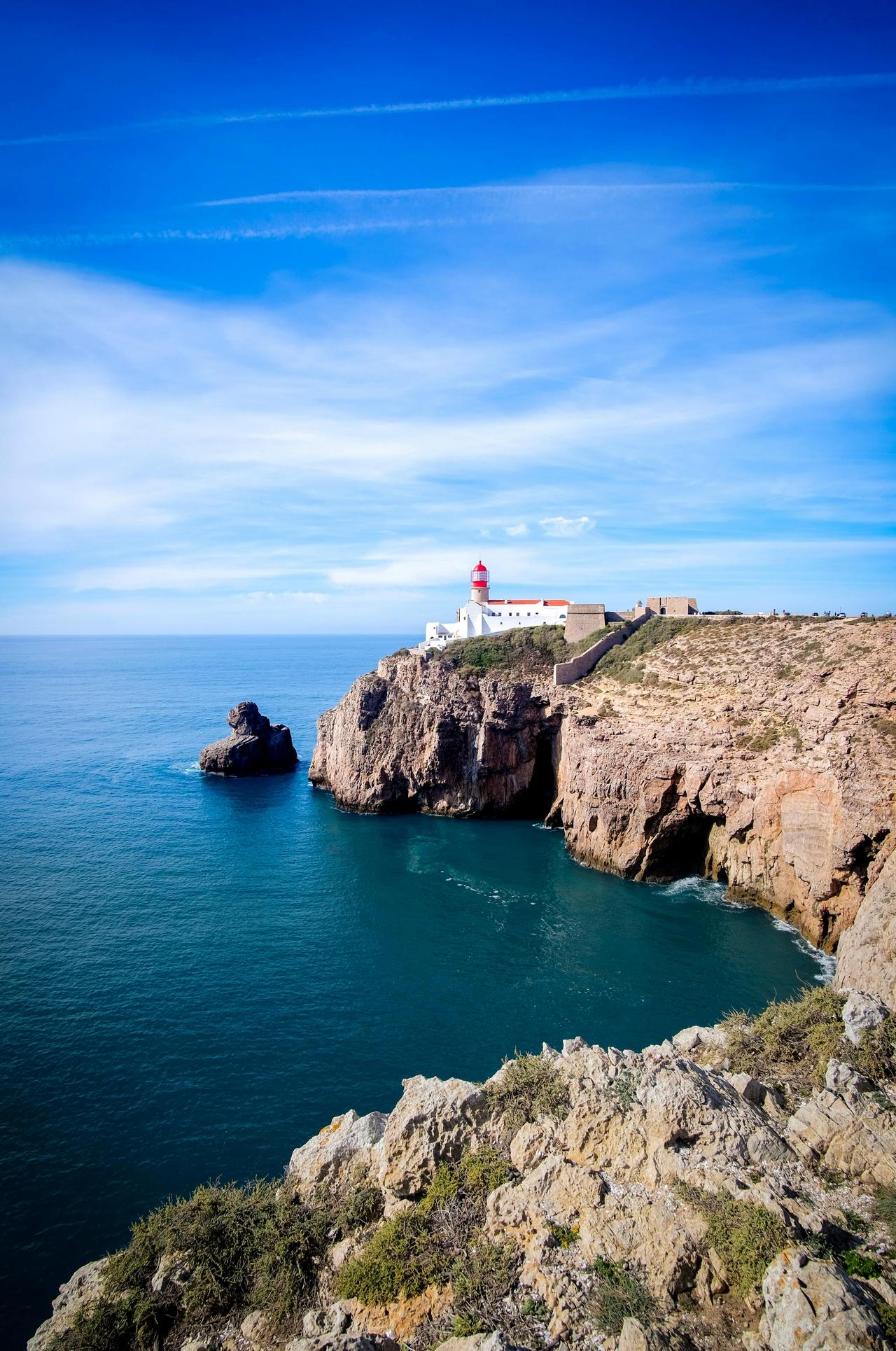
Cabo de São Vicente Lighthouse is a historic structure located at the southwestern tip of Portugal, in the Algarve region, and holds the distinction of being the country’s first constructed lighthouse. It is not only a navigational aid but also a historical cultural and geographical symbol of the region. Its strategic importance stems from its position at the southwesternmost point of Europe and from being the first light seen by mariners arriving from South America and West Africa as they approached Europe.
The lighthouse’s origins trace back to 1515, when construction began on the St. Vicente Monastery, where monks occasionally lit fires to guide sailors.

Cabo de São Vicente Lighthouse (Flickr)
The Cabo de São Vicente Lighthouse has been continuously modernized throughout the 20th century:
Today, the Cabo de São Vicente Lighthouse possesses the largest optic of all Portuguese lighthouses and is among the world’s ten largest lighthouses. It features a hyper-radial Fresnel lens with a focal length of 1.33 meters, producing a single white flash with a 5-second period and a range of 32 nautical miles.

Cabo de São Vicente Lighthouse (Flickr)
The lighthouse is not merely a technical structure; it was built in harmony with the surrounding architecture — simple, plastered, and rubble-built dwellings — and is deeply intertwined with the region’s history and legends.

Cabo de São Vicente Lighthouse (Picryl)
The lighthouse has been preserved against deterioration throughout its long history, and conservation efforts continue today.

No Discussion Added Yet
Start discussion for "Cabo de São Vicente Lighthouse" article
History and Development
Modernization Process
Current Status
Intrinsic Heritage Value and Cultural Context
Conservation and Public Access