


 Recently Added:
This article was automatically translated from the original Turkish version.
The termination of the Yemen–United Arab Emirates joint defense agreement is a process that includes the end of the military cooperation arrangement between Yemen and the United Arab Emirates the withdrawal of United Arab Emirates military presence from Yemeni territory and related regional military and diplomatic developments as decided by the Yemen Presidential Council.
According to information published by Yemen’s official agency SABA the decision to terminate the joint defense agreement signed between Yemen and the United Arab Emirates was taken by the President of the Yemen Presidential Council and Supreme Commander of the Armed Forces Rashad al-Alimi. The decision envisages the restructuring of military arrangements within Yemen’s sovereign territory and the termination of foreign military presence.
Under the decision all military units and personnel affiliated with the United Arab Emirates are required to withdraw from all Yemeni territory within 24 hours. It has been stated that this measure constitutes a direct and binding state decision by the Yemeni government.
Termination of the Yemen–United Arab Emirates Joint Defense Agreement. (Al Jazeera)
As part of the termination of the joint defense agreement the Yemeni government has also issued additional directives aimed at ensuring internal security and military control. In this context the activation of the Shield of the Nation Forces and the takeover of all military camps in the Hadhramaut and Mahra governorates have been ordered.
It has been stated that this directive aims to integrate military authority in Yemen’s eastern and southern provinces into the central government structure and to bring armed elements operating in the region under control. These regions hold a strategic security position due to their proximity to the border with Saudi Arabia.
Saudi Arabia which supports the legitimate government in Yemen issued an official appeal to the United Arab Emirates following the developments. In a written statement by the Saudi Ministry of Foreign Affairs the United Arab Emirates was requested to withdraw its troops from Yemeni territory within 24 hours as demanded by Yemen and to refrain from providing any military or financial support to any party in the country.
The statement emphasized that Saudi Arabia’s national security constitutes a “red line” and that all necessary measures will be taken against any threat to its southern borders. It was underscored that dialogue is the only path to resolving issues concerning Yemen’s south and that military movements have exacerbated regional instability.
The Saudi statement also addressed allegations that the United Arab Emirates deployed forces of the Southern Transitional Council to conduct military operations in Hadhramaut and Mahra governorates in eastern Yemen near Saudi Arabia’s southern borders.
This situation has been assessed by Saudi Arabia as a threat to both its own national security and the stability of Yemen and the region. The statement emphasized that dialogue must be pursued within a comprehensive political framework involving all Yemeni groups including the STC.
A significant military dimension of the developments is the military operation conducted around Mukalla Port by the Arab Coalition led by Saudi Arabia which supports the legitimate government in Yemen.
In a statement by the Coalition it was announced that a limited military operation was carried out in areas around Mukalla Port under the control of the separatist Southern Transitional Council. It was stated that certain weapons and military vehicles were targeted and civilians in the port area were urged to stay away from the region.
International news sources have framed the Saudi-led bombardment around Mukalla in the context of allegations of arms shipments to Yemen and the United Arab Emirates’ connections with separatist elements in the region. Reports have indicated that these military activities are linked to shifts in power dynamics within Yemen’s civil war and regional competition. It has been reported that as of the date the decision was made the United Arab Emirates has not issued an official statement regarding these developments.
U.S. Secretary of State Marco Rubio held a telephone conversation with United Arab Emirates Minister of Foreign Affairs Abdullah bin Zayid following developments in Yemen. The conversation addressed regional issues of mutual interest including the latest developments in Yemen and the situation in the Gaza Strip. The current state of strategic relations between the two countries was also assessed.
During this engagement UAE Foreign Minister Abdullah bin Zayid emphasized his country’s commitment to efforts aimed at establishing lasting peace in the region alongside the United States and other partners.
U.S. Secretary of State Rubio also held separate telephone conversations with UAE Foreign Minister Sheikh Abdullah bin Zayid Al Nahyan and Saudi Foreign Minister Faisal bin Farhan during the same period. These discussions covered issues affecting security and stability in the Middle East including the situation in Yemen. In Rubio’s conversation with Bin Zayid regional security matters economic cooperation and efforts to reduce tensions between India and Pakistan were discussed.
During Rubio’s conversation with Saudi Foreign Minister Faisal bin Farhan initiatives to stabilize Syria the cessation of hostilities in Sudan cooperation with Lebanon and developments in the Red Sea were reviewed. Additionally the planned visit of U.S. President Donald Trump to Saudi Arabia and the importance of bilateral relations were addressed.
The Arab Coalition led by Saudi Arabia which supports the legitimate government in Yemen issued a statement claiming that two vessels arriving at Mukalla Port were carrying weapons without authorization from the Yemeni government. Coalition Spokesperson Turki al-Maliki stated that these vessels had turned off their tracking and identification devices before entering Yemen’s territorial waters and entered Mukalla Port in Hadhramaut in violation of procedures.
The statement noted that the port was closed during the vessels’ entry local workers and staff were evacuated and a large number of weapons and ammunition containers along with over 80 vehicles were found onboard. It was reported that the vessels were prevented from leaving the port to prevent aid from reaching conflict zones and that this situation was communicated to senior officials in the United Arab Emirates.
Nevertheless it was stated that the United Arab Emirates transported the vehicles and containers to the Al-Rayyan Base where armed elements and a limited number of UAE personnel were stationed. The Arab Coalition declared these actions unacceptable and announced that the vehicles were returned to the port while the weapon containers remained at Al-Rayyan Base. It was also announced that the Coalition had received verified information that weapons and vehicles would be relocated to various locations in the Hadhramaut Valley and desert.
Additionally it was stated that a limited military operation was conducted at Mukalla Port to avoid loss of life and damage to public property and that the remaining containers remain at Al-Rayyan Base.
In response to developments in Yemen Qatar and Kuwait issued messages of support for the security of Saudi Arabia and the Gulf Cooperation Council (GCC) countries. The Qatari Ministry of Foreign Affairs declared full support for the legitimate government in Yemen and highlighted the importance of preserving Yemen’s territorial integrity and the interests of its people. The statement emphasized that the security of Saudi Arabia and GCC countries is an inseparable part of Qatar’s own security.
The Kuwaiti Ministry of Foreign Affairs also stated that it is closely monitoring developments in Yemen and fully supports the Yemeni government. The statement underscored the importance of preserving Yemen’s territorial integrity and the security and stability needed to meet public expectations and noted that the security of Saudi Arabia and GCC countries is one of the fundamental elements of Kuwait’s national security. It was also stated that Saudi Arabia and the United Arab Emirates have demonstrated responsible approaches in their statements and support efforts based on dialogue and diplomatic solutions in Yemen.
The Saudi Ministry of Foreign Affairs called on the United Arab Emirates to withdraw its troops from Yemeni territory within 24 hours as requested by the Yemeni government and to refrain from providing any military or financial support to any party in the country. The Riyadh administration assessed the United Arab Emirates’ deployment of the Southern Transitional Council to conduct military operations in Hadhramaut and Mahra governorates near Saudi Arabia’s southern borders as a threat to its national security. In response to the tensions the United Arab Emirates announced the dissolution of its counterterrorism units operating in Yemen.
The Omani Ministry of Foreign Affairs called on all parties involved in the tensions between Saudi Arabia and the United Arab Emirates in Yemen to exercise restraint and pursue dialogue. The statement emphasized that all parties in Yemen must resolve their issues through dialogue in a manner that serves Yemen’s security and interests and the national security of neighboring countries. The importance of Yemen’s sovereignty security and stability and respect for the will of its people were highlighted and the necessity of political solutions that ensure lasting peace and cohesion was stated.
The Bahraini Ministry of Foreign Affairs in its capacity as rotating chair of the Gulf Cooperation Council called on Saudi Arabia and the United Arab Emirates to keep disagreements among Gulf countries under control. The statement pointed to the importance of the roles assumed by Saudi Arabia and the United Arab Emirates in supporting Yemen’s security and stability and stated that disputes must be resolved through cooperation and solidarity in accordance with GCC principles.
The separatist Southern Transitional Council supported by the United Arab Emirates has repositioned its military units in certain areas of Hadhramaut and Mahra governorates in eastern Yemen. It has been reported that this repositioning occurred despite the reaction of the legitimate government in Yemen.
In a statement by the Southern Armed Forces affiliated with the STC it was stated that the repositioning process was conducted in coordination with the Arab Coalition led by Saudi Arabia. The statement indicated that forces known as the “Shield of the Nation” have begun to be actively deployed alongside STC-affiliated armed elements in the field.
These military activities have been recorded as part of an operation named “Hopeful Future” with STC forces maintaining control over specific operational areas in Hadhramaut and Mahra. It was reported that the 1st Brigade under the Shield of the Nation has been repositioned in the Samud region and that further troop deployments to Rumat and other areas are planned in subsequent phases.
The statements indicated that the repositioning was carried out in accordance with directives from STC President Aydarus al-Zubaidi. STC officials asserted that this step aims to ensure security and stability in Hadhramaut and Mahra governorates.
Among the stated objectives of the operation are strengthening security and stability in Yemen’s southern regions preventing arms smuggling routes to the Houthis combating terrorist organizations and protecting natural resources in the region.
Meanwhile Yemen Presidential Council President Rashad al-Alimi characterized the deployment of STC-affiliated forces in Yemen’s eastern governorates as an armed challenge to state authority.
The STC claimed that all domestic and international flights at Aden International Airport have been suspended and blamed Saudi Arabia for this situation. Media outlets close to the STC alleged that Saudi Arabia has effectively halted operations at the airport and canceled all flights.
In contrast the Yemeni government and the official Yemeni news agency SABA stated that neither the government nor the Arab Coalition has issued any decision to close Aden Airport. Government officials reported that only limited adjustments have been made for security reasons and in accordance with international aviation regulations.
On the same day the Yemeni government announced that STC-affiliated elements had withdrawn from certain positions in Hadhramaut governorate and that these areas had been handed over to the Shield of the Nation Forces loyal to the legitimate government. Yemen’s Minister of Information Culture and Tourism Muammar al-Iryani confirmed the withdrawal but did not provide details regarding the number of troops or the specific areas transferred.
Iryani also drew attention to the military buildup toward the Hadhramaut Valley stating that the government is addressing the process in coordination with the Arab Coalition to prevent escalation.
The Yemeni government alleged that STC-affiliated militia forces raided the Rayyan Airport in Hadhramaut governorate and looted equipment in the terminal. Yemen state television reported that during the crisis the airport had been used as a military base by UAE forces and that these forces had begun withdrawing from the region. No official statement was issued by the STC regarding this matter.
It was reported that as of 1 January UAE forces continue to withdraw from Yemen. Yemen Presidential Council President Rashad al-Alimi characterized the STC’s repositioning in eastern governorates as an armed insurrection against state authority. Alimi called for adherence to sovereign decisions and for de-escalation of tensions.
Governor of Hadhramaut Salim Hanbashi announced that if the STC does not withdraw “fully and unconditionally” from the region it will face a military response. Hanbashi accused the STC of attempting to gain control over the governorate’s oil resources and economic capabilities.
It was reported that the STC did not permit the landing of a Saudi official delegation aircraft at Aden International Airport. Saudi Arabia’s Ambassador to Yemen Muhammad Al-Jabir accused STC President Aydarus al-Zubaidi of violating political commitments by making unilateral decisions and stated that military moves in Hadhramaut and Mahra governorates have created security vacuums and caused civilian casualties.
On 2 January 2026 the United Arab Emirates announced that all elements of its armed forces in Yemen have completed their return to the country. In a written statement by the UAE Ministry of Defense it was stated that all units deployed in Yemen have been withdrawn. The statement confirmed the implementation of a previously announced decision to end the remaining duties of counterterrorism units.
The UAE announced on 30 December that it had voluntarily dissolved its counterterrorism units in Yemen following tensions with Saudi Arabia. On the same day Saudi Arabia called on the UAE to withdraw its troops from Yemeni territory within 24 hours as requested by the Yemeni government and to refrain from providing any military or financial support to any party in the country.
On 3 January 2026 the Yemeni government announced that Seyun International Airport in Hadhramaut governorate in eastern Yemen had been reclaimed from the Southern Transitional Council (STC) forces. The Shield of the Nation Forces loyal to the government reported that the airport had come under their control following the STC’s withdrawal.
On the same day Hadhramaut Protection Forces announced that the Presidential Palace in Seyun city had also been taken from STC forces. The palace was placed under protection to prevent looting and held in custody for handover to the Shield of the Nation Forces loyal to the legitimate government. Government sources reported that several strategically critical points in the governorate have also come under control following the clashes.
On the same day Yemen state television SABA announced that STC-affiliated forces had withdrawn from Gayda Airport and the Presidential Palace in Mahra governorate. It was reported that Yemen Presidential Council President Rashad al-Alimi had tasked Mahra Governor Muhammad Ali Yasir with taking over military headquarters and restoring normal conditions in the governorate.
These developments followed the Yemeni government’s announcement on 30 December of the termination of the joint defense agreement signed with the UAE. The Arab Coalition led by Saudi Arabia targeted UAE military equipment and the Riyadh administration called on the UAE to withdraw its troops in accordance with the Yemeni government’s request.
On 4 January 2026 the Shield of the Nation Forces loyal to the legitimate government in Yemen announced that full control had been secured across Mahra governorate following the withdrawal of STC forces. It was reported that all nine districts of the governorate have come under government control.
The handover process was completed smoothly during a meeting attended by leaders of both sides. It was reported that Yemen Presidential Council President Rashad al-Alimi had issued directives to take necessary steps to restore security and stability in the governorate.
On the same day Yemen state television reported that the Shield of the Nation Forces had reached Mukalla the capital of Hadhramaut governorate. The forces entered the city from the east. Government sources reported that STC forces had withdrawn from many facilities and strategic points in Mukalla.
Mukalla Port Dabba Oil Port and Rayyan International Airport were identified as key infrastructure points in the governorate. Government forces had previously secured full control over the valley and desert regions of Hadhramaut and were advancing toward coastal districts.
On 5 January 2026 it was reported that the United Arab Emirates participated in the “Gulf Shield” military exercise held in Saudi Arabia. The exercise which began with the participation of GCC countries aims to enhance joint military preparedness.
On the same day Turkish President Recep Tayyip Erdoğan held a telephone conversation with UAE President Sheikh Mohamed bin Zayed Al Nahyan. The conversation affirmed support for the territorial integrity unity and stability of Yemen and Somalia.
On 5 January it was reported that the reestablishment of control by the Shield of the Nation Forces loyal to the Yemeni government in Hadhramaut and Mahra governorates has shifted the balance of power in favor of the government. Following the withdrawal of STC forces from these two governorates warnings were issued regarding unguarded military depots and looting of weapons.
The Yemen Mine Monitoring Center warned that ammunition poses a serious risk to civilians and called on citizens to surrender it to security forces.
On 6 January 2026 the Shield of the Nation Forces loyal to the Yemeni government seized control of Seyun city in Hadhramaut governorate from STC forces. This development demonstrated the continued advance of government forces in eastern governorates.
On 7 January 2026 the Arab Coalition led by Saudi Arabia announced that it had conducted airstrikes against STC forces. The Yemen Presidential Council announced that the membership of STC President Aydarus al-Zubaidi had been revoked and that a judicial process had been initiated against him on charges of “treason against the nation.”
On the same day the STC defended that al-Zubaidi continues his duties in Aden. Following these developments it was reported that the Shield of the Nation Forces affiliated with the Yemen Presidential Council were advancing toward Aden.
Aydarus al-Zubaidi President of the separatist Southern Transitional Council operating in Yemen left the city of Aden after a military attack by the Arab Coalition led by Saudi Arabia and transferred to the United Arab Emirates.
Coalition Spokesperson Turki al-Maliki provided detailed information on al-Zubaidi’s route of movement in a written statement. The statement indicated that al-Zubaidi and his entourage departed from Aden Port by sea on the night of 7 January.
According to the Coalition’s statement al-Zubaidi and his group departed from Aden Port by ship heading toward Somaliland a region that has unilaterally declared independence in Somalia. The group arrived at Berbera Port at midday.
After arriving at Berbera Port it was reported that al-Zubaidi traveled by air to Mogadishu Airport. The statement noted that approximately one hour of waiting occurred at Mogadishu Airport before the flight was resumed.
Coalition Spokesperson al-Maliki stated that the aircraft turned toward the Persian Gulf over the Sea of Oman at 16:17. According to the statement the aircraft’s identification system was turned off over the Gulf of Oman and reactivated approximately ten minutes before landing at Al-Rif military airport in Abu Dhabi.
According to information shared by the Arab Coalition al-Zubaidi’s aircraft landed at the military airport in Abu Dhabi at 20:47. This landing confirmed that al-Zubaidi is now in the United Arab Emirates.
Coalition Spokesperson Turki al-Maliki announced that before al-Zubaidi’s escape a “preventive strike” was carried out during nighttime hours in the Dali region against forces loyal to him. The military intervention was stated to have been conducted within the context of current security developments in Yemen.
On 8 January 2026 Yemen Presidential Council President Rashad al-Alimi informed United Nations Special Envoy for Yemen Hans Grundberg during a meeting in Riyadh that the process of taking over areas previously controlled by the United Arab Emirates-supported Southern Transitional Council up to the temporary capital Aden had been successfully completed. The statement indicated that the process in Hadhramaut and Mahra governorates and other southern governorates was carried out peacefully in coordination with local authorities and with the support of the Arab Coalition led by Saudi Arabia.
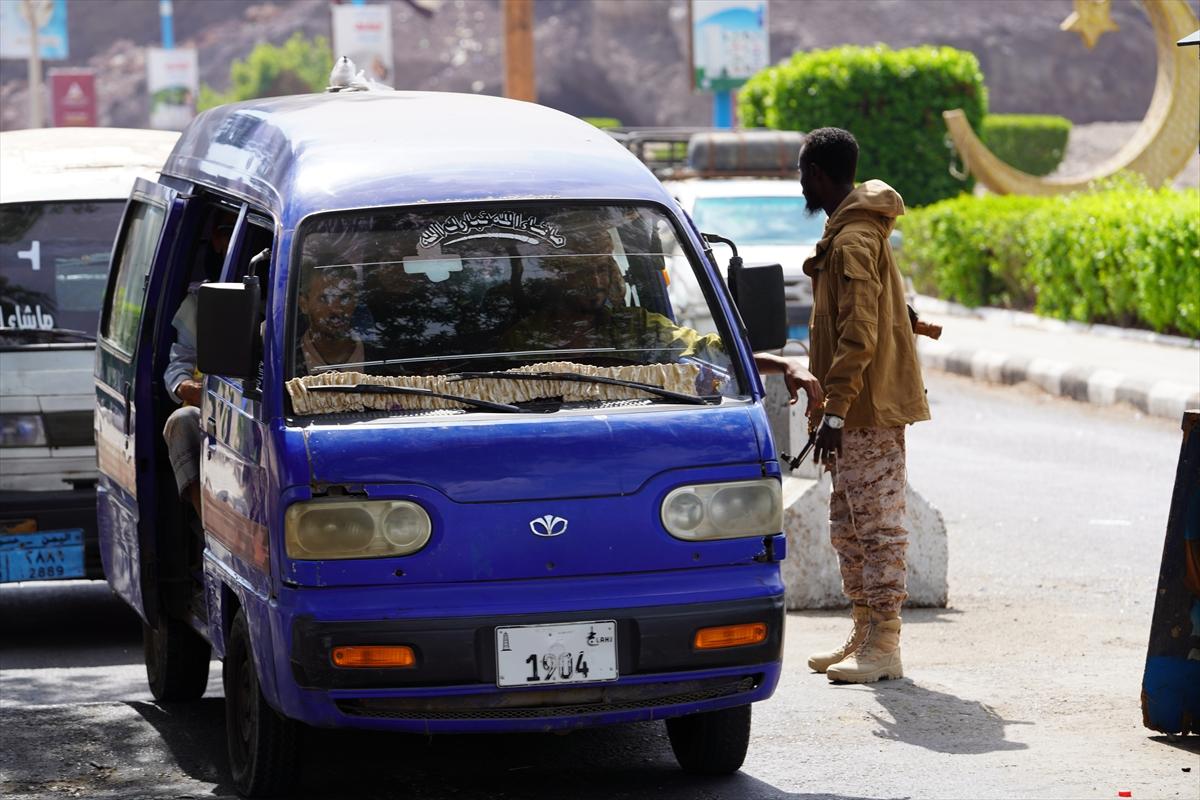
Takeover of control in Aden by forces loyal to the Presidential Council. 8 January 2026 (Anadolu Agency)
On the same day the Shield of the Nation Forces loyal to the Yemeni government announced that they had deployed in Aden in accordance with directives from Yemen Presidential Council President and Supreme Commander of the Armed Forces Rashad al-Alimi. The statement indicated that the deployment was carried out in full coordination with competent authorities and within a predetermined plan to contribute to the restoration of security and stability.
On 8 January 2026 Yemen Presidential Council President Rashad al-Alimi dismissed Defense Minister Lieutenant General Muhsin Muhammad al-Dairi and placed him on retirement. The Yemeni official agency SABA announced the decision but did not provide details regarding the grounds for dismissal.
On 9 January 2026 the United Arab Emirates-supported Southern Transitional Council announced the dissolution of all its main and subsidiary institutions and organs. The decision to dissolve was announced to the public by STC Presidential Committee Secretary General Abdurrahman al-Subayhi in Riyadh. The statement noted that the council’s offices both within Yemen and abroad have also been closed.
Subayhi stated that the dissolution decision was taken as part of preparations for the Dialogue Conference scheduled to be held in Saudi Arabia and in light of recent developments in Hadhramaut and Mahra governorates. It was stated that the STC did not participate in the military operation targeting these governorates that the operation harmed southern unity and negatively affected relations with the coalition led by Saudi Arabia. The statement emphasized that the STC’s current existence does not serve its founding objectives and has not contributed to representing the demands of the southern population.
On the same date Saudi Minister of Defense Khalid bin Salman announced that the southern issue will be addressed through the Dialogue Conference to be held in Riyadh with the support of the international community. Bin Salman stated that the decision to dissolve the STC is a step intended to encourage participation of different southern factions in the Dialogue Conference.
The nighttime curfew imposed by government-aligned forces in the temporary capital Aden on 7 January was lifted on 10 January.
In a written statement by the Amalika Brigades affiliated with the Yemen Presidential Council it was stated that the curfew has been lifted across all areas of the temporary capital Aden and that the movement of citizens and vehicles has returned to normal.
The statement noted that following directives from Presidential Council member Abdurrahman Salih al-Mahrami the previous curfew decision was revoked and responsibility for traffic regulation security and public order was transferred to competent authorities. The statement also noted that this step was taken within the framework of efforts to normalize services and living conditions in Aden in light of the security and stability achieved there.

No Discussion Added Yet
Start discussion for "Cancellation of the Yemen–United Arab Emirates Joint Defense Agreement and Related Military Developments (December 2025)" article
December 30, 2025
Decision to Terminate the Joint Defense Agreement
December 30, 2025
Military Directives Regarding Yemen’s Eastern and Southern Regions
December 30, 2025
Saudi Arabia’s Diplomatic Intervention
December 30, 2025
Southern Transitional Council and Regional Security Concerns
December 30, 2025
Military Operation Around Mukalla Port
December 30, 2025
Information in the International Media
December 30, 2025
U.S.–Gulf Country Contacts and Regional Diplomacy in the Yemen Context
December 30, 2025
Security and Calm Messages from Gulf Countries
December 30, 2025
Saudi Arabia–UAE Tensions and Regional Reactions
December 30, 2025
Oman and Bahrain’s Mediation and Unity Calls
December 30, 2025
Repositioning of UAE-Supported Forces in Eastern Governorates of Yemen (1 January)
December 30, 2025
Suspension of Flights at Aden International Airport
December 30, 2025
Withdrawal of STC Forces from Hadhramaut
December 30, 2025
Allegation of Raid on Rayyan Airport
December 30, 2025
Withdrawal of UAE Forces and Warnings from the Presidential Council
December 30, 2025
Military Intervention Warning from the Governor of Hadhramaut (2 January 2026)
December 30, 2025
Prevention of Saudi Delegation Aircraft Landing in Aden
December 30, 2025
United Arab Emirates Announces Withdrawal of Its Troops from Yemen (2 January)
December 30, 2025
Takeover of Seyun International Airport and Presidential Palace (3 January)
December 30, 2025
Withdrawal of STC Forces from Mahra Governorate
December 30, 2025
Full Control Secured in Mahra Governorate (4 January)
December 30, 2025
Shield of the Nation Forces Reach Mukalla
December 30, 2025
Regional and Diplomatic Developments (5 January)
December 30, 2025
Shift in Power Dynamics in Hadhramaut and Mahra
December 30, 2025
Takeover of Seyun City (6 January)
December 30, 2025
STC Leadership and Military Movements (7 January)
December 30, 2025
Aydarus al-Zubaidi’s Transfer from Aden to the United Arab Emirates (8 January)
December 30, 2025
Announcement of the Takeover Process of STC-Controlled Areas (8 January)
December 30, 2025
Deployment of Shield of the Nation Forces in Aden (8 January)
December 30, 2025
Dismissal of the Minister of Defense
December 30, 2025
Dissolution of the Southern Transitional Council (9 January)
December 30, 2025
Statements Regarding the Dissolution Decision (9 January)
December 30, 2025
Assessment by the Saudi Minister of Defense
December 30, 2025
Lifting of Nighttime Curfew in Temporary Capital Aden Yemen (10 January)