


This article was automatically translated from the original Turkish version.
+2 More
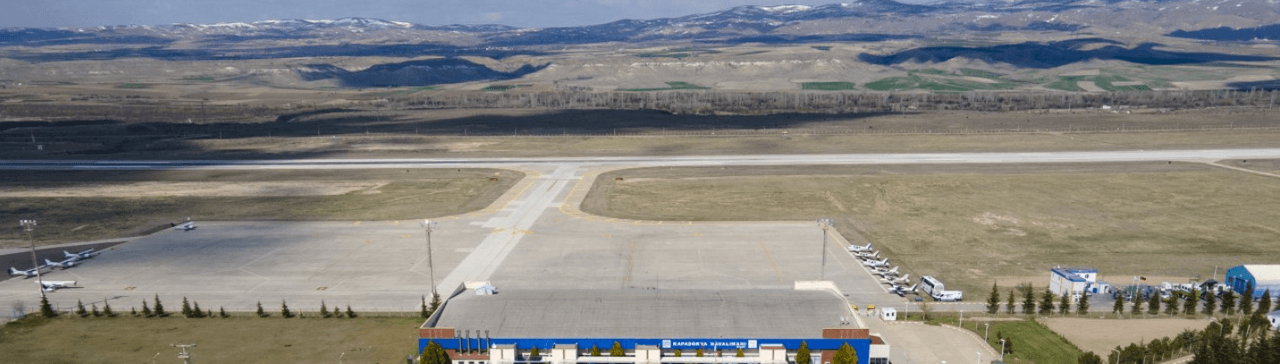
Cappadocia Airport was constructed in the Tuzköy neighborhood of Gülşehir district in Nevşehir to provide air connectivity to Cappadocia, one of Türkiye's important tourism regions. The airport began operations in 1998 under the name Nevşehir-Tuzköy Airport and, following several name changes within time, adopted its current name Cappadocia Airport. This airport serves both domestic and international hat air traffic and makes a significant contribution to the tourism and economic development of the region.
The history of Cappadocia Airport includes several key milestones:
These changes aimed to enhance the airport’s national and international recognition and to further support tourism in the region.
Cappadocia Airport is located 30 kilometers from the center of Nevşehir and 10 kilometers from the center of Gülşehir district. Access to the airport is provided via:
The airport’s geographic coordinates are determined as 38°46'31''N - 34°31'36''E.
Cappadocia Airport is a civil airport operated by the DHMI (Directorate General of State Airports). Its key features include:
The airport has infrastructure capable of operating on a 24-hour basis and is designed to accommodate both civil and military air traffic.
Cappadocia Airport participates in various projects based on the principles of an environmentally friendly and accessible airport:
Through ongoing maintenance and expansion projects, Cappadocia Airport has increased its capacity:
These improvements enabled the airport to better prepare for the tourism season and ensured a safer transportation infrastructure for the region.
Cappadocia is one of Türkiye’s most important tourism regions, and the airport serves as a critical access point that significantly increases visitor numbers. Cappadocia Airport:
Cappadocia Airport plays a vital role in the development of tourism in Nevşehir and its surrounding areas. Since its opening in 1998, the airport has evolved through name changes and modernization efforts into an internationally compliant, environmentally friendly and accessible facility. With its technical infrastructure, transportation options, and contributions to tourism, it continues to be one of the region’s most important transportation hubs.
General Information.
Here Is the First Aircraft to Land at NevşehirKapadokya Havalimanı.
Kapadokya Havalimanı.
Nevşehir Valiliği Airport Reopened for Service.
The name of Nevşehir-Kapadokya Havalimanı has changed.

History and Name Changes
Geographical Location and Access
Technical Specifications
Environmental and Accessible Airport Initiatives
Maintenance and Renovation Works
Contribution to Regional Tourism