


This article was automatically translated from the original Turkish version.
+1 More
Karnavas Bezi is a traditional woven fabric produced in the Ormanağzı Village of the Olur District in Erzurum Province, Türkiye. This handicraft derives its name from the village’s former name, “Karnavas,” and holds a unique position within the local weaving heritage due to its technical characteristics and cultural significance.

Karnavas Bezi (Olur District National Education Directorate)
Karnavas Bezi is believed to have a history of approximately 250 years. Since the Ottoman period, it has been used to produce various types of coverings, including headscarves, everyday clothing, and household textiles. Initially woven with wool yarn, production shifted to cotton yarn after cotton became available in the region. The presence of cotton textiles in a cold climate area like Erzurum is explained by the local processing of cotton fibers imported from outside the region.
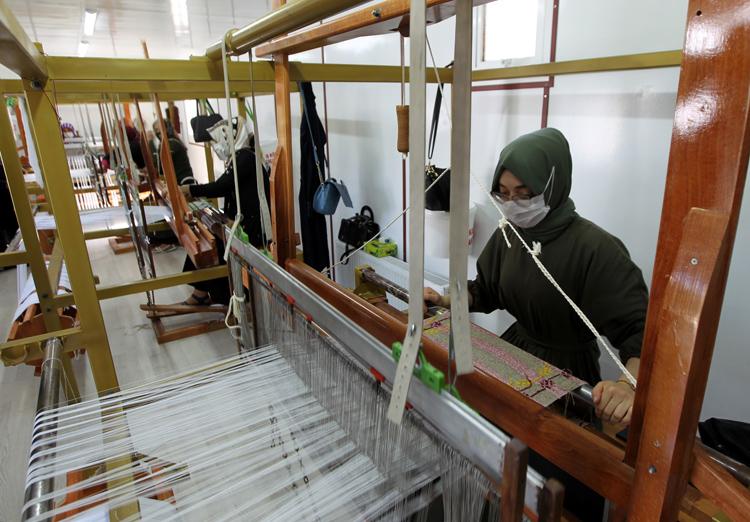
Karnavas Bezi Production Loom (AA)
Technical Features and Production Process
Karnavas Bezi is produced on whip looms using 100% cotton yarn and a plain weave technique. The fabric consists of two woven pieces, each measuring approximately 160 x 55 cm, which are sewn together by hand to form a final dimension of 160 x 110 cm. During weaving, 100-thread combs are used, and patterns and motifs are created by inserting colored threads between the weft and warp threads. These motifs are woven at regular intervals using pre-drawn pattern papers as guides.
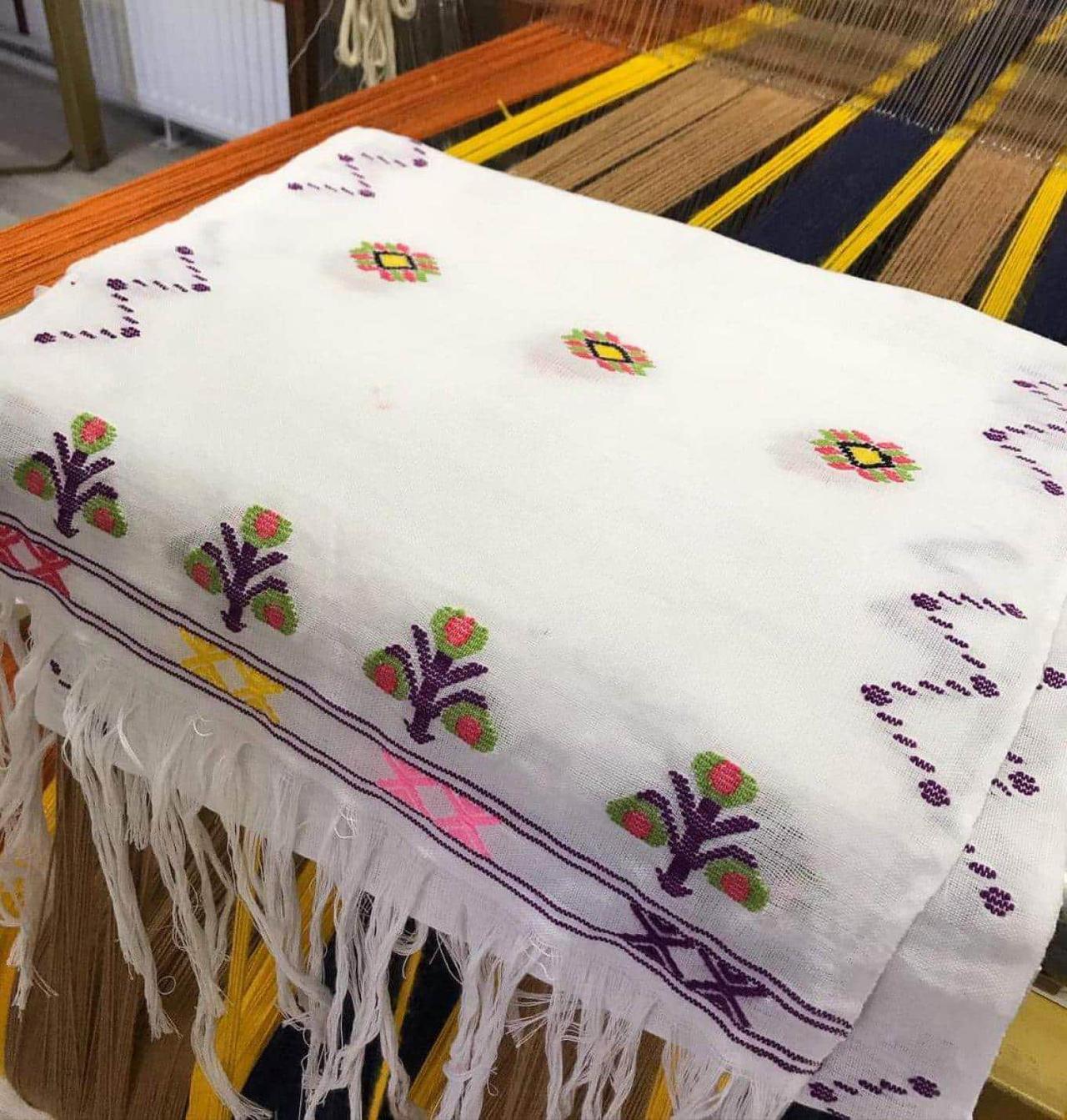
Karnavas Bezi (Olur District National Education Directorate)
The motifs on Karnavas Bezi are rich in cultural symbolism. The elibelinde motif represents fertility and abundance; the hook motif symbolizes protection against the evil eye; the star motif signifies light and goodness; and the eye motif embodies protection. Other motifs such as the water path, the knotted rose (pıtrak), the tree of life, the money flower, the bride-taking motif, and the ladybug enrich the aesthetic and symbolic world of the fabric.

Karnavas Bezi (Olur District National Education Directorate)
Traditionally, Karnavas Bezi was used by married women as a headscarf. It is reported that brides included 40 to 50 pieces of Karnavas Bezi in their dowries and presented them as gifts in their new homes. The manner of use, the shape of the covering, and the choice of motifs distinguished between married and unmarried women.
Today, Karnavas Bezi is produced on a limited number of looms. It has been revitalized through projects initiated by the Olur District Governorship and the establishment of workshops. These efforts aim to preserve Karnavas Bezi as a cultural heritage element while contributing to the local economy.

Karnavas Bezi (Olur District National Education Directorate)
Karnavas Bezi was officially registered with a geographical indication on 20 December 2021 and is now protected under geographical indication status. According to the registration, production must use 100% cotton yarn, and the pattern and motif arrangements must follow specific rules. The entire production process must take place within the boundaries of the Olur District in Erzurum Province.
Today, Karnavas Bezi is no longer used solely as a headscarf. It is also employed in various fields such as clothing, vests, scarves, tablecloths, bedspreads, curtains, kitchen textiles, and accessories, expanding its functional versatility.

History
Motifs and Symbolic Meaning
Traditional Use and Social Context
Revival Efforts
Geographical Indication and Protection Status
Contemporary Applications
