

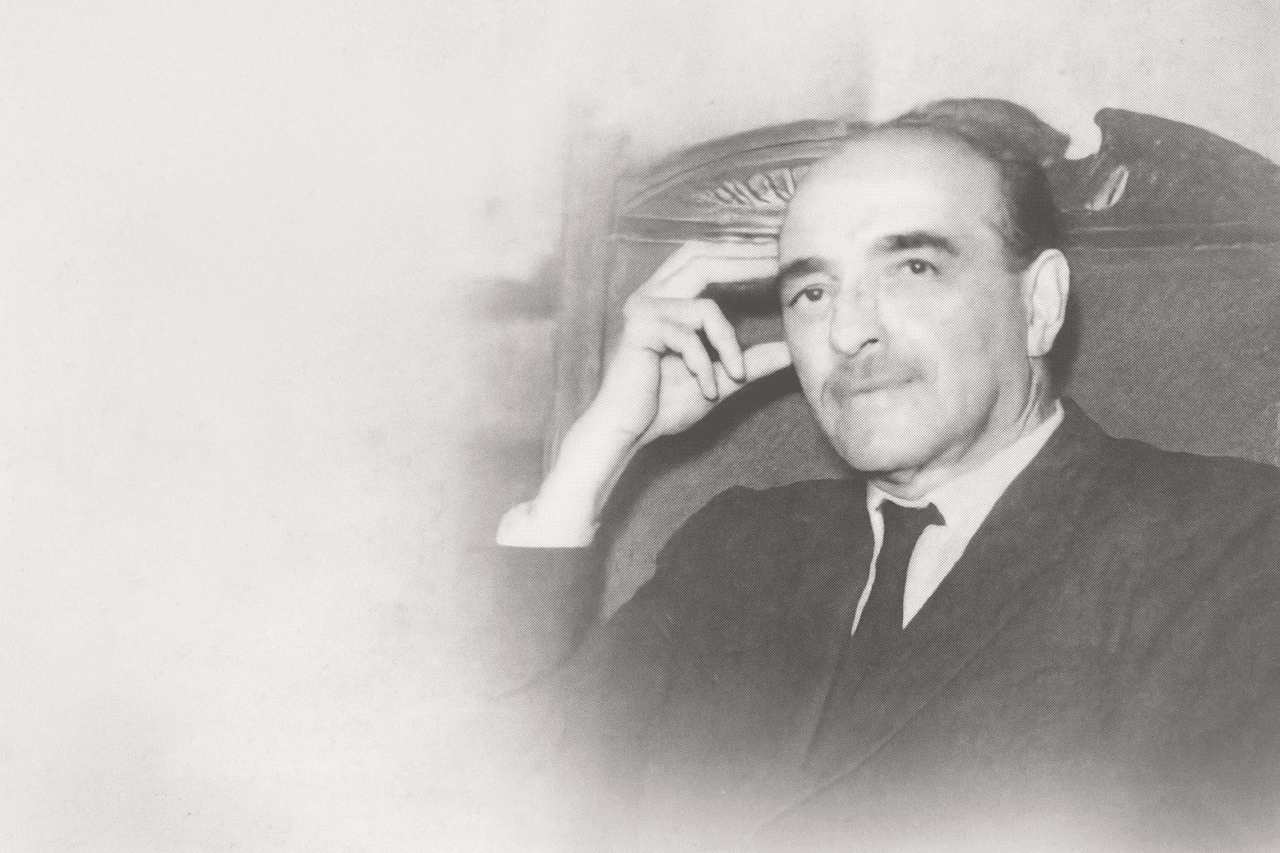

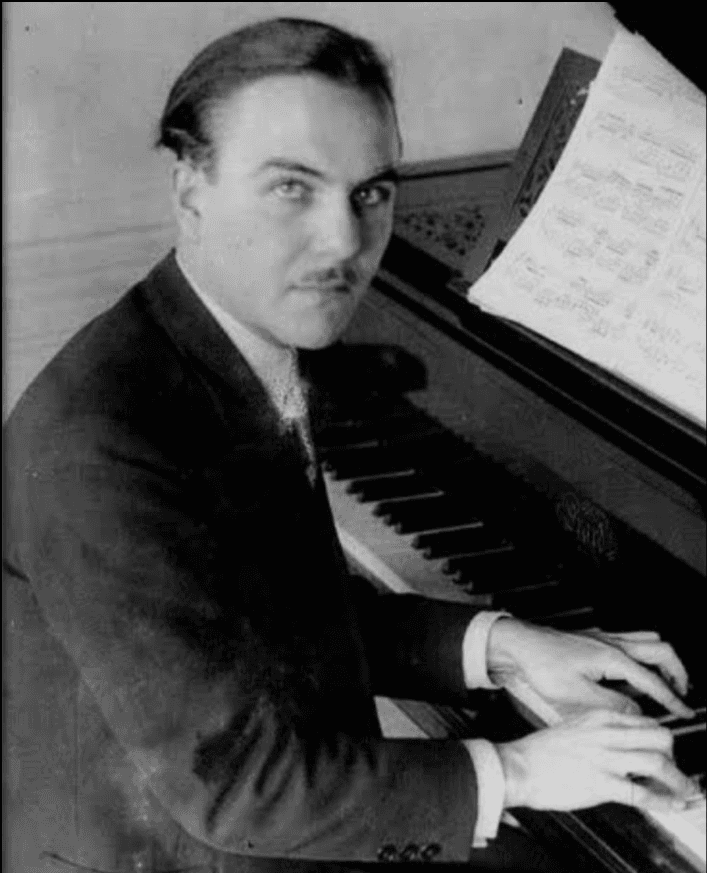
Cemal Reşit Rey
Doğum tarihi | 1904-09-25 | ||||||||
|---|---|---|---|---|---|---|---|---|---|
Place of Birth | Jerusalem - Ottoman State | ||||||||
Ölüm tarihi | 1985-10-07 | ||||||||
Grave | Edirnekapı Martyrdom Site - Istanbul | ||||||||
Profession(s) | Musician - Composer | ||||||||
Cemal Reşit Rey was born on 25 September 1904 in Jerusalem. His father, Ahmet Reşit Bey, was a prominent diplomat of the Ottoman Empire and a writer for the literary journal Servet-i Fünûn. His mother, Fethiye Hanım, was a granddaughter of Grand Vizier İbrahim Edhem Paşa. Rey received his first music lessons from his mother and composed his first waltz at the age of eight. In 1913 he moved to Paris with his family, where he studied with the renowned pianist Marguerite Long. During World War I, Rey relocated to Geneva and continued his education at the Geneva Conservatory. He later strengthened his musical knowledge by taking courses in musical aesthetics, composition, and orchestral conducting at the Paris Conservatory.
Cemal Reşit Rey was one of the “Turkish Five,” a group that pioneered the development of classical music in Türkiye. He created original works by synthesizing Western musical forms with Turkish music. In 1925 he composed the 12 Anatolian Folk Songs, bringing Turkish folk music into the realm of polyphonic composition. Among his most famous works are the Tenth Anniversary March and the operetta Lüküs Hayat. His other operettas, including Deli Dolu, Saz Caz, and Maskara, also received considerable attention. He made significant contributions to Turkish music through his symphonic poems, concertos, and chamber music.

Infographic on the life of Cemal Reşit Rey (Anadolu Agency)
Rey taught at the Istanbul Municipal Conservatory, where he founded several vocal choirs and the Stringed Instruments Group. This ensemble later became the Istanbul City Orchestra. In 1938 he served as head of the Western Music Department at Ankara Radio, and in 1945 he established the Philharmonic Society in Istanbul, enabling international artists to perform concerts in Türkiye. For many years he presented the program Explorations in the World of Piano on Istanbul Radio, where he introduced and performed many new compositions with detailed commentary. From 1982 until his death, he taught composition at the State Conservatory of Mimar Sinan University.
Cemal Reşit Rey was an artist who blended Turkish and Western music and produced works in this hybrid field. His compositions contributed significantly, both artistically and culturally, to Türkiye’s modernization process.
Cemal Reşit Rey’s Symphonic Poem (Classical World • Klasik Dünya)
Anadolu Ajansı. "Türk Müziğinin Unutulmaz Bestekarı: Cemal Reşit Rey." Accessed May 18, 2025. https://www.aa.com.tr/tr/kultur-sanat/turk-muziginin-unutulmaz-bestekari-cemal-resit-rey/1997252
Babacan, Cem. “Cemal Reşit Rey’in Bestecilik Üslubunun İncelenmesi.” *İdil* 110 (October 2023): 1724–1731. Accessed May 18, 2025.
Classical World. "Türkiye Symphonic Poem • IX.Molto Adagioı: Cemal Reşit Rey." YouTube, 2016. Accessed May 18, 2025. https://www.youtube.com/watch?v=w6iPsSfthVg
İlyasoğlu, Evin. "Bir Popüler Kültür Kahramanı: Cemal Reşit Rey." Z Dergisi. Accessed May 18, 2025. https://www.zdergisi.istanbul/makale/bir-populer-kultur-kahramani-cemal-resit-rey-397

Cemal Reşit Rey
Doğum tarihi | 1904-09-25 | ||||||||
|---|---|---|---|---|---|---|---|---|---|
Place of Birth | Jerusalem - Ottoman State | ||||||||
Ölüm tarihi | 1985-10-07 | ||||||||
Grave | Edirnekapı Martyrdom Site - Istanbul | ||||||||
Profession(s) | Musician - Composer | ||||||||
Artistic Contributions and Compositions
Educational and Institutional Contributions
Legacy and Significance