


This article was automatically translated from the original Turkish version.
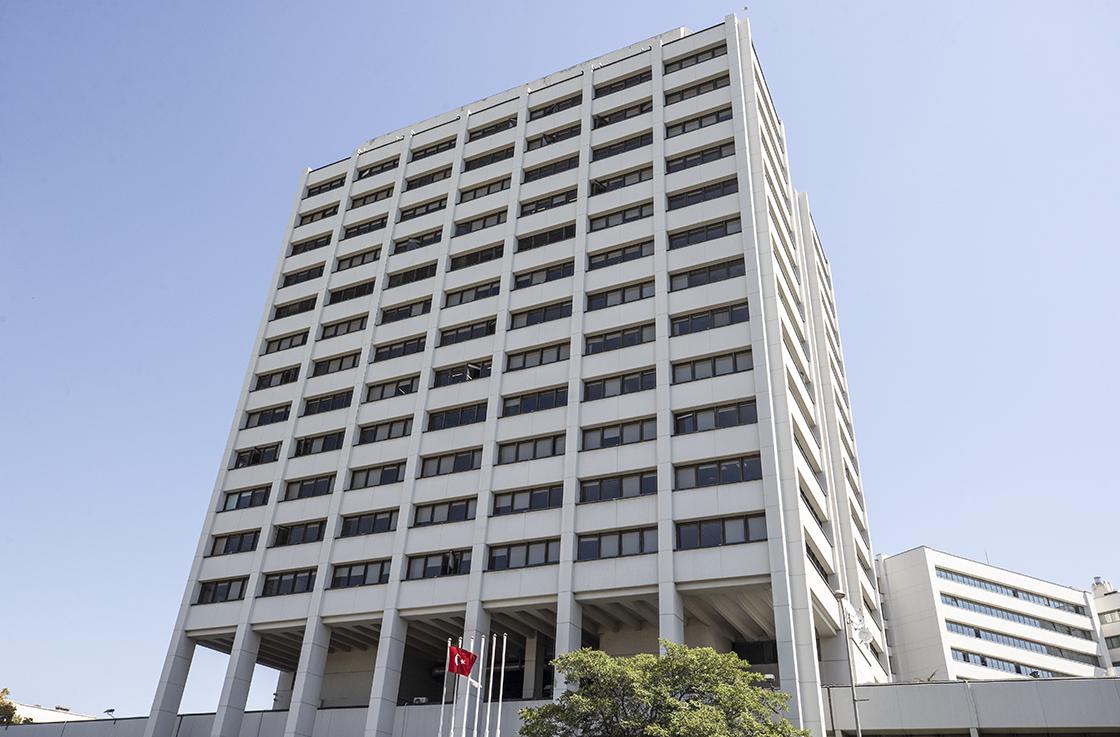
Central Bank of the Republic of Türkiye
Foundation Date | 3 October 1931 (Founding Law: 11 June 1930) | ||||||||
|---|---|---|---|---|---|---|---|---|---|
Establishment Law | Law No. 1715 on the Central Bank of the Republic of Türkiye | ||||||||
Center | Ankara, Türkiye | ||||||||
Status | Joint-stock company (subject to private law provisions with public character) | ||||||||
Other Missions | - Implement monetary and exchange rate policies - Support financial stability - Manage foreign exchange and gold reserves - Exercise authority over banknote printing and issuance - Regulate and supervise payment systems | ||||||||
Structure(s) | Its capital is divided into four groups: Group A (Treasury) Group D (Natural and Legal Persons) Group C (Foreign Capital Banks) Group B (National Banks) | ||||||||
Legal Independence | With the 2001 reforms, instrument independence and the price stability objective were placed under legal guarantee. | ||||||||
Website(s) | https://www.tcmb.gov.tr/ | ||||||||
The Central Bank of the Republic of Türkiye (TCMB) is the most authoritative financial institution responsible for implementing Türkiye’s monetary and exchange rate policies and ensuring price stability. Established by Law No. 1715 on 11 June 1930 and commencing operations on 3 October 1931, the TCMB is a public institution with a private legal structure operating as an anonymous company. Since its founding, it has assumed core functions such as implementing monetary policy, issuing banknotes, managing foreign exchange reserves, and overseeing payment systems; over time, its mandate and structural powers have undergone significant transformations due to changing economic conditions and global trends. Today, the Central Bank continues its activities within the principles of independence, transparency, and effectiveness to maintain economic balance in domestic markets and align with the global financial system.
The Ottoman Bank, established in 1863, assumed the role of the state’s treasury and held limited authority to issue currency. However, its foreign capital ownership created a need for a national central bank.
The idea of a national central bank was first proposed at the İzmir Economic Congress in 1923. A draft law was prepared in 1927, and opinions were sought from foreign experts between 1928 and 1930.
The TCMB was established by Law No. 1715 on 11 June 1930 and began operations on 3 October 1931.
A capital of 15 million liras was divided into four categories: Group A (the state), Group B (national banks), Group C (foreign banks), and Group D (Turkish individuals and legal entities).
Established as an anonymous company, the TCMB began operations with a structure designed to balance private and public interests.
The primary objective of the Central Bank is to maintain inflation at a low and stable level. In pursuit of this goal, it determines monetary policy within the framework of instrument independence. To support financial stability, it implements regulatory measures in money and foreign exchange markets. The exchange rate regime is determined in coordination with the government, while the management of gold and foreign exchange reserves falls under the Central Bank’s responsibility.
The authority to issue banknotes has been permanently delegated to the Central Bank by the Grand National Assembly of Türkiye and is exercised exclusively by it. Additionally, the Central Bank establishes and supervises payment systems and manages the infrastructure that ensures the secure and rapid transfer of funds and securities. It conducts open market operations to regulate money supply and liquidity. The Central Bank also acts as the government’s treasury, collecting public revenues, making public payments, and, until 1998, had the authority to provide short-term advances to the Treasury.
The Central Bank of the Republic of Türkiye (TCMB) continues to operate under the legal status of an anonymous company, with Group A shares owned by the public and represented by the Treasury. A legal amendment in 2001 explicitly defined the Bank’s primary objective as ensuring price stability. The Central Bank continues to carry out its core functions, including determining monetary and exchange rate policies, monitoring financial stability, issuing banknotes, and managing payment systems.
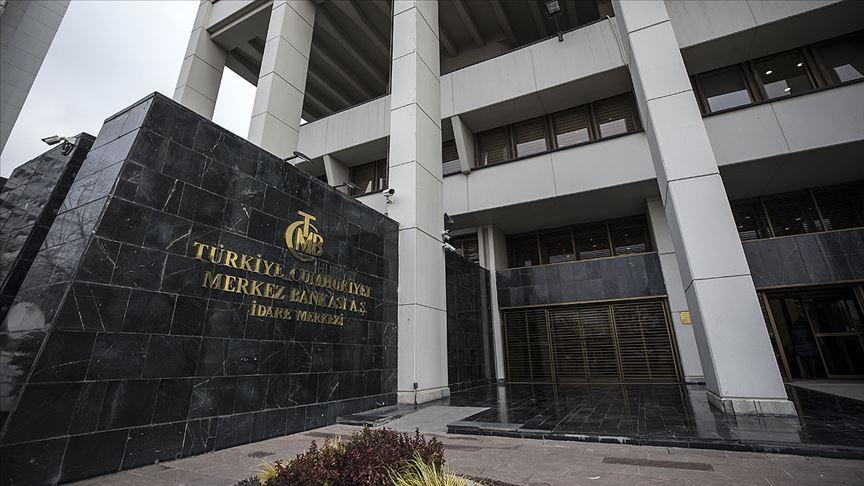
The Central Bank of the Republic of Türkiye (
1930–1950 Period: During its founding years, public expenditures were financed through Central Bank resources, and a fixed exchange rate regime was adopted.
1950–1980 Period: Resources were channeled to the public sector to achieve rapid development. The bank was modernized under Law No. 1211.
1980s: With the transition to a market economy, the exchange rate was liberalized, and the Central Bank assumed an active role.
1990s: Inflation could not be controlled, leading to crises. Structural reforms were implemented following the crises of 1994 and 2001.
2001 Reforms: Independence was strengthened, short-term Treasury advances were abolished, and price stability became the sole objective.
Post-2010: The concept of financial stability gained prominence, sparking debate over foreign exchange reserve management and interest rate decisions.
The functions of the Central Bank of the Republic of Türkiye (TCMB) have evolved through various historical phases. In its early years, it primarily served as a tool to meet the state’s financial needs. After 1980, it adapted to market economy conditions, and from 2001 onward, it transformed into a more independent central bank with price stability as its central focus. Today, the TCMB operates within a structure sensitive to political developments and international economic dynamics.
Anadolu Ajansı. “Merkez Bankası 92 Yaşında.” AA. Accessed June 11, 2025. https://www.aa.com.tr/tr/ekonomi/merkez-bankasi-92-yasinda/3005745.
Anadolu Ajansı. “Merkez Bankasının 88 Yıllık Serüveninde Milli ve Bağımsız Adımlar.” AA. Accessed June 11, 2025. https://www.aa.com.tr/tr/ekonomi/merkez-bankasinin-88-yillik-seruveninde-milli-ve-bagimsiz-adimlar/1600881.
Turk Tarih Kurumu. *Merkez Bankalarının Hisse Yapısının Tarihsel Gelişimi.* Accessed June 11, 2025. https://ttk.gov.tr/wp-content/uploads/2024/06/Merkez-Bankalarinin-Hisse-Yapisinin-Tarihsel-Gelisimi.pdf.
Türkiye Cumhuriyet Merkez Bankası. "Genel Bakış." *TCMB.* Accessed June 11, 2025. https://tcmb.gov.tr/wps/wcm/connect/TR/TCMB+TR/Main+Menu/Banka+Hakkinda/Genel+Bakis.
Türkiye Cumhuriyet Merkez Bankası. “Tarihçe.” *TCMB.* Accessed June 11, 2025. https://www.tcmb.gov.tr/wps/wcm/connect/TR/TCMB+TR/Main+Menu/Banka+Hakkinda/Tarihce/.


Central Bank of the Republic of Türkiye
Foundation Date | 3 October 1931 (Founding Law: 11 June 1930) | ||||||||
|---|---|---|---|---|---|---|---|---|---|
Establishment Law | Law No. 1715 on the Central Bank of the Republic of Türkiye | ||||||||
Center | Ankara, Türkiye | ||||||||
Status | Joint-stock company (subject to private law provisions with public character) | ||||||||
Other Missions | - Implement monetary and exchange rate policies - Support financial stability - Manage foreign exchange and gold reserves - Exercise authority over banknote printing and issuance - Regulate and supervise payment systems | ||||||||
Structure(s) | Its capital is divided into four groups: Group A (Treasury) Group D (Natural and Legal Persons) Group C (Foreign Capital Banks) Group B (National Banks) | ||||||||
Legal Independence | With the 2001 reforms, instrument independence and the price stability objective were placed under legal guarantee. | ||||||||
Website(s) | https://www.tcmb.gov.tr/ | ||||||||
No Discussion Added Yet
Start discussion for "Central Bank of the Republic of Türkiye" article
Stages of the Central Bank’s Establishment
Preliminary Developments in the Ottoman Period
Beginning of the Republican Era
Establishment Law and Commencement of Operations
Capital and Ownership Structure
Independence Debates and Structure
Core Functions of the Central Bank
Current Status and Structure
Impacts from Establishment to Present
Evolution of Impact and Role