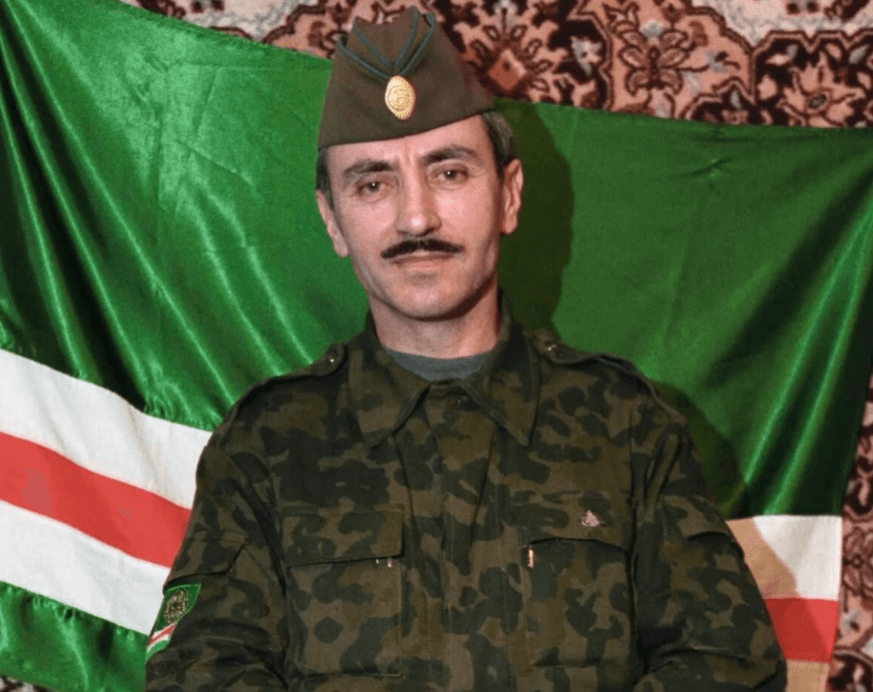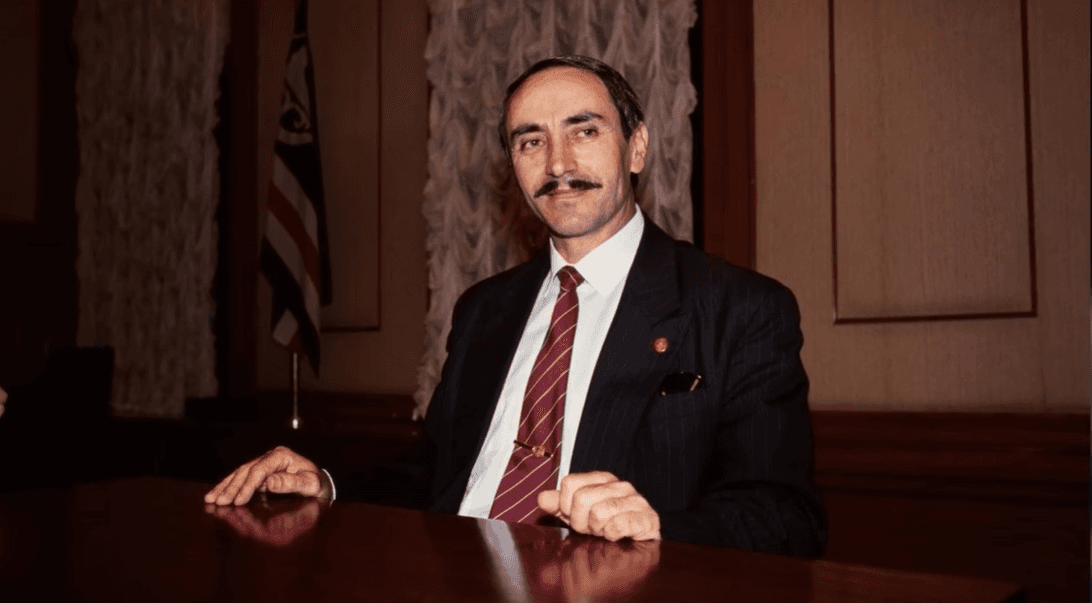
+1 More

Birth | 15 February 1944, Yalkhoroi/Chechnya | ||||||||
|---|---|---|---|---|---|---|---|---|---|
Death | 21 April 1996, near Gekhi-Chu village, Urus-Martan district, Chechnya | ||||||||
Profession(s) | Soldier Politician | ||||||||
Education | Faculty of Science in Vladikavkaz Gagarin Air War Academy (1974) Long-Range Aircraft Piloting and Engineering School (1966) Tambov Air War School (1962) | ||||||||
Child | Degi (1983) Daana (1973) Ovlur (1970) | ||||||||
Political Offices | President of the Chechen Republic of Ichkeria (27 October 1991) Chairman of the Executive Committee of the I Chechen People's National Congress (1990) | ||||||||
Annesi | Rabia Dudayeva | ||||||||
Awards and Medals | Total of 12 medals Order of the Red Banner (1989) Order of the Red Star | ||||||||
Military Service | Service in the Afghan War (1988-1989) Commander of the 326th Ternopil Heavy Bomber Division under the 46th Strategic Air Army (1989) Chief of Staff of the 13th Guards Heavy Bomber Aviation Division (1985-1987) Chief of Staff of the 31st Heavy Bomber Aviation Division (1982-1985) Commander of the 1225th Heavy Bomber Aviation Regiment (1980-1982) | ||||||||
Spouse(s) | Alla Dudayeva | ||||||||
Babası | Musa Dudayev | ||||||||
Dzhokhar Dudayev, was one of the most prominent political and military leaders of the Chechen independence movement during the dissolution of the Soviet Union. Born in 1944 in Chechnya, he was immediately deported with his family to Central Asia during Stalin’s mass deportation of the Chechen and Ingush peoples. He later rose through the ranks of Soviet military education institutions, eventually attaining the rank of general in the air forces. In the early 1990s, he returned to Chechnya, became central to the national congress movement, and assumed leadership of the Chechen administration following elections in 1991, which declared Chechnya’s independence.
Dudayev’s biography occupies the intersection of the late Soviet period, the Chechen national movement, and the sovereignty crisis between Russia and Chechnya during the 1990s. Therefore, his life is not examined merely as a personal career trajectory but within the broader contexts of exile memory, ascent within Soviet institutions, rupture from central authority, and the search for a new political order shaped by war. Chechnya’s internal structure in the 1990s, its relations with the Russian Federation, and the First Chechen-Russian War are among the key factors defining Dudayev’s historical position.
The Chechnya into which Dzhokhar Dudayev was born had been shaped by a historical tension with Russia that could not be reduced to just a few years or the final phase of the Soviet Union’s collapse. Chechnya occupied a geography at the intersection of mountains, forests, valleys, and steppes in the North Caucasus, opening northward to the Russian interior and southward to the passes of the South Caucasus. This location subjected the region to continuous intervention, not only militarily but also administratively and economically. The Russian Empire’s conquest of the Caucasus did not merely produce a change in political sovereignty; it left lasting impacts on local power structures, settlement patterns, taxation systems, and methods of military control. Throughout the 19th century, the Caucasian resistance persisted through religious legitimacy, mountainous terrain advantages, and local community solidarity; this memory of resistance remained a part of social identity well into the 20th century. One reason the independence discourse found such rapid resonance in the 1990s was that political demands framed themselves not as a new beginning but as the continuation of a long-standing struggle for sovereignty.
Although Soviet-era Chechnya appeared externally as a unified administrative structure, it contained multiple lines of tension. During the 1920s and 1930s, Sovietization, collectivization, industrialization, and administrative centralization led to increased migration of Russians and other Slavic groups into the region. As a result, local social structures were both transformed and defensively inward-looking. Traditional forms of solidarity—village networks, religious circles, and kinship ties—served not only cultural but also political and social refuge functions. On the eve of World War II, the Chechen-Ingush region was significant for agriculture, livestock, and especially oil production; the area around Grozny was one of the main centers of the Soviet oil economy. This made the region vital for central planning and strengthened its security-oriented perspective. The Soviet system, on one hand, opened pathways for modern education and military careers; on the other, it generated an unresolved relationship of mistrust between the local population and the center. Dudayev’s generation was raised precisely within this contradictory structure: opportunities for advancement within Soviet institutions existed, but historical memory and political suspicion had not disappeared.
Dudayev’s Interview with Vzglyad Television (Kosmos Website)
The most severe rupture in this historical trajectory was the deportation of February 23, 1944. Chechens and Ingush were forcibly removed from their homes within days, accused of collaboration with the Nazis, and transported by rail to Central Asia and other Soviet interior regions. The operation had been meticulously planned: villages were surrounded, residents given minimal time to gather belongings, autonomous structures were abolished, and administrative boundaries were redrawn. The deportation meant more than mere population displacement; it resulted in the fragmentation of social structures, the disruption of property rights, the severing of ties to cemeteries and sacred sites, and the shattering of historical continuity. While figures vary regarding the number of deportees, hundreds of thousands of Chechens and Ingush were expelled within weeks; high losses occurred during transit, resettlement, and the initial years of survival. Some Soviet sources indicate approximately 478,000 people were deported in the first wave, with later reports putting the total above 496,000; other estimates differ further. Therefore, it is difficult to provide an exact figure for total losses; however, the demographic and social devastation caused by the deportation is undisputed.
The official justification for the deportation was collaboration with the Germans; however, this justification became seriously contested during and after the deportation years. The German army never reached most of the Chechen-Ingush territories, yet the entire population was treated as guilty. Moreover, the deportation did not spare only villagers but also Chechen and Ingush soldiers serving in the Soviet army; some learned of their families’ deportation upon returning from the front, while others were directly sent to labor camps. This reinforced the perception that the deportation was not a military security measure but a practice of collective punishment. In Chechen collective memory, 1944 is not remembered as an administrative measure or wartime precaution but as a catastrophe passed down through generations. The concept of “Aardakh,” meaning “expulsion” or “removal,” became not merely the name of a historical event but a reference point dividing time: events are remembered as occurring before or after the deportation. When this memory re-entered public discourse from the late 1980s, it provided an exceptionally strong foundation for political unity.

Dudayev’s Youth (Anti-imperial Block of Nations)
The gradual rehabilitation process that began after Stalin’s death opened a path for Chechens and Ingush to return in 1956–1957. On November 24, 1956, the illegality of the deportation was officially acknowledged; on February 11, 1957, the Chechen-Ingush ASSR was reestablished. However, “return” did not mean a direct restoration of the previous life. After 1944, Russians and other Slavic settlers had occupied homes, farms, and public resources; thus, the return process began with disputes over property, settlement, and administrative priorities. In the 1959 census, Chechens and Ingush constituted 41.1 percent of the republic’s population, compared to 58.4 percent in 1939; Slavs had risen to 49 percent. This pattern showed that returning populations could not automatically reestablish their numerical majority within their own republic. After the return, daily life, language, education, employment, access to public positions, and property issues became sources of new tensions. Russian remained the primary instrument for administrative and professional advancement; the local population, meanwhile, adapted to the Soviet system while preserving its exile memory and sense of difference.
One of the most critical aspects of social transformation in Chechnya between the 1960s and 1980s was the simultaneous experience of modernization and exclusion. Urbanization increased, participation in higher education and the Soviet military expanded, and local cadres emerged in technical and administrative professions. Yet ethnic division of labor was never fully balanced; Russian-speaking cadres retained dominance in key sectors such as oil, industry, transportation, and bureaucracy. The official historical narrative long upheld the thesis that Chechens had “voluntarily” joined Russia; the 1944 deportation was excluded from public debate. This contradictory structure created an environment that appeared calm from the outside but internally accumulated a sense of historical injustice. The educated Chechen generation emerging in the late Soviet period entered the system’s career channels while believing that this same system suppressed their own history and collective trauma. Dudayev’s ability to build a military career and later defend his rupture from Soviet central authority is understandable only within this social background.
By the end of the 1980s, Gorbachev’s policies of glasnost and perestroika reached Chechnya belatedly. Initial political movements did not begin with direct demands for independence. Early demands centered on environmental issues, religious freedom, protection of the Chechen and Ingush languages, remembrance of the deportation, full rehabilitation of deportation victims, and rejection of politically imposed historical formulas such as “voluntary participation.” The social base of the Chechen-Ingush People’s Front for Perestroika, established in late 1988, consisted largely of intellectuals, including local Russians. The movement’s moderate program initially focused on reform, historical correction, and strengthening autonomy. However, this moderate line was soon perceived as insufficient for defending rights. In 1990, new political actors founded the All-National Chechen Congress. Among its prominent figures were poets and ideologues such as Zelimkhan Yandarbiyev.

Dzhokhar Dudayev (Anti-imperial Block of Nations)
The changes between 1989 and 1991 also revealed another division within Chechnya’s internal structure: the political orientations of Chechens and Ingush were not identical. Despite a shared memory of the 1944 deportation and the 1957 return, in the early 1990s the Ingush side showed a tendency to remain within the Russian Federation, while the Chechen side increasingly centralized its demand for independence. During the same years, local Soviet officials such as Doku Zavgaev attempted to consolidate power by placing their own cadres; in contrast, the new nationalist movement aimed to dismantle the old party structure. The August 1991 coup attempt in Moscow rapidly destabilized these balances. The support of conservative communist leaders in Grozni for the coup strengthened the national movement. With the dissolution of local Soviet institutions, the struggle for power shifted directly to the streets, congresses, and armed forces. From this point onward, the issue in Chechnya was no longer merely broader autonomy but who held power and under what legal authority.
After 1991, Chechnya appeared neither as a recognized independent state nor as an ordinary federal unit under Moscow’s full control. This ambiguity combined with the rapid collapse of the economy, weakening of public order, proliferation of armed groups, and intensification of debates over political legitimacy. On one hand, the claim to independence and the discourse of historical justice gained broad support; on the other, serious crises emerged regarding institutionalization of the new state structure, control of economic resources, management of opposition, and redefinition of relations with the center. Smuggling, arms trafficking, kidnapping, administrative fragmentation, and the collapse of the party-state structure rapidly hardened Chechnya’s social fabric in the early 1990s. Therefore, the environment in which Dudayev rose was not merely one of national awakening or rupture from the center but also an attempt to construct a new political framework within the collapse of an imperial order.
This background explains why Dudayev rapidly transformed into a powerful historical figure. In Chechnya, three distinct accumulations coexisted simultaneously: the memory of deportation and historical injustice; educated and militarily experienced cadres trained within Soviet institutions; and a nationalist movement rapidly politicized in the face of a disintegrating central state. Dudayev stood precisely at the intersection of these three lines: a child of the deportation generation, a general who had risen within the Soviet air forces, and a leader promoted by the national congresses after 1990. Therefore, his biography is not analyzed by drawing a clear distinction between personal career and historical context but within a structure in which these two dimensions continuously interpenetrate.
Dzhokhar Dudayev was born on February 15, 1944, in the village of Yalkhoroi, Chechnya, as the thirteenth child of Rabia and Musa Dudayev. Just eight days after his birth, during the mass deportation that began on February 23, 1944, he was sent with his family to Kazakhstan. His childhood years were largely spent in Chimkent. This period was marked by material deprivation and the political repression defining daily life in exile communities. In an environment where religious education was banned in public life, familial oral transmission gained special importance; his mother’s stories of Chechnya and Islamic teachings became foundational in Dudayev’s early memory.

Dudayev’s Childhood Photo (Anti-imperial Block of Nations)
The 1944 deportation was not merely a background event for Dudayev’s generation but the very condition of life. The separation of his family from their homeland, the disintegration of settled order, and the forced adaptation to a new existence directly shaped his childhood. The mass deportation of Chechen and Ingush populations by rail to Central Asia within days resulted in massive losses for many families during transit or in the first years of resettlement. Dudayev was born immediately after this collective catastrophe and spent the first phase of his life within the daily experiences of the exile community. This circumstance is one of the main factors explaining the historical foundation of his later political language; for his generation, “homeland” was not a directly experienced childhood space but a historical reality constructed through family narratives and the desire for return.
In 1957, the Soviet government’s permission for return marked the beginning of a new chapter for the Dudayev family. Notably, Dudayev himself had secretly returned to Chechnya a year earlier by boarding a long train journey. This detail reveals two important elements in the early phase of his biography: first, the exile experience instilled in him at a young age a strong desire to return home; second, it foreshadowed the personal initiative and willingness to take risks that would become prominent in his later political and military career. After returning, he completed his secondary education in Chechnya. Thus, his childhood and early youth formed a divided life path between the geography of exile and the homeland. This division demonstrated that he was both integrated into the Soviet system and a member of a generation that carried its historical injustices.
The first significant stage of his education was in physics and mathematics in Vladikavkaz. His orientation toward the sciences aligned with the Soviet modernization structure, which emphasized technical and military specialization. However, his decisive shift occurred when he transitioned to military aviation. According to one account, he entered the Faculty of Physics and Mathematics at North Ossetia State University; however, after his first year, he secretly traveled to Tambov to pursue military pilot training. Another account states that he graduated from the Faculty of Sciences in Vladikavkaz in 1960. Although minor discrepancies exist in the details of his educational path, the overall picture is clear: Dudayev, at a young age, chose between civil scientific education and military specialization, ultimately selecting a career in the Soviet air forces. His graduation from the Tambov Military Aviation School in 1962 marked the point at which this choice became permanent.

A Scene from the Chechen Deportation (Anti-imperial Block of Nations)
His entry into active service in the Soviet military in 1962 opened a new phase in Dudayev’s life. This date marked not only the beginning of military service but also his entry into a professional advancement path within Soviet institutions. He expanded his military education by graduating from the Long-Range Aircraft Piloting and Engineering School in 1966. He completed his studies at the Gagarin Air Force Academy in 1974 after entering in 1971. This educational path distinguished him from ordinary officers; long-range strategic aviation was one of the most demanding fields in the Soviet military structure, requiring high technical competence and reliability. Thus, Dudayev’s early development was built on a military career shaped not only ideologically but also by intense technical and institutional discipline.
His family life also began to take shape during these years. He married Alla Dudayeva in 1969. Their son Ovlur was born in 1970, their daughter Daana in 1973, and their second son Degi in 1983. His marriage to a Russian woman and having children of mixed Russian-Chechen ethnicity became one of the most striking elements of his biography in later years; for a leader who would become one of the main symbols of Chechen nationalism, he spent much of his life outside Chechnya, rose within Russian-speaking military circles, and built his family life within that world. This situation prevented Chechen nationalism from turning into direct ethnic Russophobia or radicalizing in a radical direction. Thus, when evaluating his early period, a dual picture emerges: on one side, the child of the Chechen deportation generation; on the other, a professional officer shaped by Soviet military modernization. Dudayev’s rapid rise within the Chechen national movement was not only due to personal charisma or political conjuncture but also to his ability to embody these two distinct life paths.
The defining arena in Dzhokhar Dudayev’s development was the Soviet air forces. His military career began in 1962. After completing his training at the Tambov Military Aviation School, he specialized in long-range aviation; he received training in long-range aircraft piloting and engineering in 1966 and graduated from the Gagarin Air Force Academy in 1974. This educational path transformed him not only into a flight crew member but also into an officer qualified for command and staff positions. In the Soviet military structure, strategic aviation was one of the most sensitive areas, requiring technical expertise, discipline, and political reliability. Therefore, Dudayev’s steady advancement here demonstrated his high level of acceptance within the system. His joining the Communist Party of the Soviet Union in 1968 was part of this upward trajectory.

Dudayev in the Air Forces (Anti-imperial Block of Nations)
Throughout the 1970s and 1980s, Dudayev held various command positions within long-range bomber aviation. From 1980 to 1982, he commanded the 1225th Heavy Bomber Aviation Regiment. He later served as chief of staff of the 31st Heavy Bomber Aviation Division and then of the 13th Guards Heavy Bomber Aviation Division. These positions signified not only administrative advancement but also service within units integral to the Soviet nuclear-deterrence system. Long-range bomber units were central to Soviet military doctrine; therefore, officers serving in these units were expected to demonstrate both technical expertise and high decision-making discipline during crises. Dudayev’s presence in these ranks demonstrated that he was not an ordinary officer stationed in provincial garrisons but a commander who had reached higher levels of military planning circles.
By the end of the 1980s, his rank progression became evident. In 1989, he attained the rank of major general. This advancement made him one of the first Chechen and first Muslim commanders to reach general rank in the Soviet air forces. This point holds special significance in his biography; for a soldier from the deportation generation, a member of a people collectively punished under Stalin, to rise to general rank within one of the Soviet system’s most prestigious military institutions was a rare example of both personal career achievement and social mobility in the late Soviet period. However, this ascent did not mean he was politically fully loyal to the Soviet center; rather, the very fact that his rupture came from within the system, rather than from outside, amplified the impact of his later break. Dudayev was not an opponent who viewed the Soviet military from the outside but a commander who understood its functioning, hierarchy, and weaknesses from within.
The medals and decorations he received during this period were also critically significant. He was awarded numerous military honors, including the Order of the Red Star and the Order of the Red Banner. In Soviet military culture, these awards signified not only length of service but also performance and command reliability. Dudayev’s career went beyond a formal promotion ladder to place him among the state’s military elite. This status explains why he was quickly taken seriously when he entered Chechen politics in the early 1990s. His name meant more to local nationalist circles than simply “a soldier of Chechen origin”; it signified a general who had reached the upper echelons of the central state apparatus. This background strengthened his political legitimacy.
One of the most prominent phases of Dudayev’s military career was his posting in Tartu, Estonia. There, he commanded the 326th Ternopil Heavy Bomber Division under the 46th Strategic Air Army. As the Soviet Union entered its dissolution process in the late 1980s, independence movements in the Baltic republics were gaining strength. During this period, the central administration considered using military force to suppress local independence initiatives. It is evident that Dudayev, during this phase, refused to implement harsh intervention orders from the Kremlin and rejected the use of force against the Baltic independence movements. This stance is regarded as one of the turning points in his subsequent political biography; for the first time, a general trained within the Soviet state’s command system distanced himself from the political preferences of central authority.
The Estonia phase affected Dudayev’s public image in two distinct directions. In Baltic circles, he gained a positive reputation as a commander who refused to use force against independence movements; in Russian military and political circles, his reliability was questioned. His designation as an “insurgent general” originated from this period and remained with him until the end of his career. Dudayev’s break from the Soviet military was not an abrupt identity shift but the result of tension between the political will of a disintegrating empire and professional military decision-making. The Baltic experience was his final major institutional rupture before returning to Chechnya. This experience showed him not only the psychological threshold of resisting central authority but also the true capacity of the crumbling Soviet state.

Dudayev and His Family (Anti-imperial Block of Nations)
Dudayev’s involvement in the Soviet-Afghan War is another significant element of his biography. It is known that he served during 1988–1989 in the context of the Soviet Union’s war in Afghanistan. This phase provided him with direct combat experience and a closer understanding of the Soviet military machine’s external operation logic. However, in public accounts, the nature of his specific duties in Afghanistan, the scope of his operational area, and the individual impact of the war on him are not always clearly detailed.
Throughout his career in the Soviet air forces, Dudayev’s notable characteristics included discipline, technical competence, personal calmness, and effectiveness within the command chain. However, when considering his subsequent political life, it is clear that this military training directly influenced his leadership style. Hierarchical thinking, command habits, the tendency to place security issues at the center of politics, and the manner of taking firm decisions during crises would also be evident in his governance style in Chechnya after 1991. Therefore, his career in the Soviet air forces was not merely a phase labeled “military service”; it was the institutional and mental preparation for his later political practice. Dudayev returned to Chechnya not merely as a member of a national movement but as a high-ranking strategic aviation general. This circumstance is one of the main reasons for his rapid centralization within the Chechen national movement.
By 1989–1990, as the Soviet Union disintegrated, Dudayev’s career began shifting from a classic military advancement path to a path of political transformation. His stance in Estonia and the controversial nature of his position in the military accelerated his return to Chechnya. This return was not a retirement or a routine change of assignment but the moment when the boundary between military career and national politics was crossed. When he returned to Chechnya, he brought with him habits of strategic thinking, military legitimacy, firsthand knowledge of state apparatuses, and the experience of witnessing the weakening of central authority.
Dzhokhar Dudayev’s transition to politics occurred within the rapidly shifting power dynamics of Chechnya during the final years of the Soviet Union. Until the late 1980s, public activism in Chechnya had primarily developed around historical rehabilitation, language, religion, and recognition of the deportation memory. After 1988, Gorbachev’s relatively liberal environment mobilized local intellectuals, students, representatives of the former exile generation, and segments of society expecting reform. Initial demands focused not on complete separation from Moscow but on recognition of historical injustices, greater participation in local governance, an end to the party-bureaucratic monopoly, and the rewriting of the Chechen-Ingush people’s past. However, this line quickly proved inadequate. The existing Soviet local administration was widely perceived as both the carrier of historical injustices and a structure dependent on Moscow. Thus, the transition from reformist frameworks to sovereignty debates accelerated.
Dudayev’s return to Chechnya was decisive in this process. His prior distancing from central authority during his posting in Estonia had already made him a controversial figure within the disintegrating Soviet military and political circles. In Chechnya, however, he stood out as a Chechen general who had risen to the highest echelons of the Soviet system. The First Chechen National Congress, held from November 23 to 25, 1990, established the political framework for this return. At the congress, an executive committee was formed with the mandate to prepare the process of establishing an independent state, and Dudayev was appointed its chairman. This choice was no accident. The Chechen nationalist circles’ greatest need at that stage was a figure who could serve as a symbol of resistance against Moscow and unite the fragmented opposition. Dudayev was seen as suitable for this role due to his military rank, his outsider status, his lack of direct ties to local Soviet cliques, and his powerful oratory.

Dzhokhar Dudayev (Anti-imperial Block of Nations)
The period from late 1990 to late 1991 saw the sharpening of a dual power structure in Chechnya. On one side were the residual official republican institutions of the Soviet order and their associated local party-bureaucratic circles; on the other, the increasingly mass-based national congress movement. The line led by Dudayev derived its legitimacy not from the existing constitutional framework but from popular congresses and street mobilization. Therefore, the movement’s rise was not merely a pre-election campaign or party struggle; it meant the direct erosion of the official state structure. Dudayev’s role in this phase was less about generating ideas than centralizing diverse social energies. The Chechen national movement was not homogeneous; dissatisfied technocrats from the old regime, poet and writer circles, youth movements, nationalists emphasizing exile memory, and local power networks were not identical actors in this process. Dudayev’s rise made it possible for these scattered circles to coalesce around a single figure.
The August 1991 coup attempt in Moscow decisively altered the power balance in Chechnya. The crisis at the center of the Soviet Union further weakened the already fragile official structures in the periphery. The stance of the Chechen-Ingush ASSR administration toward the coup attempt provided Dudayev and his circle with a strong political opportunity. Large-scale protests erupted in Grozni; mass demonstrations were organized against the existing government, and the national congress movement presented itself not merely as a reformist opposition but as the true representative of new legitimacy. At this stage, Dudayev’s leadership became more visible. He was no longer merely the chairman of the executive committee but had become the face of an alternative authority to the collapsing local Soviet order. The August events marked the turning point when the constitutional order in Chechnya effectively dissolved and political struggle transformed into an open sovereignty crisis.
In September 1991, the national congress movement turned toward dismantling the existing republican structure. The neutralization of the Supreme Soviet and the removal of old party cadres from the political scene were part of an effort to establish a new authority. At this stage, Dudayev’s circle did not limit itself to political demonstrations; it began establishing de facto dominance through armed force, building control, seizure of institutions, and control of symbolic centers of power. The transition in late 1991 was a process in which elections, street mobilization, and the use of force occurred simultaneously. Dudayev’s legitimacy rested on all three: popular support, a claim to represent a new authority against the collapsing central order, and the backing of organized groups capable of using force when necessary. This situation shaped the character of the new administration from the outset; because the process of state-building progressed more through revolutionary dismantling than through legal institutionalization.
The presidential election held on October 27, 1991, formalized Dudayev’s rise. The Chechen national movement regarded this election as an expression of new popular sovereignty. Moscow, however, declared the election invalid and claimed it lacked constitutional legitimacy. This dispute formed the legal basis for all subsequent conflicts. The Chechen side emphasized the people’s right to determine their own fate during the post-Soviet dissolution period; Moscow viewed Chechnya as an inseparable part of the Russian Federation and regarded the declaration of independence as a unilateral secession. Thus, Dudayev’s election as president was not a routine change of leadership but the open confrontation of two distinct conceptions of legitimacy.
On November 1, 1991, the first decree declared Chechnya’s independence, and the newly established state was named the Chechen Republic of Ichkeria. The administration defined itself not as a temporary autonomous structure following the Soviet collapse but as a directly independent state. This choice had extremely serious consequences for both domestic politics and foreign relations. Domestically, the declaration of independence legitimized the national congress movement as a revolutionary authority; internationally, it rapidly isolated Chechnya. Neither the Russian Federation nor the international community recognized this declaration. Thus, Dudayev’s authority transformed into a political structure that derived its legitimacy internally from popular support and revolutionary will but lacked external recognition. This situation rendered the state-building effort extremely vulnerable from the outset. Unrecognized independence left institution-building, economic-political relations, searches for external support, and security architecture in uncertainty. The most prominent feature of Dudayev’s political career emerged here: his rise to power was rapid with the help of popular support, but the international foundation of this power was extremely weak.
Moscow’s first response was aimed at halting this process in practice. Boris Yeltsin declared the elections invalid and issued an arrest warrant for Dudayev. Subsequently, Russian troops were sent to Grozni. However, this initial intervention failed. The deployed forces encountered resistance from Dudayev’s supporters; moreover, the central authority itself lacked full coordination. This failure increased Dudayev’s prestige in domestic politics. The new leader was now seen not merely as someone who had won an election but as a figure who had repelled Moscow’s first direct move. One of the main reasons for the centralization within the Chechen national movement at the end of 1991 and beginning of 1992 was precisely this. Success did not merely grant Dudayev symbolic power; it also enabled him to establish practical superiority over rival factions. Moscow’s early and failed intervention strengthened, rather than weakened, his internal legitimacy in the short term.

Dzhokhar Dudayev Speaking (Anti-imperial Block of Nations)
During this phase, the nature of Dudayev’s leadership became more apparent. He was not a politician who rose from a classic party organization; his institutional political experience was limited. However, he could combine military discipline, oratory, symbolic courage, and the language of historical injustice within the disintegrating state order. In this way, he quickly became both a mass leader and the founding figure of the new state. Yet the limits of this rise emerged simultaneously. The differing tendencies within the national congress movement, the lack of legal institutionalization, the weak administrative base of the central authority, and the absence of external recognition made the vulnerabilities of the new regime visible from the outset. Therefore, Dudayev’s transition to politics is not a one-sided success story; it is simultaneously a massive mobilization and rapidly centralized leadership on one side, and a state-building effort that began generating crises even before it was fully established on the other.
From the moment he assumed leadership of the Chechen national movement, Dudayev ceased to be a general from the Soviet air forces and became the face of the Chechen administration claiming independence. This transformation was not merely a change of position but a historical role shift. Military rank yielded to political representation claims; command experience was transferred to street mobilization and state-building efforts; the ascent achieved within the Soviet system became the instrument of post-Soviet rupture. The reason he was so powerfully and controversially remembered by both supporters and opponents in later years lies precisely in this rapid and forceful transition.
Dzhokhar Dudayev’s rule took shape during a period in which the declaration of independence was inseparably intertwined with efforts to establish actual governance, beginning in late 1991. The most fundamental problem was that while the new administration defined itself as an independent state, this status was not recognized by either the Russian Federation or the international community. This situation led the authority to base its legal foundation internally on popular sovereignty and revolutionary legitimacy and externally on de facto control. The new order established in Chechnya did not rely on a classic, established state apparatus but on the rapid reorganization of the crumbling Soviet administrative legacy. Therefore, the governance practices between 1991 and 1994 oscillated continuously between “institution-building” and “institutional vacuum.” On one hand, the presidency, ministries, security structures, and national guard units were created; on the other, the central authority’s capacity to collect taxes, ensure security, and establish a judiciary remained severely limited. The fundamental problem that emerged from the outset was this: a state had been declared, but the regular institutions capable of sustaining it had not yet been established.
The most prominent feature of the new regime’s early years was the rapid centralization of authority under intense external pressure. Dudayev consolidated the legitimacy carried by the national congress movement into the representative authority of the presidency. This centralization stemmed partly from the disintegration of the old Soviet bureaucracy and partly from the new state’s perception of itself as under threat. Opposition was not merely a political rival but often perceived as an internal threat to the new state project. As a result, the presidency assumed simultaneously constitutional, administrative, and security functions. This situation increased decision-making speed in the short term but weakened institutional pluralization and legal balance mechanisms in the medium term. Dudayev’s governance style, influenced by his military background, was hierarchical, command-centered, and crisis-oriented. Horizontal oversight of administrative structures gave way to centralized will. Therefore, the Dudayev era is viewed as a phase in which state-building increasingly merged with presidential authority.

Dzhokhar Dudayev (Anti-imperial Block of Nations)
Relations with the opposition were among the earliest areas to reveal the structural weaknesses of the new regime. Dudayev’s rise to power did not signify the unification of all Chechen political circles. Within the national movement, there were moderate, legalistic, Islamist, localist, or pragmatic tendencies. Moreover, the incomplete elimination of the old Soviet administrative cadres created continuous tension between the new administration and the former bureaucratic circles. Under these conditions, opposition was often interpreted not as legitimate political competition but as an attempt to fragment the regime or as actions by internal factions linked to Moscow. As external pressure increased, Dudayev’s approach toward opposition forces hardened progressively; control over media, public space, and security apparatuses intensified. Some of the different political factions within the opposition gradually turned toward direct armed conflict or sought external support. This situation transformed Chechnya between 1992 and 1994 into an area not only polarized between center and periphery but also internally divided.
The second major challenge faced by the administration was the economy and public order. Chechnya’s economic structure collapsed rapidly in the post-Soviet period. The region’s most important strategic asset during the Soviet era—oil production and refining capacity—could no longer function due to the breakdown of relations with the center and the new administration’s lack of international recognition. Production, transportation, financing, and foreign trade networks were severed from Moscow; however, independent state mechanisms to replace them had not yet been established. Public revenues were irregular, the budget system was unstable, and the boundaries of monetary policy authority were unclear. The financial foundation of the state-building effort was extremely weak. Although the new administration claimed economic independence, it was forced to operate within the shrinking resources created by the post-Soviet collapse. Consequently, the economic sphere became one of the most vulnerable aspects of the administration. While the Dudayev regime struggled to maintain an independent state structure, unregistered economic activities, smuggling, unregulated financial movements, and resource-sharing among armed groups grew increasingly prevalent.
The oil issue held special importance during this period. Grozni and its surroundings were among the most important centers of the North Caucasus in terms of refineries, pipelines, and processing facilities during the Soviet era. However, after the declaration of independence, the operation of this infrastructure, export arrangements, revenue distribution, and energy pipeline relations with the center became serious problems. For Chechnya, oil was both an economic resource and a political bargaining tool; for Moscow, it was one of the main factors increasing strategic interest in the region. Nevertheless, between 1991 and 1994, oil revenues failed to transform into a regular and centralized state budget. Due to political uncertainty and security problems, facilities and transportation routes did not operate at desired efficiency levels. Thus, oil became less a stable resource sustaining the new regime and more a factor intensifying external pressure and internal power struggles. One reason the Dudayev administration failed to establish a solid state apparatus economically was this.
A similar duality emerged in the area of public order and security. On one hand, national guards and armed structures formed the foundation of the new regime; on the other, these structures were not fully transformed into a centralized, regular security force. Soviet-era arms depots, remaining military ammunition, and the strengthening of local armed circles made it difficult to establish a state-monopolized security order. The administration had the capacity to use force; however, this capacity did not always translate into centralized state authority. Various commanders, local influence networks, and semi-autonomous armed groups gradually established their own domains. This situation both strengthened and weakened Dudayev’s authority: in the short term, the central regime survived thanks to armed support; in the medium term, the fragmented nature of the same armed network became an obstacle to institutional state-building. In other words, the force that protected the regime failed to transform into the discipline required to build a state.
The social structure in Chechnya also changed rapidly between 1992 and 1994. A significant portion of the Russian-speaking and Slavic communities, which had been numerically important during the Soviet period, left the republic. Reasons included political uncertainty, security concerns, breakdown of public order, disputes over property and identity, and the nationalist character of the new regime. This migration not only altered the ethnic composition but also created gaps in technical expertise, bureaucratic experience, and urban professional groups. During the same period, the militarization of daily life increased; although war had not yet begun, the political language increasingly acquired a military character. The idea of the state and the idea of armed defense began to converge within society. This situation strengthened the social legitimacy of the Dudayev regime in the short term around the idea of independence but narrowed opportunities for civil and legal institutionalization. The idea of independence became the main foundation of the regime, overshadowing the regular state apparatus.
One of the controversial aspects of this period was the unstoppable rise of the criminal economy. Kidnapping, smuggling, arms trafficking, and unregulated control over oil and financial networks reached significant proportions in early 1990s Chechnya. Some actors operated as defenders of the new state while simultaneously being carriers of unregistered economic activities. This situation eroded the Dudayev administration from within. The regime, on one hand, defended itself as a national liberation authority; on the other, it could not fully prevent the strengthening of unregulated economic networks. This contradiction facilitated Moscow’s labeling of Chechnya as a “criminal republic”; however, it also pointed to a genuinely difficult internal structural problem. As the administration sought to establish a legitimate state structure, it faced increasing pressure from fragmentation and criminalization.

Dzhokhar Dudayev (Anti-imperial Block of Nations)
Religion was also a significant dimension of the state-building effort. Islamic symbols and religious references, banned during the Soviet period due to repression, regained public space alongside the national independence discourse. However, it would be inaccurate to say that the state redefined itself as an explicit Islamic state during this period. Rather, it is necessary to speak of a transitional phase in which Islam gained strength as a historical identity and legitimacy source, while the administrative structure still retained a post-Soviet, nationalist, and military character. This distinction is important; because the ideological transformation that became prominent in the subsequent war years had not yet fully formed during the early years of Dudayev’s rule. The 1991–1994 phase was more defined by the language of national sovereignty, historical justice, and rupture from the center.
The primary goal of Dudayev’s administration in foreign policy was to secure recognition of independence. However, no concrete success was achieved in this regard. The Russian Federation regarded Chechnya’s declaration of independence as illegitimate from the outset; the international community followed a line emphasizing the preservation of post-Soviet borders. As a result, the Dudayev administration stood alone in its search for external legitimacy. This isolation strengthened the internal hardening of the independence idea and reinforced security reflexes. A state without recognition had limited channels to open to the outside world; Chechnya became a gray zone in terms of economic relations, diplomatic contacts, and legal status. Thus, the state-building effort was surrounded by international isolation from the very beginning.
When all these elements are considered together, the state established in Chechnya between 1991 and 1994 appears simultaneously real and incomplete. It is real because the declaration of independence, new administration, armed forces, administrative bodies, and political representation claims exist in practice. It is incomplete because the fundamental elements of an institutional state—taxation, law, security, economy, international recognition, and internal political consensus—have not been fully established. Dudayev was the founding figure of this new order; yet he was simultaneously the central figure carrying its structural weaknesses. The centralization of the regime, the hardening of opposition, economic fragmentation, the fragmentation of the security sector, and external isolation had, by 1994, rendered Chechnya highly vulnerable to major conflict. The war with Russia did not emerge suddenly; it took shape at the point where internal problems unresolved by the state-building effort merged with Moscow’s increasing pressure.
The conflict between Chechnya and the Russian Federation did not emerge suddenly in December 1994. After the declaration of independence in 1991, Moscow continued to view Chechnya as legally within the boundaries of the Russian Federation; in contrast, the Chechen administration sought to establish its sovereignty through de facto control. The period between 1992 and 1994 was one in which these two approaches pressured each other without escalating into open war. Moscow’s initial goal was not direct large-scale military intervention but to wear down the Dudayev administration through political, economic, and administrative means. In this framework, isolation, pressure, support for opposition, and attempts at regime change from within emerged as primary strategies. For Chechnya, this period was one in which external isolation caused by non-recognition coincided with the hardening of internal opposition.
Tensions between the internal opposition and Dudayev’s administration escalated rapidly throughout 1993 and 1994. This opposition was not merely ideological or constitutional; it included local power centers, former Soviet cadres, circles connected to Moscow, and armed formations. Moscow, while refusing to recognize Dudayev directly, supported those opposing him to undermine the regime from within. This support had political, logistical, and military dimensions. By the autumn of 1994, attacks by opposition forces on Grozni clearly indicated that war had begun. Russia initially presented this as an internal power struggle within Chechnya; however, it soon became evident that Moscow was directly involved. At this stage, the Dudayev administration found itself defending not only against internal opposition but also against a direct, albeit indirect, war by the Russian state.

Dzhokhar Dudayev (Anti-imperial Block of Nations)
In November 1994, an attack by opposition forces on Grozni failed. The presence of Russian personnel and military support in this operation could not be concealed. The failure of the operation undermined Moscow’s plan to achieve results through limited intervention and proxy forces. From this point, the Kremlin faced two options: either return to political negotiations with the Dudayev administration or resort to direct military intervention. Boris Yeltsin’s administration chose the latter. On December 11, 1994, Russian forces entered Chechnya, and the First Chechen-Russian War officially began. The official justification for the intervention was the restoration of constitutional order, the elimination of illegal armed groups, and the preservation of federal integrity. However, the scope, target selection, and level of force used quickly revealed that this was not a limited “police operation” but a large-scale war.
Russia’s greatest miscalculation at the outset of the war was assuming that Chechen resistance would be weak, fragmented, and quickly resolved. Russian political and military decision-makers believed that Grozni would be captured swiftly, the Dudayev administration would collapse, and a significant portion of the population would not engage in prolonged resistance against federal forces. This calculation proved incorrect for several reasons. First, Chechnya’s mountainous and fragmented geography provided a defensive advantage against a regular army. Second, the social structure in Chechnya, having lived through political crisis since 1991, had become militarized; numerous armed elements already existed. Third, Russian intervention quickly pushed even those outside the independence camp into a defensive reflex. As a result, the war did not end within weeks as Moscow had predicted; instead, Chechen resistance gained broader legitimacy.
The first major turning point in the war was the battles for Grozni. The Russian army targeted the capital with intense aerial bombardment, artillery fire, and armored units. The indiscriminate targeting of civilian areas alongside military objectives caused extremely high civilian casualties and massive destruction. In particular, the bombardment between late 1994 and early 1995 turned Grozni into one of the cities most severely damaged by the war. Hospitals, marketplaces, residential areas, and civilian infrastructure suffered heavy damage. During the fighting, Russian armored units suffered heavy losses; tanks and armored personnel carriers proved ineffective in narrow streets against prepared defensive lines and mobile Chechen groups. Although the capture of Grozni was a tactical advance, it created significant moral and political weariness for Russia.
Dzhokhar Dudayev remained both a political and military leader throughout the war. He did not act directly as a frontline commander in every phase of the conflict; however, he continued to represent the overall political framework of the war, the legitimacy discourse of resistance, and central authority. His role was less about tactical command and more about defining the resistance as a state and an independence struggle. In this sense, Dudayev was not merely the president of Chechen resistance but its symbolic center. For Russia, he became one of the personalized targets of the war; the Kremlin often reduced all resistance in Chechnya to the figure of Dudayev. This situation transformed his assassination into not only a military but also a political objective. For the Chechen side, Dudayev’s presence helped hold together numerous armed and political actors under a single claim of sovereignty.
As the war progressed, the contrast between Russia’s superior firepower and the Chechen side’s mobile defense, hit-and-run tactics, urban warfare, and retreat to mountainous areas became evident. Chechen forces chose terrain and combat methods that turned the Russian army’s heavy equipment against itself. Small units operating within cities successfully neutralized Russian armored vehicles; in rural and mountainous areas, flexible defensive lines replaced fixed frontlines. This situation caused the war to shift rapidly from classical trench warfare to a complex form of resistance. Russia’s numerical superiority, firepower, and air dominance were unquestionable; however, this advantage failed to achieve its political objectives quickly. The prolongation of the war eroded the morale of federal forces, domestic public support, and international standing.
The impact on the civilian population was one of the distinguishing features of the First Chechen-Russian War. The fighting did not remain confined to military targets; settlements, infrastructure, health services, and the entire fabric of daily life collapsed. Tens of thousands of people lost their lives; far more were displaced. Although figures vary regarding death tolls, it is clear that total losses were extremely high for both combatants and civilians. A significant portion of Chechnya’s population became refugees or internally displaced. Family structures, education, healthcare, and economic life suffered severe blows. The fact that children grew up in a war environment, social violence became normalized, and constant displacement demonstrates that the war produced not only short-term but also intergenerational effects. Therefore, the Dudayev period must be evaluated not only in terms of sovereignty or military strategy but also in terms of the war’s consequences on the social fabric.
The prolongation of the war also brought changes to Chechnya’s internal structure. The political discourse of the 1991–1994 period, centered on independence, national sovereignty, and historical justice, began to acquire a harsher military and religious tone as the war intensified. While state-building and independence were emphasized in the early years of Dudayev’s rule, the ideology of resistance became more prominent in the later stages of the war. This change was evident not only at the rhetorical level but also in forms of social mobilization. The war increased the weight of local commanders and narrowed the boundaries between military authority and political representation. Nevertheless, the defining framework between 1994 and 1996 remained Chechen independence and national defense against Russian intervention, without descending into extreme radicalization.

Dzhokhar Dudayev Making a Statement (Anti-imperial Block of Nations)
Throughout 1995, fighting spread across a wide area. While Russia attempted to consolidate control over the capital, the Chechen side continued resistance in mountainous and rural regions. Events such as the Budyonnovsk raid in the same year influenced the course of the war and public perception in Russia; the war was no longer merely a military issue in Chechnya but a central crisis concerning Russia’s internal security and political stability. These developments increased pressure on the Kremlin for negotiations. Nevertheless, the federal government did not wish to withdraw without achieving a decisive military victory. For the Chechen side, the continuation of resistance depended largely on maintaining the balance between political leadership and field commanders. Dudayev remained the most important figure preserving the political meaning of the war at this stage.
Dzhokhar Dudayev was killed on April 21, 1996, in a Russian air strike. His death did not signify the end of the war. On the contrary, resistance continued under new leadership, and within a few months, Chechen forces regained the initiative in Grozni, changing the political outcome of the war. The developments of August 1996 and the subsequent Khasavyurt Accord revealed that Russia had not achieved a decisive victory. Thus, Dudayev did not personally end the war; however, he established its political framework, carried the legitimacy of resistance, and shaped its early phase. His death transformed him into a symbolic figure for the Chechen side; for Russia, although one of the main political objectives of the war had been achieved, it did not produce sufficient strategic consequences.
The place of the war in Dudayev’s life is significant on two levels. First, it completed the transformation of his presidency into a wartime leadership. The independent state he sought to build between 1991 and 1994 had, since late 1994, become a survival struggle against heavy military pressure. Second, Dudayev’s historical image was formed primarily within this war. To his supporters, he is the symbol of the struggle for sovereignty against Russian intervention; to Soviet perspectives, he is one of the main actors who dragged an uninstitutionalized state project into war. Both assessments are incomprehensible without the context of the war. Dudayev’s name is most closely associated with this war in Chechen history; because his rule, ideology, leadership style, and legacy became most clearly visible here.
At the center of Dzhokhar Dudayev’s thought world was the idea of independence. This independence did not mean merely expanding administrative autonomy but the political separation of Chechnya from Russia and the establishment of its own sovereignty. The language he used after 1991 defined the Chechen issue not as a contemporary constitutional disagreement but as the final link in a centuries-long sovereignty struggle. Therefore, in his political discourse, history was used not merely as a reference to the past but to legitimize the current struggle. The tension with Russia was presented not as a temporary center-periphery conflict but as a relationship of domination with historical continuity. Thus, the demand for independence became both a political program and a demand for historical justice. In this respect, Dudayev’s thinking differs from classic post-Soviet regional separatist examples; because he represented Chechnya not as a region seeking a new status but as a political entity with its own state tradition and historical rights claim.
His nationalism was primarily defensive and foundational in character. In defining the Chechen people
Abubakarov, Taymaz. Режим Джохара Дудаева: Правда и вымысел. Записки дудаевского министра экономики и финансов [Cevher Dudayev Rejimi: Gerçekler ve Efsaneler. Dudayev Dönemi Ekonomi ve Finans Bakanının Notları]. Moscow: In San, 1998. Accessed April 19, 2026. https://ichkeria.net/wp-content/uploads/2020/06/d090d0b1d183d0b1d0b0d0bad0b0d180d0bed0b2-d0a2.-d0a0d0b5d0b6d0b8d0bc-d094d0b6d0bed185d0b0d180d0b0d0b40b5d0b2d0b0-1998.pdf
Akbulat, Emir Fatih. "Cevher Dudayev." Türk Dünyası Ansiklopedisi. Atatürk Araştırma Merkezi, July 16, 2025. Accessed April 19, 2026. https://turkdunyasiansiklopedisi.gov.tr/detay/8414/Cevher-Dudayev
Alekberov, Elshan. "The Hidden Meaning Behind the Chechen War." SAIS Review (1989–2003) 15, no. 2 (1995): 153–76. Accessed April 19, 2026. https://www.jstor.org/stable/45345296?seq=1.
Anadolu Ajansı. "Çeçenistan’da Bağımsızlığın Sembol İsmi: Cahar Dudayev." April 21, 2020. Accessed April 19, 2026. https://www.aa.com.tr/tr/dunya/cecenistan-da-bagimsizligin-sembol-ismi-cahar-dudayev/1812753
Anadolu Ajansı. "İNFOGRAFİK: Çeçenistan’da Bağımsızlık Mücadelesinin Sembol İsmi: Cahar Dudayev." April 21, 2017. Accessed April 19, 2026. https://www.aa.com.tr/tr/info/infografik/27958.
Anti-imperial Block of Nations. "Dzhokhar Dudayev: from a Soviet general to the leader of independent Ichkeria." ABN Correspondence. Accessed April 19, 2026. https://abn.org.ua/en/liberation-movements/dzhokhar-dudayev-from-a-soviet-general-to-the-leader-of-independent-ichkeria/
Benifand, Alexander. "Chechnya: The War Without An End." *Refuge: Canada's Journal on Refugees / Refuge: Revue canadienne sur les réfugiés* 14, no. 10 (1995): 7–9. Accessed April 19, 2026. https://www.jstor.org/stable/45412404?seq=1.
Dudayeva, Alla. Миллион первый: Жизнь запрещенных людей [Milyon Birinci: Yasaklı İnsanların Hayatı]. Moscow: Ultra. Kultura, 2003. Accessed April 19, 2026. https://books.google.com.tr/books/about/%D0%9C%D0%B8%D0%BB%D0%BB%D0%B8%D0%BE%D0%BD_%D0%BF%D0%B5%D1%80%D0%B2%D1%8B%D0%B9.html?id=y7AiAQAAIAAJ&redir_esc=y
Gammer, Moshe. *The Lone Wolf and the Bear: Three Centuries of Chechen Defiance of Russian Rule*. Pittsburgh: University of Pittsburgh Press, 2006. Accessed April 19, 2026. https://www.researchgate.net/publication/259815023_The_Lone_Wolf_and_the_Bear_Three_Centuries_of_Chechen_Defiance_of_Russian_Rule_by_Moshe_Gammer
Karaca, Mahmut Resul. "İnfografik: Çeçenistan’da Bağımsızlık Mücadelesinin Sembol İsmi: Cahar Dudayev." Anadolu Ajansı, April 21, 2020. Accessed April 19, 2026. https://m.aa.com.tr/tr/info/infografik/33504
Kosmos Website. "Джохар Дудаев - интервью 1995." YouTube. Accessed April 19, 2026. https://www.youtube.com/watch?v=KInS8mu9xkM&t=2s.
Kumar, Rama Sampath. "Chechnya: Russian Fiasco." Economic and Political Weekly 31, no. 1 (1996): 23–27. Accessed April 19, 2026. https://www.jstor.org/stable/4403644?seq=1.
Köse, Ezgi. "Çeçenistan: Bir Var Olma Mücadelesi." Gazi Üniversitesi, 2012. Accessed April 19, 2026. https://www.academia.edu/9869005/%C3%87E%C3%87EN%C4%B0STAN_B%C4%B0R_VAR_OLMA_M%C3%9CCADELES%C4%B0
Outkine, Evgueni. "Military Operation in Chechnya 1994-96 and Its Effects on the Russian – Turkish Relations." Master's thesis, Bilkent Üniversitesi, 2004. Accessed April 19, 2026. https://repository.bilkent.edu.tr/server/api/core/bitstreams/a8b96aa8-8841-40e3-8694-0770439435ae/content
Pantyuk, M., A. Dushnyi, V. Il’nits’kyi, I. Zymomria, eds. "Aktual’ni pytannia humanitarnykh nauk: Mizhvuzivskyi zbirnyk naukovykh prats molodykh vchenykh Drogobyts’koho derzhavnoho pedahohichnoho universytetu imeni Ivana Franka." Vol. 51. Drogobych: Vydavnychi dim “Helvetika”, 2022. Accessed April 19, 2026. https://www.aphn-journal.in.ua/archive/51_2022/51_2022.pdf.
Shirley, Michael. "Illusive Sovereignty: Why Chechnya Did Not Achieve Independence." European and Russian Affairs 14, no. 1 (2020): 144–60. Accessed April 19, 2026. https://www.researchgate.net/publication/352811786_Illusive_Sovereignty_Why_Chechnya_Did_Not_Achieve_Independence
Sole, Sefa. "Çeçenistan’ın Siyasi Coğrafyası." Master's thesis, Marmara Üniversitesi, 2022. Accessed April 19, 2026. https://tez.yok.gov.tr/UlusalTezMerkezi/TezGoster?key=5XiSE4yCP_gmnukpMEp65eh8-cJtzi_Q9UPIlo-V8lnJOtiA3vBRAm-4XPlmcPZX
Szajkowski, Bogdan. "Chechnia: The Empire Strikes Back." GeoJournal 37, no. 2 (1995): 229–36. Accessed April 19, 2026. https://www.jstor.org/stable/41146613.
Tatarstan Republic Academy of Sciences, Center for Islamic Studies. "Вызовы религиозного экстремизма в глобализирующемся мире: коллективная монография" [Küreselleşen Dünyada Dini Radikalizmin Meydan Okumaları: Kolektif Monografi]. Kazan: Foliant, 2017. Accessed April 19, 2026. https://mon.tatarstan.ru/file/pub/pub_1978858.pdf
Tishkov, Valery. *Chechnya: Life in a War-Torn Society*. Foreword: Mikhail S. Gorbachev. Berkeley: University of California Press, 2004. Accessed April 19, 2026. https://www.jstor.org/stable/10.1525/j.ctt1ppjsd.

Birth | 15 February 1944, Yalkhoroi/Chechnya | ||||||||
|---|---|---|---|---|---|---|---|---|---|
Death | 21 April 1996, near Gekhi-Chu village, Urus-Martan district, Chechnya | ||||||||
Profession(s) | Soldier Politician | ||||||||
Education | Faculty of Science in Vladikavkaz Gagarin Air War Academy (1974) Long-Range Aircraft Piloting and Engineering School (1966) Tambov Air War School (1962) | ||||||||
Child | Degi (1983) Daana (1973) Ovlur (1970) | ||||||||
Political Offices | President of the Chechen Republic of Ichkeria (27 October 1991) Chairman of the Executive Committee of the I Chechen People's National Congress (1990) | ||||||||
Annesi | Rabia Dudayeva | ||||||||
Awards and Medals | Total of 12 medals Order of the Red Banner (1989) Order of the Red Star | ||||||||
Military Service | Service in the Afghan War (1988-1989) Commander of the 326th Ternopil Heavy Bomber Division under the 46th Strategic Air Army (1989) Chief of Staff of the 13th Guards Heavy Bomber Aviation Division (1985-1987) Chief of Staff of the 31st Heavy Bomber Aviation Division (1982-1985) Commander of the 1225th Heavy Bomber Aviation Regiment (1980-1982) | ||||||||
Spouse(s) | Alla Dudayeva | ||||||||
Babası | Musa Dudayev | ||||||||
Historical and Social Background
Family, Childhood, and Education Years
Career in the Soviet Air Forces
Transition to Politics and Emergence as Leader of the Chechen National Movement
Declaration of Full Independence and Rule
Conflict with Russia and the First Chechen-Russian War
Thought World, Personality, and Leadership Style