


This article was automatically translated from the original Turkish version.
The Challenger disaster was a catastrophic accident that occurred on 28 January 1986 when the Space Shuttle Challenger exploded shortly after launch from NASA’s Kennedy Space Center in Florida, United States. This tragedy is regarded as one of the largest accidents in the history of spaceflight. Seven astronaut lives were lost, and this event left deep marks on the history of space travel. The disaster also triggered numerous investigations and debates concerning safety, technology and human factors. The primary cause of the accident was a failure in the seal of the O-ring rings in the solid rocket boosters due to cold weather conditions. This incident prompted NASA to review its safety procedures and engineering practices.
The Space Shuttle Challenger was a spacecraft used by NASA’s space shuttle program to carry both crewed and uncrewed payloads into orbit. Its 51-L mission on 28 January 1986 was its tenth flight. This mission was planned to deploy satellites, conduct scientific experiments, and fulfill training and operational duties for astronauts. One of the main objectives of the Challenger mission was to test the performance and safety of NASA’s space shuttle program. Additionally, the flight was designed to provide important data to advance scientific research and space exploration.
The 51-L mission was also planned to capture public attention through only technical and scientific goals. A distinctive feature of the Challenger mission was the inclusion of Christa McAuliffe, whose presence held significant public relations value. McAuliffe had been selected as the first civilian astronaut to fly in space and was sent into orbit to deliver educational programs to offer for students and teachers. Her role was to broadcast educational materials from space, test teaching methods in microgravity, and engage with schoolchildren to increase public interest in space.
The other crew members were experienced astronauts chosen to carry out specific technical and scientific tasks. Commander Francis R. Scobee, as mission commander, was responsible for the safety of the spacecraft and the successful completion of all mission objectives. Scobee had extensive experience in spaceflight and had previously flown on Challenger’s first mission. Pilot Michael J. Smith was tasked with managing the spacecraft’s flight and supporting the commander. Smith’s responsibilities included making critical decisions during all phases of the flight and responding to emergencies possible.
Senior astronauts Ronald McNair and Ellison Onizuka were responsible for conducting scientific experiments. McNair, an astrophysicist specializing in physical sciences, was to play a key role laser in experiments involving place technology. Onizuka, with expertise in engineering and physics, would contribute to testing spacecraft systems and implementing scientific experiments. Both astronauts would assist in managing experiments conducted in the space environment.
Judith Resnik, an experienced engineer and astronaut, would participate in various scientific experiments as well as work related to testing and improving shuttle technology. Resnik’s role was to evaluate the efficiency of instruments tested during the flight and explore applications of new technologies. Finally, Gregory Jarvis served as an load engineer on the Challenger mission. Jarvis was responsible for ensuring the proper installation and transport of technical payloads, particularly scientific equipment, aboard the shuttle.
This seven-member crew, each assigned critical roles within their areas of expertise, aimed to achieve the scientific and educational goals of the Challenger mission. However, on 28 January 1986, the Space Shuttle Challenger exploded in the atmosphere 73 seconds after launch, rapidly disintegrating and falling into the ocean. All astronauts perished in this tragic event, leading to fundamental changes in space programs, engineering safety, and management processes.
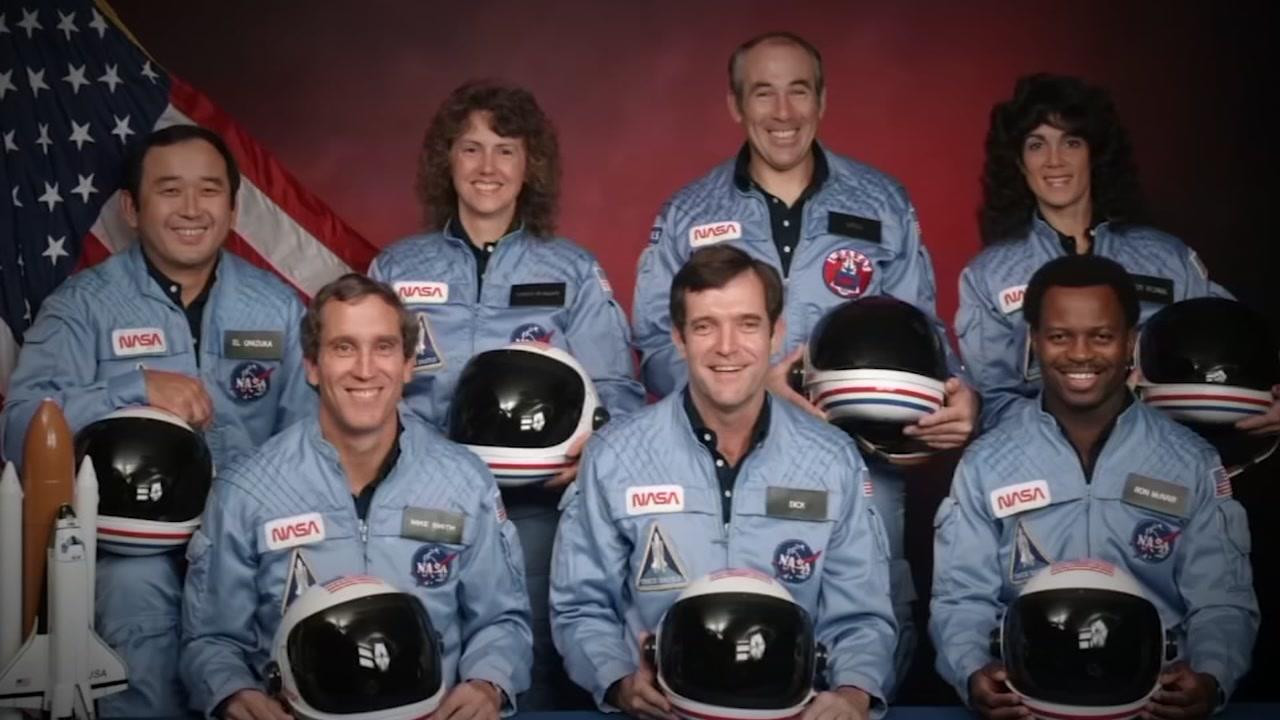
Challenger Mission Astronaut Crew
The Space Shuttle Challenger launched successfully from Kennedy Space Center on 28 January 1986. However, 73 seconds after liftoff, a massive explosion occurred while the shuttle was in the atmosphere. Immediately following the explosion, Challenger broke apart and fell into the ocean, resulting in the deaths of all seven astronauts. Accident The explosion was caused by a leak at the base of the rocket’s right booster. Subsequent technical investigations by NASA revealed that this leak resulted from the O-rings, critical seals in the booster, losing their flexibility due to low temperatures. The cold weather compromised the seals’ ability to contain pressure, allowing hot gases to escape. This gas leak weakened the structural integrity of the fuel tank, leading to a catastrophic explosion road.
The Challenger disaster was not viewed solely as an engineering failure but also exposed serious organizational weaknesses. Before launch, NASA engineers had expressed concerns that the O-rings might fail under cold conditions and recommended delaying the launch. However, NASA management ignored these warnings and proceeded with the launch due to pressure from schedule delays and cost concerns. This decision reflected a prioritization of operational pressures and institutional goals over technical data, revealing an inadequate safety culture within the organization. The tragedy led to sweeping changes in the space shuttle program and forced NASA to reevaluate its safety policies. Investigations following the accident established new standards for space program safety by emphasizing the need for more rigorous engineering evaluations and requiring management to take technical experts’ warnings seriously.
The causes of the Challenger disaster stemmed from a combination of technical and organizational factors. In this context, the primary contributors can be categorized into two main groups: engineering flaws and management failures. Engineering errors were directly linked to the failure of the O-rings, a critical component of the rocket, to function properly under cold weather conditions. At the same time, management deficiencies within NASA’s decision-making processes played a significant role in the disaster. The dismissal of engineers’ warnings and the rejection of recommendations to delay the launch prevented the accident from being avoided.
In the technical dimension of the Challenger disaster, the malfunction of the O-ring rubber components in the rocket motors was critical. O-rings are essential seals that prevent the escape of combustion gases from the shuttle’s solid rocket boosters. Unusually cold weather affected Florida in the days preceding Challenger’s launch. These low temperatures caused the O-rings to lose their elasticity and harden. Due to the cold, the rubber seals failed to maintain their sealing function, resulting in a gas leak on the right side of the booster. This leak was identified as the primary cause of the explosion.
The degradation of the O-rings’ performance triggered a critical failure during launch. The gas leak initiated the first stage of the explosion. From a technical standpoint, the disaster occurred because previously identified risks by engineers were not adequately addressed. This situation demonstrates the serious consequences of inadequate oversight and insufficient testing in engineering processes.
In addition to engineering factors, a major cause of the Challenger disaster was NASA’s management failures. NASA engineers had raised clear warnings that the launch was hazardous under cold weather conditions. However, these warnings were not sufficiently heeded by NASA’s upper management, and a decision was made to proceed with the launch due to time pressure. NASA’s engineering team had explicitly expressed concerns that the O-rings would not function properly in cold temperatures. Nevertheless, senior managers refused to approve a delay.
This situation revealed a critical flaw in NASA’s organizational culture. Management was focused on maintaining a strict flight schedule and viewed every launch as a success. Commercial objectives and calendar pressure led to the neglect of safety measures. NASA approved the launch without considering engineers’ warnings or their risk analyses risk. This decision can be interpreted as an organizational failure, as program progress and on-time launches were prioritized over safety.
In conclusion, the Challenger disaster resulted from a combination of management errors: the disregard of engineers’ safety warnings and the approval of the launch under time pressure like. The event clearly exposed deficiencies in NASA’s leadership structure and the organization’s culture, which prioritized efficiency over safety.
Following the Challenger disaster, NASA and the U.S. government launched a comprehensive investigation to determine its causes. Headed by then-Vice President George H.W. Bush, the Challenger Accident Investigation Board (Rogers Commission) conducted an in-depth examination that revealed both technical and organizational factors behind the accident.
Regarding the technical causes of the accident, one of the most significant factors was the failure of the O-rings in the shuttle’s rocket motors. O-rings are critical components that control the flow of combustion gases. Unusually cold weather in Florida in the days before the launch compromised the flexibility normally provided by the O-rings. As a result of the cold, the seals hardened and lost their ability to prevent leaks.
During launch, the failure of the O-rings to function properly caused a gas leak on the side of the booster, which led directly to the explosion. The explosion occurred just 73 seconds after liftoff, and the shuttle was completely none.
Beyond technical causes, the disaster was also rooted in NASA’s management failures. The Rogers Commission conducted a detailed analysis of NASA’s management philosophy and safety culture. The investigation revealed that NASA engineers had issued serious warnings about the launch, but these were ignored by management. Specifically, engineers had expressed concerns that the O-rings would not perform adequately in cold conditions. Nevertheless, NASA management approved the launch rather than delaying it.
Another management issue was NASA’s neglect of safety measures under increasing workload and schedule pressure. In the mid-1980s, NASA’s space program was under intense pressure to achieve commercial success. The space shuttle program aimed to increase flight frequency and serve the private sector. This pressure hindered engineers and managers from properly evaluating risks during the launch process decision making and complete.
The Challenger disaster was not merely a technical disaster but also created a profound social and cultural shock. At the time, astronauts were widely regarded as national heroes, and this tragedy shook public confidence in space exploration. The fact that Christa McAuliffe, the first teacher selected to fly in space, was among the victims made the disaster even more tragic. The event generated widespread grief in the education community and among the public, significantly dampening interest in the space program coup.
Additionally, financial support for space research declined after the disaster. However, over time, as NASA strengthened its safety measures, space research gradually regained public trust. In the aftermath, public debates in the United States increasingly focused on safety, risk management, and public engagement with space exploration.
The Rogers Commission highlighted deficiencies in NASA’s safety culture as a fundamental cause of the accident. The Commission emphasized that NASA’s engineering assessments needed to be given greater weight and that the safety aspects of the space program required more serious attention. It also noted that engineering errors were compounded by NASA’s workforce management, communication gaps, and flawed decision-making processes.
In light of these findings, NASA implemented major changes and reviewed its safety protocols. Initiatives were launched to improve the safety culture, and steps were taken to ensure that engineers’ concerns would be more seriously considered. Several shuttle flights were postponed, and more comprehensive pre-launch testing procedures were introduced.
These post-accident reforms enhanced safety in the space program and contributed to fewer accidents in subsequent years. At the same time, the Challenger disaster became a dönüm point in how the risks of space exploration are communicated to the public, fostering a awareness in understanding the challenges of space travel reason.
Columbia Accident Investigation Board. (2003). Report of Columbia Accident Investigation Board. NASA.
Feynman, R. P. (1986). Appendix F: Personal Observations on Reliability of the Shuttle by R. P. Feynman. Rogers Commission Report.
Garber, S. J. (2007). NASA and the Space Shuttle: A History of Innovation and Tragedy. NASA History Division.
Haghighattalab, S., & Saghamanesh, M. (2018). Is Engineering Ethics Important for Aerospace Engineers? *MATEC Web of Conferences 179, 03009 (2018)*. https://doi.org/10.1051/matecconf/201817903009
McDonald, A., & Hansen, J. R. (2009). Truth, Lies, and O-Rings: Inside the Space Shuttle Challenger Disaster. University Press of Florida.
McDonald, A., & Hansen, J. R. (2009). Truth, Lies, and O-Rings: Inside the Space Shuttle Challenger Disaster. University Press of Florida.
NBC News. (2019, January 28). *Archival: Space Shuttle Challenger disaster | NBC Nightly News* [Video]. YouTube. https://www.youtube.com/watch?v=yibNEcn-4yQ
Rogers, W. P. (1986). Report of the Presidential Commission on the Space Shuttle Challenger Accident. Government Printing Office.
Rogers, W. P., & Other Members of the Presidential Commission on the Space Shuttle Challenger Accident. (1986). Report to the President by the Presidential Commission on the Space Shuttle Challenger Accident. NASA.
Vaughan, D. (1996). The Challenger Launch Decision: Risky Technology, Culture, and Deviance at NASA. University of Chicago Press.
Vaughan, D. (1996). The Challenger Launch Decision: Risky Technology, Culture, and Deviance at NASA. University of Chicago Press.

No Discussion Added Yet
Start discussion for "Challenger Space Shuttle Disaster: Causes, Consequences, and Impacts on Space Research" article
Introduction
Space Shuttle Challenger and Mission Objectives
How the Disaster Occurred
Causes of the Disaster
Engineering Causes
Management Causes
Post-Accident Investigations
Technical Investigations: The O-Ring Issue and Cold Weather
Management and Organizational Investigations
Social and Cultural Impacts
Conclusions and Evaluation