

This article was automatically translated from the original Turkish version.
Definition | An unmanned lunar mission related to the China Lunar Exploration Program | ||||||||
|---|---|---|---|---|---|---|---|---|---|
Task Types | Orbital insertion Landing Surface mobility Leap/jump | ||||||||
Useful Load Types | Relay satellite Orbital vehicle satellite Measurement instrument Mini flying probe | ||||||||
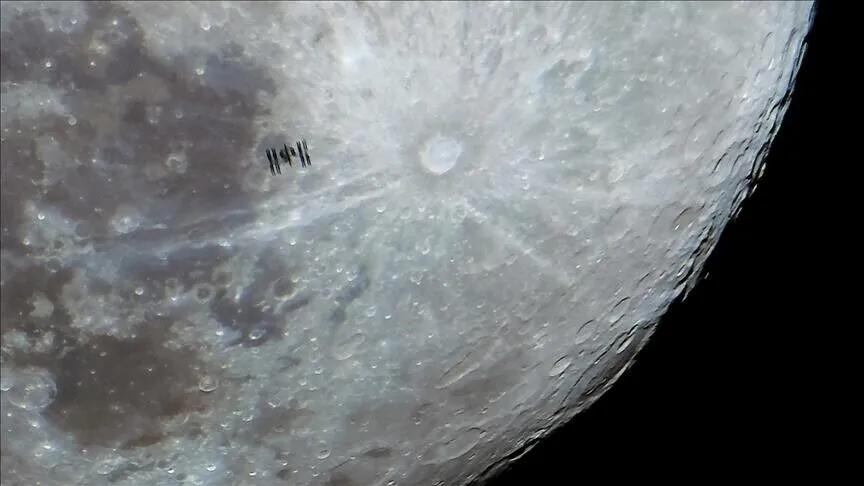
Chang'e-7, is an unmanned lunar mission under the fourth phase of China’s Lunar Exploration Program (CLEP), designed to conduct a comprehensive scientific survey of the Moon’s south pole. The mission is regarded as China’s most ambitious unmanned lunar mission to date.【1】
On 19 August 2026, the Chang'e-7 spacecraft and its Long March-5 Y14 carrier rocket were vertically transported to the launch pad at the Wenchang Spacecraft Launch Site in Hainan Province. However, adverse weather conditions caused by the Nara Tropical Low-Pressure System over the Gulf of Tonkin indefinitely postponed the launch.【2】 On 23 August 2026, the China Manned Space Agency (CMSA) announced that the spacecraft did not meet launch conditions and that the launch would not occur within the planned timeframe for 2026.【3】 The delay was attributed to the precise planetary alignment required between Earth and the Moon.
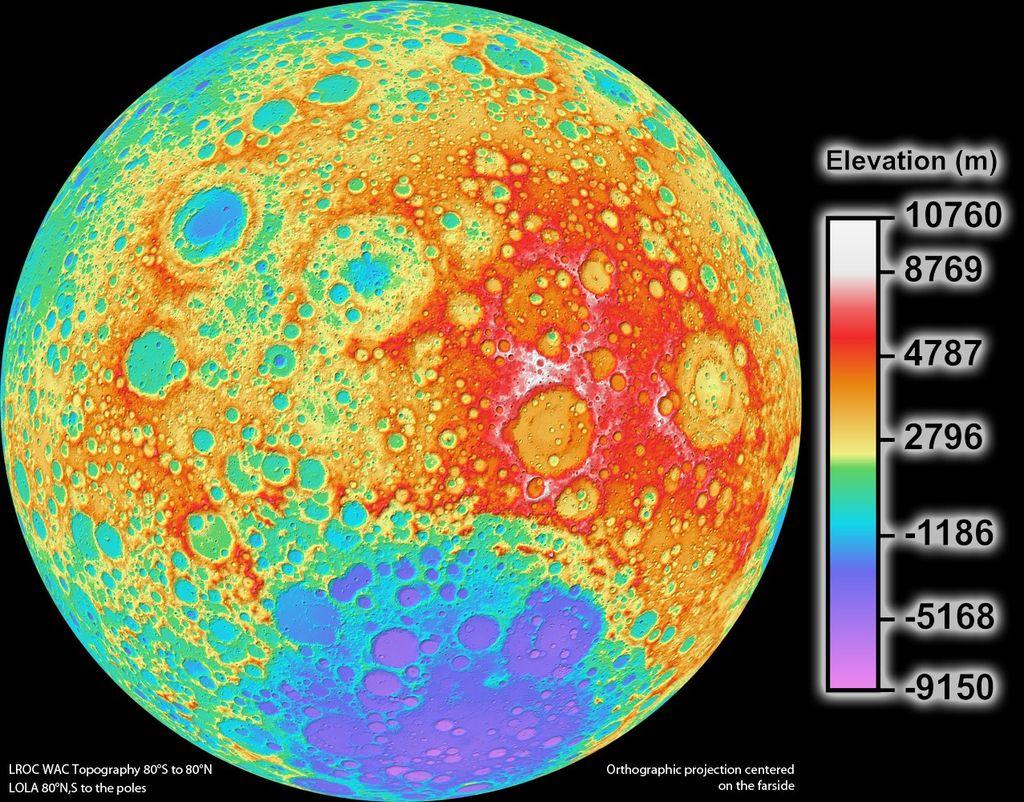
Ayın Topografi Haritası (NASA)
The main scientific objectives of the Chang'e-7 mission are as follows:
The Chang'e-7 mission employs a “four-in-one” mission architecture consisting of four distinct modules:
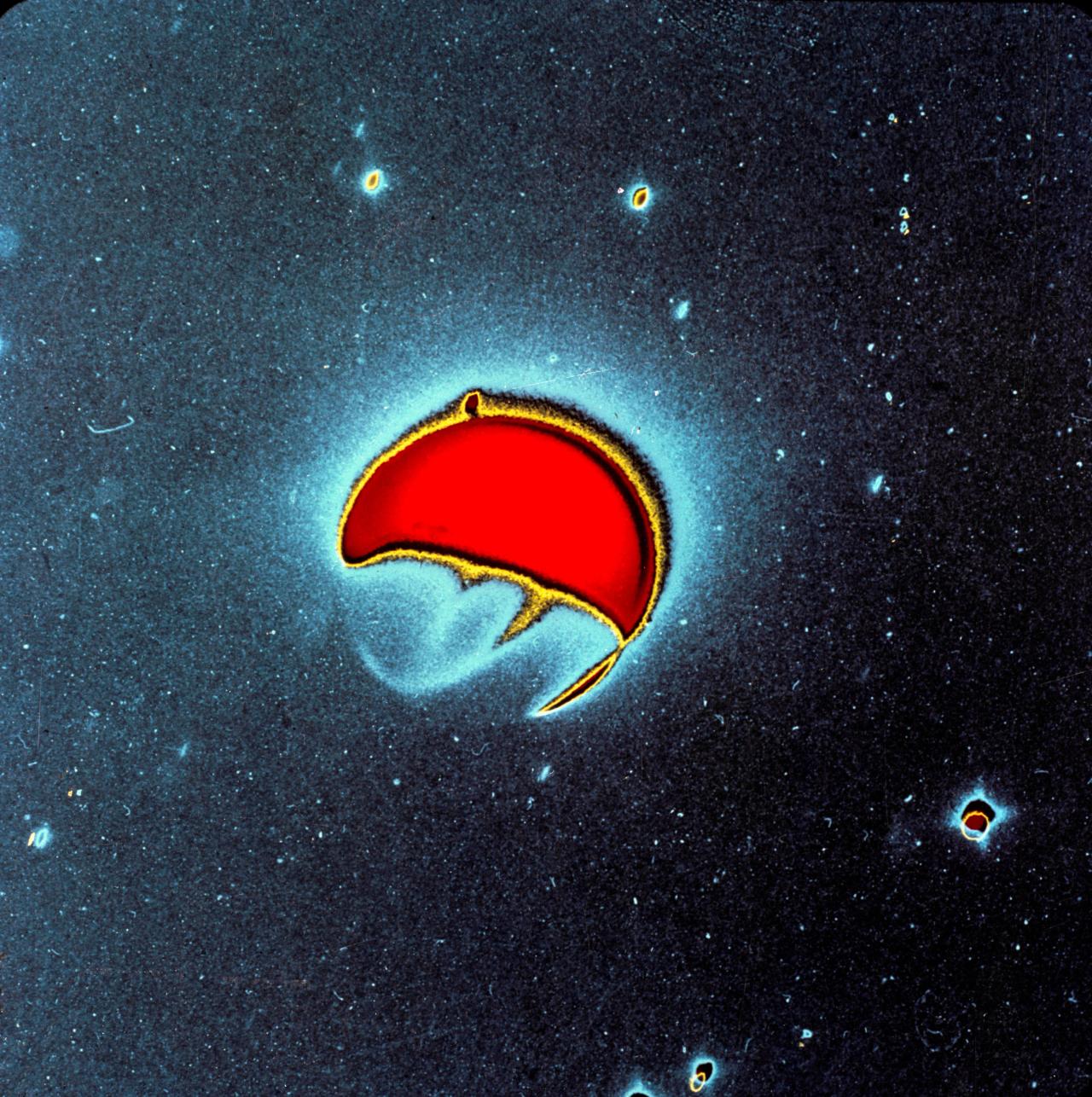
Dünyanın Ultraviole Fotoğrafı (NASA)
The mission is equipped with 18 scientific payloads distributed across its platforms:【12】
CGTN. “China’s Chang’E-7 Launch Will Not Proceed in Planned Window This Year.” CGTN, August 23, 2026. Accessed August 25, 2026.https://news.cgtn.com/news/2026-08-23/China-s-Chang-e-7-launch-will-not-proceed-in-planned-window-this-year-1PQD1RsGs5a/p.html
Khaliq, Riyaz ul. “China Readies Robotic Lunar Mission in Search for Water Ice.” Anadolu Agency, August 19, 2026. Accessed August 25, 2026.https://www.aa.com.tr/en/asia-pacific/china-readies-robotic-lunar-mission-in-search-for-water-ice/4031430
Wall, Mike. “Bad Weather Delays Launch of China’s Historic Chang’e 7 Mission to Moon’s South Pole.” Space, August 23, 2026. Accessed August 25, 2026.https://www.space.com/space-exploration/launches-spacecraft/bad-weather-delays-launch-of-chinas-historic-change-7-mission-to-moons-south-pole
Wang, Chi, Yingzhuo Jia, Changbin Xue, Yangting Lin, Jianzhong Liu, Xiaohui Fu, Lin Xu et al. "Scientific objectives and payload configuration of the Chang'E-7 mission." *National Science Review* 11, no. 2 (2024): nwad329. Accessed August 25, 2026.https://academic.oup.com/nsr/article/11/2/nwad329/7503932
YU, Houman, Wei RAO, Yiyuan ZHANG, and Zhuoyi XING. "Mission analysis and spacecraft design of Chang’E-7." *Journal of Deep Space of Exploration* 10, no. 6 (2023): 567-576. Accessed August 25, 2026.https://www.sciengine.com/JDSE/doi/10.15982/j.issn.2096-9287.2023.20230119.
“China Prepares to Launch Chang’e-7 Lunar Probe.” Xinhua, August 19, 2026. Accessed August 25, 2026.
“Earth in Far-Ultraviolet.” NASA, January 13, 2025. Accessed August 25, 2026.
“High Resolution Topographic Map of the Moon - NASA Science.” NASA, February 12, 2025. Accessed August 25, 2026.https://science.nasa.gov/resource/high-resolution-topographic-map-of-the-moon/
[1]
Riyaz ul Khaliq, “China Readies Robotic Lunar Mission in Search for Water Ice,” Anadolu Agency, 19 Ağustos 2026, https://www.aa.com.tr/en/asia-pacific/china-readies-robotic-lunar-mission-in-search-for-water-ice/4031430.
[2]
Mike Wall, “Bad Weather Delays Launch of China’s Historic Chang’e 7 Mission to Moon’s South Pole,” Space, 23 Ağustos 2026, https://www.space.com/space-exploration/launches-spacecraft/bad-weather-delays-launch-of-chinas-historic-change-7-mission-to-moons-south-pole.
[3]
Cgtn, “China’s Chang’E-7 Launch Will Not Proceed in Planned Window This Year,” CGTN, 23 Ağustos 2026, https://news.cgtn.com/news/2026-08-23/China-s-Chang-e-7-launch-will-not-proceed-in-planned-window-this-year-1PQD1RsGs5a/p.html.
[4]
Houman YU et al., "Mission analysis and spacecraft design of Chang’E-7." Journal of Deep Space of Exploration 10, no. 6 (2023): 568.
[5]
Chi Wang et al., “Scientific Objectives and Payload Configuration of the Chang’E-7 Mission,” National Science Review 11, no. 2 (29 Aralık 2023), 7.
[6]
Chi Wang et al., “Scientific Objectives and Payload Configuration of the Chang’E-7 Mission,” National Science Review 11, no. 2 (29 Aralık 2023), 7.
[7]
Chi Wang et al., “Scientific Objectives and Payload Configuration of the Chang’E-7 Mission,” National Science Review 11, no. 2 (29 Aralık 2023), 7-9.
[8]
Chi Wang et al., “Scientific Objectives and Payload Configuration of the Chang’E-7 Mission,” National Science Review 11, no. 2 (29 Aralık 2023), 1-2.
[9]
Houman YU et al., "Mission analysis and spacecraft design of Chang’E-7." Journal of Deep Space of Exploration 10, no. 6 (2023): 572.
[10]
Houman YU et al., "Mission analysis and spacecraft design of Chang’E-7." Journal of Deep Space of Exploration 10, no. 6 (2023): 567-576.
[11]
Riyaz ul Khaliq, “China Readies Robotic Lunar Mission in Search for Water Ice,” Anadolu Agency, 19 Ağustos 2026, https://www.aa.com.tr/en/asia-pacific/china-readies-robotic-lunar-mission-in-search-for-water-ice/4031430; Houman YU et al., "Mission analysis and spacecraft design of Chang’E-7." Journal of Deep Space of Exploration 10, no. 6 (2023): 573.
[12]
Chi Wang et al., “Scientific Objectives and Payload Configuration of the Chang’E-7 Mission,” National Science Review 11, no. 2 (29 Aralık 2023), 12-13.

Definition | An unmanned lunar mission related to the China Lunar Exploration Program | ||||||||
|---|---|---|---|---|---|---|---|---|---|
Task Types | Orbital insertion Landing Surface mobility Leap/jump | ||||||||
Useful Load Types | Relay satellite Orbital vehicle satellite Measurement instrument Mini flying probe | ||||||||
No Discussion Added Yet
Start discussion for "Chang’e-7 Lunar Mission" article
Launch Status and Delay
Primary Scientific Objectives
“Four-in-One” Architecture
Payload Configuration