


This article was automatically translated from the original Turkish version.
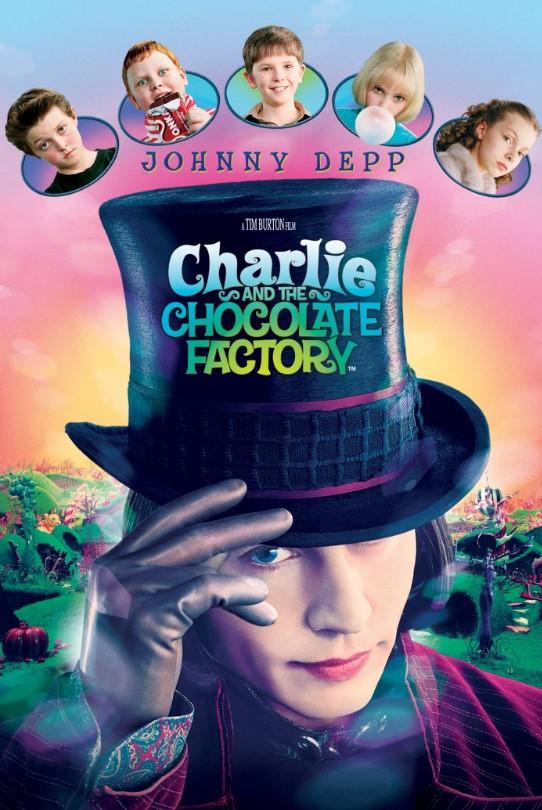
Charlie's Chocolate Factory
Director(s) | Tim Burton | ||||||||
|---|---|---|---|---|---|---|---|---|---|
Screenplay(s) | John August | ||||||||
Producer(s) | Richard D. Zanuck | ||||||||
Music(s) | Danny Elfman | ||||||||
Lead Roles | Johnny Depp, Freddie Highmore | ||||||||
Release Date(s) | 15 July 2005 (USA) | ||||||||
Duration | 115 minutes | ||||||||
IMDb Rating | 6.7/10 | ||||||||
Charlie and the Chocolate Factory is a fantasy adventure film released in 2005. Directed by Tim Burton, the production is an adaptation of Roald Dahl’s 1964 novel of the same name. Johnny Depp stars in the lead role, while young actor Freddie Highmore also plays a significant part. The film explores events taking place in a fictional chocolate factory, using fantastical elements through the perspective of child characters. The screenplay, written by John August, was distributed by Warner Bros. Pictures.
The film begins with Charlie Bucket, a poor child, being invited to visit the famous chocolate factory owned by Willy Wonka. Wonka hides five Golden Tickets in his chocolate bars, granting the finders entry to his renowned factory. Charlie, by a stroke of luck, discovers one of these tickets. Alongside the other four children, he enters the factory and explores its extraordinary sections. As each child undergoes trials tailored to their personality flaws, the narrative unfolds with moral messages and individual lessons.
Charlie’s humble and modest character stands in direct contrast to the other children’s greed, arrogance, gluttony, and spoiled behavior. The story ultimately transforms into an adventure that leads to Charlie becoming Wonka’s heir.
Charlie and the Chocolate Factory - YouTube
The film centers on concepts such as childhood, innocence, family, greed, arrogance, and indulgence. Through the character of Willy Wonka, the film examines how personal trauma shapes human character, while each section of the factory is designed as a metaphorical space reflecting the children’s weaknesses. The film carries the structure of a moral allegory, reinforcing the core values of Dahl’s original work through visual effects.
Additional subthemes explored in the film include critique of capitalism, consumerism, individual ethical responsibility, and the importance of family unity. Particularly, the songs performed by the Oompa Loompa characters highlight the lessons and criticisms directed at the children.
He is the owner of the factory and the central figure of the film. Due to past traumas with his father, he struggles with social relationships. His eccentric personality functions both as a source of entertainment and as a catalyst driving the narrative forward.
He stands out in the film for his modest lifestyle, moral integrity, and devotion to his family. The character embodies the idealized profile of childhood as portrayed in the film.
Each of these child characters represents a distinct personality flaw. Veruca Salt’s entitlement, Augustus’s gluttony, Violet’s arrogance, and Mike’s addictive tendencies serve as critical elements within the narrative.
They are the small-statured workers employed in the factory. After each child’s incident, they sing songs that impart a didactic quality to the narrative.
The film is the second cinematic adaptation of Roald Dahl’s novel. Filming took place at Pinewood Studios in England. Digital effects, set design, and makeup are prominent features of the production. The music, composed by Danny Elfman, is based on the poems found in Dahl’s original book. Elfman also provided the singing voice for the Oompa Loompa songs.
Accessed November 26, 2025.
Beyazperde. "Charlie'nin Çikolata Fabrikası (2005)." Accessed May 15, 2025. https://www.beyazperde.com/filmler/film-52933/
IMDb. "Charlie and the Chocolate Factory (2005)." Accessed May 15, 2025. https://www.imdb.com/title/tt0367594/
Rotten Tomatoes. "Charlie and the Chocolate Factory (2005)." Rotten Tomatoes. Accessed May 15, 2025.
YouTube. "Charlie and the Chocolate Factory (2005)." Accessed May 15, 2025. https://www.youtube.com/watch?v=OFVGCUIXJls

Charlie's Chocolate Factory
Director(s) | Tim Burton | ||||||||
|---|---|---|---|---|---|---|---|---|---|
Screenplay(s) | John August | ||||||||
Producer(s) | Richard D. Zanuck | ||||||||
Music(s) | Danny Elfman | ||||||||
Lead Roles | Johnny Depp, Freddie Highmore | ||||||||
Release Date(s) | 15 July 2005 (USA) | ||||||||
Duration | 115 minutes | ||||||||
IMDb Rating | 6.7/10 | ||||||||
No Discussion Added Yet
Start discussion for "Charlie and the Chocolate Factory (Film)" article
Plot
Thematic Structure
Characters
Willy Wonka (Johnny Depp)
Charlie Bucket (Freddie Highmore)
Veruca Salt (Julia Winter), Augustus Gloop (Philip Wiegratz), Violet Beauregarde (AnnaSophia Robb), Mike Teavee (Jordan Fry)
Oompa Loompa (Deep Roy)
Production Process
Nominations and Awards