


This article was automatically translated from the original Turkish version.
+1 More
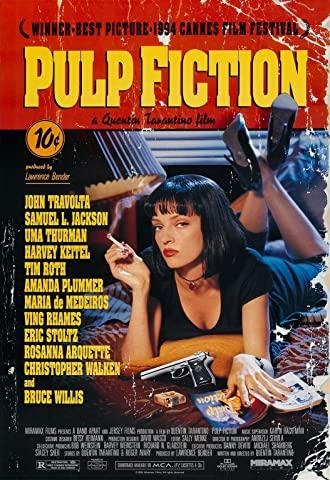
Cheap Novel
Original Name(s) | Pulp Fiction | ||||||||
|---|---|---|---|---|---|---|---|---|---|
Director(s) | Quentin Tarantino | ||||||||
Screenplay(s) | Quentin Tarantino Roger Avary | ||||||||
Genre | Crime Black Comedy Drama | ||||||||
Production Year | 1994 | ||||||||
Duration | 154 minutes | ||||||||
IMDb Rating | 8.9 | ||||||||
Quentin Tarantino’s directed Pulp Fiction, set in Los Angeles, tells three seemingly distinct yet intricately interwoven stories. With its non-linear narrative structure and unconventional characters, it draws attention through its innovative and postmodern approach to the crime film genre.
In the film, hitmen Vincent Vega (John Travolta) and Jules Winnfield (Samuel L. Jackson) are tasked with retrieving a mysterious briefcase for their boss Marsellus Wallace (Ving Rhames). In another segment, Vincent spends a bizarre and tragicomic evening with Marsellus’s wife, Mia Wallace (Uma Thurman). In the third story, boxer Butch Coolidge (Bruce Willis) attempts to flee after betraying his agreement with Marsellus Wallace. These disparate narratives are connected by coincidences and the ironic play of fate.
The film dismantles classical storytelling conventions by presenting a fragmented, non-linear structure. Tarantino has created one of the defining icons of postmodern cinema through his use of pop culture references, dark humor, and the aestheticized depiction of violence.
The film employs violence in an exaggerated, often ironic manner to generate comedic effect. The juxtaposition of brutality with mundane moments both amuses and disorients the audience.
The characters frequently encounter unexpected coincidences. These random events generate the film’s dramatic tensions and underscore the uncontrollable nature of life.
Pulp Fiction is renowned for its seemingly trivial yet deeply character-revealing dialogue. Jules and Vincent’s conversation about hamburgers exemplifies Tarantino’s mastery in writing dialogue.
The film’s title derives from the cheap crime novels of the 1940s and 1950s known as pulp fiction. Tarantino, co-writing the screenplay with Roger Avary, brought a fresh energy to the film industry. Made on a low budget, the film demonstrated that independent cinema could achieve commercial success.
The film garnered international acclaim after winning the Palme d’Or at the Cannes Film Festival. It established Tarantino’s distinctive style for global audiences and has since become one of the most iconic works in popular culture.
John Travolta drew attention with his portrayal of Vincent Vega, a role that revitalized his career, masterfully capturing the character’s absurdities and cool demeanor. Samuel L. Jackson delivered an unforgettable performance as Jules Winnfield, combining philosophical depth, rage, and humor. Uma Thurman successfully conveyed the mysterious and captivating qualities of Mia Wallace. Bruce Willis brought a compelling and nuanced performance to the complex and hardened character of Butch Coolidge.
Pulp Fiction profoundly influenced the cinematic language of the 1990s and has become a classic, referenced countless times in popular culture. Recognized as one of the foundational works of postmodern cinema, it holds a significant place in film history and continues to serve as a reference point today.
Best Original Screenplay – Quentin Tarantino, Roger Avary
Best Picture
Best Director – Quentin Tarantino
Best Actor – John Travolta
Best Supporting Actor – Samuel L. Jackson
Best Supporting Actress – Uma Thurman
Best Film Editing – Sally Menke
Cannes Film Festival (1994)
Palme d’Or – Quentin Tarantino (Won)
Best Motion Picture – Drama (nomination)
Best Director – Quentin Tarantino (nomination)
Best Screenplay – Quentin Tarantino, Roger Avary (nomination)
Best Original Screenplay – Quentin Tarantino, Roger Avary (Won)
Best Supporting Actor – Samuel L. Jackson (Won)
All The Right Movies. "25 Interesting Facts About Pulp Fiction." Accessed March 21, 2025. Link
Angı, S. K. *Ek Dergi*. “Ucuz Roman: Poetik Bir Yaklaşım.” Accessed March 21, 2025. Link
Beyazperde. "Ucuz Roman." Accessed March 21, 2025. Link
Ceyda. Popgek. "Pulp Fiction İncelemesi." Accessed March 21, 2025. Link
IMDb. "Pulp Fiction (1994)." Accessed March 21, 2025. Link
Karnavalesk. "Pulp Fiction ve Postmodernizm." Accessed March 21, 2025. Link
Roger Ebert. “Great Movie: Pulp Fiction (1994).” Accessed March 21, 2025. Link
Sinemalar.com. "Ucuz Roman." Accessed March 21, 2025. Link

Cheap Novel
Original Name(s) | Pulp Fiction | ||||||||
|---|---|---|---|---|---|---|---|---|---|
Director(s) | Quentin Tarantino | ||||||||
Screenplay(s) | Quentin Tarantino Roger Avary | ||||||||
Genre | Crime Black Comedy Drama | ||||||||
Production Year | 1994 | ||||||||
Duration | 154 minutes | ||||||||
IMDb Rating | 8.9 | ||||||||
Themes and Analysis
1. Postmodern Narrative and Deconstruction
2. The Fusion of Violence and Humor
3. Fate and Chance
4. The Power of Dialogue
Production Process and Technical Features
Performances
Impact and Significance
Awards and Nominations
Academy Awards (Oscars, 1995)
Won:
Nominations:
Golden Globe Awards (1995)
BAFTA Awards (1995)