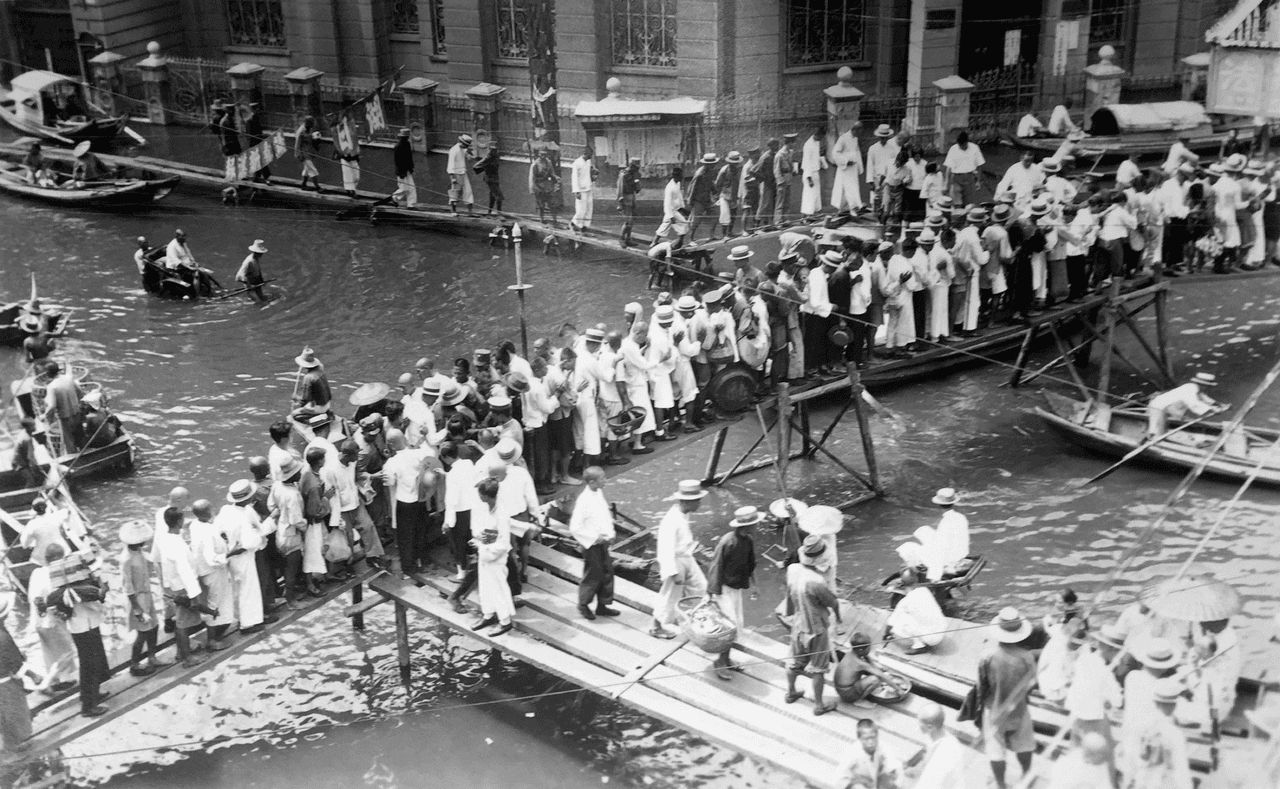


This article was automatically translated from the original Turkish version.
+1 More
Date(s) | June – August 1931 | ||||||||
|---|---|---|---|---|---|---|---|---|---|
Primary Causes | damaged and neglected water control infrastructure melting of heavy snowpack accumulated during winter months Extreme monsoon rains and El Niño effect | ||||||||
Total Affected Population | Approximately 50,000,000 people | ||||||||
Loss of Life | 2,000,000 – 3,700,000 (due to drowning, epidemic disease and famine) | ||||||||
Event Type | River Flood / Flash Flood | ||||||||
Event | 1931 China Flood (1931 Yangtze-Huai Flood) | ||||||||
Location | Republic of China (Yangtze Basin Grand Canal) Huai Basin | ||||||||
The 1931 China Flood is one of the largest natural disasters of the 20th century, affecting the Yangtze and Huai river basins and the Grand Canal. The floods that occurred between June and August submerged an area of approximately 180,000 square kilometers and directly impacted between 25 and 50 million people. As a result of the disaster, 40 million people were left homeless, and the number of deaths, direct and indirect, ranged between 2 and 3.7 million.【1】
The primary factor in the flood's formation was prolonged and intense rainfall combined with global climate anomalies. Heavy snow accumulation in the upper reaches of the Yangtze River during winter and subsequent intense spring rains acted as precursors to the disaster. Rainfall in May, far exceeding normal levels, saturated the soil to its maximum capacity, intensifying the floods that would occur in the summer months.【2】
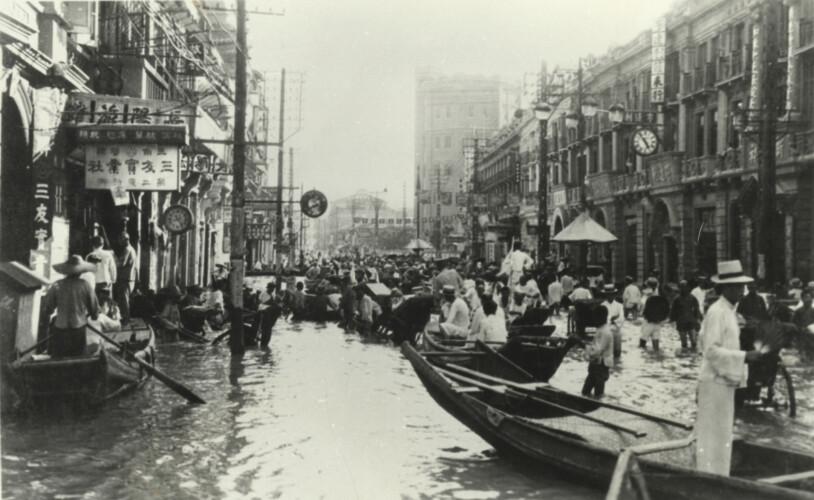
1931 China Flood (HSBC)
The rainfall of summer 1931 exhibited a prolonged, continuous character rather than short-term extreme weather events. Following an El Niño winter in the tropical Pacific, warming in the Indian Ocean basin caused the Western Pacific Subtropical High (WPSH) to expand southwestward. Simultaneously, extratropical wave activity over Eurasia led to a southward shift of the upper tropospheric westerly jet stream. The convergence of these atmospheric conditions fixed the rain band over the Yangtze River Valley, causing intense rainfall to persist for weeks.【3】
The destructiveness of the flood was directly linked to urban modernization policies and deteriorating hydraulic infrastructure. The Taiping Rebellion (1850–1864) and civil wars of the 1920s led to the destruction of dikes and embankments designed to control water flow. Due to resources being diverted to military conflicts, sediment buildup in river channels was not cleared and flood control measures were neglected.【4】
During the late Qing Dynasty and the Republican era, urban modernization projects led to the draining of natural wetlands and lakes that had previously served as flood buffers, to convert them into agricultural and industrial land. Historical city walls in Wuchang and Hanyang, which had functioned as flood barriers, were demolished under the pretext of urban redevelopment. Water management authority was transferred from local communities and traditional practices to centralized technocratic officials, resulting in the exclusion of local hydrological knowledge from institutional systems.【5】
Rising water levels, beginning in April, turned farmland and rice paddies into swamps. The Wuhan metropolitan area (Hankou, Wuchang, and Hanyang), one of the era’s most important commercial and industrial centers, suffered the most severe damage. In Hankou, by late July, the collapse of dikes along the Yangtze River submerged entire industrial and commercial districts. On 19 August, water levels in Hankou reached a historic peak of 28.28 meters.【6】
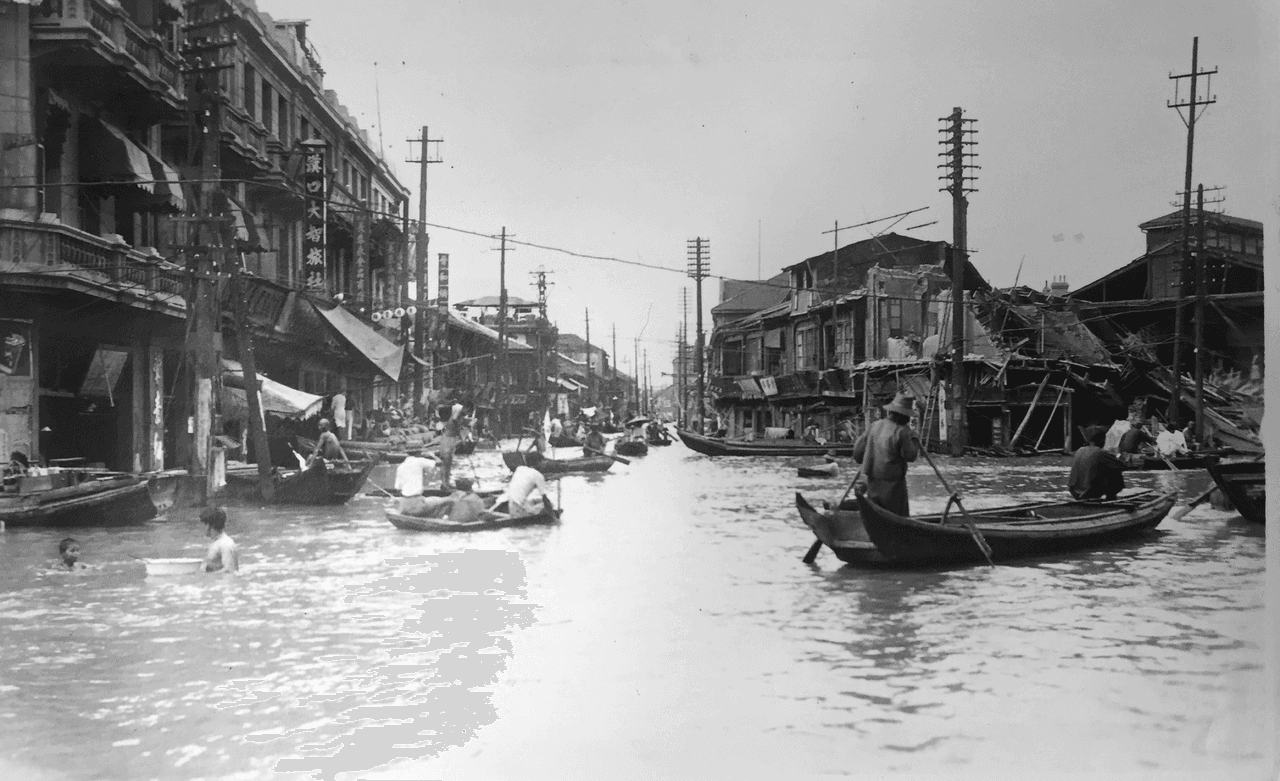
Collapsed hotel in Dazhimen. (dialogue.earth)
On 25 August 1931, the breach of dikes around the city of Gaoyou caused the Yangtze River to overflow, killing between 10,000 and 15,000 people in a single night. The submersion of agricultural lands disrupted food supply chains in major cities such as Wuhan and Nanjing, triggering urban famines. The disaster zone was surrounded by the constant noise of flowing water, collapsing buildings, and a persistent odor of decay.【7】
The majority of deaths caused by the flood resulted not from drowning or starvation but from epidemic diseases. Contaminated floodwaters mixed with drinking water sources, leading to rapid outbreaks of typhoid, dysentery, and cholera. The marshlands left behind by the floodwaters provided ideal breeding grounds for uncontrolled populations of malaria-carrying mosquitoes.【8】
Refugee camps housing displaced populations lacked clean water, sanitation, and food supplies. Due to inadequate infrastructure and overcrowded living conditions, mortality rates from disease in these camps far exceeded those in rural areas. Approximately 70 percent of the recorded two million deaths were attributable to disease.【9】
Administrative relief efforts led by the National Flood Relief Committee (NFRC) and the Chinese International Famine Relief Committee (CIFRC) proved inadequate. Government bonds issued to fund relief lost value due to Japan’s occupation of Manchuria, hindering fundraising. Financial shortfalls were partially addressed through contributions from the Red Cross, the Red Swastika Society, overseas Chinese communities, and private donors. As part of international aid, the United States provided a wheat credit of 450,000 tons.
Ten million people were displaced during the disaster, forced to migrate amid widespread chaos. The breakdown of order led to looting and disproportionate use of force by military units enforcing martial law. After floodwaters receded, epidemic diseases that had been in decline since the 1920s resurged, and rural debt levels rose permanently.【10】
"The Yangtze-Huai River floods." HSBC History. Accessed April 25, 2026. https://history.hsbc.com/index.php/collections/snapshots/crisis-and-recovery/the-yangtze-huai-river-floods
Courtney, Chris. "Picturing disaster: The 1931 Wuhan flood." *Dialogue Earth*. September 11, 2018. Last updated May 15, 2024. Accessed April 25, 2026. https://dialogue.earth/en/climate/10811-picturing-disaster-the-1931-wuhan-flood/
HISTORY.com Editors. "Yangtze River peaks in Gaoyou, China, killing more than 10,000." *HISTORY*. A&E Television Networks, November 13, 2009. Updated May 27, 2025. Accessed April 25, 2026. https://www.history.com/this-day-in-history/august-25/yangtze-river-peaks-in-china
Spicq, Delphine. Review of Chris Courtney’s *The Nature of Disaster in China: The 1931 Yangzi River Flood*. *East Asian Science, Technology, and Medicine* 53 (2021): 101–110. Accessed April 25, 2026. https://brill.com/view/journals/east/53/1-2/article-p106_106.xml?ebody=pdf-130820
Ye, Zhiguo. "Cities Under Siege: The Flood of 1931 and the Environmental Challenges of Chinese Urban Modernization." *History Urbanism Resilience Volume 02: The Urban Fabric | Housing and Neighborhoods (17th IPHS Conference, Delft)*. 2016. Accessed April 25, 2026. https://journals.open.tudelft.nl/iphs/article/view/1225/1828
Zhou, Yueqi, Tianjun Zhou, Jie Jiang, Xiaolong Chen, Bo Wu, Shuai Hu, and Mingna Wu. "Understanding the Forcing Mechanisms of the 1931 Summer Flood along the Yangtze River, the World's Deadliest Flood on Record." *Journal of Climate* (2023). Accessed April 25, 2026. https://journals.ametsoc.org/view/journals/clim/36/18/JCLI-D-22-0771.1.xml
[1]
Yueqi Zhou vd., "Understanding the Forcing Mechanisms of the 1931 Summer Flood along the Yangtze River, the World's Deadliest Flood on Record," Journal of Climate (2023), 1, access 25 April 2026.https://journals.ametsoc.org/view/journals/clim/36/18/JCLI-D-22-0771.1.xml
Delphine Spicq, review of Chris Courtney's The Nature of Disaster in China: The 1931 Yangzi River Flood, East Asian Science, Technology, and Medicine 53 (2021): 1, access 25 April 2026.https://brill.com/view/journals/east/53/1-2/article-p106_106.xml?ebody=pdf-130820
"Yangtze River peaks in Gaoyou, China, killing more than 10,000," HISTORY, last updated 27 May 2025, access 25 April 2026.https://www.history.com/this-day-in-history/august-25/yangtze-river-peaks-in-china
[2]
Yueqi Zhou vd., "Understanding the Forcing Mechanisms of the 1931 Summer Flood along the Yangtze River, the World's Deadliest Flood on Record," Journal of Climate (2023), 15, access 25 April 2026.https://journals.ametsoc.org/view/journals/clim/36/18/JCLI-D-22-0771.1.xml
Delphine Spicq, review of Chris Courtney's The Nature of Disaster in China: The 1931 Yangzi River Flood, East Asian Science, Technology, and Medicine 53 (2021): 1, access 25 April 2026.https://brill.com/view/journals/east/53/1-2/article-p106_106.xml?ebody=pdf-130820
[3]
Yueqi Zhou vd., "Understanding the Forcing Mechanisms of the 1931 Summer Flood along the Yangtze River, the World's Deadliest Flood on Record," Journal of Climate (2023), 1,5, access 25 April 2026.https://journals.ametsoc.org/view/journals/clim/36/18/JCLI-D-22-0771.1.xml
[4]
Zhiguo Ye, "Cities Under Siege: The Flood of 1931 and the Environmental Challenges of Chinese Urban Modernization," History Urbanism Resilience Volume 02: The Urban Fabric | Housing and Neighborhoods (17th IPHS Conference, Delft) (2016), 2, access 25 April 2026.https://journals.open.tudelft.nl/iphs/article/view/1225/1828
Delphine Spicq, review of Chris Courtney's The Nature of Disaster in China: The 1931 Yangzi River Flood, East Asian Science, Technology, and Medicine 53 (2021): 1, access 25 April 2026.https://brill.com/view/journals/east/53/1-2/article-p106_106.xml?ebody=pdf-130820
"Yangtze River peaks in Gaoyou, China, killing more than 10,000," HISTORY, last updated 27 May 2025, access 25 April 2026.https://www.history.com/this-day-in-history/august-25/yangtze-river-peaks-in-china
[5]
Zhiguo Ye, "Cities Under Siege: The Flood of 1931 and the Environmental Challenges of Chinese Urban Modernization," History Urbanism Resilience Volume 02: The Urban Fabric | Housing and Neighborhoods (17th IPHS Conference, Delft) (2016), 5,6,8, access 25 April 2026.https://journals.open.tudelft.nl/iphs/article/view/1225/1828
[6]
Zhiguo Ye, "Cities Under Siege: The Flood of 1931 and the Environmental Challenges of Chinese Urban Modernization," History Urbanism Resilience Volume 02: The Urban Fabric | Housing and Neighborhoods (17th IPHS Conference, Delft) (2016), 2,8, access 25 April 2026.https://journals.open.tudelft.nl/iphs/article/view/1225/1828
"Yangtze River peaks in Gaoyou, China, killing more than 10,000," HISTORY, last updated 27 May 2025, access 25 April 2026.https://www.history.com/this-day-in-history/august-25/yangtze-river-peaks-in-china
[7]
"Yangtze River peaks in Gaoyou, China, killing more than 10,000," HISTORY, last updated 27 May 2025, access 25 April 2026.https://www.history.com/this-day-in-history/august-25/yangtze-river-peaks-in-china
Delphine Spicq, review of Chris Courtney's The Nature of Disaster in China: The 1931 Yangzi River Flood, East Asian Science, Technology, and Medicine 53 (2021): 2, access 25 April 2026.https://brill.com/view/journals/east/53/1-2/article-p106_106.xml?ebody=pdf-130820
[8]
Delphine Spicq, review of Chris Courtney's The Nature of Disaster in China: The 1931 Yangzi River Flood, East Asian Science, Technology, and Medicine 53 (2021): 1,2, access 25 April 2026.https://brill.com/view/journals/east/53/1-2/article-p106_106.xml?ebody=pdf-130820
[9]
Yueqi Zhou vd., "Understanding the Forcing Mechanisms of the 1931 Summer Flood along the Yangtze River, the World's Deadliest Flood on Record," Journal of Climate (2023), 15, access 25 April 2026.https://journals.ametsoc.org/view/journals/clim/36/18/JCLI-D-22-0771.1.xml
Delphine Spicq, review of Chris Courtney's The Nature of Disaster in China: The 1931 Yangzi River Flood, East Asian Science, Technology, and Medicine 53 (2021): 1,2, access 25 April 2026.https://brill.com/view/journals/east/53/1-2/article-p106_106.xml?ebody=pdf-130820
[10]
Delphine Spicq, review of Chris Courtney's The Nature of Disaster in China: The 1931 Yangzi River Flood, East Asian Science, Technology, and Medicine 53 (2021): 3,4, access 25 April 2026.https://brill.com/view/journals/east/53/1-2/article-p106_106.xml?ebody=pdf-130820

Date(s) | June – August 1931 | ||||||||
|---|---|---|---|---|---|---|---|---|---|
Primary Causes | damaged and neglected water control infrastructure melting of heavy snowpack accumulated during winter months Extreme monsoon rains and El Niño effect | ||||||||
Total Affected Population | Approximately 50,000,000 people | ||||||||
Loss of Life | 2,000,000 – 3,700,000 (due to drowning, epidemic disease and famine) | ||||||||
Event Type | River Flood / Flash Flood | ||||||||
Event | 1931 China Flood (1931 Yangtze-Huai Flood) | ||||||||
Location | Republic of China (Yangtze Basin Grand Canal) Huai Basin | ||||||||
Climatic and Meteorological Factors
Human and Environmental Causes
Flood Development and Physical Impacts
Epidemics and Loss of Life
Relief Efforts and Socioeconomic Consequences