


This article was automatically translated from the original Turkish version.
+2 More
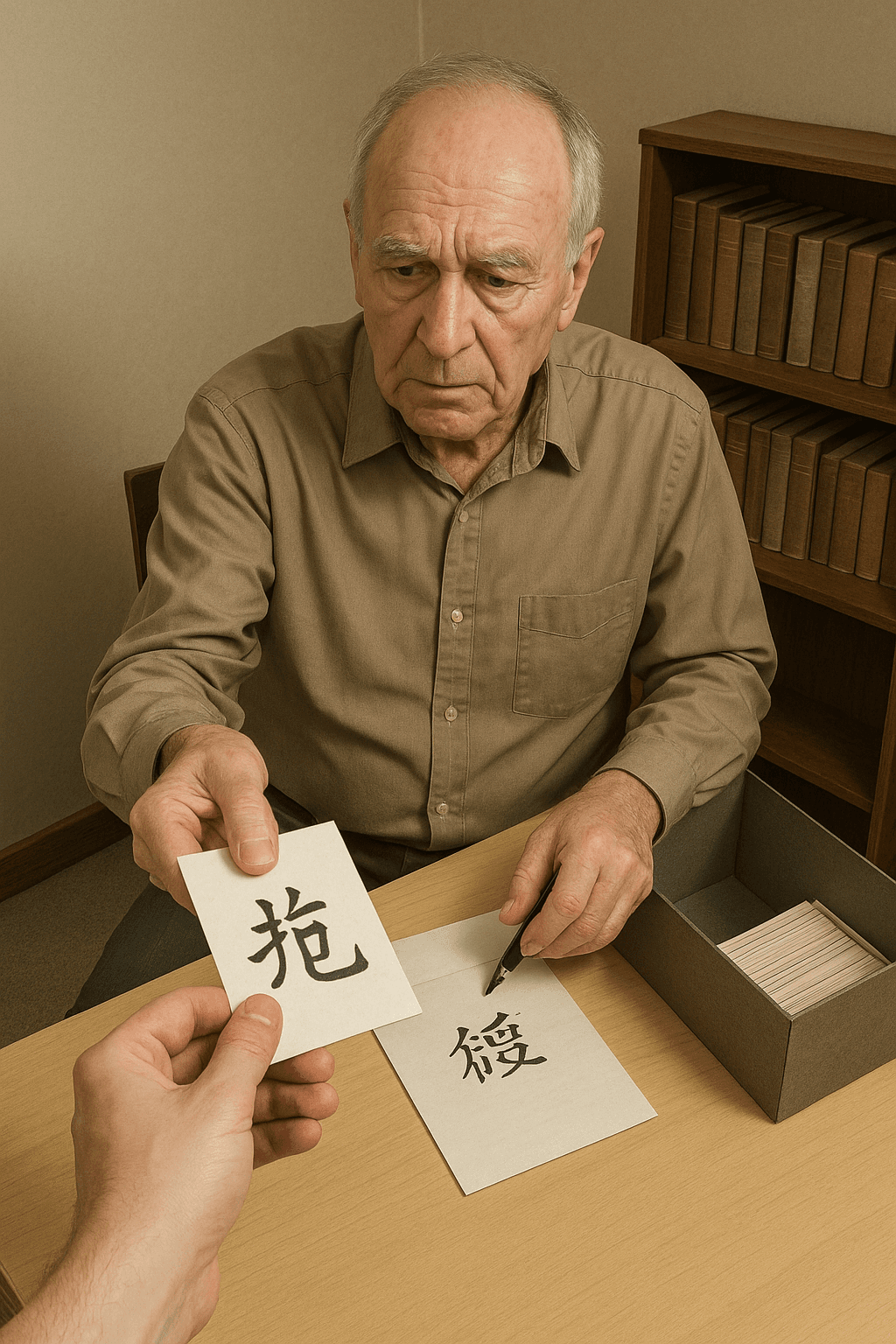
Chinese Room Thought Experiment
Type(s) | Philosophical thought experiment | ||||||||
|---|---|---|---|---|---|---|---|---|---|
Related Field(s) | Cognitive science Ethics of artificial intelligence Philosophy of mind | ||||||||
Origin(s) | 1980 | ||||||||
Founder(s) | John Searle | ||||||||
Opposing Theories | System Argument Turing Test | ||||||||
The Chinese Room Thought Experiment (Chinese Room Argument) is a thought experiment developed in 1980 by American philosopher John Searle to examine artificial intelligence consciousness and meaning. The experiment questions whether artificial intelligence truly possesses the capacity to “think” or “understand.” Searle argued that even if computers correctly manipulate symbols this does not generate genuine consciousness or understanding. The experiment has made significant contributions to the philosophy of mind and artificial intelligence research and has initiated important philosophical debates in the field.
The Chinese Room Thought Experiment was first presented by John Searle in his 1980 paper titled Minds Brains and Programs. At the time artificial intelligence (AI) research was heavily focused on symbolic processing and logical computation. AI researchers generally held the view that machines could achieve human-like thinking and meaning generation. Searle however challenged these developments and began questioning whether machines could truly possess the capacity for meaningful thought.

Generated with the aid of artificial intelligence.
The Chinese Room Thought Experiment sought to move beyond the prevailing understanding of AI at the time and critique the assumption that machines could be attributed with human-like cognitive abilities. It can be said that Searle’s experiment provided a significant counterpoint to earlier AI theories such as the Turing Test. The Turing Test evaluates whether a machine possesses human-like intelligence based on its ability to engage in conversation indistinguishable from that of a human. Searle contended that the Turing Test does not prove a machine is genuinely conscious.
The central aim of the Chinese Room Thought Experiment is to question whether a machine’s ability to produce correct responses through symbol manipulation is equivalent to genuine thinking and conscious understanding. The experiment is described as follows:
A person who does not understand Chinese sits alone in a room. Inside the room is a rulebook written in English that provides instructions for responding to Chinese text. External questions written in Chinese are delivered into the room and the person must produce appropriate responses. Using only the instructions in the rulebook the person generates correct answers. An observer outside the room sees that the responses are accurate. However because the person does not understand Chinese they have no comprehension of the meaning of the questions or their answers. They produce correct responses through symbolic operations but there is no genuine understanding or meaning beyond this.
The fundamental question raised by this experiment is this: Can a machine that produces correct responses through symbol manipulation be said to demonstrate meaningful conscious thought?
The Chinese Room Thought Experiment has brought to the forefront a philosophical question regarding the relationship between artificial intelligence and consciousness. Searle argued that for machines to possess meaningful understanding they require more than mere symbol manipulation. His claims sparked significant debate in AI research and have been widely discussed by philosophers.
Searle maintained that a machine’s ability to produce correct symbolic responses does not imply that it has a meaningful thinking experience. He emphasized that symbol manipulation is merely an external process and cannot give rise to an internal experience or genuine consciousness. In contrast some AI researchers have argued that machines can learn and generate meaningful thoughts through symbol processing.
The Chinese Room Thought Experiment has prompted researchers to deeply reflect on the capacity of artificial intelligence to process symbols and generate meaning. The experiment highlights the distinction between conscious thought and symbol manipulation. According to Searle a system may produce correct responses but this does not demonstrate that the system has a meaningful conscious experience.
Over time the Chinese Room Thought Experiment has been subject to numerous criticisms and alternative interpretations. Searle’s original position held that symbol manipulation cannot produce genuine meaningful thought or conscious experience. However following the presentation of this view various philosophers and AI researchers have questioned Searle’s perspective and proposed alternative arguments. These criticisms and evolving ideas have deepened the philosophical impact of the experiment.
One of the main criticisms of the Chinese Room Thought Experiment is that Searle adopts a narrow individualistic perspective that is internally consistent but overly limited. Searle argues that the person inside the room generates no meaning beyond symbol manipulation. However some critics find this view inadequate and have developed the “Systems Reply.” This argument posits that the person in the room is merely one component of a larger system and that true meaning arises from the entire system working together. Even though the individual follows rules to process symbols the system as a whole engages in a meaningful “thinking” process. From this perspective it is not the individual’s understanding that matters but the system’s capacity to generate meaning.
Another criticism concerns the possibility that machines could develop conscious thought through symbol manipulation. This view suggests that artificial intelligence may not merely process symbols but could eventually develop consciousness through increasingly complex processes and advanced learning capabilities. With the rapid advancement of technology it has become theoretically possible for machines to move beyond simple symbol manipulation and reach deeper more human-like thinking processes.
A further important criticism of the Chinese Room Thought Experiment is based on Alan Turing’s famous Turing Test. The Turing Test proposes evaluating whether a machine thinks like a human by engaging it in conversation. If a human cannot distinguish the machine from another human during interaction the machine is considered to possess human-like intelligence. Searle used the Turing Test as an argument to show that machines cannot achieve genuine meaningful thought or consciousness through symbol manipulation alone. However some critics argue that this view presents a narrow perspective and that a machine’s possession of conscious thought must involve more than merely imitating human behavior.
Another criticism targets Searle’s clear distinction between consciousness and meaning. Searle emphasized the difference between generating meaning and having a conscious experience and argued that symbol manipulation cannot produce human-like conscious experience. However some philosophers have suggested that symbol processing systems may be sufficiently complex and dynamic to give rise to conscious thought. According to this view the boundaries between conscious thinking and meaning generation may be more fluid and perhaps symbol manipulation contributes to the foundations of consciousness.
Finally one of the deepest criticisms leveled against the Chinese Room Thought Experiment concerns whether machines can truly be “conscious.” Some AI researchers believe that for machines to generate conscious experience they must go beyond symbol manipulation and develop the capacity to process environmental interactions and internal states. This perspective defends the potential for machines to form conscious experiences and seeks to move beyond symbol processing and meaning to a deeper level of cognition. From this viewpoint symbol manipulation and conscious experience may be interwoven and machines may acquire the capacity for experiential awareness akin to humans.
In conclusion the Chinese Room Thought Experiment remains at the center of philosophical debates on artificial intelligence and consciousness and serves as a conceptual reference point for future research in these fields. The experiment has also broadened inquiries into concepts such as the mind philosophy meaning and consciousness and has laid the groundwork for new perspectives.
Beyaz, Mehtap. “Çin Odasında Neler Oluyor?” *Felsefelogos*, no. 60 (2016): 91. Accessed May 3, 2025. https://openurl.ebsco.com/EPDB%3Agcd%3A12%3A4685100/detailv2?sid=ebsco%3Aplink%3Ascholar&id=ebsco%3Agcd%3A116402325&crl=c&link_origin=scholar.google.com.
Dore, Fatma. “Güçlü Yapay Zekaya Karşı Çin Odası Argümanı.” *Afyon Kocatepe Üniversitesi Sosyal Bilimler Dergisi* 14, no. 1 (2012): 23. Accessed May 3, 2025. https://openurl.ebsco.com/EPDB%3Agcd%3A11%3A4975307/detailv2?sid=ebsco%3Aplink%3Ascholar&id=ebsco%3Agcd%3A83431362.

Chinese Room Thought Experiment
Type(s) | Philosophical thought experiment | ||||||||
|---|---|---|---|---|---|---|---|---|---|
Related Field(s) | Cognitive science Ethics of artificial intelligence Philosophy of mind | ||||||||
Origin(s) | 1980 | ||||||||
Founder(s) | John Searle | ||||||||
Opposing Theories | System Argument Turing Test | ||||||||
No Discussion Added Yet
Start discussion for "Chinese Room Thought Experiment" article
History
Definition of the Chinese Room Experiment
Philosophical Significance and Contributions
Criticisms and Evolving Perspectives
The Systems Reply
Evolving Capabilities of Artificial Intelligence
Turing Test and Conscious Intelligence
Distinguishing Consciousness and Meaning
Machines and Conscious Experience