


This article was automatically translated from the original Turkish version.
Cyan
Specie(s) | Scolopendra | ||||||||
|---|---|---|---|---|---|---|---|---|---|
Habitats | Tropical and Temperate Climates | ||||||||
Feeding Types | Carnivorous | ||||||||
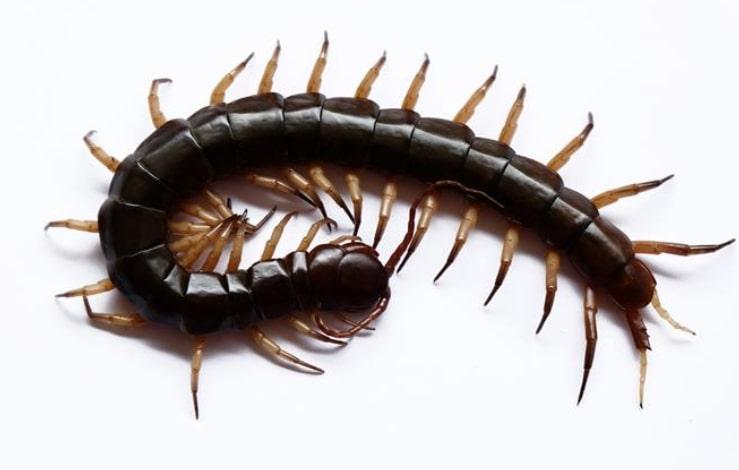
Scolopendra species, commonly known as centipedes, are venomous arthropods typically found in tropical and temperate climates, distinguished by their segmented bodies. long Fast movement Their hunting capabilities, numerous legs, and effective av capture methods make them notable predators. Centipedes feed on a carnivorous diet and use potent venoms to kill their prey. Some fox species can be dangerous to humans and pose serious health risks, especially to children. Understanding more about the ecological role of centipedes, the damage they cause, and methods of control is essential for effectively managing these organisms and minimizing potential health threats. information active
Centipedes are recognized by their numerous legs and segmented bodies. Their bodies are typically long, slender, and segmented, with one pair of legs per segment. Centipedes usually have between 30 and 40 legs, enabling rapid movement. Their venomous forcipules assist in effectively capturing and killing prey.
The life cycle of centipedes consists of three stages: egg, nymph, and adult. Female centipedes lay their eggs in concealed locations, and these eggs develop into nymphs after a specific duration period. Juveniles initially resemble their parents and gradually acquire additional body segments and legs as they grow. Adult centipedes can live for several years, though their lifespan varies depending on food availability.
Centipedes play a important role in ecosystems. By using potent venoms to kill their prey, they help regulate populations of insects and other arthropods. This can be particularly beneficial in agricultural settings where pest control is needed. Centipedes are predatory arthropods that contribute to the healthy functioning of ecosystems by maintaining natural balance.
However, in certain situations, centipedes can pose a threat to humans and domestic animals. Their venomous bites often cause intense pain, redness, swelling, and in some cases, allergic reactions. road The size and poison potency of centipede species can render them a potential hazard in specific regions. Individuals with allergies to centipede venom may experience severe health complications.

The venom of centipedes is used to kill prey and facilitate digestion. It contains compounds including neurotoxins and protein. These components disrupt the nervous systems of prey, causing paralysis. Centipedes inject their venom rapidly after capturing prey, ensuring their survival. In humans, centipede venom typically causes pain, swelling, and redness, though rarely it may trigger anaphylactic shock like severe allergic reactions. However, the exact effects of centipede venom vary depending on the individual’s allergic constitution and physiological response.
Centipedes prefer moist and warm environments. Consequently, they are commonly found in tropical and temperate climates common. In forested areas, they nest in natural habitats such as decaying leaves and rotting wood. Additionally, centipedes may establish nests in corners of homes, basements, garages, and other darkness and damp locations.
In terms of distribution, centipedes have expanded from tropical regions into human settlements across the world. Their rate of spread is high due to their rapid reproductive capacity. When centipede populations increase significantly in homes and human settlements, they can disrupt ecosystems and interfere with human living spaces problem. Preventing their spread is possible by improving environmental conditions and modifying habitats.
When centipedes become a problem in homes or commercial areas, effective control measures must be implemented. These methods can be summarized as follows:
Sis Tarım. "Çiyan." *Sistarım*. https://www.sistarim.com.tr/ciyan/.
Teknik Türk. "Çiyan." *Teknik Türk*. Accessed [insert date]. https://teknikturk.com.tr/hasere-rehberi/ciyan/6.
İstanbul İlaçlama. "Çiyan." İstanbul İlaçlama. https://www.istanbulilaclama.com/hasere/ciyan/.

Cyan
Specie(s) | Scolopendra | ||||||||
|---|---|---|---|---|---|---|---|---|---|
Habitats | Tropical and Temperate Climates | ||||||||
Feeding Types | Carnivorous | ||||||||
Biological Characteristics and Life Cycle
Ecological Role and Harm
Venom Characteristics
Habitats and Distribution
Control Methods