

This article was automatically translated from the original Turkish version.
Classroom of the Elite
Original Name(s) | Welcome to the Realms of the Strongest | ||||||||
|---|---|---|---|---|---|---|---|---|---|
MyAnimeList (MAL) Rating | 7.93 | ||||||||
IMDb Rating | 7.7 / 10 | ||||||||
Studio | Lerche | ||||||||
Author / Artist | Shōgo Kinugasa / Shunsaku Tomose | ||||||||
Type(s) | Psychological Thriller School Drama | ||||||||
Classroom of the Elite is a Japanese light novel series written by Shōgo Kinugasa and illustrated by Shunsaku Tomose. It was first published on 25 May 2015 under Media Factory’s MF Bunko J imprint. The series is divided into two main arcs: “First Year” and “Second Year” (from 2020 onward).
Classroom of the Elite Season 4|Official Trailer (Crunchyroll)
The media ecosystem of the work comprises the following components:
As of 2024, the light novel series has sold over six million copies worldwide, achieving commercial success.
Classroom of the Elite is set in a fictional version of modern Japan, at the prestigious Kōdo Ikusei Senior High School, established by the government to cultivate the nation’s future leaders. The school is renowned for guaranteeing its students 100 percent job placement or university admission.
The foundational pillars of this fictional universe are as follows:

Kiyotaka Ayanokōji (IMDb)
Classroom of the Elite follows the perspective of Kiyotaka Ayanokōji, a new student at Kōdo Ikusei Senior High School. Ayanokōji deliberately scores exactly 50 percent on every subject in the entrance exam, securing placement in Class D—the lowest tier, labeled the “class of failures.”
The central themes of the story include:

Ken Sudō (IMDb)
Classroom of the Elite explores the relationship between individual talent and social hierarchy on philosophical and psychological levels. The work questions the concept of merit within a modern educational system, confronting viewers with ethical dilemmas.

Kiyotaka Ayanokōji (IMDb)
The series is built around the question of “equality among people.” While debating whether an education system should measure only academic achievement or also survival skills, it explores the themes of Social Darwinism and Meritocracy through its point-based structure. The false identities characters adopt to gain social acceptance or conceal trauma form the theme of Masking and Identity. Utilitarianism, where decisions are judged by tangible benefits rather than moral values, underpins the strategic maneuvers in the narrative.
The work presents mystery and psychological tension through strategic storytelling. The use of the Unreliable Narrator technique—where the protagonist withholds key information from the reader—creates surprising revelations at story climaxes. Classical philosophical quotations from renowned thinkers at the beginning of each chapter add intellectual depth. The narrative favors Game Theory and Psychological Manipulation over physical conflict. Character backstories and secrets are revealed gradually through a controlled flow of information.
Classroom of the Elite is an anime series produced by Lerche studio, consisting of three seasons. It faithfully adapts the “First Year” arc of the light novel. As of 2026, there are no feature-length films or side projects related to the series; the narrative continues exclusively in the television series format.
The first season, consisting of 12 episodes, adapts the first three volumes of the light novel. It begins with an introduction to the school’s point system. The central plot revolves around the students’ first major “Special Examination,” held on a deserted island to secure basic needs and earn points. This season lays the foundation for inter-class competition and introduces the first hints of the protagonist’s hidden abilities.
Released five years after the first season, the second season, with 13 episodes, covers events from volumes four to 7.5 of the light novel. The story begins with a psychological examination held aboard a luxury cruise ship, where classes are divided into mixed teams. Throughout the season, the school’s sports festival and strategic paper-based examinations are explored. The season’s most critical moment is Kakeru Ryūen’s pursuit of the true identity behind Class D and the resulting direct confrontation.
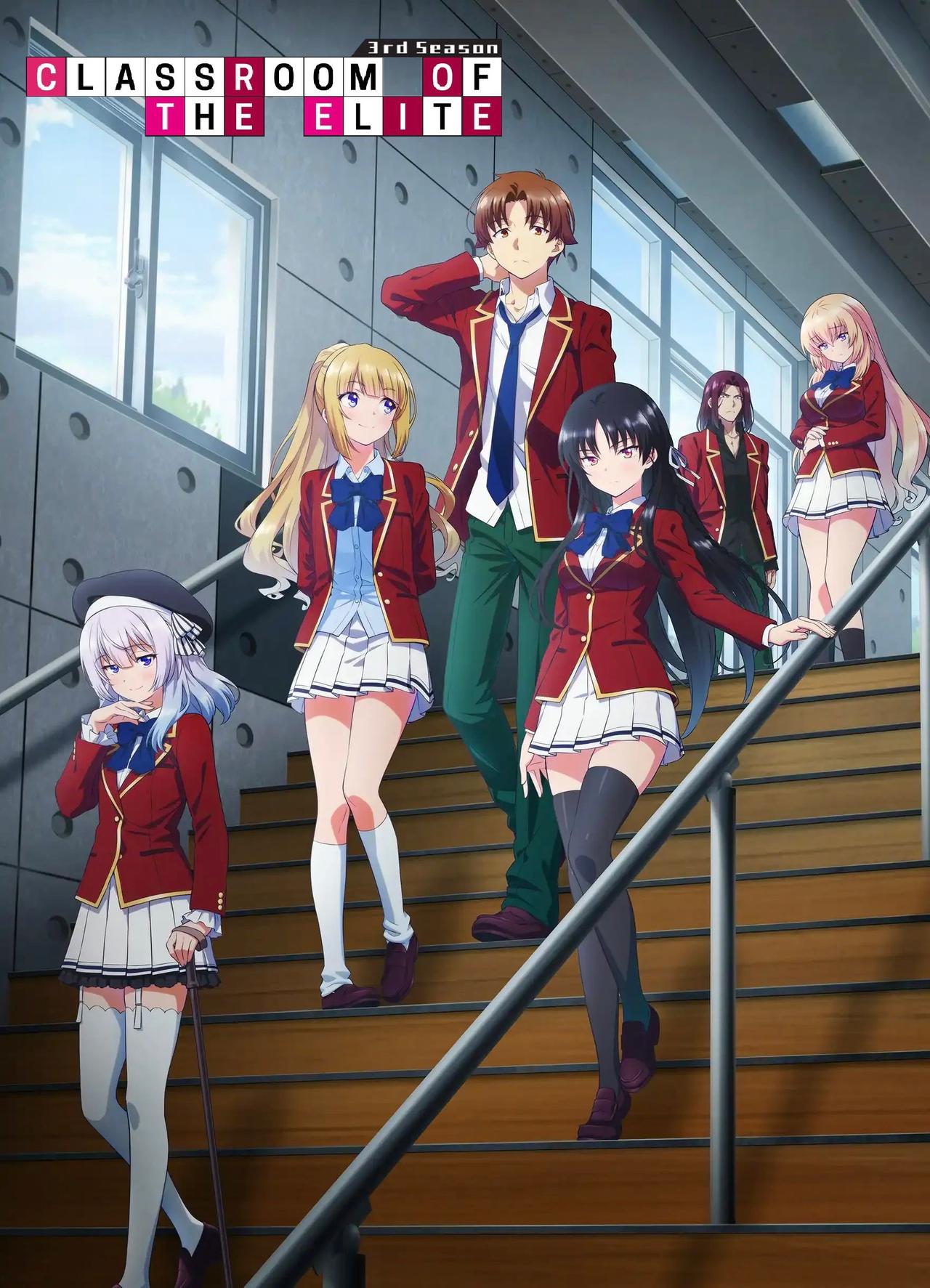
The 13-episode third season concludes the “First Year” arc by adapting material from volume eight to 11.5. The season features the “Integrated Education Camp,” where students are forced to collaborate across classes, and the “Elimination Examination,” in which classes compete to eliminate each other. With the season finale, the students’ first years at the school are completed, and the shifts in class hierarchy are finalized.
Classroom of the Elite has consistently ranked highly in its publication platforms and reader polls, achieving commercial and popular success. This success is primarily driven by character popularity and sales figures rather than literary merit.
Accessed November 26, 2025. https://www.aa.com.tr/tr/kultur/ahlatta-acilan-kurslarla-geleneksel-tas-isciligi-yasatiliyor/3116279.
Accessed November 26, 2025. https://www.aa.com.tr/tr/kultur/ahlatta-acilan-kurslarla-geleneksel-tas-isciligi-yasatiliyor/3116279.
Accessed November 26, 2025. https://www.aa.com.tr/tr/kultur/ahlatta-acilan-kurslarla-geleneksel-tas-isciligi-yasatiliyor/3116279.
Accessed November 26, 2025. https://www.aa.com.tr/tr/kultur/ahlatta-acilan-kurslarla-geleneksel-tas-isciligi-yasatiliyor/3116279.
IMDb. "Awards." Classroom of the Elite. Accessed April 28, 2026.
IMDb. "Classroom of the Elite." Accessed April 28, 2026.
IMDb. "Episodes." Classroom of the Elite. Accessed April 28, 2026.
IMDb. "Parental Guide." Classroom of the Elite. Accessed April 28, 2026.
IMDb. "Plot Summary." Classroom of the Elite. Accessed April 28, 2026.
IMDb. "Ratings." Classroom of the Elite. Accessed April 28, 2026.
YouTube. "Classroom of the Elite - Official Trailer." Video, 1:33. June 24, 2017. Accessed April 28, 2026.
https://www.imdb.com/title/tt7263328/
https://www.imdb.com/title/tt7263328/parentalguide/
https://www.imdb.com/title/tt7263328/ratings/

Classroom of the Elite
Original Name(s) | Welcome to the Realms of the Strongest | ||||||||
|---|---|---|---|---|---|---|---|---|---|
MyAnimeList (MAL) Rating | 7.93 | ||||||||
IMDb Rating | 7.7 / 10 | ||||||||
Studio | Lerche | ||||||||
Author / Artist | Shōgo Kinugasa / Shunsaku Tomose | ||||||||
Type(s) | Psychological Thriller School Drama | ||||||||
No Discussion Added Yet
Start discussion for "Classroom of the Elite (Series)" article
Setting and Fictional Universe
Plot
Main Characters and Voice Actors
Themes and Narrative Style
Thematic Framework
Narrative Style
Seasons and Films
First Season (2017)
Second Season (2022)
Third Season (2024)
Awards and Nominations