This article was automatically translated from the original Turkish version.
+1 More
Realm | Animalia | ||||||||
|---|---|---|---|---|---|---|---|---|---|
Branch | Chordata | ||||||||
Class | Mammalia | ||||||||
Team(s) | Primates | ||||||||
Family | Indriidae | ||||||||
Specie(s) | Propithecus coquereli | ||||||||
IUCN Status | Critically Endangered | ||||||||
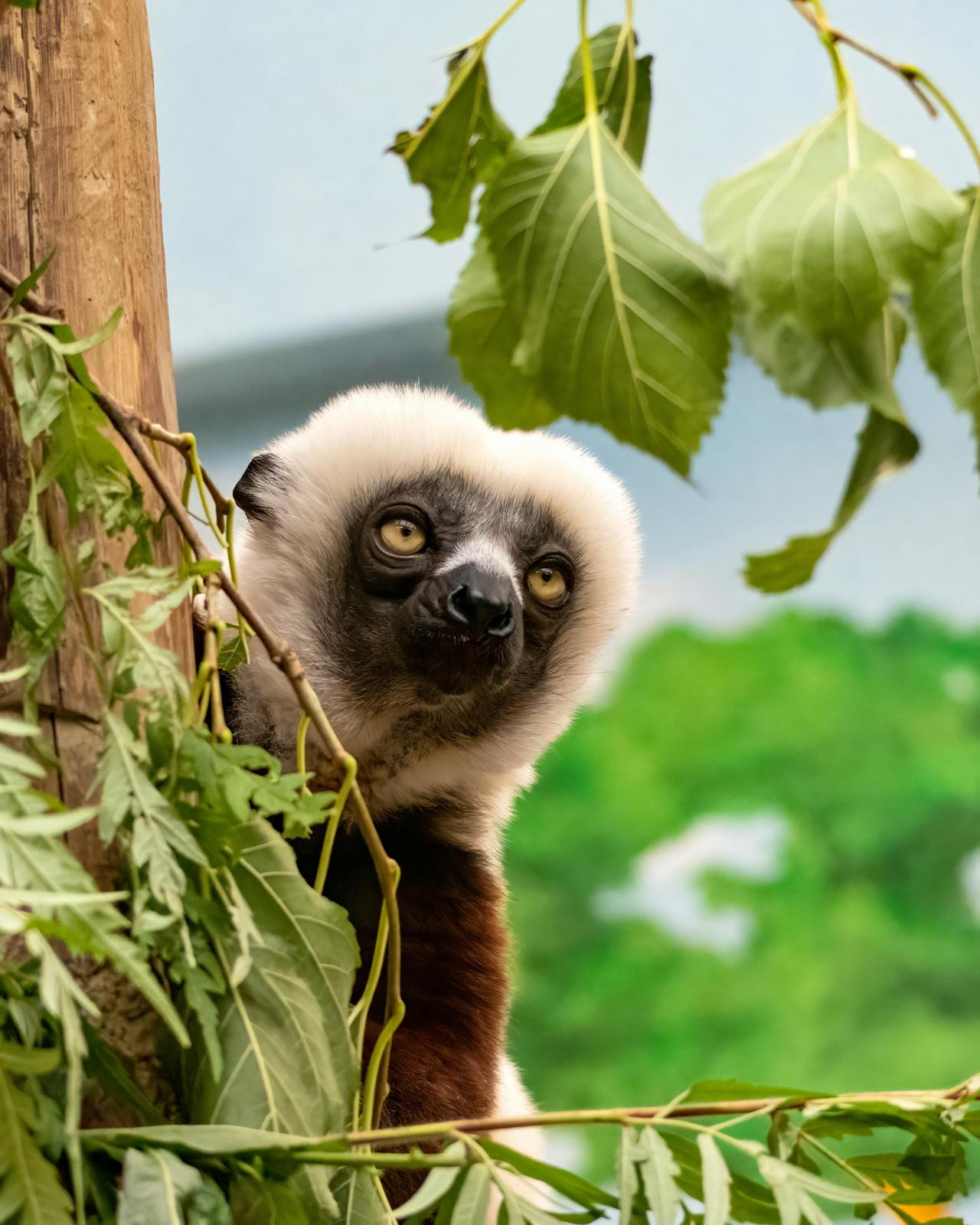
Coquerel’s sifaka is a lemur species native to the dry deciduous forests of northwestern Madagascar. This species is distinguished from other lemurs by its vertical clinging and leaping locomotion. Its long, powerful hind legs enable it to leap distances exceeding 20 feet (6 meters) between trees. On the ground, it moves by hopping sideways on two legs. The name “sifaka” derives from its distinctive “shif-auk” call.

Coquerel’s sifaka (Pexels)
Coquerel’s sifaka is found in regions such as the Ankarafantsika Nature Reserve and the Bora Special Reserve in northwestern Madagascar. It inhabits tropical dry forests, which are frequently affected by annual fires. This species has a limited geographic range, and its population is declining due to habitat fragmentation.
Coquerel’s sifakas feed on leaves, flowers, fruit, bark, and dead wood. Their digestive systems are specialized to efficiently break down the fibers and toxins in plant material. Ninety-eight different plant species have been identified in their diet, but only twelve of these make up two-thirds of their food intake.
Classified as Critically Endangered on the IUCN Red List, Coquerel’s sifaka faces threats from habitat loss, deforestation, and hunting. Although protected within the Ankarafantsika and Bora reserves, habitat destruction continues. Organizations such as the Duke Lemur Center are implementing conservation and breeding programs to protect this species and increase its population.
Coquerel’s sifaka plays a critical role in Madagascar’s forest ecosystems by aiding seed dispersal. Seeds that pass through their digestive system show increased germination rates, contributing to the preservation of biodiversity.
Animal Diversity Web. “Propithecus coquereli: Coquerel's Sifaka.” University of Michigan Museum of Zoology. Accessed June 23, 2025. https://animaldiversity.org/accounts/Propithecus_coquereli/.
Duke Lemur Center. “Coquerel's Sifaka.” Duke University. Accessed June 23, 2025. https://lemur.duke.edu/discover/meet-the-lemurs/coquerels-sifaka/.
Pexels. “Doğa, Yapraklar, Hayvan Fotoğrafçılığı, Lemur.” Accessed June 23, 2025. https://www.pexels.com/tr-tr/fotograf/doga-yapraklar-hayvan-fotografciligi-lemur-17937495/.
Pexels. “Hayvan, Oturmak, Hayvanat Bahçesi, Maymun.” Accessed June 23, 2025. https://www.pexels.com/tr-tr/fotograf/hayvan-oturmak-hayvanat-bahcesi-maymun-6575227/.
San Diego Zoo Wildlife Alliance. “Coquerel's Sifaka.” Accessed June 23, 2025. https://animals.sandiegozoo.org/animals/coquerels-sifaka.

Realm | Animalia | ||||||||
|---|---|---|---|---|---|---|---|---|---|
Branch | Chordata | ||||||||
Class | Mammalia | ||||||||
Team(s) | Primates | ||||||||
Family | Indriidae | ||||||||
Specie(s) | Propithecus coquereli | ||||||||
IUCN Status | Critically Endangered | ||||||||
Physical Characteristics
Habitat and Distribution
Behavior and Social Structure
Diet
Reproduction and Young
Conservation Status
Ecological Role