


This article was automatically translated from the original Turkish version.
Realm | Plantae | ||||||||
|---|---|---|---|---|---|---|---|---|---|
Branch | Tracheophyte | ||||||||
Class | Magnoliopsida | ||||||||
Team(s) | Asteraceae | ||||||||
Family | Asteraceae | ||||||||
Genus | Tussilago | ||||||||
Specie(s) | Tussilago farfara | ||||||||
Tussilago farfara L., a perennial herbaceous plant belonging to the Asteraceae (daisy) family, is widespread in moist and sandy habitats. This species, native to Europe, Western and Central Asia, is particularly used in both traditional and modern medicine for the treatment of respiratory tract diseases. In our country, Tussilago farfara, known as "öksürükotu", is notable for its early flowering and broad ecological tolerance.
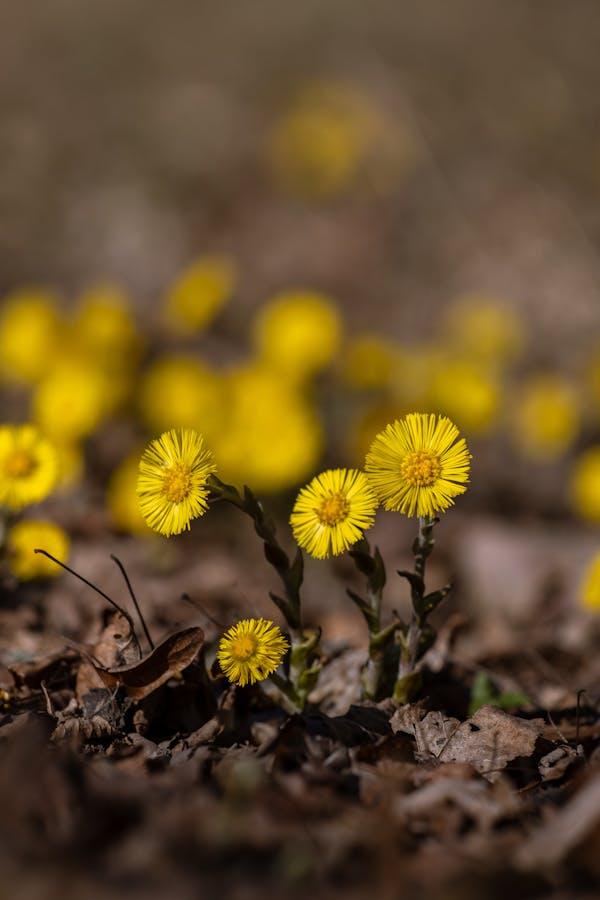
Tussilago farfara is a perennial plant with a root system consisting of horizontal rhizomes growing beneath the soil. The plant typically flowers in early spring, before the leaves develop. The flowering stem is 4–15 cm tall, bears purplish bracts, and is densely covered with white woolly hairs. After flowering, the stem assumes a drooping form.
The flower head (capitulum) is 1.5–2.5 cm in diameter and composed of yellow, honey-scented florets. The phyllaries are strap-shaped with blunt tips and often exhibit a purplish and white-tufted structure. The fruiting achenes are 3–4 mm long, cylindrical, and vary in color from pale yellow to golden yellow. The pappus consists of 10–15 mm long, delicate, easily broken white hairs.
Leaves develop after flowering. The petioles are long, and the lamina measures 10–20(–30) cm in diameter. The leaves are angular heart-shaped, with irregularly toothed margins and densely woolly hairs on the lower surface; the upper surface becomes hairless as they mature.
The plant spreads rapidly vegetatively through rhizomes; generative reproduction via seeds is more limited. Seeds are densely packed within the flower heads; each head can produce approximately 200–300 seeds.
Flowering occurs between February and April, depending on regional climatic conditions. It prefers habitats such as waste areas, sandy soils, grasslands, road margins, and moist regions. The optimal growth pH ranges from 5.5 to 8.0, and it thrives successfully in clayey, loamy, and calcareous heavy soils.

Tussilago Farfara (Source: Pexel)
Kingdom: Plantae
Phylum: Tracheophyta
Class: Magnoliopsida
Order: Asterales
Family: Asteraceae
Genus: Tussilago
Species: Tussilago farfara
Anti-inflammatory Effect: Flavonoids and other active compounds in Tussilago farfara are effective in reducing inflammation in the respiratory tract. This supports its use in alleviating symptoms of inflammatory conditions such as bronchitis, tracheitis, and laryngitis.
Antioxidant Activity: Phenolic compounds present in the plant neutralize free radicals, thereby reducing oxidative stress and helping prevent cellular damage.
Neuroprotective Activity: Some in vitro and in vivo studies have shown that T. farfara extracts may protect nerve cells from oxidative damage.
Antidiabetic Effect: Experimental studies indicate that coltsfoot extracts may support blood glucose regulation and enhance insulin sensitivity.
Expectorant Effect: High levels of mucilage in the plant coat the mucous membranes of the throat and upper respiratory tract, soothing cough and facilitating mucus expulsion.
Antiseptic Effect: Infusions and decoctions of coltsfoot aid in eliminating pathogenic microorganisms and accelerate recovery in respiratory tract infections.
Immunostimulatory Effect: Vitamins, minerals, and bioactive compounds contribute to strengthening the immune system.
Gastroprotective Effect: Mucilage protects the gastric and intestinal mucosa against irritants, playing a supportive role in the treatment of gastritis and peptic ulcers.
Mucilage: Provides a protective coating for the throat and gastric mucosa, soothes cough, and facilitates mucus clearance.
Flavonoids: Possess strong antioxidant and anti-inflammatory properties. They help strengthen blood vessel walls and improve microcirculation.
Tannins: Have an astringent and anti-inflammatory effect, reducing inflammation and irritation of mucous membranes.
Polysaccharides: Stimulate the immune system and enhance the body’s defense against infections.
Organic Acids: Compounds such as gallic and caffeic acid contribute to regulating metabolic processes and exhibit antimicrobial activity.
Essential Oils: Confer the plant’s characteristic aroma and possess mild antiseptic properties.
Vitamins: Contains various vitamins, particularly vitamin C, which strengthens the immune system and supports overall health.
Minerals: Rich in potassium, calcium, magnesium, iron, and other trace elements that contribute to maintaining bodily health.
Pyrrolizidine Alkaloids: Although present in low amounts, they may exhibit toxic effects with long-term use. Therefore, caution is advised when using this plant.
GBIF Backbone Taxonomy. "Tussilago farfara L." Accessed April 27, 2025. https://www.gbif.org/species/3149879.
Türkiye Herboloji Derneği. "Tussilago farfara L." Accessed April 27, 2025. https://www.turkiyeherboloji.org.tr/otlar.asp?id=119.
ViolaPharm. "Coltsfoot Herb: Medicinal Properties and Uses." Accessed April 27, 2025. https://violapharm.com/en/coltsfoot-herb-medicinal-properties-and-uses/.
İBU Flora. "Tussilago farfara." Bolu Abant İzzet Baysal Üniversitesi. Accessed April 27, 2025. http://ibuflora.ibu.edu.tr/tur/tussilago-farfara.

Realm | Plantae | ||||||||
|---|---|---|---|---|---|---|---|---|---|
Branch | Tracheophyte | ||||||||
Class | Magnoliopsida | ||||||||
Team(s) | Asteraceae | ||||||||
Family | Asteraceae | ||||||||
Genus | Tussilago | ||||||||
Specie(s) | Tussilago farfara | ||||||||
No Discussion Added Yet
Start discussion for "Coughwort (Tussilago farfara L.)" article
Morphological Characteristics
Systematic and Phylogenetic Position
Pharmacological Properties
Phytochemical Composition