


This article was automatically translated from the original Turkish version.
+2 More
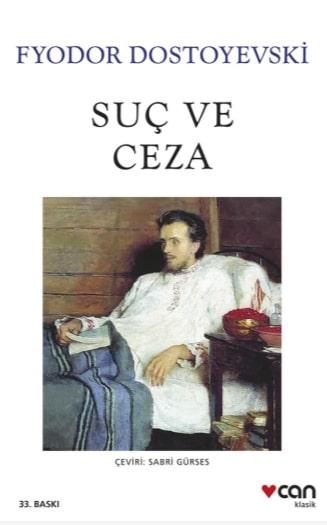
Author(s) | Fyodor Dostoyevski | ||||||||
|---|---|---|---|---|---|---|---|---|---|
Type(s) | Novel | ||||||||
Category | Literature | ||||||||
Original Language | Russian | ||||||||
First Publication Date(s) | October 2015 | ||||||||
Fyodor Dostoyevski’s 1866 novel Crime and Punishment is regarded as one of the most psychologically profound works in world literature. Novel, crime, conscience, morality, justice and the inner conflicts of the individual are explored as universal themes, while also presenting a philosophical and social discussion.
Dostoyevski wrote Crime and Punishment after returning from exile in Siberia. Author, exile years of observing the psychological dynamics among prisoners greatly influenced him. Written during a period in the 19th century Russia when social inequality, poverty and nihilism were intensely debated, work reflects the political and social atmosphere of its time.
The novel centers on the moral and psychological turmoil experienced by Rodion Romanovich Raskolnikov, a impoverished student in St Petersburg, after he commits a murder. Advocating the theory of the “superior man,” Raskolnikov kills a pawnbroker whom he believes is a parasite, testing the idea that great individuals may commit crimes in the name of justice. However, the guilt and moral conflicts that follow drive him into an intense internal reckoning. The novel is a deep psychological study of Raskolnikov’s inner transformation and redemption.
Dostoyevski masterfully employs interior monologue, stream of consciousness and dramatic tension techniques to deepen the psychological complexity of his characters. The novel is recognized as a fusion of realist and psychological fiction.
“Dostoyevski's Crime and Punishment: What Does the Book Explain? Summary, Topic, Characters,” Pendik Gazetesi, Accessed March 19, 2025, https://www.pendikgazetesi.com.tr/dostoyevski-nin-suc-ve-ceza-kitabi-ne-anlatiyor-ozeti-konusu-karakterleri_25169.html.
“Summary of the Book ‘Crime and Punishment.’” Gedik Üniversitesi UZEM İGÜNSEM, Accessed March 19, 2025. https://uzemigunsem.gedik.edu.tr/suc-ve-ceza-kitabinin-ozeti.
“Çürük ve Ceza” – Dostoyevski, Türk Edebiyatı, Accessed March 19, 2025, https://www.turkedebiyati.org/suc-ve-ceza-dostoyevski/.
“Çürük ve Ceza” – Fyodor Mihayloviç Dostoyevski, Can Yayınları, Accessed March 19, 2025. https://www.canyayinlari.com/suc-ve-ceza-9789750738906?srsltid=AfmBOoqb6GUjciRw_X8YhVyqgyuRhzFZr66HPNILg87KGjpdspJYToNQ.

Author(s) | Fyodor Dostoyevski | ||||||||
|---|---|---|---|---|---|---|---|---|---|
Type(s) | Novel | ||||||||
Category | Literature | ||||||||
Original Language | Russian | ||||||||
First Publication Date(s) | October 2015 | ||||||||
No Discussion Added Yet
Start discussion for "Crime and Punishment (Book)" article
Writing Process and Historical Context
Plot
Character Analysis
Themes
Literary Techniques and Narrative Style