This article was automatically translated from the original Turkish version.
+2 More
Location | Büyükanafarta Village, Eceabat, Çanakkale | ||||||||
|---|---|---|---|---|---|---|---|---|---|
Region | Damakçılık Hill between Kayacık and Ağıl Streams | ||||||||
Related War | World War I – Gallipoli Front | ||||||||
British Casualties | Approximately 4,000–5,000 | ||||||||
Related Commander | Anafartalar Group Commander Lieutenant Colonel Mustafa Kemal | ||||||||
Related Unit | 7th Division | ||||||||
Number of Martyrs in the Unit | approximately 2,350 | ||||||||
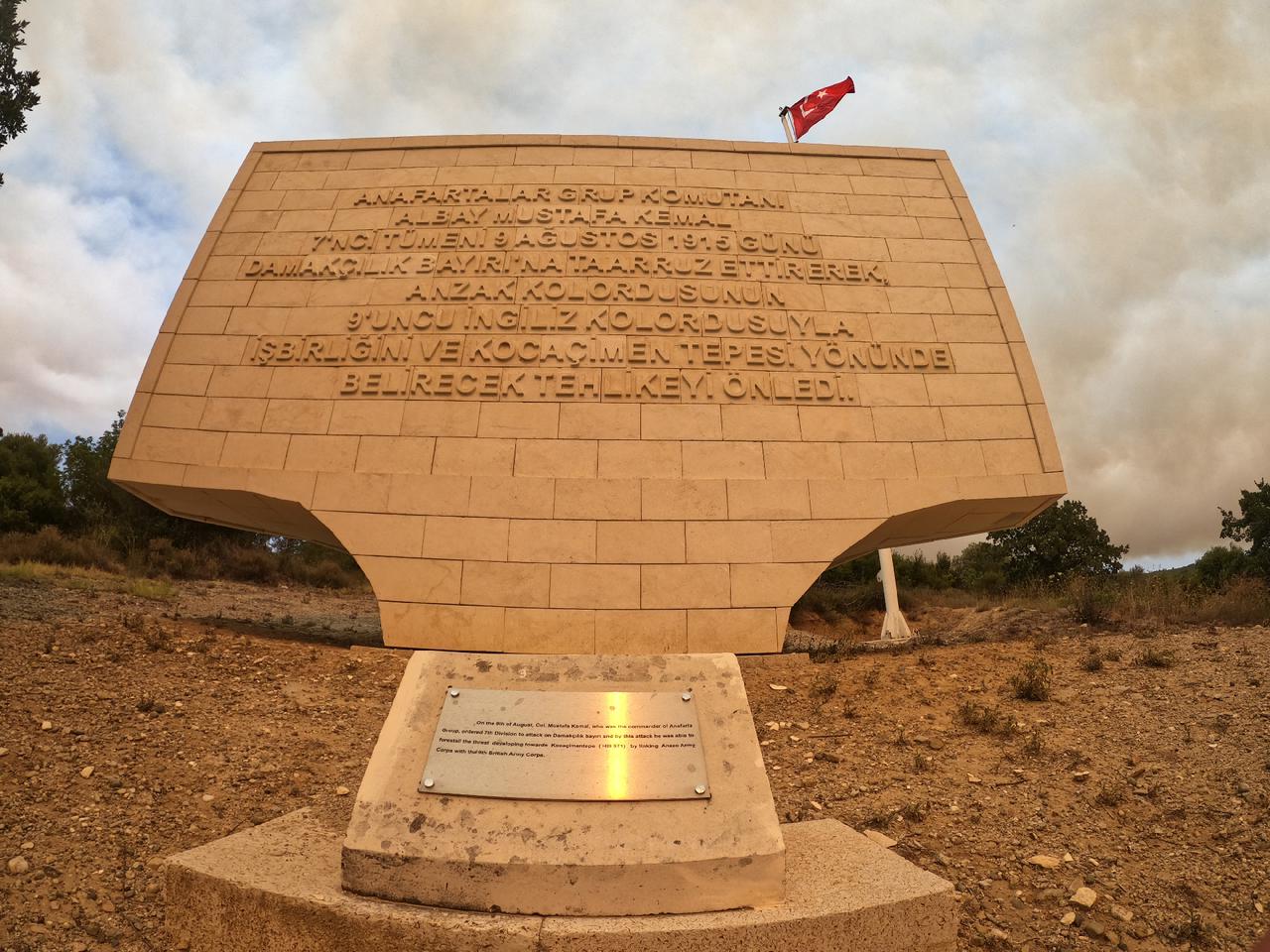
The Damakçılık Bayırı Inscription is a historical monument and stone-covered inscription erected within the boundaries of Büyükanafarta village in the Eceabat district of Çanakkale province to commemorate the battles of the Gallipoli Campaign during World War I and the military defensive and offensive operations conducted during that period.
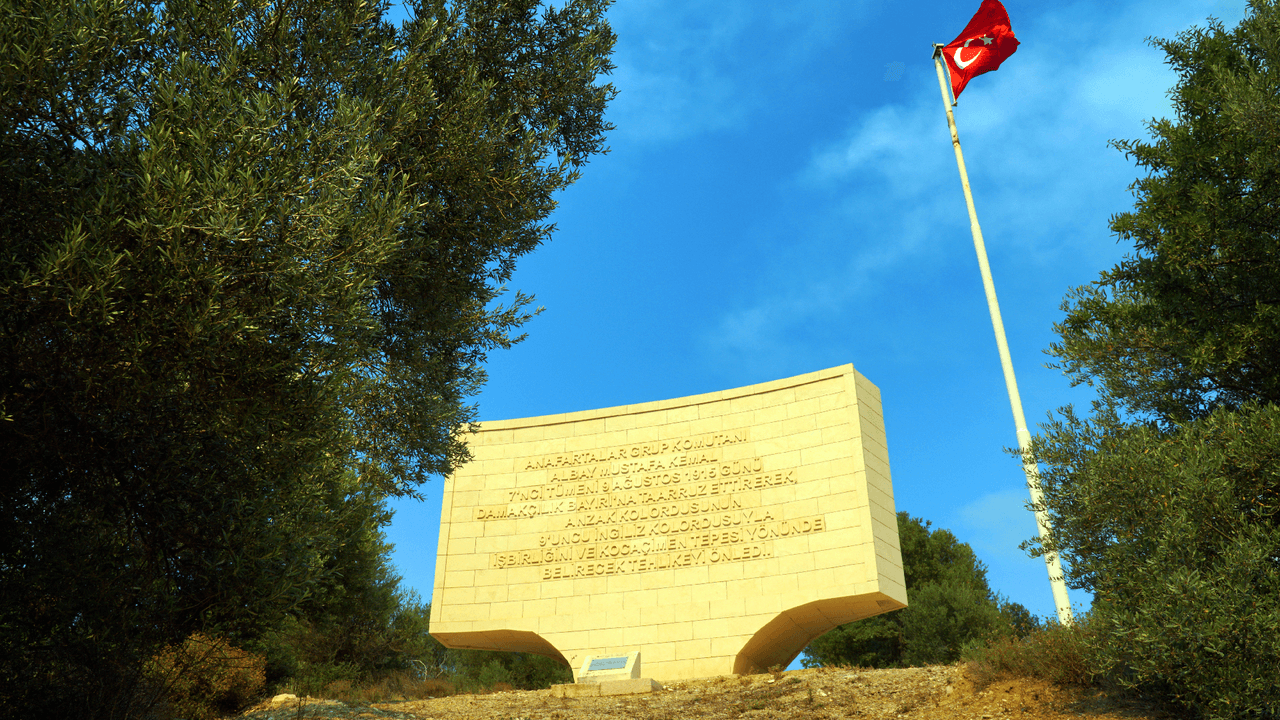
Damakçılık Bayırı Kitabesi (Gelibolu Tarihi Alan Başkanlığı)
The geographical area known as Damakçıl or Damakçılık is situated near the intersection point of the Kabatepe-Büyük Anafarta coastal road and the path coming from Küçükkemikli Burnu.
This ridge, located between Kayacık and Ağıl streams, served as an intermediate objective and passage corridor in military operational planning, guiding attacking forces toward Kocaçimentepe, a position of strategic importance in the region.【1】
Due to its strategic significance in the effort to capture or hold Kocaçimentepe—the primary objective—battles were concentrated along this line. Accordingly, the First Battle of Anafarta on 9 August 1915 and the Bombatepe (Kayacık Ağılı) Battle on 27 August 1915 both occurred directly on the Damakçıl Bayırı position.【2】
As a result of these military clashes, the attacking British IX Corps suffered between 4,000 and 5,000 heavy casualties, while the units of the Ottoman Seventh Division, positioned in defense, lost approximately 2,350 men (killed).【3】
This monument, symbolizing the battles on the historical peninsula, was constructed at the northwestern tip of Damakçılık Bayırı. Its design was carried out by architect Ahmet Gülgönen, and the structure bears a stone-covered inscription containing historical information.【4】
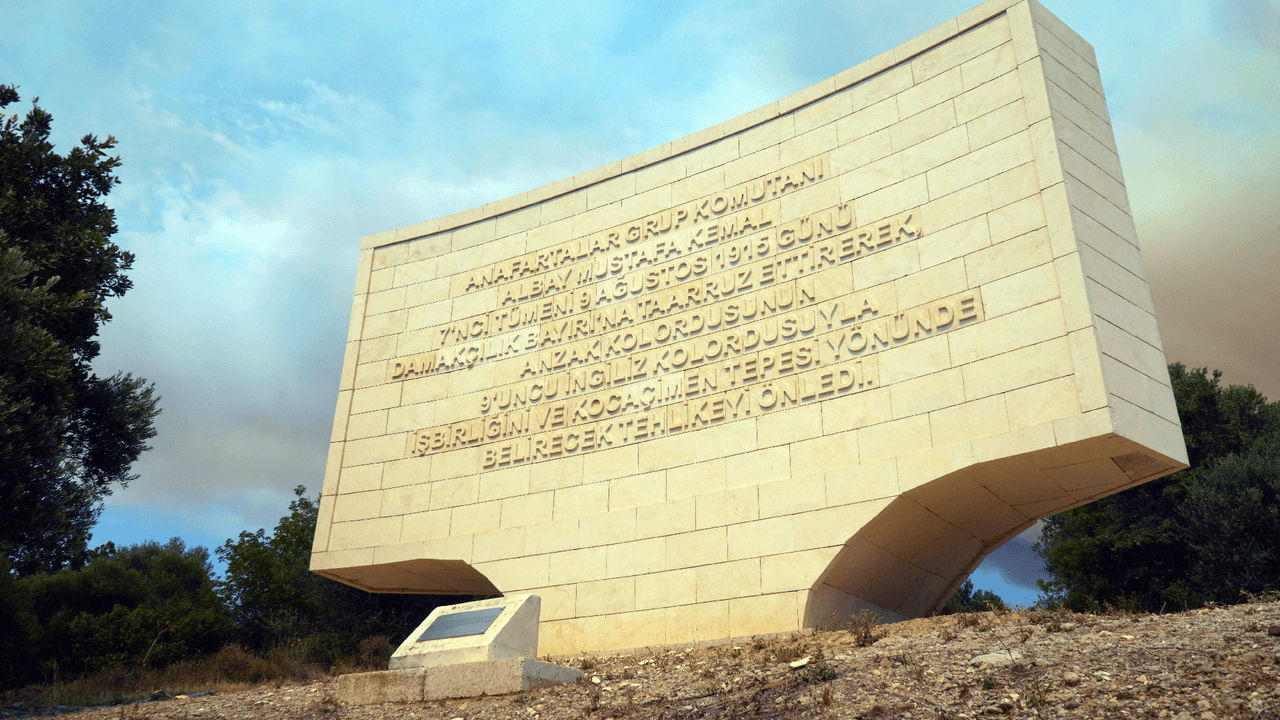
Damakçılık Bayırı Kitabesi (Gelibolu Tarihi Alan Başkanlığı)
The stone-covered inscription on the monument contains the following statements regarding military command and administration during the battle:
“The Commander of the Anafarta Group, Colonel Mustafa, directed the Seventh Division to attack Damakçıl Bayırı on 9 August 1915, thereby preventing coordination between the ANZAC Corps and the threat emerging toward Kocaçimentepe.”【5】
Gelibolu Tarihi Alan Başkanlığı. "Damakçılık Bayırı Kitabesi." Accessed July 17, 2026.https://canakkaletarihialan.gov.tr/tr/ziyaret/sehitlikveanitlar/damakcilik-bayiri-kitabesi
T.C. Çanakkale Valiliği. "Damakçılık Bayırı Kitabesi." Accessed July 17, 2026.https://www.canakkale.gov.tr/damakcilik-bayiri-kitabesi
[1]
Gelibolu Tarihi Alan Başkanlığı. "Damakçılık Bayırı Kitabesi." Erişim Tarihi 17 Temmuz 2026. https://canakkaletarihialan.gov.tr/tr/ziyaret/sehitlikveanitlar/damakcilik-bayiri-kitabesi
[2]
T.C. Çanakkale Valiliği. "Damakçılık Bayırı Kitabesi." Erişim Tarihi 17 Temmuz 2026. https://www.canakkale.gov.tr/damakcilik-bayiri-kitabesi
[3]
Gelibolu Tarihi Alan Başkanlığı. "Damakçılık Bayırı Kitabesi."
[4]
T.C. Çanakkale Valiliği. "Damakçılık Bayırı Kitabesi."
[5]
Gelibolu Tarihi Alan Başkanlığı. "Damakçılık Bayırı Kitabesi."

Location | Büyükanafarta Village, Eceabat, Çanakkale | ||||||||
|---|---|---|---|---|---|---|---|---|---|
Region | Damakçılık Hill between Kayacık and Ağıl Streams | ||||||||
Related War | World War I – Gallipoli Front | ||||||||
British Casualties | Approximately 4,000–5,000 | ||||||||
Related Commander | Anafartalar Group Commander Lieutenant Colonel Mustafa Kemal | ||||||||
Related Unit | 7th Division | ||||||||
Number of Martyrs in the Unit | approximately 2,350 | ||||||||
No Discussion Added Yet
Start discussion for "Damakçılık Bayırı Inscription" article
Geographical Location and Military Strategy
Historical Developments and Engagements
Architectural Features and Design
Inscription (Text)