


This article was automatically translated from the original Turkish version.
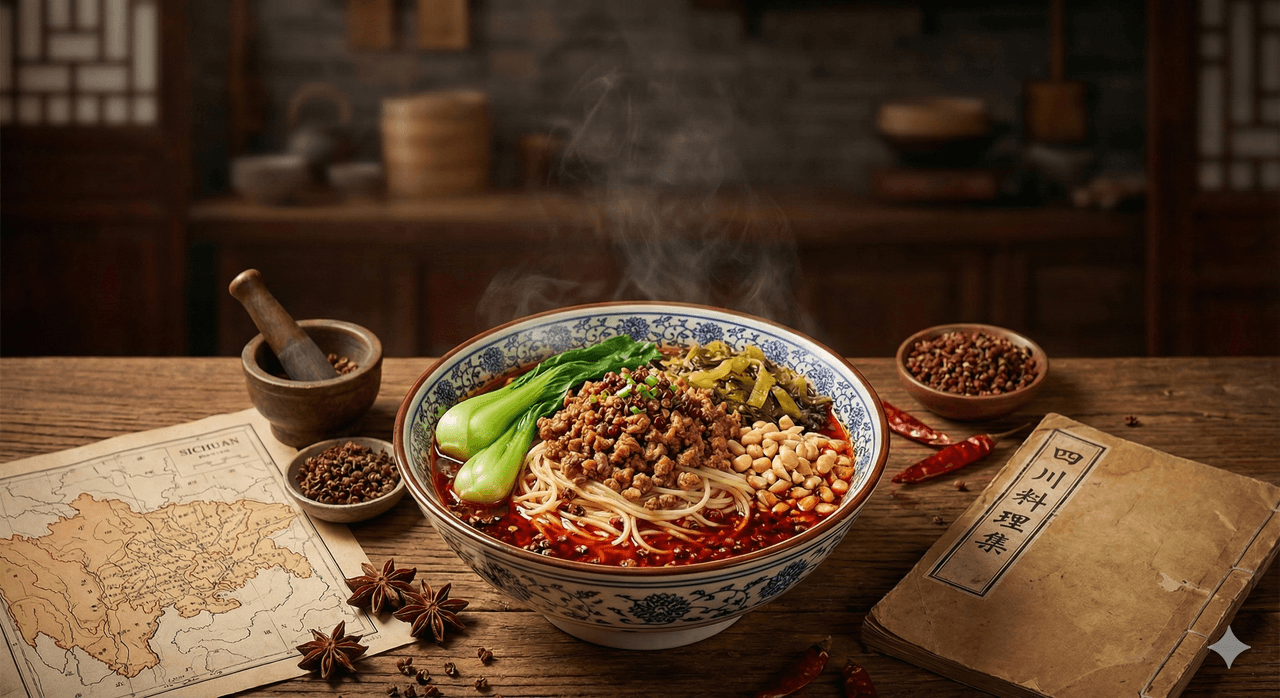
Dan Dan Noodles (Yapay Zekâ ile Oluşturulmuştur)
Dan Dan Noodles is a traditional noodle dish originating from China’s Sichuan province, known for its spicy and aromatic profile. Its name derives from the bamboo poles called "dan", which street vendors in Chengdu used to carry the noodles, sauces, and cooking equipment. One end of the pole held the noodles and sauces, while the other carried a portable stove. Historically served in small portions, the dish has now become a standard offering on restaurant menus.

Dan Dan Noodles (Generated by Artificial Intelligence)
The dish’s origins lie in the street vendor culture of Chengdu, the capital of Sichuan province. The name Dan Dan Noodles directly references the method by which the dish was transported and sold on the streets. Street vendors would carry long bamboo poles across their shoulders, with baskets suspended from each end. One basket contained the noodles and sauce ingredients, while the other held the stove and cooking utensils.
Historically, this dish was prepared fresh and served on the streets. Its small portion sizes were linked to its nature as a quick, on-the-go meal. Today, while Dan Dan Noodles is more commonly served in restaurants than by street vendors, it retains its original flavor profile and cultural significance.
An authentic Dan Dan Noodles consists of a combination of spices and aromatic elements:
The base of the sauce is chili oil, which imparts a distinctive color and aroma to the dish. Another critical component is Sichuan pepper, which produces a numbing sensation. Combined with the heat of the chili oil, it creates the signature "málà" (麻辣) flavor. Sesame paste, made from roasted sesame seeds, adds a nutty taste and thick texture to the sauce. Additional ingredients include soy sauce, black rice vinegar, garlic, and a small amount of sugar to balance the flavors.

Mixing Sauce Ingredients (Generated by Artificial Intelligence)
Minced pork or beef is typically used in the dish and served as a topping over the noodles. Traditionally, minced pork or beef is stir-fried in oil with various spices until it loses moisture and becomes slightly crispy.
One of the most distinctive ingredients is Ya Cai, a type of pickled mustard green native to the Sichuan region. This ingredient adds a fermented, salty, and slightly sour depth to the dish.

Packaged Sui Mi Ya Cai (Sichuan Pickled Vegetable) (Generated by Artificial Intelligence)
Thin, white noodles made from plain wheat flour are typically preferred. Their ability to hold the sauce well is essential to achieving the dish’s characteristic texture.
The preparation of Dan Dan Noodles involves cooking the ingredients separately and combining them during serving. First, a sauce base is made using chili oil and sesame paste. The minced meat and pickled vegetables are stir-fried until crispy. While the noodles are boiling, leafy greens such as Chinese cabbage or spinach are often blanched briefly in the same water and then drained.
In the Sichuan serving style, the prepared sauce is placed at the bottom of the bowl. The boiled noodles are layered on top, followed by the minced meat, pickled vegetables, and fresh scallions. Before eating, the diner must thoroughly mix the noodles to ensure the sauce coats them evenly and prevents clumping. Mixing the noodles with the sauce before consumption ensures an even distribution of ingredients. In Sichuan cuisine, Dan Dan Noodles is typically classified not as a main course but as a snack or appetizer.

Dan Dan Noodles (Yapay Zekâ ile Oluşturulmuştur)
History and Origins
Ingredients and Components
Sauce and Spices:
Meat and Toppings:
Pickled Vegetables (Ya Cai):
Noodle Selection:
Preparation Method