


This article was automatically translated from the original Turkish version.
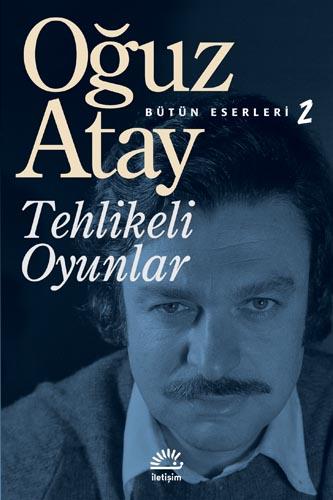
Dangerous Games
Author Name | Oğuz Atay | ||||||||
|---|---|---|---|---|---|---|---|---|---|
Publication Year | 1973 | ||||||||
Number of Pages | 479 | ||||||||
Publisher(s) | İletişim Yayınları | ||||||||
Language(s) | Turkish | ||||||||
Oğuz Atay’s 1973 novel Tehlikeli Oyunlar is one of the significant works that followed his The Unattachable novel and carries the character of a continuation. The novel delves deeply into the complex relationship between an individual’s perception of reality and play, fiction, and offers a critical inquiry into the underlying truths beneath societal chaos.
The central figure of the novel is Hikmet Benol, a man in his thirties. His struggles and psychological turmoil since childhood are shaped not by themes of return to the sea but by his confrontation with the artificiality and opportunism of urban life. Seeking to escape the boredom, artificiality, and exploitation of city life, Hikmet moves to a shantytown and attempts to build a new life there. His relationships with the retired Colonel Hüsamettin Tambay and the widow Nurhayat Hanım in this new environment serve as external manifestations of his inner reckonings and existential questioning.
Tehlikeli Oyunlar narrates the individual’s struggle with himself, the pain of self-transformation and self-overcoming. The novel blurs the boundaries between reality and play, life and fiction, shedding light on the individual’s spiritual loneliness, doubts about his own existence, and the confusion of modern society. Freedom, personal quest, perception of reality, existential inquiry, and social alienation are among the novel’s central themes.
The novel consists of four main sections and eighteen subsections. It draws attention through the technique of “play within play,” the interweaving of time, and the variety of narrative layers. The narrator consciously creates chaos within the text by playing different games with the reader. This fragmented structure produces an “uncanny atmosphere” that can only be resolved through the active participation of the novel’s “ideal reader.” The interpretive collaboration of the reader plays a vital role in shaping the novel’s world of meaning.
In terms of language and narrative, Atay employs intense linguistic play in the novel. Techniques such as concatenating words, allusions to Ottoman Turkish and archaic Turkish, and joining words with hyphens add a postmodern richness to the text. These linguistic games deepen Hikmet’s world and his intellectual confusion while maintaining the reader’s engagement with the text. Furthermore, his parody of Tanzimat-era novelistic language through poems written in syllabic meter reveals the ironic and critical dimensions of the work.
Tehlikeli Oyunlar contains numerous postmodern elements. One of the novel’s fundamental postmodern features is the concept of “play,” which is supported by methods such as irony, parody, and metafiction, and challenges the perception of reality. The novel’s ending is open to multiple interpretations. While some critics argue that Hikmet Benol commits suicide, others suggest that the entire novel is merely a “dream” or “game” created by him. The Colonel’s statements in the final section imply that the entire narrative may have been constructed within Hikmet’s mind. In this context, the novel symbolizes the blurring of boundaries between reality and fiction and the chaos inherent in human existence.
Atay, Oğuz. Tehlikeli Oyunlar. İletişim Yayınları. 59. bs. Istanbul. 2025.
Sağıroğlu, Birsel. 2018. “Tehlikeli Oyunlar’a Biçimci Yaklaşım.” *Söylem Filoloji Dergisi* 1, no. 1: 6–24. Accessed July 7, 2025. https://dergipark.org.tr/tr/download/article-file/265046.
Yaylacı, Yunus Emre. 2021. “Tehlikeli Oyunlar Romanında Postmodern Bir Unsur Olarak Oyun Kavramı.” Accessed July 7, 2025. https://tdk.gov.tr/wp-content/uploads/2021/04/Yunus-Emre-Yaylac%C4%B1-_-TEHL%C4%B0KEL%C4%B0-OYUNLAR-ROMANINDA-_-6.pdf

Dangerous Games
Author Name | Oğuz Atay | ||||||||
|---|---|---|---|---|---|---|---|---|---|
Publication Year | 1973 | ||||||||
Number of Pages | 479 | ||||||||
Publisher(s) | İletişim Yayınları | ||||||||
Language(s) | Turkish | ||||||||
No Discussion Added Yet
Start discussion for "Dangerous Games (Book)" article
Content and Thematic Structure
Structure and Narrative Techniques
Characters
Postmodern Play and Interpretations