


This article was automatically translated from the original Turkish version.
Normalization is the process of organizing tables in a database according to specific rules to eliminate redundant data data, prevent data loss, and simplify database management. In database design, normalization is applied to create well-structured tables, remove data dependencies, and clarify relationships.
Normalization is based on specific rules applied in levels known as "normal forms." Generally, three primary normal forms are used: 1NF, 2NF, and 3NF. In more complex systems, higher-level forms such as Boyce-Codd Normal Form (BCNF), 4NF, and 5NF like are also applied.
Requirements:
🔹 Example: The following student table does not comply with 1NF because the "Courses" column contains multiple values:
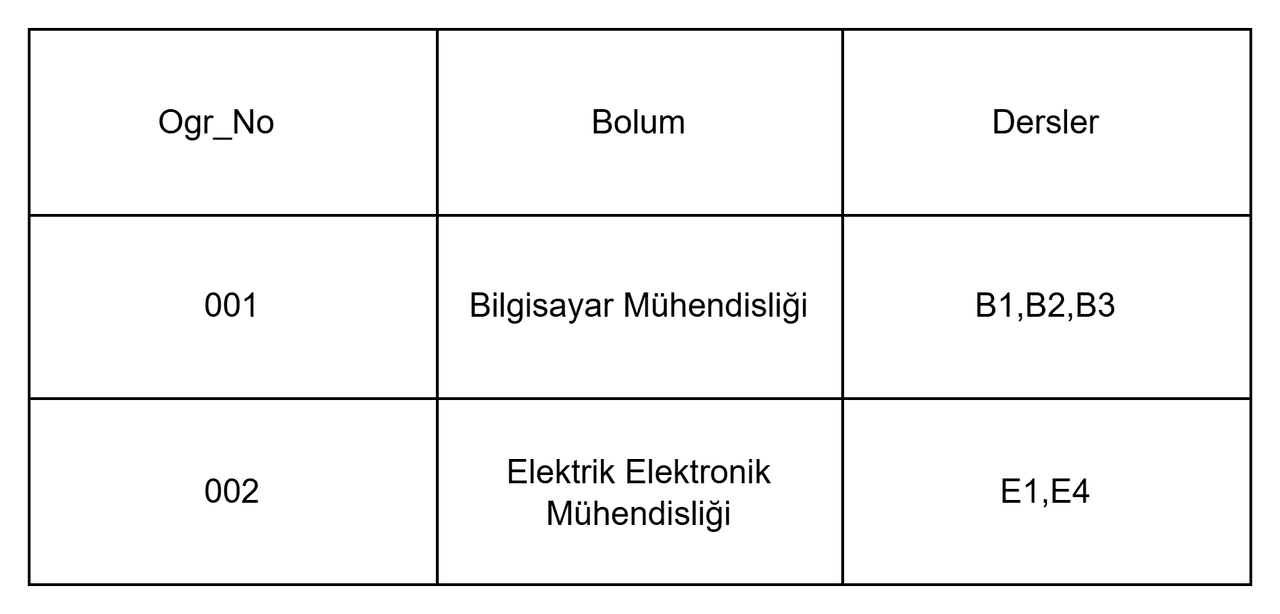
Transformed 1NF Table:
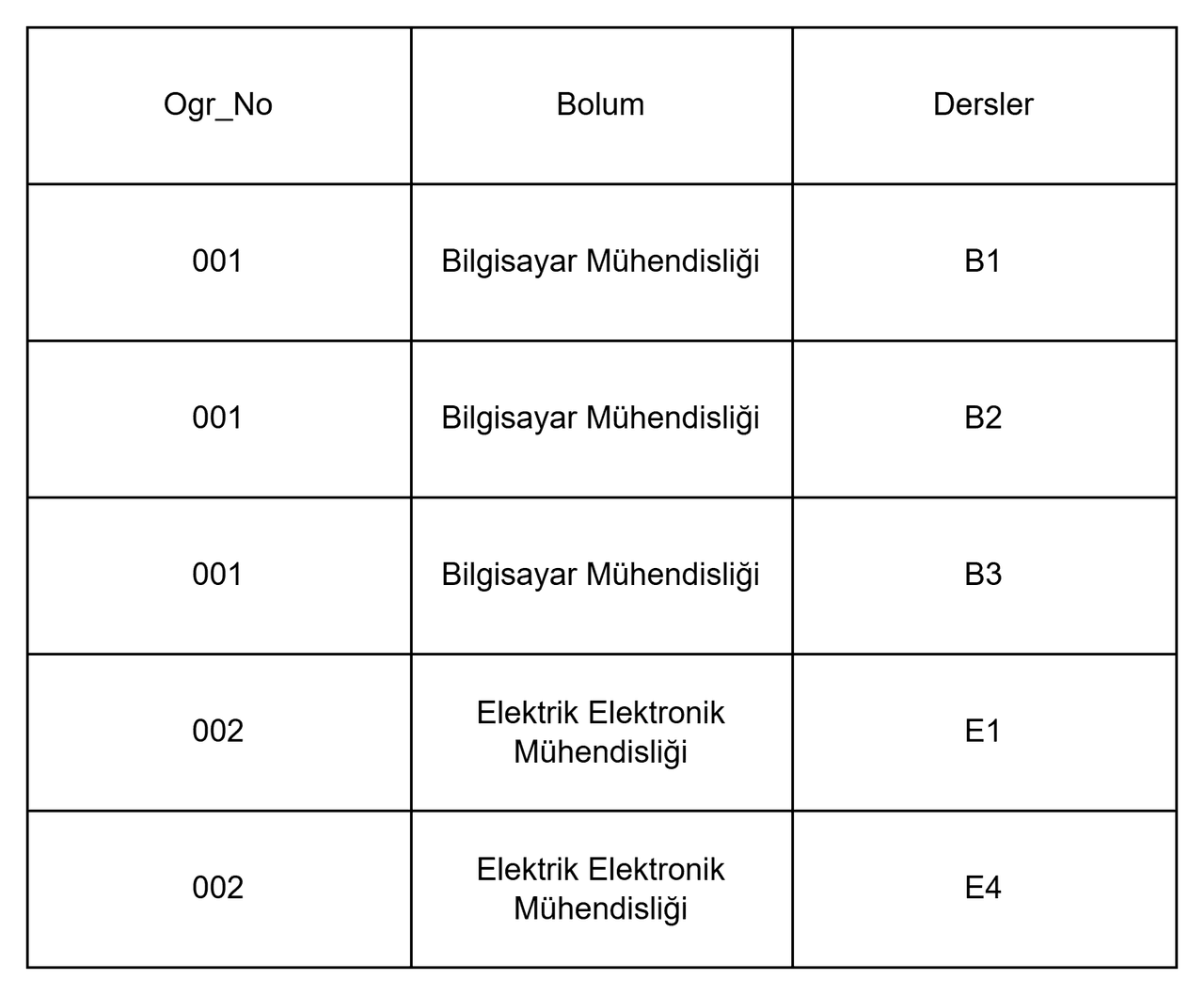
Requirements:
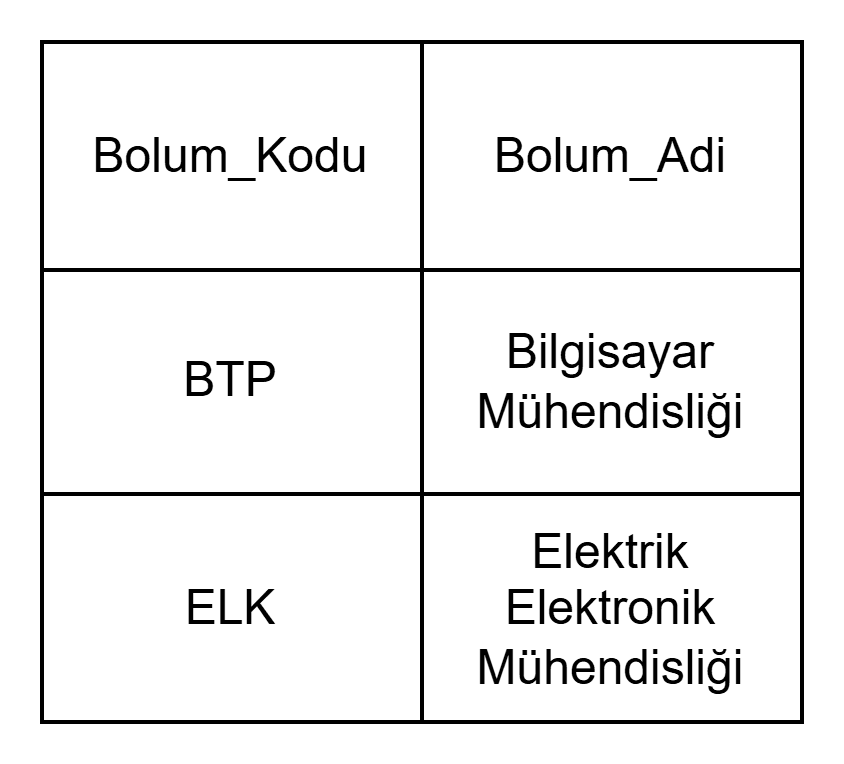
🔹 Example:
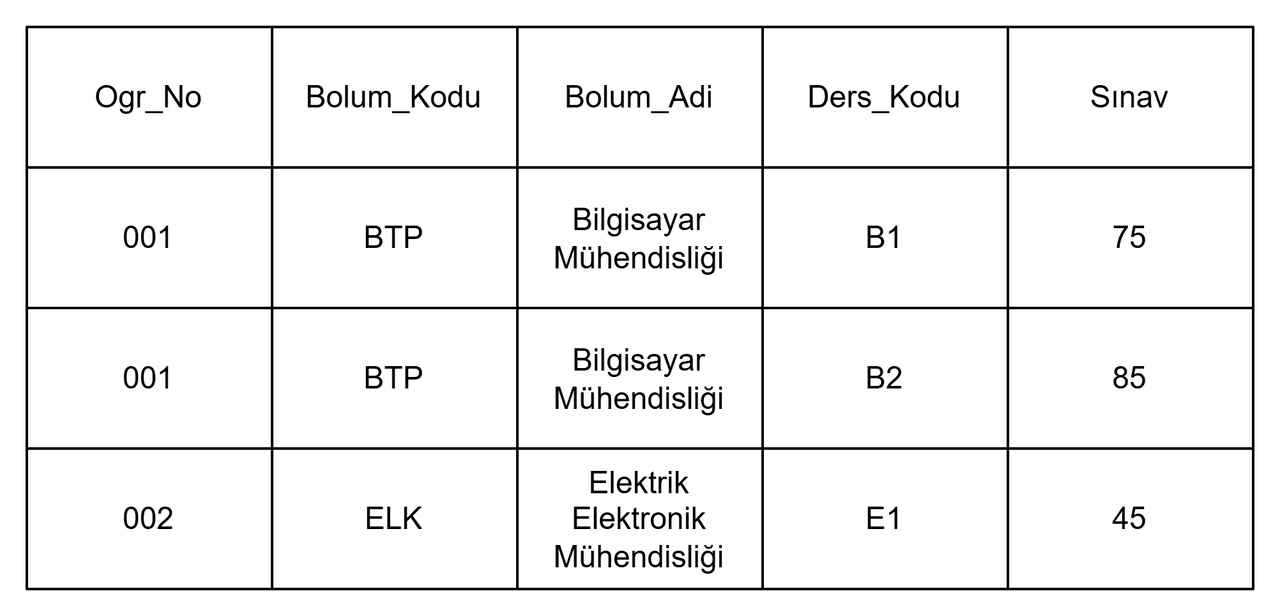
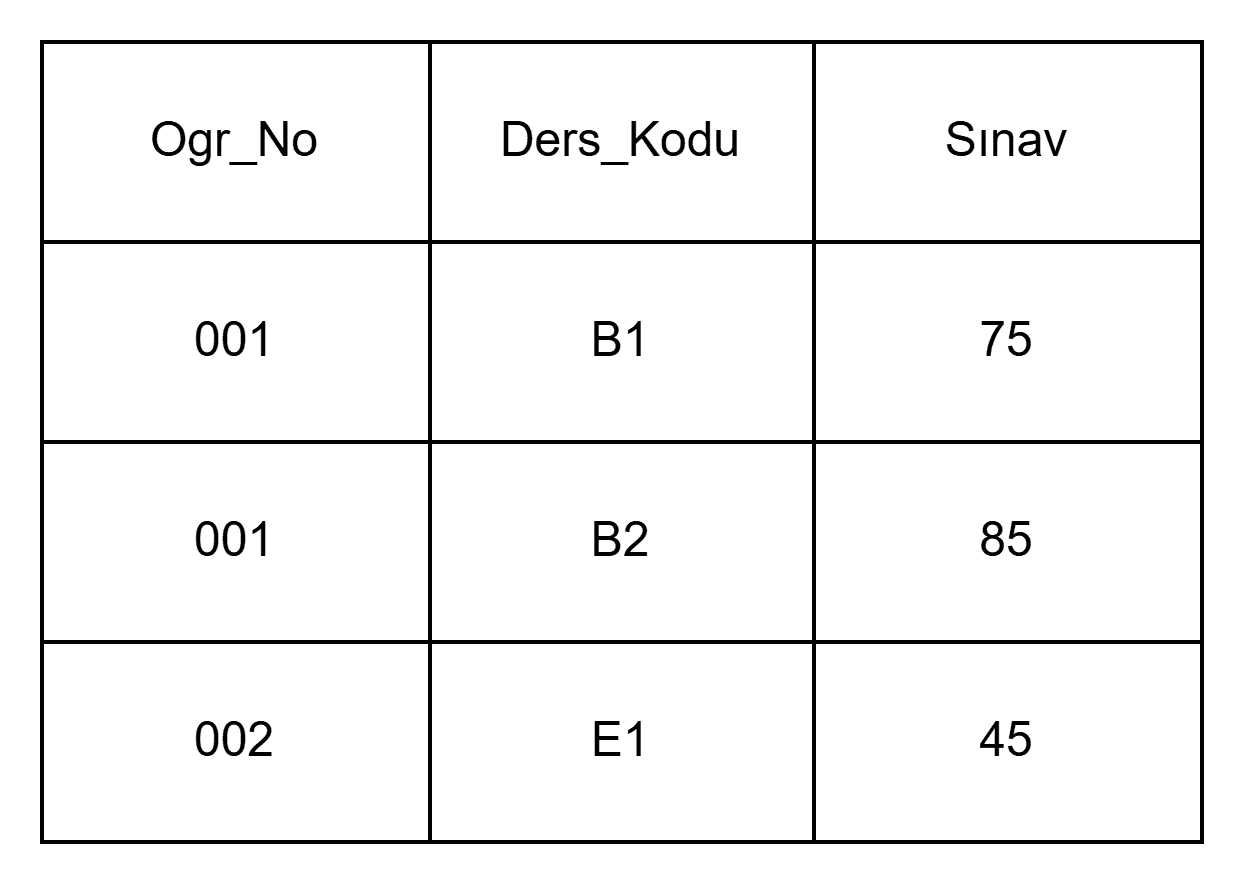
In this table, the "Department_name" column depends on "Department_code." Therefore, "Department_name" must be moved to a separate table:
Student Table:
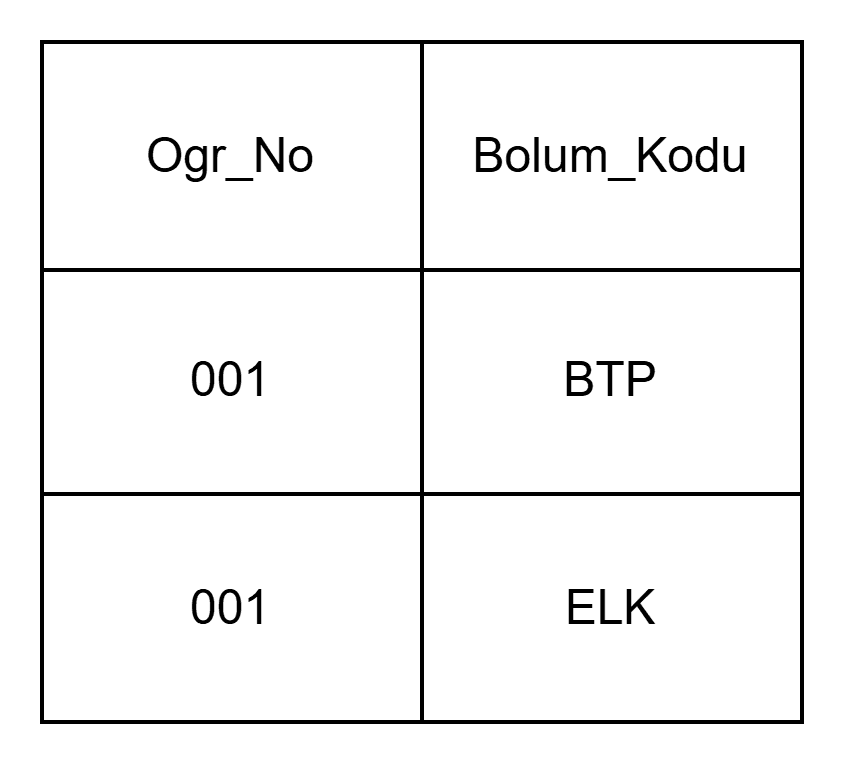
Department Table:
Grades Table:
Requirements:
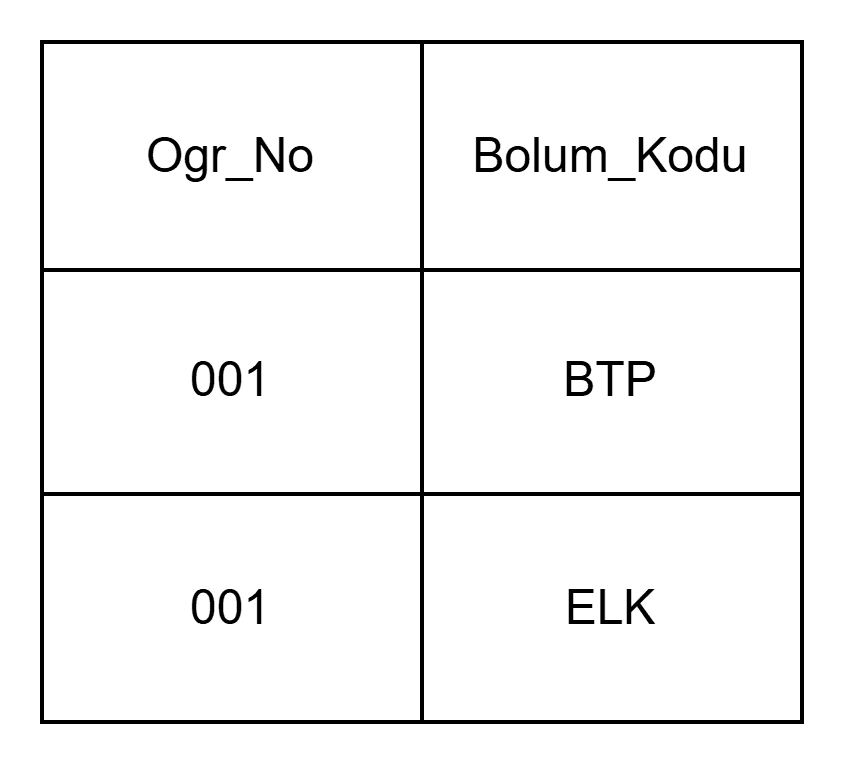
🔹 Example: In the table, the "Department_code" information depends on "Department_name." If "Department_name" depends on another column, this creates a transitive dependency situation road. To prevent this, department information should be stored in a separate table.
Final Hali:
Database normalization is a critical method used to ensure data integrity, use storage space efficiently storage and improve performance. 1NF, 2NF, and 3NF are the most commonly used normalization steps common. Boyce-Codd Normal Form (BCNF), 4NF, and 5NF are applied for more complex structures.
Ramakrishnan, Raghu, and Johannes Gehrke. Database Management Systems. 3rd Edition. New York: McGraw-Hill, 2002.
Silberschatz, Abraham, Henry F. Korth, and S. Sudarshan. Database System Concepts. 7th Edition. New York: McGraw-Hill, 2019.

No Discussion Added Yet
Start discussion for "Database Normalization" article
Advantages of Normalization
Normalization Rules and Normal Forms
First Normal Form (1NF)
Second Normal Form (2NF)
Third Normal Form (3NF)