


This article was automatically translated from the original Turkish version.
+2 More
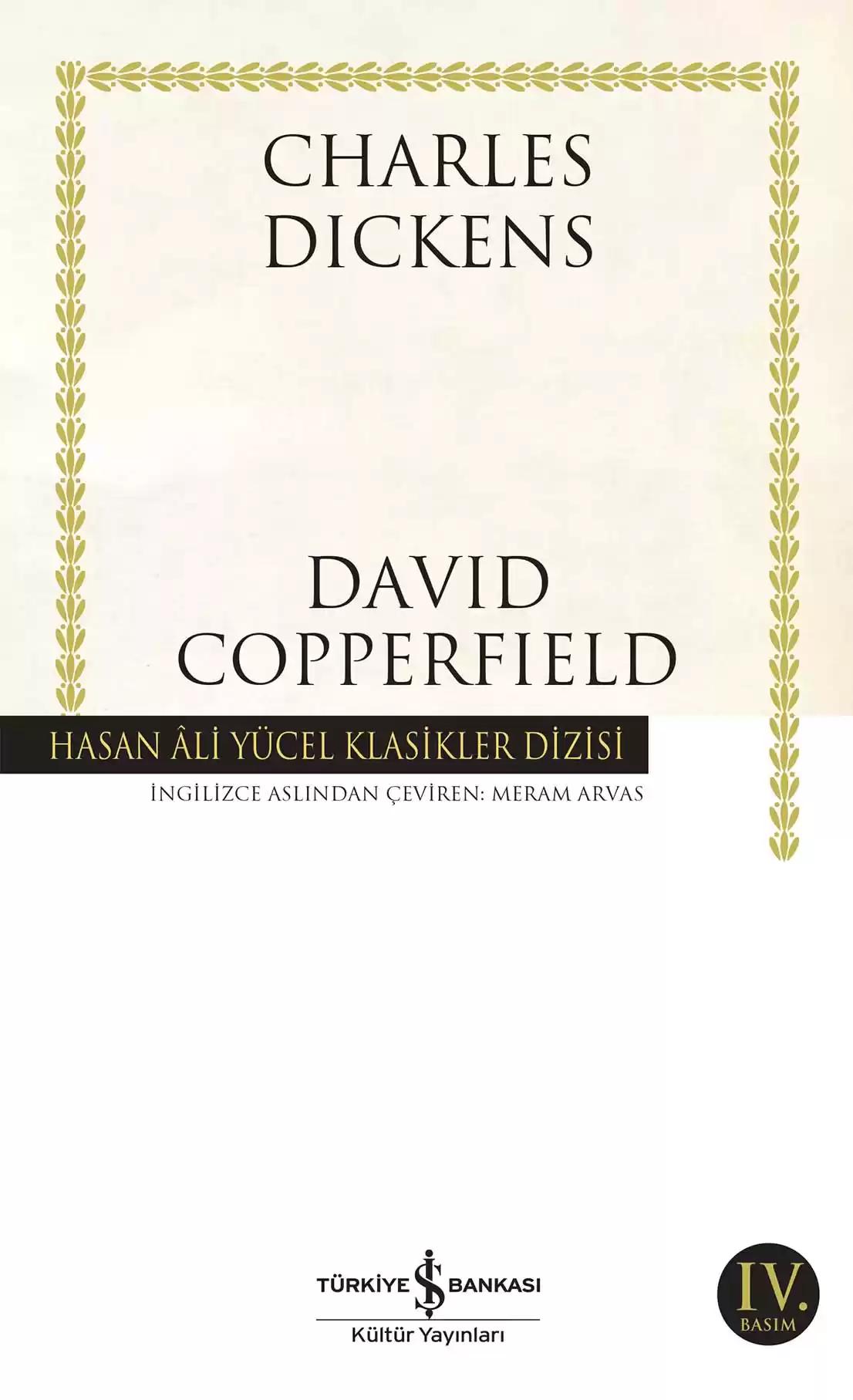
David Copperfield
Author(s) | Charles Dickens | ||||||||
|---|---|---|---|---|---|---|---|---|---|
Translator(s) | Meram Arvas | ||||||||
Number of Pages | 1112 | ||||||||
Publisher(s) | İş Bankası Kültür Yayınları | ||||||||
ISBN | 9786052959817 | ||||||||
David Copperfield is a semi-autobiographical novel written by the English author Charles Dickens and first published in 1850. Inspired by Dickens’s own childhood and youth, the novel is regarded as the one he called his “favourite child,” in which he reconstructs his life story within a fictional framework. The novel masterfully explores social, familial, and individual themes set in Victorian England.
The novel narrates the life of its protagonist, David Copperfield, from childhood onward. Orphaned before birth, David grows up under the harsh rule of his cruel stepfather, Mr. Murdstone. After his mother’s death, he is sent to a boarding school and later dispatched to work in London. Despite the hardships of his early years, David’s determination and intelligence enable him to overcome these difficult circumstances and develop into a successful writer. Throughout the novel, David’s education, friendships, romantic relationships, and conflicts with his family are examined. The narrative centers on David’s inner growth and his awakening to the injustices and class divisions of his society. Dickens offers powerful critiques of working-class life, child labor, the education system, and family structures of the era.
The story is told in the first person by David Copperfield himself. Dickens vividly and richly describes characters, settings, and events, helping readers vividly imagine the world of the novel. Because the narrator’s personal experiences and emotions are central, the style is intimate and emotional. Readers share in David’s joys and sorrows.
David Copperfield appeals to readers interested in classic literature, those drawn to coming-of-age narratives, those seeking social critique in storytelling, and those wishing to understand the social structure of 19th-century England.
Dickens, Charles. David Copperfield. Çev. Meram Arvas. İstanbul: Türkiye İş Bankası Kültür Yayınları, 2019.
Türkiye İş Bankası Kültür Yayınları. *David Copperfield* (book cover). Accessed May 14, 2025. https://www.iskultur.com.tr/david-copperfield.aspx.

David Copperfield
Author(s) | Charles Dickens | ||||||||
|---|---|---|---|---|---|---|---|---|---|
Translator(s) | Meram Arvas | ||||||||
Number of Pages | 1112 | ||||||||
Publisher(s) | İş Bankası Kültür Yayınları | ||||||||
ISBN | 9786052959817 | ||||||||
No Discussion Added Yet
Start discussion for "David Copperfield (Book)" article
Plot Summary
Themes in the Novel
Key Characters
Style of the Novel
Target Audience