
 Recently Added:
This article was automatically translated from the original Turkish version.
Sanctions on Israeli Settlements are commercial and diplomatic measures announced on 8 September 2026 by twelve countries including the United Kingdom France and Canada in response to Israeli settlement activities in the occupied West Bank. Under the initiative supported by Canada Denmark Finland France Iceland Ireland Norway Poland Portugal Spain Sweden and the United Kingdom it was decided to restrict trade in goods produced in Israeli settlements in the West Bank and to take measures against individuals and entities contributing to the expansion of these settlements. The decision was taken citing rising settler violence in the region and activities aimed at expanding Israeli settlements.
In a joint statement issued by the foreign ministers of the twelve countries it was stated that the expansion of Israeli settlements in the West Bank and settler violence against Palestinians undermine the feasibility of a two-state solution. Accordingly the countries decided to either implement national measures restricting trade in goods produced in Israeli settlements in the West Bank or to support commercial restrictions to be applied at the European level. It was reported that Ireland and Spain had already begun implementing similar restrictions on these products.
The United Kingdom announced more comprehensive measures within the sanctions decision. UK Foreign Secretary Ed Miliband declared that an import ban would be imposed on goods produced in Israeli settlements located in occupied Palestinian territories.
It was also announced that certain companies and individuals providing services in construction infrastructure finance and real estate sectors to support the expansion of settlements would be included in the sanctions. Furthermore it was decided to prohibit advertising of Israeli settlements in the West Bank within the United Kingdom. The British government emphasized that the sanctions target not the State of Israel as a whole but specifically the settlements in the West Bank and activities aimed at their expansion.
The decision was influenced by the ongoing expansion of Israeli settlements in the West Bank and increasing incidents of violence between Israeli settlers and Palestinians. Since Israel’s occupation of the West Bank and East Jerusalem in 1967 the number of settlements established in these areas has grown over time. As of 2026 approximately 700000 Israelis are reported to live in around 160 Israeli settlements in the West Bank and East Jerusalem while approximately 3.3 million Palestinians reside in the region. The majority of the international community considers these settlements to be in violation of international law.
Following the outbreak of the Gaza War on 7 October 2023 there has been a marked increase in attacks by Israeli settlers against Palestinians and Palestinian property in the West Bank. According to data from the Palestinian Ministry of Health at least 1105 Palestinians have been killed in the West Bank by Israeli forces or settlers between the start of the Gaza War and September 2026. The Israeli military and government have been accused of failing to take adequate measures to prevent settler violence in the region.
The settlement project in the E1 area located east of East Jerusalem also played a significant role in bringing the sanctions decision to the forefront. Israel’s announcement of a tender process to construct approximately 1200 new housing units in the E1 area triggered international condemnation. The E1 area is strategically positioned between the northern and southern parts of the West Bank and is seen as potentially undermining the territorial contiguity of the future Palestinian state. The British government also stated that the project could eliminate the feasibility of a two-state solution.
During the announcement of the sanctions UK Foreign Secretary Ed Miliband also clarified the British government’s legal stance on Israel’s occupation of the West Bank. Miliband stated that Israel’s efforts to entrench its control over the territory expand its sovereignty and promote the growth of settlements render the occupation in the West Bank illegal under international law. This position was noted to be consistent with the advisory opinion issued by the International Court of Justice in 2024.
Miliband further characterized actions targeting the forced displacement of Palestinians in certain areas of the West Bank as ethnic cleansing and accused the Israeli government of failing to intervene adequately in these activities. The Israeli government rejected these allegations and criticized Miliband’s statements as misrepresenting the facts.
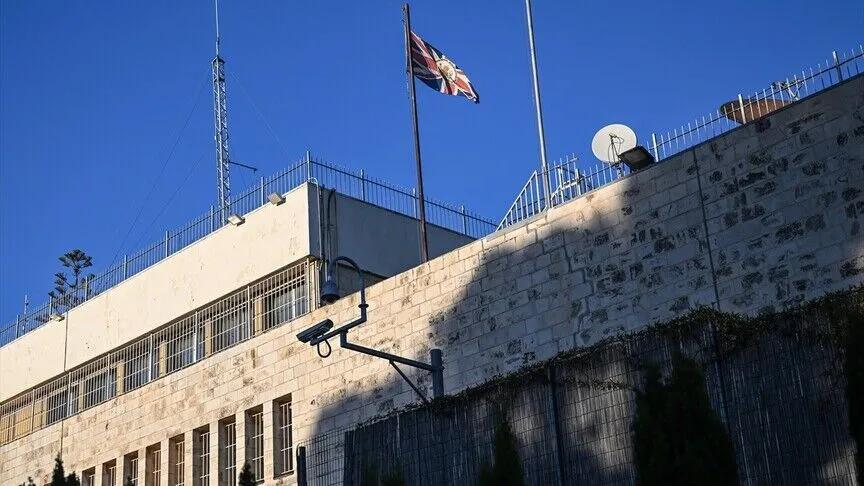
Following the announcement of the sanctions the Israeli government implemented a series of countermeasures against the United Kingdom. Israeli Foreign Minister Gideon Saar announced the closure of the British consulate in East Jerusalem. The closure of the consulate which engages in relations with Palestinians in Jerusalem the West Bank and Gaza constitutes one of the main diplomatic responses to the sanctions.
Israel also banned entry to eleven British MPs including Jeremy Corbyn and Diane Abbott. It was announced that the United Kingdom’s activities supporting the training of the Palestinian Authority’s security forces in the West Bank would be terminated and that British representatives would be removed from international coordination mechanisms operating on Gaza. The Israeli government framed these measures as a direct response to the UK’s sanctions.
Israeli Foreign Minister Saar characterized the UK’s decision as a political measure directed against Israel. Israeli President Isaac Herzog also stated that the sanctions would not contribute to a solution and called for dialogue between the countries. The Israeli government rejected allegations that its activities in the West Bank and Gaza violate international law.
The Palestinian administration welcomed the sanctions decision by the United Kingdom and other countries. In a statement issued by the Presidency of the State of Palestine the decision was regarded as a significant step taken at the international level against Israel’s policies in the West Bank.
The United States government did not join the sanctions. US Secretary of State Marco Rubio stated that the Washington administration would not implement the measures taken by the United Kingdom. US Ambassador to Israel Mike Huckabee also criticized the UK’s sanctions decision and noted that it could have economic consequences for the United Kingdom.
The economic impact of the sanctions is assessed as limited. According to UK government data trade between the United Kingdom and the occupied Palestinian territories amounted to approximately 51 million dollars in 2025. Therefore it was emphasized that the decision’s significance lies not only in its direct economic effects but also as part of broader international political and diplomatic pressure against Israeli settlements in the West Bank.
Anadolu Ajansı. “ABD Başkanı Trump, İngiltere öncülüğünde İsrail'e uygulanan yeni yaptırımlara karşı çıkmadı.” Accessed September 9, 2026.https://www.aa.com.tr/tr/dunya/abd-baskani-trump-ingiltere-onculugunde-israile-uygulanan-yeni-yaptirimlara-karsi-cikmadi/4051703
Anadolu Ajansı. “İsrail, yaptırımlara yanıt olarak İngiltere'nin Doğu Kudüs'teki konsolosluğunu kapatma kararı aldı.” Accessed September 9, 2026.https://www.aa.com.tr/tr/dunya/israil-yaptirimlara-yanit-olarak-ingilterenin-dogu-kudusteki-konsoloslugunu-kapatma-karari-aldi/4051065
BBC News, “UK announces sanctions on West Bank settlements prompting furious Israeli response”, September 8, 2026. Accessed September 9, 2026.
BBC Türkçe. “İsrail, İngiltere'nin Doğu Kudüs'teki konsolosluğunu kapatacağını açıkladı.” Accessed September 9, 2026.https://www.bbc.com/turkce/articles/c62m8pygnd9o
DW Türkçe. “İngiltere dahil 12 ülkeden İsrail'e yaptırım.” Accessed September 9, 2026.https://www.dw.com/tr/i̇ngiltere-dahil-12-ülkeden-i̇sraile-yaptırım/a-79193005
Euronews Türkçe. “İngiltere ve Fransa dahil 11 Avrupa ülkesinden İsrail yerleşimlerine yönelik yaptırım.” Accessed September 9, 2026.https://tr.euronews.com/2026/09/08/ingiltere-ve-fransa-dahil-11-avrupa-ulkesinden-israil-yerlesimlerine-yonelik-yaptirim
TRT Haber. "12 Ülke İsrail'e Karşı Harekete Geçti: Ortak Yaptırım Kararı." Accessed September 9, 2026.https://www.trthaber.com/haber/dunya/12-ulke-katil-israile-karsi-harekete-gecti-ortak-yaptirim-karari-956257.html

Twelve countries, including England, France and Canada, announced new sanctions and trade restrictions in response to increasing settler violence and the expansion of Israeli settlements in the occupied West Bank. England decided to ban the import of goods produced in settlements and to impose sanctions on individuals and companies that facilitate the expansion of settlements.
No Discussion Added Yet
Start discussion for "Decision on Sanctions Against Israeli Settlements in the West Bank by 12 Countries" article
September 9, 2026
The Sanctions Decision
September 9, 2026
Background to the Decision
September 9, 2026
The United Kingdom’s Position
September 9, 2026
Israel’s Countermeasures
September 9, 2026
International Reactions