
This article was automatically translated from the original Turkish version.
Promoting Advanced Artificial Intelligence Innovation and Security is a comprehensive executive order signed by U.S. President Donald Trump on 2 June 2026 that establishes a framework allowing the federal government to voluntarily review the most advanced artificial intelligence models before their public release, with the aim of limiting cyber security threats under national security considerations.【1】
The primary objective of the order is to mitigate cyber security threats within the framework of national security concerns. However, the voluntary nature of participation highlights the limits of the Trump administration’s regulatory approach toward the technology sector.
Shortly after returning to office in January 2025, Trump revoked the executive order issued by former President Joe Biden to establish standards for the safe development of artificial intelligence.【2】
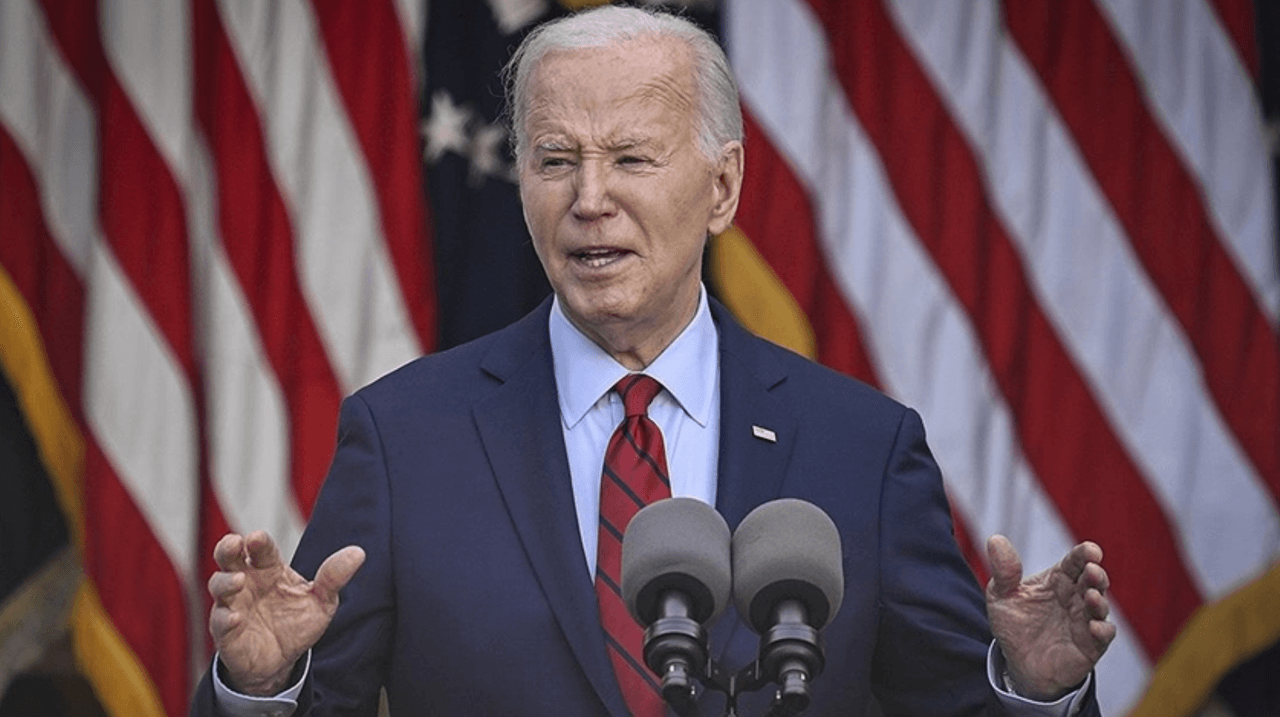
Joe Biden's AI Announcement - 14 January 2025 (Anadolu Ajansı)
This decision was interpreted as an early signal of Trump’s principle of non-intervention in the technology sector. Within this framework, the administration also sought to discourage states from implementing independent artificial intelligence regulations.
In April 2026, Anthropic announced a highly advanced artificial intelligence model named “Claude Mythos.” The model gained attention for its ability to detect security vulnerabilities in widely used software, sparking competition among AI security experts, governments, and technology companies.
Following the announcement of Mythos, U.S. Treasury Secretary Scott Bessent and Federal Reserve Chair Jerome Powell convened an emergency meeting with Wall Street CEOs to highlight the cyber security risks posed by the model to the global software infrastructure.
Anthropic restricted access to Mythos exclusively to trusted partners such as major technology firms and banks. On 2 June 2026, the company announced it had expanded this pool of trusted partners to include 150 new organizations.【3】
On 21 May 2026, Trump abruptly canceled a signing ceremony planned for the Oval Office, citing concerns that certain provisions in the initial draft of the order could undermine the United States’ leadership in technological competition.【4】
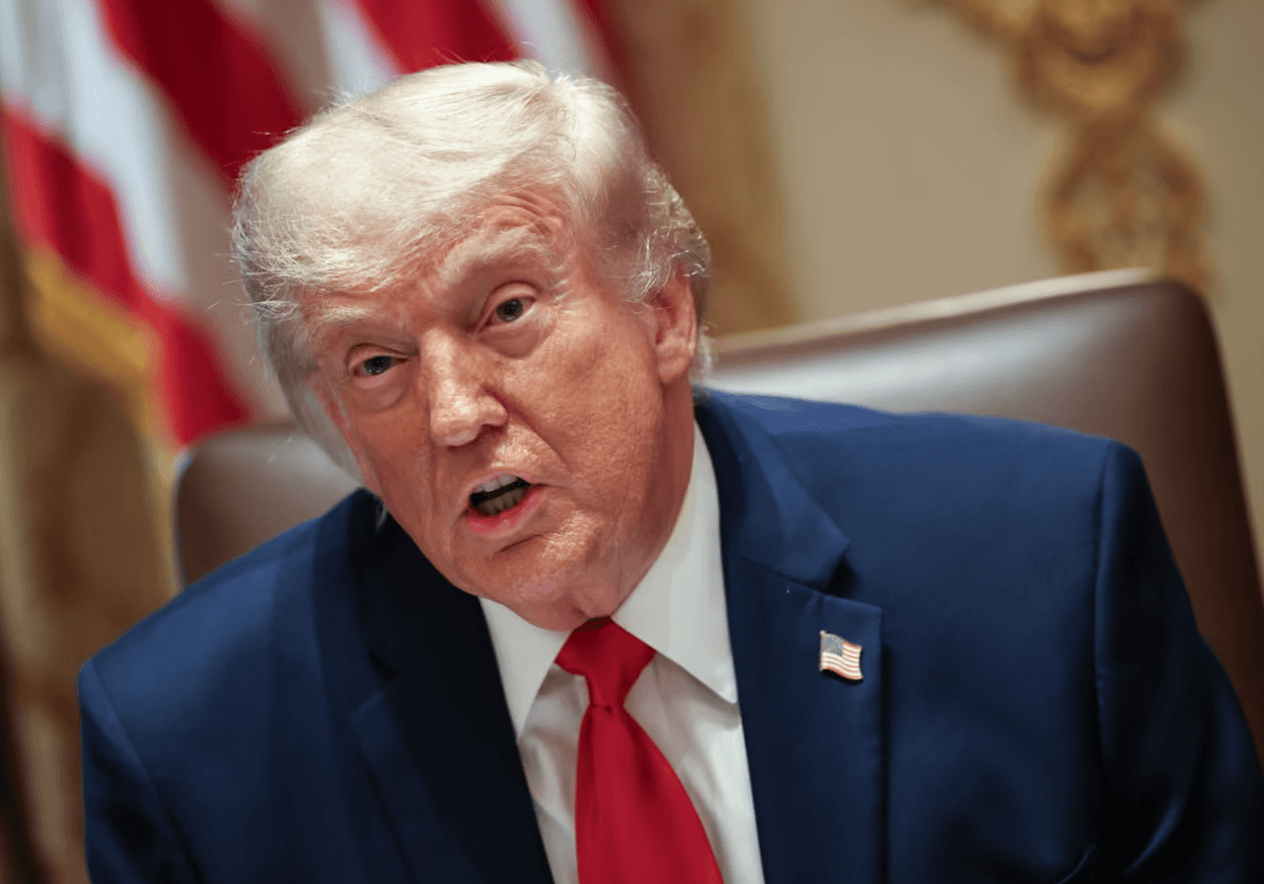
Donald Trump Making a Statement at the White House (The Guardian)
Trump commented on the matter: “I did not like some aspects, so I delayed it. We are ahead of China, ahead of everyone; I do not want to take any step that undermines this leadership.”【5】
This delay was partly the result of pressure from Silicon Valley leaders. Multiple news sources reported that Elon Musk, Mark Zuckerberg, and former White House official David Sacks conducted private phone calls with Trump urging him to narrow the order’s scope.
The final version of the order was signed quietly without any ceremony. The initial draft’s proposed 90-day pre-review period was reduced to 30 days in the final text.【6】
Promoting Advanced Artificial Intelligence Innovation and Security encourages developers of “covered frontier models” to grant the federal government access to advanced AI systems up to 30 days before their public release.
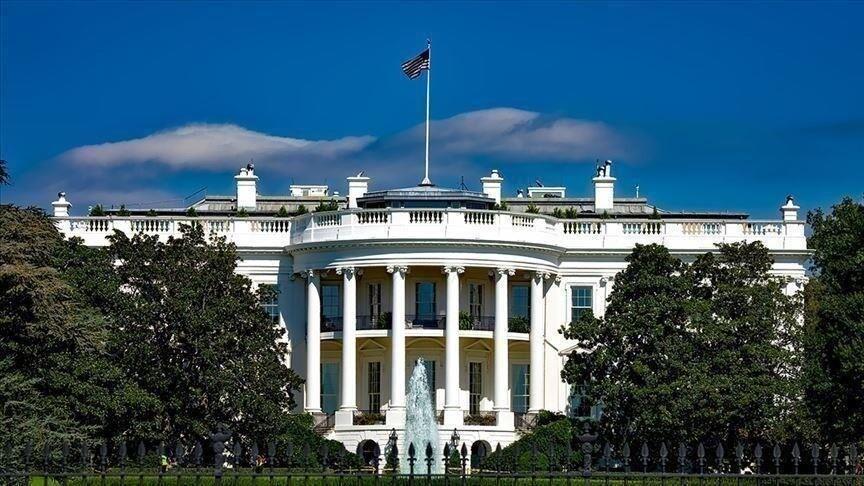
The White House (Anadolu Ajansı)
The order also anticipates that developers will be able to assess with federal authorities the level of risk posed by their models and whether to participate in the voluntary review process.
The text explicitly states that the government will act selectively during this process. The White House’s social media post included the following statement: “We are not monitoring all new models; such a level of state intervention would have a chilling effect on freedom of expression and innovation.”【7】
The order explicitly prohibits any interpretation of its provisions that would require a mandatory government license, pre-approval, or authorization for the development, publication, dissemination, or distribution of new AI models, including frontier models.
The order mandates that federal agencies prioritize cyber defense of national security and civil systems within 30 days. It proposes the establishment of a voluntary public-private partnership model to create an AI cyber security exchange center for identifying software vulnerabilities, involving the Treasury, Homeland Security, and Defense departments.
Treasury Secretary Scott Bessent is directed to coordinate with banks and AI firms to scan software and develop patches for security flaws. “Critical infrastructure” includes banks, emergency services, rural hospitals, local public services, and community banks.
The National Security Agency (NSA) and the Department of Defense will determine which AI models undergo government review. The order also anticipates that the government will hire additional experts in AI and cyber security and strengthen cyber defense systems within institutions operating key infrastructure.【8】
The order also includes provisions to establish programs that develop AI-enabled defense systems and accelerate cyber defense of civilian federal information systems. It further mandates the creation of a classified benchmarking process to evaluate current AI cyber capabilities and define the threshold for frontier models.
The Attorney General has been directed to prioritize enforcement of federal laws against anyone who unlawfully accesses or damages computers using artificial intelligence.
The Guardian assesses that the order reflects Trump’s effort to tighten control over cyber security and national security threats; however, its voluntary nature signals continued resistance to regulatory pressure.【9】
It is notable that the final order contains statements rejecting constraints on innovation. The text emphasizes that the United States will continue to lead the world in artificial intelligence and refuses to stifle this innovation with overly burdensome regulations.
Policy analyst Juan Londoño of the libertarian Cato Institute described the order as flawed but nonetheless a positive step toward preparing for the deployment of advanced AI systems.【10】
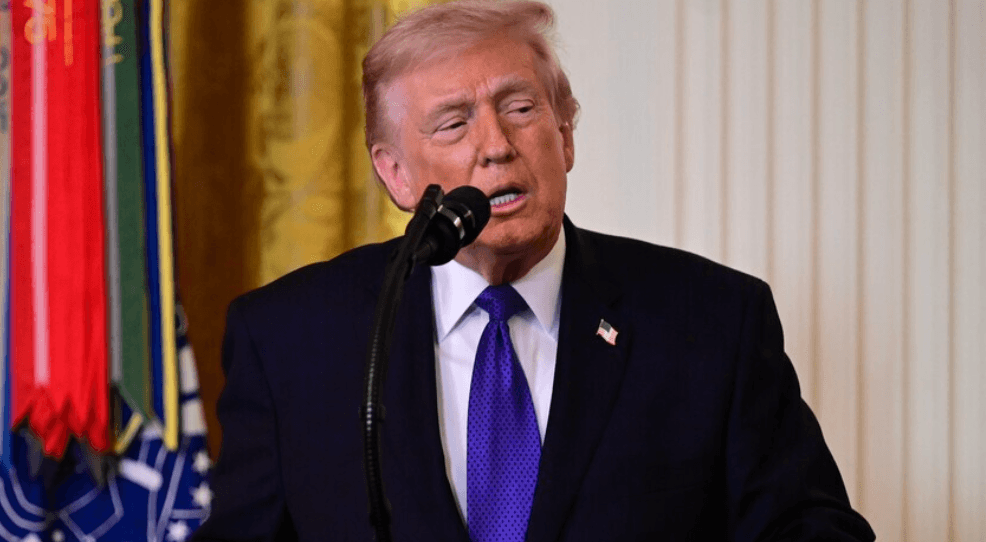
Donald Trump Speaking (Anadolu Ajansı)
While Londoño welcomed the voluntary nature of the process, he expressed concern over the broad discretion granted to the NSA director to determine which models are subject to review and who qualifies as a trusted partner.【11】
Londoño emphasized that granting such broad discretion to the NSA director could set a dangerous precedent, enabling the policy to be weaponized against companies like Anthropic with which the government may have conflicts.
Democratic Senator Mark Warner (Virginia, Vice Chair of the Intelligence Committee) supported Trump’s policy but accused the administration of belatedly attempting to rebuild what it had dismantled in its first year.【12】 Indeed, Trump had revoked Biden-era AI safeguards shortly after returning to office a year earlier.【13】
Leading AI firms have generally welcomed the order. Anthropic stated that the order represents a significant step toward strengthening America’s leadership in artificial intelligence and pledged to cooperate with the White House in its implementation.【14】
OpenAI CEO Sam Altman stated that the order strikes the right balance. Altman summarized his view as follows: “The United States must continue to lead in artificial intelligence by developing the best models, ensuring their security, and keeping AI tools in the hands of reliable defenders.”【15】 Google Executive Kent Walker described the order as an important advancement.
OpenAI’s Director of Global Relations, Chris Lehane, commented: “As AI capabilities continue to evolve, effective security frameworks must be developed through democratic institutions, drawing on technical expertise and broad stakeholder participation, thereby reinforcing accountability and public trust.”【16】
In May 2026, the Trump administration signed agreements with Microsoft, Google DeepMind, and xAI to secure early access to their new models prior to public release. Details of these agreements were removed from the Department of Commerce’s website without explanation.【17】 The Center for AI Standards and Innovation (CAISI), within the Department of Commerce, had previously signed similar agreements with OpenAI and Anthropic.【18】
Anadolu Agency. "Trump Issues Executive Order for 30-Day Voluntary Review of Advanced AI." Anadolu Agency, June 2, 2026. Accessed June 3, 2026. https://www.aa.com.tr/en/americas/trump-issues-executive-order-for-30-day-voluntary-review-of-advanced-ai/3954476
Anadolu Ajansı. "ABD Başkanı Trump Yapay Zekaya İlişkin Kararname İmzaladı." Anadolu Ajansı, June 2, 2026. Accessed June 3, 2026. https://www.aa.com.tr/tr/dunya/abd-baskani-trump-yapay-zekaya-iliskin-kararname-imzaladi/3954482
Associated Press. "Trump Signs Executive Order on Advanced Artificial Intelligence Innovation and Security." Associated Press, June 2, 2026. Accessed June 3, 2026. https://apnews.com/article/trump-ai-executive-order-e41af74f7b0865482f07d10fe7a50fe3
PYMNTS. "White House Executive Order Seeks Access to New AI Models." PYMNTS, June 2, 2026. Accessed June 3, 2026. https://www.pymnts.com/news/artificial-intelligence/2026/white-house-executive-order-seeks-access-new-ai-models/.
Reuters. "Trump Signed Order to Promote Advanced AI Innovation, Security, White House Says." Reuters, June 2, 2026. Accessed June 3, 2026. https://www.reuters.com/world/trump-signed-order-promote-advanced-ai-innovation-security-white-house-says-2026-06-02/
The Guardian. "Trump Executive Order on AI Introduces Voluntary Review Process for Advanced Models." The Guardian, June 2, 2026. Accessed June 3, 2026. https://www.theguardian.com/us-news/2026/jun/02/trump-executive-order-ai-voluntary-review.
The White House. "Fact Sheet: President Donald J. Trump Promotes Advanced Artificial Intelligence Innovation and Security." The White House, June 2, 2026. Accessed June 3, 2026. https://www.whitehouse.gov/fact-sheets/2026/06/fact-sheet-president-donald-j-trump-promotes-advanced-artificial-intelligence-innovation-and-security/.
The White House. "Promoting Advanced Artificial Intelligence Innovation and Security." The White House, June 2, 2026. Accessed June 3, 2026. https://www.whitehouse.gov/presidential-actions/2026/06/promoting-advanced-artificial-intelligence-innovation-and-security/
Tiryaki, Ayşe İrem. "ABD Başkanı Biden'dan Yapay Zeka Altyapısını Hızlandırmayı Amaçlayan Kararname." *Anadolu Ajansı*, January 14, 2025. Accessed June 3, 2026. https://www.aa.com.tr/tr/dunya/abd-baskani-bidendan-yapay-zeka-altyapisini-hizlandirmayi-amaclayan-kararname/3450136
[1]
Courtney Rozen, Ismail Shakil ve Bhargav Acharya, "Trump Administration to Ask US AI Firms to Voluntarily Submit Models for Cybersecurity Tests," Reuters, 3 Haziran 2026. https://www.reuters.com/world/us/trump-signed-note-advanced-innovation-security-white-house-says-2026-06-02/
[2]
Matt O'Brien, "Trump Signs an Executive Order That Invites Vetting of Top AI Models for National Security Risks," Associated Press, 3 Haziran 2026. https://apnews.com/article/trump-ai-executive-order-e41af74f7b0865482f07d10fe7a50fe3
[3]
Matt O'Brien, "Trump Signs an Executive Order That Invites Vetting of Top AI Models for National Security Risks," Associated Press, 3 Haziran 2026. https://apnews.com/article/trump-ai-executive-order-e41af74f7b0865482f07d10fe7a50fe3
[4]
Matt O'Brien, "Trump Signs an Executive Order That Invites Vetting of Top AI Models for National Security Risks," Associated Press, 3 Haziran 2026. https://apnews.com/article/trump-ai-executive-order-e41af74f7b0865482f07d10fe7a50fe3
[5]
Sanya Mansoor, "Trump Signs Executive Order Seeking Early Access to New AI Releases," The Guardian, 3 Haziran 2026. https://www.theguardian.com/us-news/jun/02/trump-pymnt-i-seeks-access
[6]
Yasin Güngor, "Trump Issues Executive Order for 30-Day Voluntary Review of Advanced AI," Anadolu Ajansı, 2 Haziran 2026. https://www.aa.com.tr/en/americas/trump-issues-executive-order-for-30-day-voluntary-review-of-advanced-ai/3954476
[7]
Matt O'Brien, "Trump Signs an Executive Order That Invites Vetting of Top AI Models for National Security Risks," Associated Press, 3 Haziran 2026. https://apnews.com/article/trump-ai-executive-order-e41af74f7b0865482f07d10fe7a50fe3
[8]
Sanya Mansoor, "Trump Signs Executive Order Seeking Early Access to New AI Releases," The Guardian, 3 Haziran 2026. https://www.theguardian.com/us-news/jun/02/trump-pymnt-i-seeks-access
[9]
Sanya Mansoor, "Trump Signs Executive Order Seeking Early Access to New AI Releases," The Guardian, 3 Haziran 2026. https://www.theguardian.com/us-news/jun/02/trump-pymnt-i-seeks-access
[10]
Matt O'Brien, "Trump Signs an Executive Order That Invites Vetting of Top AI Models for National Security Risks," Associated Press, 3 Haziran 2026. https://apnews.com/article/trump-ai-executive-order-e41af74f7b0865482f07d10fe7a50fe3
[11]
Matt O'Brien, "Trump Signs an Executive Order That Invites Vetting of Top AI Models for National Security Risks," Associated Press, 3 Haziran 2026. https://apnews.com/article/trump-ai-executive-order-e41af74f7b0865482f07d10fe7a50fe3
[12]
Matt O'Brien, "Trump Signs an Executive Order That Invites Vetting of Top AI Models for National Security Risks," Associated Press, 3 Haziran 2026. https://apnews.com/article/trump-ai-executive-order-e41af74f7b0865482f07d10fe7a50fe3
[13]
Matt O'Brien, "Trump Signs an Executive Order That Invites Vetting of Top AI Models for National Security Risks," Associated Press, 3 Haziran 2026. https://apnews.com/article/trump-ai-executive-order-e41af74f7b0865482f07d10fe7a50fe3
[14]
Matt O'Brien, "Trump Signs an Executive Order That Invites Vetting of Top AI Models for National Security Risks," Associated Press, 3 Haziran 2026. https://apnews.com/article/trump-ai-executive-order-e41af74f7b0865482f07d10fe7a50fe3
[15]
Courtney Rozen, Ismail Shakil ve Bhargav Acharya, "Trump Administration to Ask US AI Firms to Voluntarily Submit Models for Cybersecurity Tests," Reuters, 3 Haziran 2026. https://www.reuters.com/world/us/trump-signed-note-advanced-innovation-security-white-house-says-2026-06-02/
[16]
Matt O'Brien, "Trump Signs an Executive Order That Invites Vetting of Top AI Models for National Security Risks," Associated Press, 3 Haziran 2026. https://apnews.com/article/trump-ai-executive-order-e41af74f7b0865482f07d10fe7a50fe3
[17]
Sanya Mansoor, "Trump Signs Executive Order Seeking Early Access to New AI Releases," The Guardian, 3 Haziran 2026. https://www.theguardian.com/us-news/jun/02/trump-pymnt-i-seeks-access
[18]
Courtney Rozen, Ismail Shakil ve Bhargav Acharya, "Trump Administration to Ask US AI Firms to Voluntarily Submit Models for Cybersecurity Tests," Reuters, 3 Haziran 2026. https://www.reuters.com/world/us/trump-signed-note-advanced-innovation-security-white-house-says-2026-06-02/

No Discussion Added Yet
Start discussion for "Decree on Promoting Advanced Artificial Intelligence Innovation and Security (2026)" article
Background and Political Context
Repeal of the Biden Administration Policy
The Emergence of Anthropic’s Mythos Model
Signing Ceremony and Delay
Key Provisions of the Order
Voluntary Model Sharing Framework
Mandatory Licensing Prohibition
Cyber Security Infrastructure
Legal Enforcement
Regulatory Approach Debate
Interpretation of Policy Change
Criticism
Industry Reactions
Previous Agreements