This article was automatically translated from the original Turkish version.
+1 More
Province(s) | Yalova | ||||||||
|---|---|---|---|---|---|---|---|---|---|
District | Çınarcık | ||||||||
Town | Teşvikiye | ||||||||
Elevation(s) | 700–1000 m | ||||||||
Vegetation Cover | Kayın, meşe, kestane, gürgen | ||||||||
Delmece Yaylası is a high-altitude plateau located within the Teşvikiye village boundaries of Çınarcık district in Yalova province, Türkiye. It possesses both natural and cultural heritage value due to its pristine landscape, forested structure, continuation of nomadic pastoral traditions, and suitability for recreational activities.
Delmece Yaylası is situated southeast of the city center of Yalova, at the foothills of the Samanlı Mountains. Its elevation ranges between approximately 700 and 1000 meters. Access to the plateau is provided by roads that begin in Teşvikiye village and consist of alternating asphalt and stabilized surfaces. While these roads allow vehicle access, hiking trails are also frequently preferred, especially during summer months. Nature walking routes start in Teşvikiye, pass through Erikli Waterfall, and lead to Delmece.

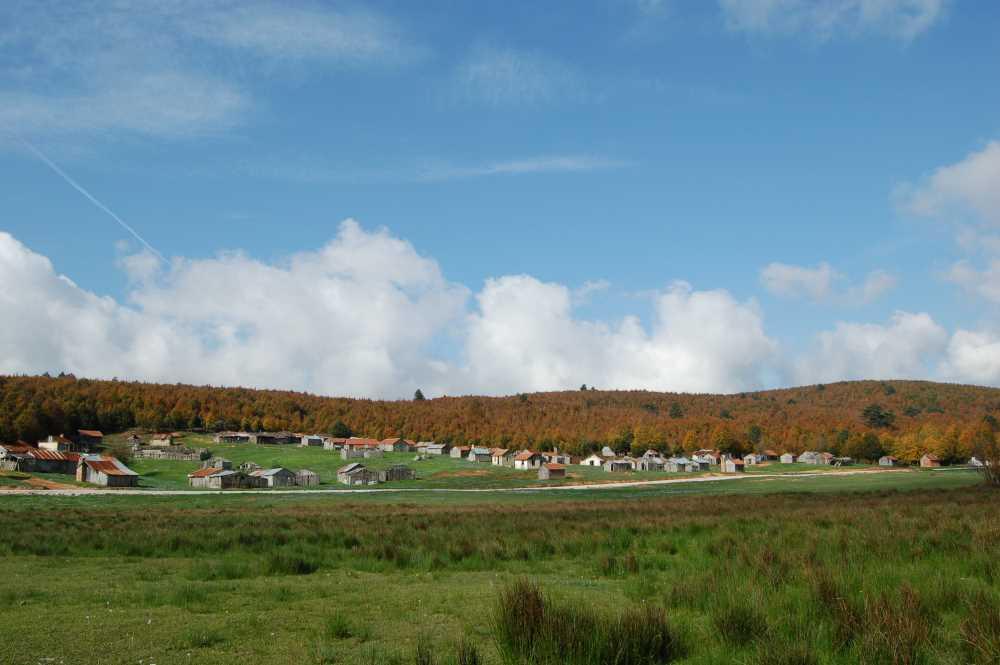
Delmece Yaylası (Culture Portal)
The plateau extends over a vast meadow area of approximately 400 dunams. Its topography features gentle slopes, extensive open spaces, and terrain suitable for settlement and agriculture. The area contains 60 traditional wooden structures and 20 stone or masonry buildings. These structures are used seasonally and do not serve as permanent residential areas. Building density within the plateau is low, and settlement patterns are dispersed.
Due to its humid and cool climate, Delmece Yaylası supports a rich forest ecosystem. Common tree species include oriental beech (Fagus orientalis), oak (Quercus spp.), hornbeam (Carpinus betulus), chestnut (Castanea sativa), and various pine species. The forest understory includes plants such as ferns, edelweiss, wild mint, and numerous forest flowers.
Natural water sources within the plateau boundaries, such as Şifalı Su and Dipsiz Göl, support the continuity of the vegetation cover. These water sources are reported to be potable and are used by local residents and visitors. They also play a vital role in maintaining the ecological balance of the ecosystem.
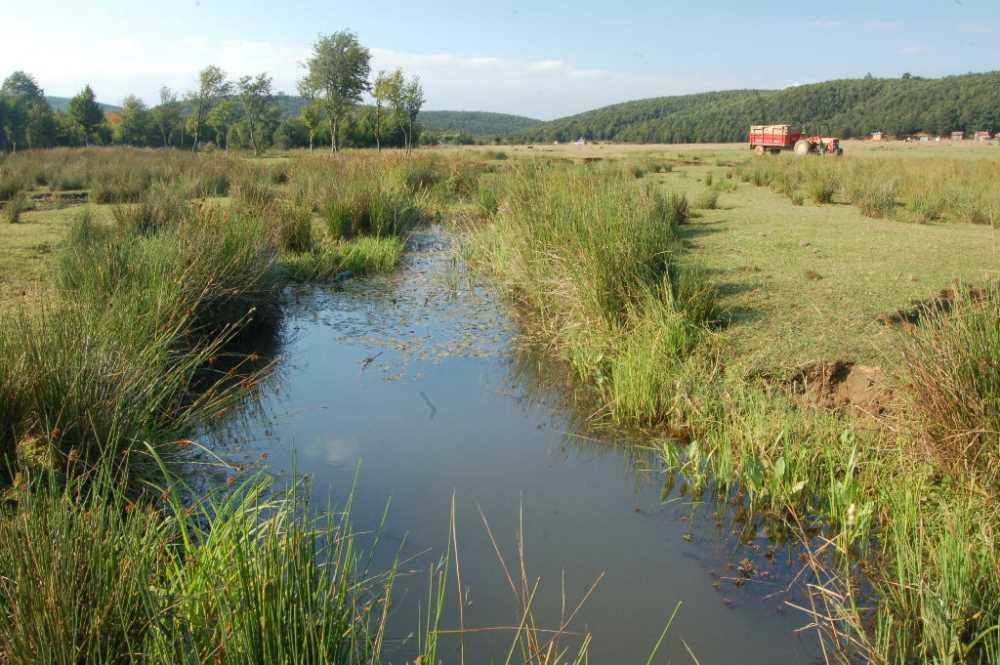
Delmece Yaylası (Culture Portal)
Historically, Delmece Yaylası served as a seasonal settlement used by local villagers during summer months for livestock grazing. Today, this tradition continues to some extent, with specific families bringing their animals to the plateau and staying there during summer. The wooden structures are used for accommodation, storage, and shelter in this context. Delmece is one of the rare examples preserving the classical Black Sea pastoral culture under the environmental conditions of the Marmara Region.
Due to its natural environment, Delmece Yaylası has become a prominent destination for nature tourism and alternative tourism in recent years. It is frequently chosen for nature-based activities such as camping, hiking, cycling, landscape photography, and meditation.
The majority of visitors are day-trippers, but some campers stay for several days during summer by setting up tents. However, there are no commercial facilities offering accommodation services on the plateau. The insufficient infrastructure—such as toilets, waste bins, and access to clean water—poses a significant challenge for controlled and sustainable use of the area.
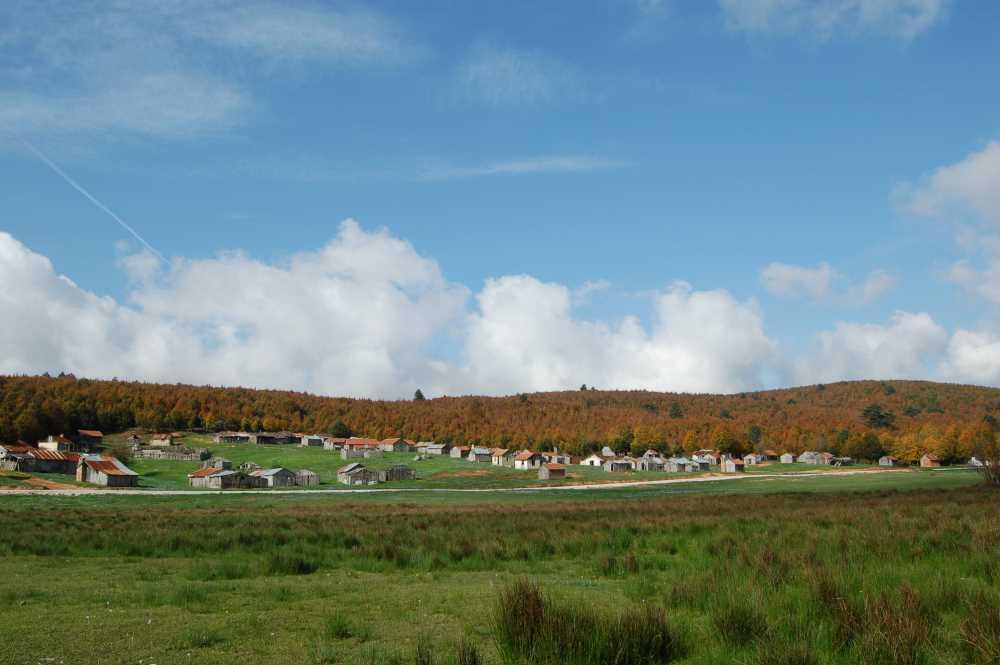
Delmece Yaylası (Culture Portal)
Visual materials of Delmece Yaylası archived by the Ministry of Culture and Tourism reveal a landscape characterized by meadow expanses, surrounding forest cover, and a blue sky. Notable elements in the photographs include open areas where tents are pitched, traditional plateau houses, and natural features such as Dipsiz Göl.
Delmece Yaylası currently lacks any special protected status. Increasing numbers of visitors, demands for construction, motor vehicle use, and litter pollution are threatening the plateau’s natural balance. Additionally, the use or abandonment of traditional pastoral structures without restoration risks the degradation of cultural landscape elements.
Therefore, the preservation of the area’s natural and cultural structure requires planning under sustainable tourism principles and effective management. It is recommended that local authorities and central administration jointly develop a planning framework to determine the plateau’s carrying capacity.
T.C. Ministry of Culture and Tourism. "Delmece Yaylası Fotoğrafı." *Kültür Portalı Medya Arşivi*. Accessed July 14, 2025. https://www.kulturportali.gov.tr/medya/fotograf/fotodokuman/1098
T.C. Ministry of Culture and Tourism. "Delmece Yaylası." *Kültür Portalı*. Accessed July 14, 2025. https://kulturportali.gov.tr/turkiye/yalova/gezilecekyer/delmece-yaylasi
Usman, Efe Emre. Akkaya, Divin Hazal. “Yayla Turizmi ve Konaklama Mekânları Üzerine Bir İnceleme: Yalova Delmece Yaylası.” Academia.edu. Accessed July 14, 2025. https://www.academia.edu/2319113/Yayla_Turizmi_ve_Konaklama_Mek%C3%A2nlar%C4%B1_%C3%9Czerine_Bir_%C4%B0nceleme_Yalova_Delmece_Yaylas%C4%B1

Province(s) | Yalova | ||||||||
|---|---|---|---|---|---|---|---|---|---|
District | Çınarcık | ||||||||
Town | Teşvikiye | ||||||||
Elevation(s) | 700–1000 m | ||||||||
Vegetation Cover | Kayın, meşe, kestane, gürgen | ||||||||
Geographical Location and Access
Physical Structure and Spatial Distribution
Vegetation and Ecological Structure
Pastoral Tradition and Seasonal Use
Recreational Activities and Tourism Use
Visual Landscape and Documentary Value
Environmental Pressures and Conservation Needs