

This article was automatically translated from the original Turkish version.
Nerve | The anterior digastric muscle is innervated by the mylohyoid nerve (n. mandibularis V3), while the posterior digastric muscle is innervated by the facial nerve (CN VII). | ||||||||
|---|---|---|---|---|---|---|---|---|---|
Artery | The facial artery is supplied by the occipital artery and the maxillary artery. | ||||||||
Function(s) | It depresses and retracts the mandible to widen the oral cavity and elevates the hyoid bone. | ||||||||
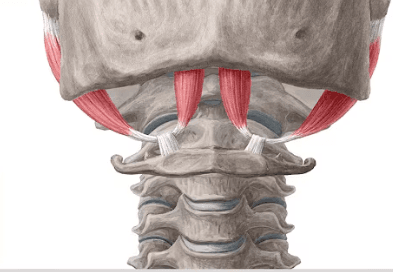
Digastric Muscle is a suprahyoid muscle located bilaterally beneath the jaw, composed of two muscular bellies (anterior and posterior). It derives its name from this paired structure (di-: two, -gastrik: belly). The posterior and anterior bellies converge at an intermediate tendon attached to the hyoid bone.
The digastric muscle is a superficial neck muscle consisting of two distinct bellies, named for this dual structure. The anterior belly originates from the digastric fossa on the inner surface of the mandible, while the posterior belly attaches to the mastoid notch of the temporal bone. These two bellies are connected by an intermediate tendon composed of tissue distinct from the muscle fibers. The intermediate tendon is anchored to the hyoid bone via a fibrous ring, which sometimes contains a synovial sheath to reduce friction during movement. Thus, the digastric muscle functions like a bidirectional lever system, acting on both the mandible and the hyoid bone. The muscle has two distinct portions—the anterior and posterior bellies—connected by the intermediate tendon. Structurally, the intermediate tendon is attached to the hyoid bone, the anterior belly connects to the mandible, and the posterior belly connects to the temporal bone. These attachments enable the muscle’s bidirectional function. Additionally, the posterior belly lies adjacent to the posterior border of the parotid gland, while the anterior belly is in close relation to the submandibular gland. The digastric muscle serves as a defining boundary in several cervical anatomical triangles: submandibular, carotid, submental, and muscular triangles.
The anterior belly of the digastric muscle originates from the first pharyngeal arch and is innervated by the mylohyoid nerve, a branch of the mandibular division of the trigeminal nerve (CN V₃). The posterior belly originates from the second pharyngeal arch and is innervated by the digastric branch of the facial nerve (CN VII). This dual embryological origin and innervation has important clinical implications for motor control and neurological assessment.
The anterior belly is innervated by the mylohyoid nerve (CN V₃), and the posterior belly by the digastric branch of the facial nerve (CN VII). This dual innervation supports the muscle’s complex motor functions. Although not detailed in the text, the digastric muscle is typically supplied by branches of the facial and cervical arteries.
The digastric muscle depresses the mandible, facilitating mouth opening, and thus plays a key role in mastication and speech. It also elevates the hyoid bone, aiding swallowing and respiration by expanding the upper airway. The muscle exhibits a bidirectional function: it can move the hyoid bone while the mandible is fixed, or move the mandible while the hyoid is fixed. Structural variations of the digastric muscle may occur; rare cases include absence of the intermediate tendon, altered attachment sites, or a duplicated anterior belly. These variations are clinically significant in head and neck surgery and imaging evaluations. The muscle’s position serves as an important anatomical landmark in neck surgery. Dysfunction of the digastric muscle may lead to impairments in swallowing and mandibular movement.
Accessed November 26, 2025.
Accessed November 26, 2025.
Aslan, Gülcan, Mustafa Demir, and Mehmet Yıldırım. "Bruksizmde Digastrik Kas Hassasiyetinin Önemi." ResearchGate, 2024. Accessed July 26, 2025.
Gupta, Ravi, and Neha Sharma. "A Cadaveric Case Report of Bilateral Accessory Anterior Bellies of the Digastric Muscles." ResearchGate, 2024. Accessed July 26, 2025.
Hasan, Saba, and Ayesha Malik. "Variations and Thicknesses of Anterior Belly of the Digastric Muscle: An Ultrasonographic Study." ResearchGate, 2024. Accessed July 26, 2025.
Kachlik, David, and Ivan Varga. "The Digastric Muscle: Its Anatomy and Functions Revisited." ResearchGate, 2024. Accessed July 26, 2025.
Zarrinkalam, Mehdi, and Farzad Kordrostami. "The Trochlea for the Intermediate Tendon of the Digastric Muscle: A Review." ResearchGate, 2024. Accessed July 26, 2025.

Nerve | The anterior digastric muscle is innervated by the mylohyoid nerve (n. mandibularis V3), while the posterior digastric muscle is innervated by the facial nerve (CN VII). | ||||||||
|---|---|---|---|---|---|---|---|---|---|
Artery | The facial artery is supplied by the occipital artery and the maxillary artery. | ||||||||
Function(s) | It depresses and retracts the mandible to widen the oral cavity and elevates the hyoid bone. | ||||||||
Anatomical Structure
Morphology and Attachment Points
Embryological Origin and Classification
Innervation and Vascular Supply
Function and Clinical Relevance