


This article was automatically translated from the original Turkish version.
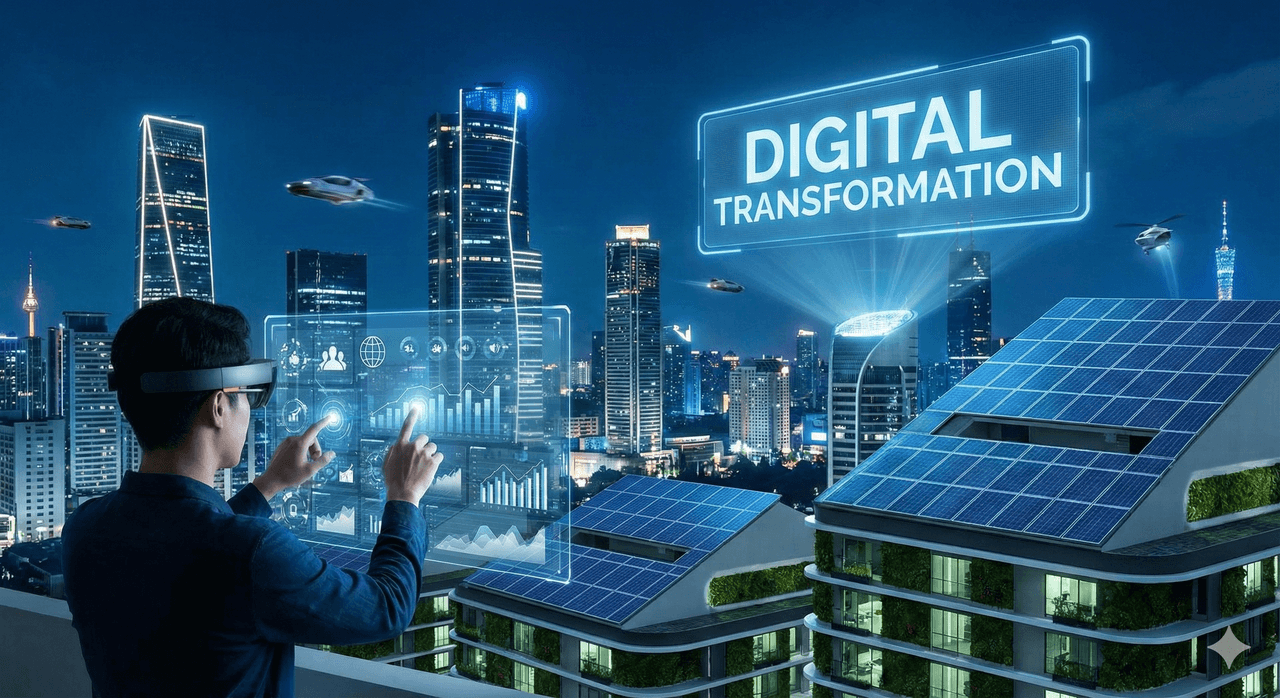
Digital Transformation (Generated with Artificial Intelligence)
Related Concept(s) | Digitalization Automation Data Management Industry 4.0 | ||||||||
|---|---|---|---|---|---|---|---|---|---|
Scope(s) | Production Supply Chain Decision Making Management Service | ||||||||
Requirements | Strategy, Infrastructure, Human Resources, Governance | ||||||||
Digital transformation is a multidimensional process that involves restructuring an organization’s economic, managerial, and operational activities through digital technologies. This process encompasses not merely the migration of existing operations to digital environments but also the holistic reorganization of work methods, organizational structures, decision-making mechanisms, and value creation models. Digital transformation is regarded as a long-term transformation process integrating technological innovation with strategic management and institutional change.

Digital Transformation (Generated with Artificial Intelligence)
In academic literature, the concept of digital transformation is distinguished from digitalization and automation. While digitalization primarily refers to the execution of analog processes using digital tools, digital transformation involves the redesign of these processes and entails a structural change affecting the entire organization. In this sense, digital transformation is viewed not as a technology-centric application but as a strategic management approach.
In the process of digital transformation, organizations reassess their goals, visions, and competitive strategies in alignment with digital technologies. Literature indicates that this reflects the understanding that digital transformation is not a technical renewal but a change process that impacts organizational integrity.
Digital transformation is shaped around three core components: technology, processes and human resources. The technology dimension includes data analytics, information systems, and digital infrastructure. The process dimension involves the redesign of workflows and internal organizational integration. Human resources are associated with digital competencies, organizational culture and adaptability to change. Treating these three components in isolation weakens the digital transformation process. In particular, the inability of human resources and organizational culture to adapt to transformation is considered among the key factors limiting the sustainability of digital transformation initiatives.
In the industrial sector, digital transformation aims to make production processes traceable, measurable and manageable through digital technologies. In this context, digital transformation drives structural changes in areas such as production planning, quality management, maintenance and repair processes, and supply chain management. Industry-focused digital transformation is linked to the concepts of increased efficiency and process optimization. However, this transformation is possible not only through technological investments but also through the transformation of organizational structure and management philosophy.
Digital transformation also demands comprehensive change in corporate governance. Key elements of this process include the data-driven nature of strategic decision-making, the support of governance mechanisms by digital tools, and the long-term planning of digital investments. The success of digital transformation depends on organizations treating it not as a technology project but as a strategic institutional change process. This approach reveals that digital transformation is an ongoing process.
In the process of digital transformation, human resources are regarded as one of the most decisive factors. Developing employees’ digital skills, strengthening organizational learning mechanisms, and managing resistance to change are critical to the effectiveness of the transformation. Digital transformation depends not only on technical infrastructure but also on organizational alignment and the human factor. In this context, digital transformation is understood not merely as a technological shift but as a social and managerial transformation.
Sezen, Hayrettin Kemal and Arzu Eren Şenaras. "Dijitizasyon, Dijitalizasyon ve Dijital Dönüşüm Kavramlarına İlişkin Bir Değerlendirme." Pamukkale Üniversitesi Sosyal Bilimler Enstitüsü Dergisi, no. 51 (2022): 49-59. Accessed February 3, 2026.
Topal, Fatma, and Gül Selin Türkyılmaz. “Dijital Dönüşüm Uygulamalarının Örgütlerin Dayanıklılığı Üzerindeki Etkisi.” *Uluslararası İktisadi ve İdari İncelemeler Dergisi*, no. 49 (2025): 227–246. Accessed February 5, 2026. https://dergipark.org.tr/tr/pub/ulikidince/article/1682212
Türkyılmaz, Serap. "Dijital Dönüşümün İşletmeler Üzerindeki Etkisi." Nişantaşı Üniversitesi Sosyal Bilimler Dergisi. Accessed January 31, 2026.
Çanakkale Onsekiz Mart Üniversitesi Dijital Dönüşüm Ofisi. "Dijital Dönüşüm Nedir?" Çanakkale Onsekiz Mart Üniversitesi Dijital Dönüşüm Ofisi. Accessed February 3, 2026. https://ddok.comu.edu.tr/tr/sayfa/dijital-donusum-nedir-2

Digital Transformation (Generated with Artificial Intelligence)
Related Concept(s) | Digitalization Automation Data Management Industry 4.0 | ||||||||
|---|---|---|---|---|---|---|---|---|---|
Scope(s) | Production Supply Chain Decision Making Management Service | ||||||||
Requirements | Strategy, Infrastructure, Human Resources, Governance | ||||||||
No Discussion Added Yet
Start discussion for "Digital Transformation" article
Conceptual Framework and Definition Approaches
Key Components of Digital Transformation
Digital Transformation in Industry and Production
Corporate Governance and Strategic Dimension
Human Resources and Organizational Alignment