


This article was automatically translated from the original Turkish version.
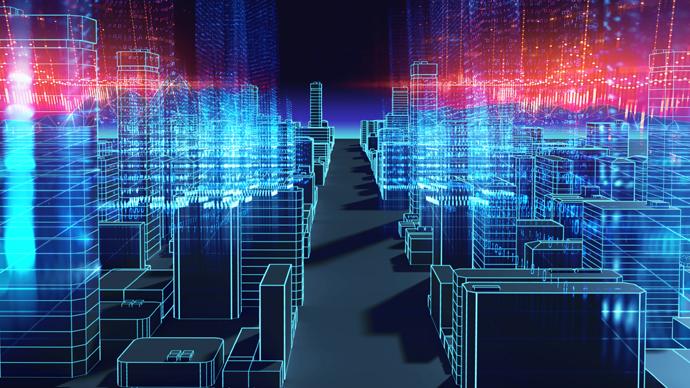
Digital Twin Technology
History | It was first used by NASA for space missions. | ||||||||
|---|---|---|---|---|---|---|---|---|---|
Basic Components | Communication Data Analytics Digital Model Sensors Physical Entity | ||||||||
Application Area(s) | Education Urban Planning Tourism Healthcare Industry | ||||||||
Digital twin technology is a technology that enables the real-time representation of a physical object or process in a digital environment. This technology is based on the creation of virtual replicas of physical systems and conducting analyses through these replicas. Digital twins are recognized as one of the core components of Industry 4.0 and are used in numerous fields ranging from manufacturing to healthcare and from tourism to disaster management.
The concept of the digital twin was first introduced by NASA to create digital models of spacecraft. This allowed physical systems to be monitored and analyzed in a virtual environment. Over time, this technology began to be applied in industrial production, healthcare, education and many other sectors. Digital twin technology is a technology that enables the real-time representation of a physical object or process in a digital environment. This technology is based on the creation of virtual replicas of physical systems and conducting analyses through these replicas. Digital twins are recognized as one of the core components of Industry 4.0 and are used in numerous fields ranging from manufacturing to healthcare and from tourism to disaster management.
Industry and Manufacturing: Digital twins are used to optimize production processes, predict maintenance needs and improve product quality. For example, by creating a digital twin of a production line, potential failures can be identified in advance and production processes can be made more efficient.
Healthcare Sector: In healthcare, digital twins enable the development of personalized treatment plans based on individual patient health data. This allows for the advancement of personalized medicine and more effective treatment processes.
Tourism and Cultural Heritage: In the tourism sector, digital twins enable the virtual visitation of historical and cultural sites. This technology enriches tourism activities by offering interactive and personalized experiences to visitors.
Disaster Management: In disaster management, digital twins are used to create digital models of cities and simulate disaster scenarios through these models. This enables more effective preparedness for disasters and optimization of response operations.
Real-Time Monitoring: The real-time status of physical systems can be monitored through digital twins.
Prediction and Simulation: Potential scenarios can be simulated to forecast future conditions in advance.
Increased Efficiency: Efficiency can be improved in production and operational processes.
Cost Reduction: Costs can be reduced by identifying maintenance and repair needs in advance.
The implementation of digital twin technology presents certain challenges and ethical concerns. These include data security, privacy, high costs and deficiencies in technical infrastructure. Additionally, ethical concerns related to the use of personal data must also be taken into account.
The adoption of digital twin technology is expected to expand further in the future. By integrating with technologies such as artificial intelligence and machine learning, smarter and more predictive systems can be developed. It is also anticipated that digital twins will find applications in new sectors such as education, agriculture and energy.
Digital twin technology provides innovative solutions across many fields by representing physical systems in a digital environment. This technology offers advantages such as process optimization, cost reduction and increased efficiency. However, the challenges and ethical issues encountered during implementation must also be considered. In the future, it is expected that digital twins will be used across a broader range of applications and integrated with advancing technologies.
Alptekin, Gökhan, and Türkmen, Deniz. “Dijital İkiz Üzerine Yapılan Araştırmaların Dergi Yayınlarındaki Eğilimlerinin Görselleştirilmesi.” *Açıköğretim Uygulamaları ve Araştırmaları Dergisi* 9, no. 2 (2023): 1–30. https://doi.org/10.51948/auad.1309385. Accessed May 8, 2025.
Göçen, Selin. “Açık ve Uzaktan Öğrenmede Dijital İkiz Teknolojisinin Kullanımına İlişkin Bir Değerlendirme.” Açıköğretim Uygulamaları ve Araştırmaları Dergisi 6, no. 4 (2020): 155–173. Accessed May 8, 2025.
Karaca, Şükran, and Özkan Önem, Esra. “Dijital İkiz Teknolojisinin Turizm Sektöründe Kullanım Alanları ve Etkileri.” *Kayseri Üniversitesi Sosyal Bilimler Dergisi* 5, no. 2 (2023): 158–168. Accessed May 8, 2025. https://doi.org/10.51177/kayusosder.1374880
Kumaş, Esra, and Serpil, Erol. "Endüstri 4.0’da Anahtar Teknoloji Olarak Dijital İkizler." *Politeknik Dergisi* 24, no. 2 (2021): 691–701. Accessed May 8, 2025.
Çalış Duman, Meral. “İşletmeler İçin Yeni Bir Verimlilik Teknolojisi: Dijital İkiz.” *Verimlilik Dergisi*, 2022, pp. 189–206. Accessed May 8, 2025.

Digital Twin Technology
History | It was first used by NASA for space missions. | ||||||||
|---|---|---|---|---|---|---|---|---|---|
Basic Components | Communication Data Analytics Digital Model Sensors Physical Entity | ||||||||
Application Area(s) | Education Urban Planning Tourism Healthcare Industry | ||||||||
No Discussion Added Yet
Start discussion for "Digital Twin Technology" article
Definition and History of Digital Twin Technology
Application Areas
Benefits of Digital Twin Technology
Challenges and Ethical Issues
Future Perspective