


This article was automatically translated from the original Turkish version.
+1 More
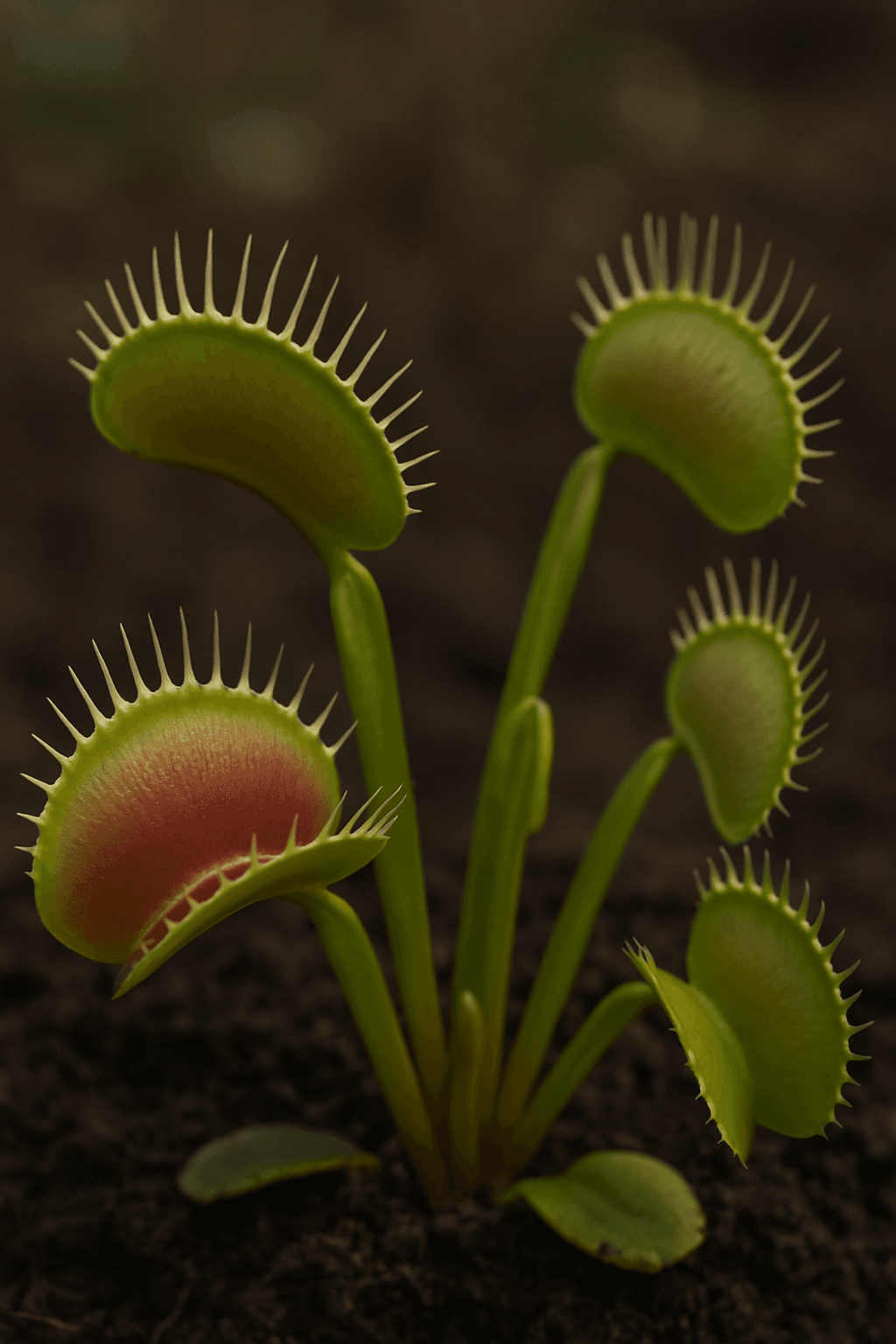
Dionaea muscipula, commonly known as the Venus flytrap, is a species distinguished by its structural and functional adaptations among carnivorous plants. It naturally occurs in a limited range in the southeastern United States, particularly in the wetland ecosystems of North and South Carolina. Despite being capable of photosynthesis, this species has evolved a heterotrophic feeding strategy to supplement its nutritional needs due to the nitrogen- and phosphorus-poor soils in which it grows.
Dionaea muscipula captures and digests insects, particularly flies, through specialized traps characterized by their rapid closing mechanism. This mechanism provides a unique example of stimulus-response signaling, not only among plants but across all organisms. Consequently, the species serves as a model organism in both physiological and biomechanical studies.
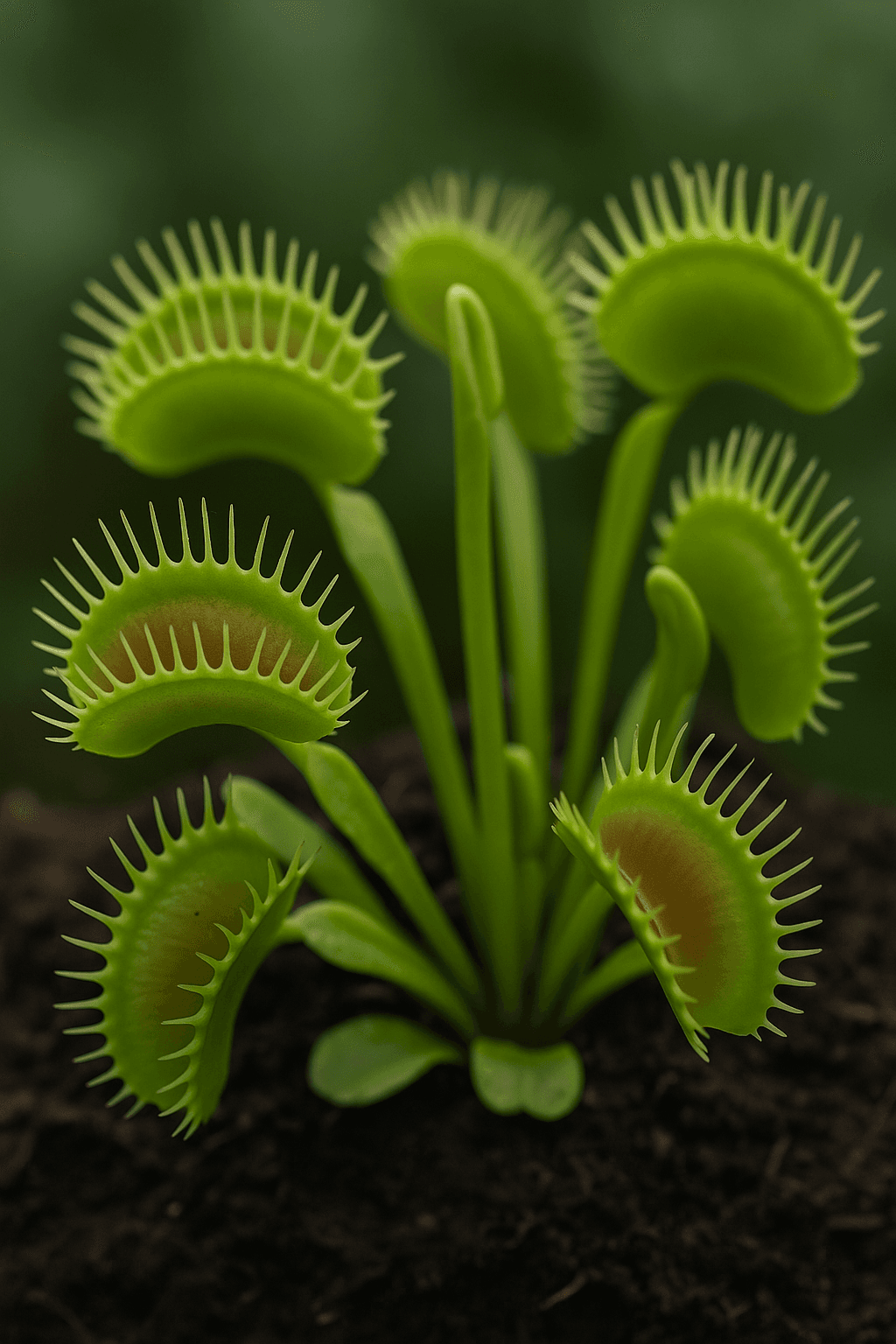
Designed with the assistance of artificial intelligence.
The morphological structure of Dionaea muscipula presents a complex adaptation specialized for prey capture. The plant’s overall architecture consists of four fundamental components:
1. Rosette Leaf Arrangement: The plant develops rosette leaves positioned close to the ground in a circular arrangement. Each leaf simultaneously performs photosynthesis and prey capture.
2. Bilobed Trap Leaves: Each leaf is divided symmetrically into two lobes along a central axis resembling a hinge. The inner surfaces of these lobes contain digestive glands and three mechanosensitive trigger hairs each.
3. Marginal Cilia (Serrate Structures): Although the marginal spines do not form a complete seal when the trap closes, they prevent prey escape. These structures also assess prey size to optimize energy expenditure.
4. Root System and Rhizome: The roots are shallow and primarily serve to anchor the plant rather than absorb nutrients. The rhizome region acts as the renewal center sustaining the plant’s annual growth cycle.
This structure operates on the principles of minimal energy use and maximum prey efficiency. The speed of trap closure ranges between 100 and 300 milliseconds, an extraordinary reflex among plants.
The prey-capture mechanism of Dionaea muscipula can be explained through biomechanical and electrophysiological processes. The trigger hairs on the leaf surface are sensitive to mechanical stimuli and generate action potentials in response to consecutive stimuli. These potentials alter cellular turgor pressure, triggering rapid trap closure. The evolution of this mechanism likely conferred a selective advantage during natural selection.
The nutrient-poor habitats inhabited by Dionaea muscipula have driven the evolution of heterotrophic feeding strategies. While terrestrial plants typically acquire nutrients through their root systems, this species obtains nitrogen and phosphorus through insect digestion, defining its ecological niche. This adaptation provides a competitive advantage within its ecological context.
Dionaea muscipula is threatened by habitat loss, climate change, and illegal collection. Conservation projects are being developed to prioritize genetic diversity and the sustainability of natural habitats. Habitat restoration and controlled cultivation methods are being scientifically evaluated within the broader context of biodiversity preservation. These efforts are expected to yield positive outcomes for the Venus flytrap and other threatened species in the future.
Ellison, Aaron M., and Nicholas J. Gotelli. Energetics and Carnivorous Plants—Darwin’s Botanical Novelty. Journal of Experimental Botany 52, no. 358 (2001): 2001-2022.
Forterre, Yoël, et al. How the Venus Flytrap Snaps. Nature 433, no. 7024 (2005): 421-425.
Juniper, Barrie E., Richard J. Robins, and Daniel M. Joel. The Carnivorous Plants. London: Academic Press, 1989.
Williams, Stephen E. Comparative Sensory Physiology of the Droseraceae—The Evolutionary Ecology of Prey Capture. Annals of Botany 80, no. 3 (1997): 247-255.

No Discussion Added Yet
Start discussion for "Dionaea muscipula (Venus flytrap)" article
Morphological Structure: Form and Function Adaptation of the Trap Mechanism
Biomechanical and Neurophysiological Dynamics
Ecological Role and Adaptations
Conservation and Future Perspectives