

 Recently Added:
This article was automatically translated from the original Turkish version.
The dispute over suspending the European Union’s Association Agreement with Israel arose due to the inability of member states to reach consensus on proposals to suspend the agreement, resulting in the initiative failing to produce any outcome.
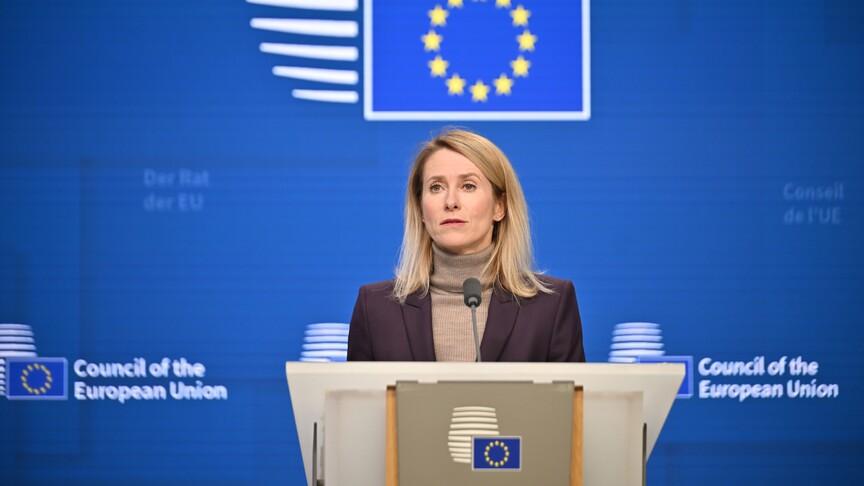
The European Union Foreign Ministers discussed proposals regarding the suspension of the Association Agreement with Israel during a meeting held in Luxembourg. High Representative for Foreign Affairs and Security Policy Kaja Kallas noted that some member states had proposed either fully or partially suspending the agreement and introducing specific trade restrictions. However, due to opposition from other member states, consensus could not be achieved and no decision was adopted.
In the European Union’s decision-making process, it was stated that suspending the Association Agreement requires unanimous agreement. Accordingly, it was reported that the necessary political support was not secured during the meeting and the proposal was not accepted. It was also indicated that certain member states would need to change their positions to enable alternative measures requiring a qualified majority.
Clear differences in opinion emerged among member states during the meeting process. Some countries argued that Israel had violated its obligations under the Association Agreement and therefore advocated for its suspension. In contrast, a group led by Germany and Italy opposed the move, asserting that such a step would be inappropriate.
Italy’s position emerged as a decisive factor in the decision-making process. In this context, it was stated that the necessary numerical and political conditions for suspending the agreement had not been met.
During the meeting, alternative options beyond suspension of the agreement were also brought forward. These included imposing targeted sanctions on specific individuals or groups or implementing partial trade restrictions. However, it was emphasized that sufficient consensus among member states would still be required to implement any of these alternatives.
The issues discussed at the meeting were not limited to relations with Israel; developments in the Middle East were also addressed. It was noted that ceasefire processes in the region were ongoing but nearing their end, and that a potential resumption of hostilities could result in high costs. Furthermore, the importance of preserving freedom of navigation was underscored as a fundamental principle for the European Union.
It was also stated that existing European Union sanctions against Iran remain in place and that political consensus has been reached on expanding them. In this context, new sanction options targeting aspects affecting maritime transport were discussed.
The Association Agreement between the European Union and Israel, in force since 2000, forms the foundational framework for political cooperation and commercial relations between the parties. The agreement grants Israel preferential access to the European Union market and recognizes respect for democratic principles and human rights as core elements.

The European Union failed to reach agreement on suspending its Partnership Agreement with Israel. High Representative for Foreign Affairs of the EU, Kaja Kallas, stated that some member countries had proposed suspension but no consensus was reached.
No Discussion Added Yet
Start discussion for "Dispute over the Suspension of the Partnership Agreement between the European Union and Israel" article
April 24, 2026
Meeting Process and Decision-Making Mechanism
April 24, 2026
Divergent Views Among Member States
April 24, 2026
Alternative Measures and Discussions
April 24, 2026
International and Regional Context
April 24, 2026
Nature of the Association Agreement