
This article was automatically translated from the original Turkish version.
Sancak Region, one of the seven sanjaks subordinate to the Ottoman Empire’s Bosnia Eyalet, is a settlement known as “Raška” in Serbian history and “Yenipazar Sanjak” in Ottoman history. Divided between Serbia and Montenegro, this region, which encompasses multiple ethnic identities, has retained the name Sancak to the present day. The Yenipazar Sanjak borders Muslim Bosnia-Herzegovina, Albania, and Kosovo to the west and Christian Serbia and Montenegro to the east. The region, possessing significant geopolitical, economic, historical, and cultural importance, has waged major struggles since its separation from the Ottoman Empire to achieve autonomy.
Sancak, long a subject of debate in both past and present, occupies a strategic position at the heart of the Balkans, serving as a crucial junction connecting Eastern Europe with Western Europe and providing access to the Adriatic Sea.
The historical past of the Sancak Region extends back to antiquity, having served as a stage for the rule of various peoples and states. Archaeological findings and place names indicate that the earliest settlements in the region were established by the Illyrians. The Illyrians, who inhabited this area around the 6th century BCE, are known to have been a community organized in tribes without political unity.【1】
Beginning in the 6th century CE, the onset of Slavic incursions fundamentally altered the region’s demographic structure, and by the end of the century, control had passed to Slavic communities. During this period, the region began to be referred to in Serbian historiography as “Raška” and became a central hub in the formation of the Serbian state tradition.
During the Middle Ages, the Raška Region formed the political and cultural core of the Serbian Kingdom. The state, whose foundations were laid by Vojislav’s son Mihailo, expanded under King Bodin but suffered from political instability following his death due to succession struggles. During this time, the center of power shifted from Montenegro to Raška.【2】
The reign of Stefan Nemanja in the 12th century marked a turning point for the region. Nemanja’s adoption of Orthodox Christianity in 1168 at the Church of Sv. Petar near Novi Pazar significantly influenced the region’s religious and cultural identity. The churches and monasteries constructed during this period established Raška as a major center of the Serbian Orthodox world.
After Nemanja’s death, the Kingdom of Serbia maintained its dominance in the region throughout the 13th and 14th centuries, although conflicts with Byzantine and Bulgarian powers caused fluctuations in its political structure. Until the 15th century, Raška remained under Serbian control, but by the second half of the 15th century, it came under Ottoman sovereignty.
The Ottoman Empire’s entry into the Balkans began with Süleyman Paşa, son of Orhan Gazi, who captured Gallipoli and crossed into Rumelia. Subsequent conquests secured Turkish dominance over the Balkans for five and a half centuries. Prior to this period, the Balkan region had been fragmented; during Ottoman rule, it experienced political, economic, and cultural stability.
Following the First Battle of Kosovo in 1389, the Ottomans began asserting control over Serbian territories and made their initial incursions into the Raška Region. However, between 1396 and 1455, full Ottoman authority was not established; while fortresses were under Ottoman control, rural areas remained governed by Serbian lords. This situation reflects a dual political structure in the region.
The definitive incorporation of the Sancak Region into Ottoman administration occurred during the tenure of Isa Bey, son of Ishak Bey, in 1455.【3】 From this date, the region was integrated into the Ottoman administrative and military system. Its location at the intersection of major trade routes rendered it a strategically vital center for both military and economic purposes.
During the consolidation of Ottoman authority, Isa Bey founded the city of “Yenipazar” (Yenice-i Pazar). A geographically suitable location at the convergence of key roads was chosen for its establishment, where essential urban elements such as a military garrison, market, bathhouse, and mosque were constructed. These developments enabled the region to rapidly become an administrative and commercial center.
Due to this central position, the Sancak Region came to be known during the Ottoman period as the “Yenipazar Sanjak,” and its regional identity formed around this city.
Until the conquest of Bosnia in 1463, the Yenipazar Sanjak functioned as a frontier region for the Ottoman Empire. After this date, it was incorporated under the administration of Bosnia and became an integral part of the Ottoman administrative structure as a sanjak subordinate to the Bosnia Eyalet.
The city, recorded as “Yenice Pazar” in 1477, gained the status of a kadılık in 1485 and acquired a more institutionalized administrative framework. With the separation of the Bosnia Sanjak from the Rumeli Eyalet in 1521 and its subsequent elevation to provincial status, the Yenipazar Sanjak was integrated into this new administrative structure.【4】
In 1578, the Yenipazar Sanjak became one of the seven major administrative units of the Bosnia Eyalet. Its administrative identity became more pronounced after Bosnia attained beylerbeylik status in 1580. During this period, Yenipazar emerged as the center where the mütesellim resided.
Following the changes in Ottoman military and political balances after 1683, the administrative status of the Sancak Region was affected, and at times the region gained greater autonomy by being detached from Bosnia. This flexible administrative structure persisted until the end of the 18th century.【5】
With the proclamation of the Tanzimat Decree in 1839, profound changes were introduced into the Ottoman administrative system; the eyalet structure was reorganized and new administrative units were established. During this period, Yenipazar was organized as a kaymakamlık subordinate to the Bosnia Vilayet.
After the Treaty of Karlowitz in 1699, as the Ottoman Empire began withdrawing from Central Europe, the Sancak Region retained its importance as a frontier area under the Bosnia Eyalet. However, as the Ottoman Empire weakened during the 19th century, international competition over the region intensified.
Following the Russo-Turkish War of 1877–1878, the Treaty of San Stefano proposed dividing the Sancak Region between Serbia and Montenegro, but this arrangement could not be implemented due to conflicting interests among the great powers. The same year’s Treaty of Berlin left the region nominally under Ottoman sovereignty, but in practice it came under the influence of the Austro-Hungarian Empire.【6】
During this period, Sancak functioned as a buffer zone between Serbia and Montenegro; Austro-Hungary, through its military presence in the region, sought to prevent the unification of the two states. The presence of Austro-Hungarian military units in certain areas until 1908 was a consequence of this policy.
The Balkan Wars proved another decisive factor for the region. The Ottoman Empire, defeated under difficult conditions, lost the majority of its Balkan territories, including the Sancak Region.
Following the Balkan Wars and the Ottoman withdrawal from the region, the Sancak Region was divided between Serbia and Montenegro in 1913. This new political arrangement eliminated the region’s administrative unity and marked the beginning of a new chapter in Sancak’s historical development.
During World War I, Sancak was occupied by the Austro-Hungarian Empire and endured the effects of military conflict. After the war ended, in 1918 the region was placed under the administration of the Kingdom of Serbs, Croats and Slovenes (later the Kingdom of Yugoslavia).【7】 With the state’s name change to the Kingdom of Yugoslavia in 1929, Sancak became part of this new political structure.
During the Kingdom of Yugoslavia period, the Sancak Region lost its special administrative status from the Ottoman era; it was first incorporated into the Užice and Raška županijas, and after 1929 administrative reforms, into the Zeta and Morava banovinas. This process led to a relative decline in the region’s administrative and political significance.
During World War II, Sancak became a site of Italian and German occupations; Serbian nationalist Chetnik activities also posed serious threats, particularly to the Muslim Bosniak population. During this period, Bosniaks from Sancak participated in various political and military structures to defend the region.
In 1943, Yugoslavia’s communist leader Josip Broz Tito briefly declared Sancak an autonomous region; however, this autonomy was abolished after the war. In 1945, a decision was made to re-divide Sancak between Serbia and Montenegro, largely restoring its 1913 status.
During the 1990s, as Yugoslavia disintegrated, political movements emerged in the Sancak Region. With the transition to a multi-party system, political parties representing Bosniaks were established, and a referendum on Sancak’s autonomy was held in 1991. However, these initiatives were rejected by the governments of Serbia and Montenegro. A memorandum issued in 1993 called for a special status for the region, but these demands also proved unsuccessful.
During the Yugoslav civil wars of 1990–1995, Sancak was not a direct battlefield but was significantly affected by ethnic pressures, population displacements, and political tensions. After the breakup of Yugoslavia, Sancak continued to exist as a region within the current borders of Serbia and Montenegro.
During this period, although the Bosniak population formed the majority in Sancak, it remained a minority within both states and sought to preserve its rights within the different constitutional frameworks of Serbia and Montenegro.【8】
Different ethnic groups coexist in the Sancak Region. The majority of the population consists of Bosniaks, Serbs, Albanians, and Montenegrins. The Muslim population comprises Bosniaks, Albanians, Pomaks, Tatars, and Turks.
The religious structure of the region is primarily shaped by Islam and Christianity. Bosniaks constitute the majority of the Muslim population, while the Orthodox Christian population is predominantly composed of Serbs and Montenegrins. This religious diversity reflects the political and cultural transformations the region has undergone throughout its history.
The formation of the Muslim population in Sancak was decisively shaped by the process of Islamization during the Ottoman period. As in the broader Balkans, certain segments of Catholic and Orthodox communities, particularly those of Bogomil origin, embraced Islam for various political, social, and economic reasons. As a result, a new social structure emerged, identified as “Muslim Slavs.”
Bosniaks are regarded as a community formed through the historical assimilation of Slavic groups with the region’s original inhabitants, the Illyrians and Vlachs. During Ottoman rule, Bosniaks, sharing the same religious identity, integrated within Muslim communities and were sometimes directly referred to by neighboring populations as “Turks”; however, Ottoman administration officially defined them by their “Bosniak” identity.
Variations in Bosniak identity definitions have been evident throughout history. Until the 19th century, this community primarily identified itself through religious terms such as “Muslim,” “Ottoman,” or “Islamic nation”; in the modern era, emphasis on ethnic identity became more pronounced.【9】
Ottoman population data are primarily based on tahrir registers, which are considered highly reliable, especially during the classical period. However, from the 18th century onward, as central authority weakened, inconsistencies emerged in population records, leading authorities to rely increasingly on information provided by European travelers and diplomats.
Censuses conducted in the 19th century provided more concrete data on the region’s demographic structure. For example, a census from 1858 recorded approximately 24,440 Muslims and 20,492 Christians in the Yenipazar Sanjak. The 1870 Bosna Vilayet Salname indicated a total population of 83,983, with Muslims forming the overwhelming majority.【10】
At the beginning of the 20th century, population movements, particularly migrations, caused significant changes. According to 1911 data, approximately 217,000 people lived in the region, with Muslims forming the majority. The Balkan Wars and subsequent political developments significantly altered this demographic structure.【11】
According to modern censuses, the total population of Sancak was approximately 440,000 in 1991 and about 393,000 in 2011. Today, Bosniaks constitute the majority in the region as a whole, yet remain a minority within Serbia and Montenegro. Bosniak population density is higher in the eastern part of the region, while the Serbian population is more prominent in the western part.
The economic structure of the Sancak Region has been shaped throughout history by its geographic location and natural resources. Due to its position at the intersection of major trade routes stretching from Dubrovnik in the west to Istanbul in the east, the region became a vibrant commercial center, especially during the Ottoman period. This strategic location enabled Sancak to play a vital role in regional trade networks.
During the Ottoman period, the town of Tašliča (Pljevlja), part of the Sancak, emerged as a significant center for crafts and commerce; it was recognized not only within the Bosnia Eyalet but also across other Ottoman provinces as a major production and trade hub.

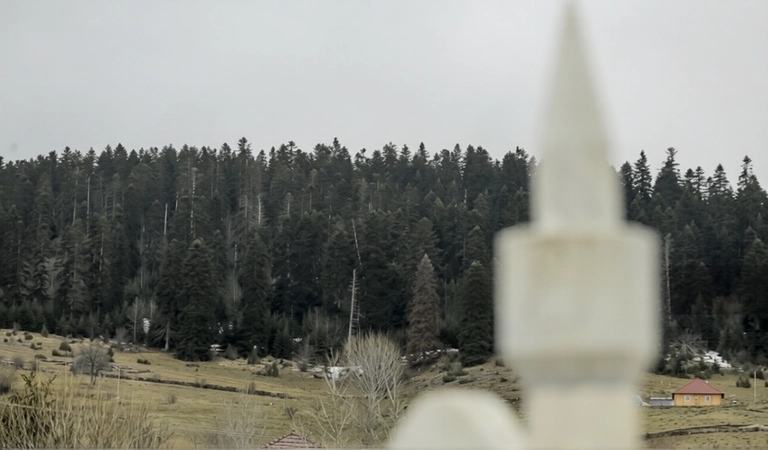
Sancak (Anadolu Ajansı)
The foundation of the regional economy has been agriculture and animal husbandry. Small-scale farming and large livestock rearing have long been among the primary livelihood sources for the people of Sancak. In addition, craft activities based on local production hold an important place in the economy. Traditional products such as woolen goods, leather items, meat, and dairy products have held value for both local consumption and trade.
Industrial production remains limited but includes activities in textiles, footwear, knitwear, furniture, and food sectors. These productions serve both domestic and foreign markets. However, property regulations and economic constraints in the region have at times negatively affected economic development.【12】
The Sancak Region is also rich in natural resources. Deposits of gold, silver, copper, and lead have been identified; coal reserves, in particular, hold major economic importance. Coal extracted from Plevlia, Berane, and surrounding areas has become one of the region’s most significant underground resources.

Sancak Bölgesi (Anadolu Ajansı)
In addition, marble deposits and various metal resources contribute to the region’s economic diversity. These natural riches not only support mining but also enhance tourism potential. Lakes, thermal springs, and natural beauties are significant assets for tourism development.
The Sancak Region has historically been home to a multi-layered cultural structure where diverse ethnic and religious communities coexisted. As in the broader Balkans, cultural diversity has been a defining factor in the region’s historical development.
The religious structure of the region is primarily shaped by Islam and Christianity. Bosniaks constitute the majority of the Muslim population, while the Christian population is predominantly composed of Orthodox Serbs and Montenegrins. This religious distribution emerged as a result of the Islamization process during the Ottoman period.
With Ottoman rule, Islamic culture and institutions became widespread in Sancak, and religious and cultural life was shaped through mosques, madrasas, waqfs, and social structures. During this period, the region became not only an administrative but also a cultural component of the Ottoman world.
The Bosniak identity that emerged from the Islamization process reflects an interweaving of religious affiliation and ethnic origin. In this context, Bosniaks, despite their Slavic roots, developed a cultural identity centered on Islam. Throughout history, this community has successfully preserved its language, culture, and religious identity despite various political and social pressures.
The languages spoken in the region also reflect this cultural diversity. Serbian, Bosnian, Montenegrin, Albanian, and to some extent Croatian are used. This multilingualism reveals the region’s exposure to diverse cultural influences throughout its history.
The region’s cultural structure extends beyond religious and ethnic elements to influence daily life practices. Traditional crafts, architectural styles, local clothing, and social relations continue to carry traces of Ottoman culture. Particularly, social and religious structures established through the waqf system played a vital role in urbanization and cultural development.
The Bosniak national emblem is shaped like a European shield, divided diagonally from the upper left to the lower right. The upper right section features three crescents on a green background, while the lower left section displays three golden lilies on a dark blue background.

Boşnak Bayrağı (Bošnjačko nacionalno vijeće u Republici Srbiji)
The Bosniak flag is white and measures 1 by 1.625 meters. At its center is the Bosniak emblem. The Bosniak emblem and flag are the official symbols of Bosniaks in Sancak as well as those living in Serbia and Montenegro.
The three lilies on the blue background of the emblem signify the Bosniaks’ European origins, while the three crescents on the green background indicate their adherence to Islam. The shield shape of the emblem emphasizes their European heritage. The blue background and golden lilies in the lower section suggest that Bosniaks are among the region’s oldest inhabitants and signify their unity with Bosniaks in Bosnia-Herzegovina. Additionally, the color blue represents the Bosniaks’ commitment to democracy, while green symbolizes their adoption of Islamic culture and tradition.【13】
The Sancak Region has developed under the influence of various civilizations, a legacy reflected in its architectural and cultural heritage. Particularly during the Ottoman period, the waqf system became one of the fundamental dynamics of urbanization, enabling the construction of numerous religious, social, and educational structures.
Through Ottoman-era waqfs, mosques, prayer halls, madrasas, schools, dervish lodges, and various social buildings were constructed in Sancak, playing a vital role in shaping both religious life and social order.

Sahat Kula (Anadolu Ajansı)
The Clock Tower stands 28 meters high, making it the tallest tower in Montenegro and Sancak. Although the exact date and builder remain unknown, some sources indicate it was constructed in the 18th century as a waqf of Mehmed Paşa Kukavica.
The Hacı Hurem (Bor) Mosque is one of the three oldest historical mosques in Novi Pazar. According to tradition, it was built in the mid-16th century and is among the historic Turkish mosques of the region. This mosque is unique in Novi Pazar as it is the only one to preserve an inscription indicating its construction date. An inseparable part of the mosque is the türbe containing the tomb of its builder, Hacı Hurem. Despite undergoing some modifications over time, the mosque has retained its original character and remains one of the largest and most important mosques in Novi Pazar.
Built by Hasan Çelebi in 1528, this mosque was burned down during the Austro-Ottoman War in 1689. According to one tradition, it was repaired by an Arab, a Turkish officer of Arab descent, and thus became known as the Arab Mosque. The mosque was constructed as a two-story building; its short and archaic minaret was rebuilt and decorated.
The Spoćani Monastery, located approximately 17 kilometers west of Novi Pazar at the source of the Raška River, was built by King Uroš I. The exact construction date is unknown. The inscription on the tambour of the dome, which would have indicated the year of construction, has been damaged. Based on the compositions depicted on the church walls, scholars have concluded that the monument was built in the 1260s. Of what was once a complex of several buildings (refectory, lodgings, etc.), only the Church of the Holy Trinity remains today. The church’s architecture belongs to the classic style of the Raška school of architecture. This endowment and the royal family mausoleum of King Uroš I represent an important legacy of medieval art. The frescoes are significant not only for their artistic value but also for illuminating the history of the period. It has been listed on UNESCO’s World Heritage List since 1979.
The Kumanica Monastery is located in the village of Vrbnica, under the jurisdiction of Sjenica. The exact date and founder of the monastery are unknown. Although its name first appears in a written document from 1514, the monastery was likely constructed in the 14th century. The cross motif on the foundation of the building indicates its affiliation with Raška architecture. Recent research suggests that its founder was King Milutin, one of the Serbian rulers who built the Church of Saint Nicholas near Nikoljac in the 14th century and numerous other Serbian churches. The Kumanica Monastery is dedicated to Saint Gabriel. The monastery was destroyed in the 18th century for unknown reasons, likely due to aging and weakened materials. Until its destruction, the monastery preserved the Kumanica Gospel, now housed at the Serbian Academy of Sciences and Arts. The monastery was restored in 2000.
[1]
Nazif Hoca, “Yenipazar,” İslâm Ansiklopedisi (İstanbul: Millî Eğitim Basımevi, 1978), 13:395-396.
[2]
Caner Sancaktar, “1878–1945 Döneminde Sancak Sorunu: Avusturya, Sırbistan, Karadağ ve Boşnaklar,” Balkan ve Yakın Doğu Sosyal Bilimler Dergisi, Haziran 2020, 7. Erişim tarihi: 04 Nisan 2026.https://www.ibaness.org/bnejss/2020_06_01/02_Sancaktar.pdf
[3]
Muhammed Aruçi, “Sancak”, Türkiye Diyanet Vakfı İslâm Ansiklopedisi (İstanbul: TDV Yayınları, 2009), 36:100. Erişim tarihi: 05 Nisan 2026 https://islamansiklopedisi.org.tr/sancak--sirbistan
[4]
Sead İbriç, XIX. Yüzyılda Yeni Pazar Sancağı (Konya: Selçuk Üniversitesi, Sosyal Bilimler Enstitüsü, yüksek lisans tezi, 2004), 7. Erişim tarihi: 04 Nisan 2026.https://tez.yok.gov.tr/UlusalTezMerkezi/tezDetay.jsp?id=BC2TubAf3tiarmy7-LU3Fw&no=h6c95s7UPlRU8ZlgxbnNQg
[5]
Mehmet Esat Sarıcaoğlu ve Ahmet Özensoy, “Sancak Bölgesi Osmanlı Vakıfları,” Kırıkkale Üniversitesi Sosyal Bilimler Dergisi 13, no. 2 (2023): 489. Erişim tarihi: 04 Nisan 2026. https://dergipark.org.tr/en/pub/kusbd/article/1298719
[6]
Davut Nuriler, Sancak’ın Asırlık Hak Mücadelesi (İstanbul: Motto Yayınları, 2019), 275.
[7]
Hüseyin Kansu, Sancak ve Balkanlar’daki Son Gelişmeler (İstanbul: Bayrak Matbaası, 1999), 6.
[8]
Selma Saraç, Sancak Bölgesinde Hıristiyanlık ve İslâm (15–17. Yüzyıllar) (Edirne: Trakya Üniversitesi, Sosyal Bilimler Enstitüsü, yüksek lisans tezi, 2022), 11.Erişim tarihi: 04 Nisan 2026. https://unis.trakya.edu.tr/tez-detay/2_D3CtCW_56/sancak-bolgesinde-hiristiyanlik-ve-islam-15-17-yuzyillar
[9]
Aydın Babuna, Geçmişten Günümüze Boşnaklar, çev. Hayati Torun (İstanbul: Tarih Vakfı Yurt Yayınları, 2000), 15.
[10]
Salname-i Vilayet-i Bosna (H. 1287 [1870]), 144–145.
[11]
Kemal H. Karpat, Osmanlı Nüfusu (1830–1914), çev. Bahar Tırnakçı (İstanbul: Tarih Vakfı Yurt Yayınları, 2003), 118.
[12]
Murat Yılmaz, Drina’nın Öbür Yakası: Sancak Kimlik Oluşumu ve Otonomi Sorunu (İstanbul: İHH Yayınları, 2004), 30.
[13]
Erhan Türbedar, Sancak Bölgesi Hakkında Temel Bilgiler (Ankara: Sancak Dostları Vakfı, 2004), 11-12.
Historical Background (Pre-Ottoman Period)
Sancak During the Ottoman Period
Conquest and Establishment
Administrative Structure and Status
Political Developments
Sancak in the Modern Era (After 1918)
Population and Ethnic Structure
Economy
Cultural and Religious Structure
Bosniak National Emblem and Flag
Historical Monuments and Architecture
Sahat Kula (Pljevlja)
Bor Mosque-Haji Hurem Mosque (Novi Pazar)
Hasan Çelebi Mosque (Novi Pazar)
Spoćani Monastery
Kumanica Monastery (Sjenica)