badge icon

This article was automatically translated from the original Turkish version.
Article

Disturbance (Book)

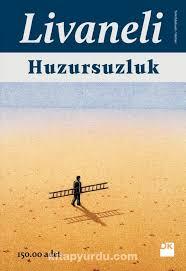
huzursuzluk.jpeg
Unrest
Author:
Zülfü Livaneli
Type:
Turkish novel
Language:
Turkish
Publication Date:
2017
Publisher:
Doğan Kitap (2017)İnkılap Yayınevi (2021)
Number of Pages:
160

Unrest is a novel published by Zülfü Livaneli in 2015 that intertwines social tension with individual psychological states. While narrating an inner journey marked by the deep imprints of time and place, the novel also lays bare the anxieties experienced by Turkish society during its modernization process. Roman explores the inner unrest and traumas of a generation left adrift in contemporary Türkiye.


The novel’s central character is a journalist who spent years in prison for a political offense. His memories of the past and his relationship with society generate profound inner unrest and existential crises. On one hand, he grapples with the legacies of history; on the other, he confronts the individual and social problems of present-day society. Particularly, the journalist’s inquiries into the lost values on of Türkiye’s transformation process form the core structure of the novel.


Characters of the Novel

  • The Journalist: The protagonist is portrayed as an unnamed journalist struggling with inner unrest and trauma. Due to past experiences of political repression and disillusionment, he has become alienated from society and other people. His concern for the direction of society and his search for personal identity constitute a central theme throughout the novel.
  • The Social Environment: The people surrounding the journalist are distinct characters shaped by memories of the past and the general mood of the public. These figures reveal both the journalist’s struggles within social and political spheres and his personal battles. Throughout the novel, readers witness the internal conflicts of these characters in relation to social decay and transformation.
  • Female Characters: Each woman in the novel reflects individual dramas drawn from different segments of society. Themes such as loneliness, injustice, and social pressure are explored through the psychological depth of these characters.
  • Social Representatives: Figures such as police officers and court officials in the novel represent the social repression and the ruthless face of Türkiye’s political system.


Main Narrative Structure

The novel’s structure features a fluid interplay between time and place. The narrative shifts back and forth between the past and the present, immersing the reader in a constant state of searching. The journalist’s past traumas, his experiences in prison, and his fractured relationship with society form the foundational pillars of the story. The novel progresses by drawing parallels between personal history and social history.


At the heart of the narrative lies an inner journey in which the journalist confronts his past, undergoes psychological transformation, and responds to the rapidly shifting values of society. He constantly interrogates his experiences, striving to understand how social realities have shaped him. Periodic political upheavals and personal dream fractures deeply affect his psychological state.


Themes of the Novel

  • Individual Unrest and Existential Crisis: The novel begins with the protagonist’s inner unrest. Past traumas lead him to alienation from society and plunge him into an existential crisis. Unrest offers a profound perspective on the internal conflicts inherent in the individual’s search for self.
  • Social Disintegration and Transformation: The novel also examines Türkiye’s process of transformation. Rapid societal changes have caused fractures in individuals’ psychological structures. Zülfü Livaneli questions how individuals cope with this transformation and how the moral values of society have been reshaped.
  • Justice and Social Responsibility: The novel unfolds on a ground where justice and individual responsibility are questioned. The journalist observes that justice does not function in his society and that individuals are left abandoned. This realization reveals to him the extent of decay within the social structure.
  • The Importance of Time and Memory: Confronting the past, reviving memory, and understanding how that past shaped the individual are among the most fundamental elements of the novel. The protagonist’s struggle to build a future while being haunted by the past is a prominent feature of the narrative.


Subthemes

  • Individual and Social Alienation: The protagonist, unable to form meaningful connections with society or other people, becomes increasingly isolated. This isolation is both a personal and a social consequence of his questioning.
  • Political Repression and Psychological Impact: The novel contains critiques of Türkiye’s political past. Traumas such as imprisonment and torture leave lasting marks on the characters’ inner worlds.
  • Crisis of Values: As traditional values are rapidly replaced by modernism and pragmatism, the characters struggle to come to terms with these lost ideals.

Author Information

Avatar
AuthorBeyza Nur TürküDecember 23, 2025 at 10:55 AM

Tags

Discussions

No Discussion Added Yet

Start discussion for "Disturbance (Book)" article

View Discussions

Contents

  • Characters of the Novel

  • Main Narrative Structure

  • Themes of the Novel

  • Subthemes

Ask to Küre