This article was automatically translated from the original Turkish version.
Type of Geographical İndication | Mahreç Sign | ||||||||
|---|---|---|---|---|---|---|---|---|---|
Registration Number | 1667 | ||||||||
Registration Date | 27.11.2024 | ||||||||
Product / Product Group(s) | Bakery and confectionery products sweets dough products | ||||||||
Province(s) | Diyarbakır | ||||||||
Applicant/Registrant(s) | Diyarbakır Chamber of Commerce and Industry | ||||||||
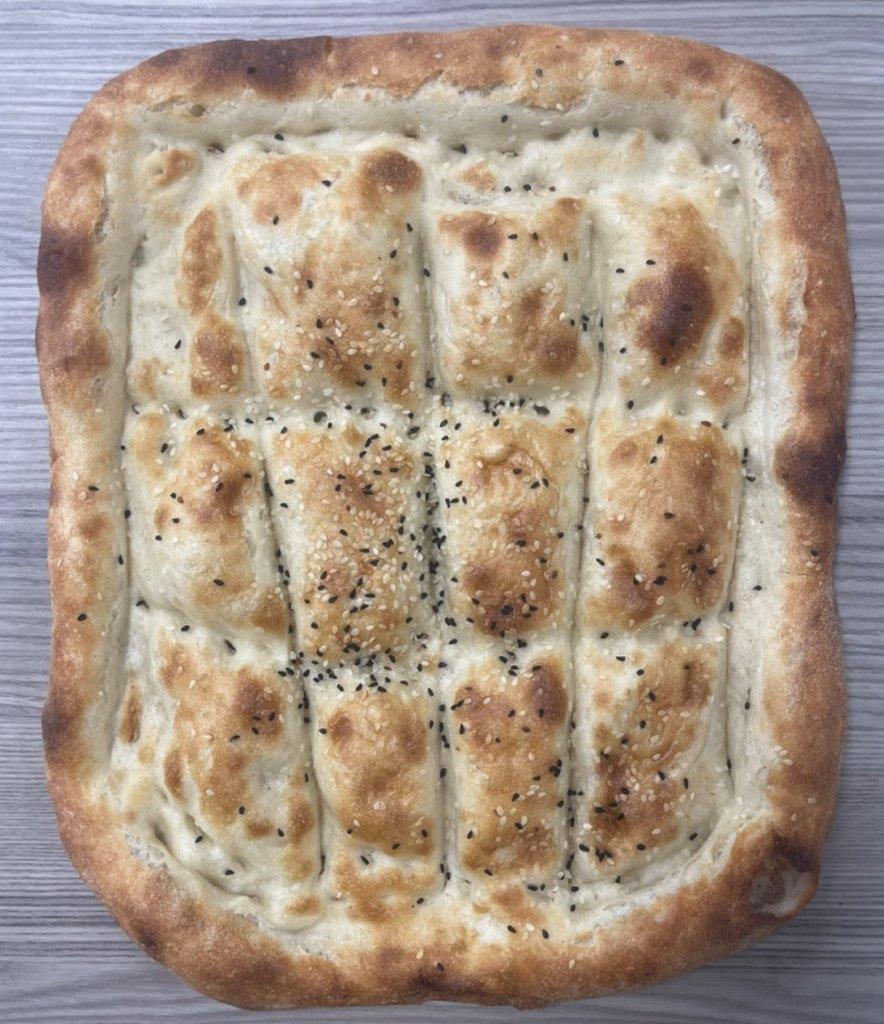
Diyarbakır Pebble Bread is a traditional bread baked in stone ovens and holds a deep-rooted place in Diyarbakır’s culinary culture. Registered with a geographical indication on 27 November 2024, this product is produced exclusively within the boundaries of Diyarbakır Province and is distinguished by its unique production method and shaping technique.
Diyarbakır Pebble Bread is oval in shape, measuring approximately 30–35 cm in width, 40–50 cm in length, and 3 cm in thickness. Thanks to a special shaping technique applied while the dough is still pliable, ingredients such as cheese, halva, or tomato paste can be inserted inside; these components do not spill out during consumption. The bread’s soft texture and form support this functional method of use.
The basic ingredients used in the production of this bread (quantities may vary) are as follows:
The dough is prepared using flour, water, yeast, and salt, and kneaded for approximately 15 minutes. The resulting sticky dough is then rested for about one hour. After resting, portions of 500 g each are formed and rolled into oval shapes. A technique known as “tirnaklama” is used to shape the dough; this process requires skill and ensures even baking. Cumin and/or sesame may be sprinkled on top as desired. The final shaped dough is baked in a stone oven at approximately 200 °C for 10 minutes. Stone ovens are designed to retain the heat from wood fires within the baking chamber.
Diyarbakır Pebble Bread is commonly consumed in daily meals, especially at breakfast. The shaping technique and stone oven baking method are distinctive practices requiring specialized craftsmanship unique to Diyarbakır. In this regard, the product is closely associated with the identity of Diyarbakır Province.
All stages of production are carried out exclusively within the boundaries of Diyarbakır Province. The product’s long-standing historical presence in this region and the distinctive regional characteristics of its production method have qualified it for geographical indication registration.
The production of Diyarbakır Pebble Bread is inspected at least once a year by a three-member oversight body established under the coordination of the Diyarbakır Chamber of Commerce and Industry. This body consists of expert representatives from the Diyarbakır Provincial Directorate of Agriculture and Forestry, the Diyarbakır Chamber of Commerce, and the Diyarbakır Chamber of Commerce and Industry. During inspections, compliance with ingredient specifications, adherence to the traditional production method, packaging and storage conditions, and the correct use of the geographical indication mark are verified.
Turk Patent and Trademark Office. *Diyarbakır Çakıl Ekmeği Sicil Belgesi, No. 1667.* Ankara: Turk Patent and Trademark Office, November 27, 2024. Accessed October 23, 2025. https://ci.turkpatent.gov.tr/Files/GeographicalSigns/a88c07bb-ca71-4961-96a7-871653c5c1e2.pdf.
Turkish Patent and Trademark Office. "Diyarbakır Çakıl Ekmeği." Geographical Indications Portal. Registration Date November 27, 2024. Accessed October 23, 2025. https://ci.turkpatent.gov.tr/cografi-isaretler/detay/11067.

Type of Geographical İndication | Mahreç Sign | ||||||||
|---|---|---|---|---|---|---|---|---|---|
Registration Number | 1667 | ||||||||
Registration Date | 27.11.2024 | ||||||||
Product / Product Group(s) | Bakery and confectionery products sweets dough products | ||||||||
Province(s) | Diyarbakır | ||||||||
Applicant/Registrant(s) | Diyarbakır Chamber of Commerce and Industry | ||||||||
No Discussion Added Yet
Start discussion for "Diyarbakır Gravel Bread" article
Physical Characteristics and Structure
Production Method
Consumption and Cultural Context
Geographical Boundary and Production Conditions
Monitoring Process