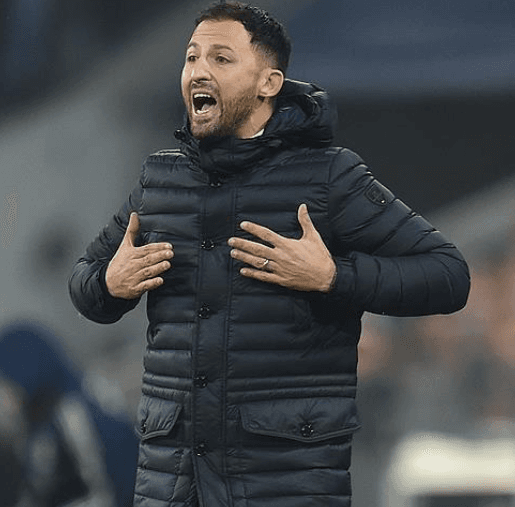
Doğum tarihi | 1985-09-12 | ||||||||
|---|---|---|---|---|---|---|---|---|---|
Place of Birth | Italy, Rossano | ||||||||
Roles | Fenerbahçe Belgium National Team RB Leipzig Spartak Moscow Schalke 04 Erzgebirge Aue | ||||||||
Tactical Understanding | Flexible defensive structures transition game, centrally controlled pressure-based system | ||||||||
Domenico Tedesco is a figure who has entered the ranks of Europe’s most respected technical minds without a playing career. He rose to prominence during a period in German football when young coaches were being given opportunities, carving out a profile that merged engineering precision with tactical thinking. Throughout his career, he has taken on major responsibilities at a young age and drawn attention through decisive actions in crisis situations.
Domenico Tedesco’s understanding of football is built on a highly flexible and detail-oriented system. The tactical frameworks he implements are not confined to a single formation but continuously adapt based on player profiles and opponents’ playing styles. In this regard, he has distinguished himself through his mastery of in-game variations.
During his time at Schalke 04, his preferred primary structure was the 3-5-2. This formation could shift into a 5-4-1 in defensive phases. In attack, the team maintained a double-striker system, with a “pivot” midfielder brought to the forefront. Technically gifted players such as Max Meyer were positioned centrally as playmakers when in possession.
In Tedesco’s system, the defensive line consisted of three center-backs, with full-backs integrated into the defensive structure. These full-backs, such as Caligiuri and Oczipka, functioned as part of the five-man defensive line when the opposition had possession and pushed high to support attacks once possession was regained.
Central control was fundamental to Tedesco’s philosophy. Opponents were forced into narrow central zones during build-up, where pressure from the number eights aimed to provoke turnovers. The two strikers were instructed to press not the center-backs but the opposition’s playmaker, forcing the ball wide. Once the ball reached the flanks, a double press was applied against the opposing full-back.
In this pressing system, the entire team shifted according to the direction of play, forming a structure resembling a “pentagon” in midfield. This structure was composed of two central midfielders, two strikers, and a single deep-lying pivot.
Immediately after regaining possession, Tedesco’s teams launched direct attacking actions. Vertical passes aimed to catch the opposition defense unprepared, rapidly transporting the ball into the opponent’s half. Players in central areas facilitated transitions by spreading the ball wide to the wingers.
One of the strikers typically assumed a more linking role; for example, players like Franco Di Santo frequently dropped into midfield to disrupt the opposition’s defensive balance. This created space for the second striker or deep-running midfielders.
Tedesco’s teams aimed to combine controlled build-up with positional play when in possession. During build-up, numerous passes occurred between the center-backs and central midfielders, maintaining both width and depth, particularly in long-ball constructions from the back.
The central playmaker was typically positioned with five possible passing options: two center-backs, two inside midfielders, and one striker. This structure enabled the team to bypass pressure and progress the ball methodically.
Wide players were not limited to staying on the touchline; they were often directed into central corridors. In attacking variations, the inverted winger would cut inside, allowing the full-back to occupy the flank, thereby ensuring both width and numerical superiority.
During matches, rapid directional changes and switches of play were systematically employed, using passes from the flank to the center to break down the opposition’s defensive organization.
The primary defensive principle was denying space in the center. Therefore, the central midfielders positioned ahead of the three-man defensive line worked to neutralize the opponent’s central connections. When attacks were directed toward the flanks, the nearest player applied pressure while the remaining blocks shifted to provide support.
In defending long balls, aerial dominance was prioritized. Defenders such as Naldo, Matija Nastasić, and Thilo Kehrer provided significant superiority in aerial duels, rendering opponents’ long-ball attempts largely ineffective.
Under Domenico Tedesco, Schalke became one of the Bundesliga’s strongest teams in both defensive and offensive set pieces. Defensively, a tight structure based on spatial coverage was adopted. Offensively, specialized training was conducted for second-ball situations. Player positioning during set pieces was meticulously analyzed and implemented.
Tedesco was born in Rossano and moved with his family to Esslingen, Germany, at the age of two. His playing career remained at amateur levels, playing for ASV Aichwald. However, his most notable background lies in his academic training in engineering and management sciences. While working for Mercedes, he developed an interest in Stuttgart’s youth system and began scouting for VfB Stuttgart’s U9 team.
His first serious coaching role was as full-time head coach of Stuttgart’s U17 team. During this period, he earned consistent promotions within the club, proving his capabilities. In 2016, he took charge of Hoffenheim’s U19 side, achieving significant progress. That same year, he graduated top of his class from the German Football Association’s Hennes-Weisweiler Academy with the highest possible score.
In March 2017, Erzgebirge Aue, a team in Bundesliga 2, appointed Tedesco as head coach. At the time, Aue was at the bottom of the league with only 11 matches remaining and facing relegation. Tedesco rapidly restructured the team’s defensive organization, particularly addressing weaknesses in set-piece defending. Over these 11 matches, the team earned 20 points and successfully avoided relegation. This performance attracted the attention of top-tier clubs.
In June 2017, Schalke 04 appointed Tedesco as head coach. At 31 years old, he became the youngest head coach in the club’s history. Shortly after taking charge, he implemented sweeping changes to the squad, excluding veteran players Benedikt Höwedes and Klaas-Jan Huntelaar. These decisions, made without any major star signings, generated considerable surprise.
In his first season with Schalke, he achieved remarkable momentum in the Bundesliga, guiding the team to second place behind Bayern Munich and securing qualification for the UEFA Champions League. One of the season’s turning points was a 4-4 draw away against Borussia Dortmund, coming back from 4-0 down. Tedesco’s team, noted for tactical flexibility, high motivation, and a solid defensive structure, completed matches with low possession but maximum efficiency.
His system was generally based on a 3-5-2 formation, shifting into a five-man defensive block that emphasized central containment. He repositioned Max Meyer as a deeper playmaker and drew attacking contributions from players such as Amine Harit and Leon Goretzka. Guido Burgstaller and Franco Di Santo played crucial roles in both pressing and linking play.

Domenico Tedesco (Heute.at)
After finishing second in the Bundesliga in the 2017-18 season under Domenico Tedesco, Schalke 04 qualified for the UEFA Champions League. However, the following 2018-19 season witnessed a significant sporting decline. The team recorded inconsistent results throughout the league and slipped to the lower half of the table.
The defensive organization that had defined Tedesco’s first season became increasingly predictable and easier for opponents to dismantle. The team’s attacking output declined, their ability to create chances diminished, and inefficiency in front of goal became evident. During this period, key players also experienced drops in form, and internal roles within the team lost clarity.
Following these poor results, public criticism emerged suggesting Tedesco’s tactical approach had become rigid. Certain match results brought the team dangerously close to the relegation zone. As pressure mounted from fan groups and the media, the club’s management intensified its evaluations of the coaching staff.
By March 2019, Schalke had exhibited serious instability in both the DFB-Pokal and the league, leading to the decision to terminate Domenico Tedesco’s tenure as head coach. This decision represented an unexpected reversal for the young coach who had led the club to second place just one season earlier.
Tedesco’s tenure at Schalke began with ascent but ended abruptly in decline. Nevertheless, this period played a decisive role in shaping his crisis management skills and his approach in subsequent coaching roles.
Following the downturn in his second season at Schalke, Tedesco was dismissed in March 2019. In October 2019, he was appointed head coach of Spartak Moscow, where he developed a more defensive and transition-focused philosophy. He concluded his tenure in Russia in June 2021. In December of the same year, he returned to Germany and became head coach of RB Leipzig. In the 2021-22 season, he won the DFB-Pokal with Leipzig, marking his first major club trophy.
However, poor results at the start of the following season led to his dismissal in September 2022.
In February 2023, the Royal Belgian Football Association appointed Domenico Tedesco as head coach of the national team. For the first time in his coaching career, he took charge of a national side, with his contract extending through the end of the 2024 UEFA European Championship. At the time of his appointment, Belgium was transitioning away from its previous generation and entering a rebuilding phase. Tedesco’s demonstrated leadership and structural change capabilities at club level led the federation to view him as the architect of this generational renewal.
Domenico Tedesco’s professional coaching career included a significant chapter in Türkiye, beginning in the autumn of 2025 and lasting approximately seven and a half months. The Italian coach’s tenure, initiated amid administrative changes, was defined by a domestic cup victory and progress in European competition. His time at the helm of the yellow-and-navy team is also recorded for statistical trends, last-minute point losses, and early exits from domestic cup competitions.
Domenico Tedesco was appointed by then-president Ali Koç on 13 September 2025 and signed a contract with Fenerbahçe. Just eight days after he began his duties, a management change occurred at the club, with Sadettin Saran assuming the presidency. The newly formed board decided to retain Tedesco and continue with his leadership.
Tedesco’s first league match with the yellow-and-navy team came in the fifth week against Trabzonspor. In his first five league games, he recorded two wins and three draws. By the seventh week, despite falling six points behind the league leader, the team gained momentum after a home win against Fatih Karagümrük. In the remaining nine matches of the first half, they earned seven wins and two draws, accumulating 23 points. As a result, Fenerbahçe entered the winter break in third place, just three points behind the leader, undefeated in the league.
Tedesco managed the team in a total of 28 Süper Lig matches, achieving 17 wins, nine draws, and two losses. The team’s 25-match unbeaten league run ended with a defeat away to Fatih Karagümrük. One of the most prominent features of his league campaign was point losses at home. In three of the five league matches where Fenerbahçe lost points at home, the team conceded goals in stoppage time; notably, they lost late goals to Corendon Alanyaspor and Çaykur Rizespor, with the latter occurring in the 90+8th minute.
Under Domenico Tedesco’s leadership, the team won the Turkcell Süper Cup. Fenerbahçe advanced to the final after defeating Samsunspor 2-0 in the preliminary match held in Adana. In the final at Atatürk Olympic Stadium, they defeated Galatasaray 2-0 thanks to goals from new signings Guendouzi and Oosterwolde. The trophy was added to the club’s museum, marking Fenerbahçe’s first trophy in three seasons.
Under Tedesco’s management, Fenerbahçe competed in the UEFA Europa League and earned 12 points in the group stage across eight matches, with three wins, three draws, and two losses, securing progression to the next round. In the round of 16 play-off, they were drawn against English side Nottingham Forest. Fenerbahçe lost the first leg at home 3-0. Although they won the away return leg 2-1, the team was eliminated from European competition.
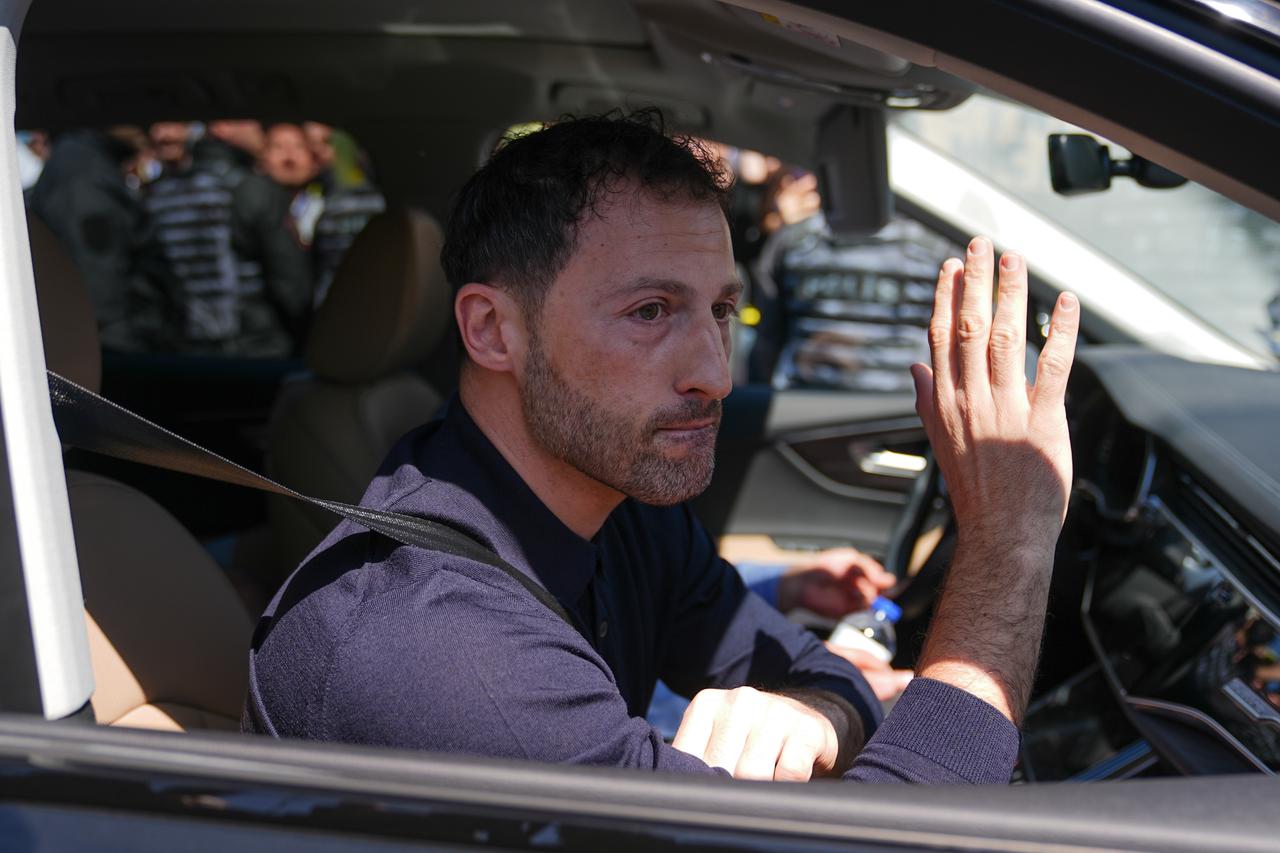
Domenico Tedesco (AA)
Tedesco’s contract was terminated around 28 April 2026 following a series of poor away results. The team’s elimination from the Ziraat Türkiye Kupası by TÜMOSAN Konyaspor, followed immediately by a 3-0 away defeat to Galatasaray in the league, prompted the decision.
After the departure was formalized, Tedesco visited the Fenerbahçe Can Bartu Facilities, where he met with club staff and players for a farewell. A group of fans gathered outside the facility and showed their support. During this emotional farewell, Tedesco did not refuse requests for photos and autographs from fans waiting for him before leaving the premises.
BBC Sport. "Domenico Tedesco is named as Belgium's head coach." Accessed September 9, 2025. https://www.bbc.com/sport/football/64566792
BBC Sport. "Domenico Tedesco: Schalke appoint 31-year-old as coach." Accessed September 9, 2025. https://www.bbc.com/sport/football/40228554
ESPN. "Domenico Tedesco, 32, just getting started as manager of rising Schalke." Accessed September 9, 2025. https://www.espn.co.uk/football/story/_/id/37492952/domenico-tedesco-32-just-getting-started-manager-rising-schalke
Footballbh. "Domenico Tedesco: The German-Italian revolutionizing Gelsenkirchen." Accessed September 9, 2025. https://footballbh.net/2018/01/04/domenico-tedesco/
Footballbiography. "Domenico Tedesco: From Whosale Merchant to Football Boss." Accessed September 9, 2025. https://footballbiography.com/domenico-tedesco-football-manager-untold-story/
Pantheon. "Domenico Tedesco Biography." Accessed September 9, 2025. https://pantheon.world/profile/person/Domenico_Tedesco
Spielverlagerung. "Interview with Schalke head coach Domenico Tedesco." Accessed September 9, 2025. https://spielverlagerung.com/2017/12/02/interview-with-schalke-head-coach-domenico-tedesco/

Doğum tarihi | 1985-09-12 | ||||||||
|---|---|---|---|---|---|---|---|---|---|
Place of Birth | Italy, Rossano | ||||||||
Roles | Fenerbahçe Belgium National Team RB Leipzig Spartak Moscow Schalke 04 Erzgebirge Aue | ||||||||
Tactical Understanding | Flexible defensive structures transition game, centrally controlled pressure-based system | ||||||||
Domenico Tedesco’s Tactical Philosophy
Base Formations and Structures
Central Pressure and Area Compression
Transition Play and Verticality
Possession Play and Set Pieces
Role of Wide Players in Attack
Defensive Organization
Set-Piece Strategies
Early Years and the Stuttgart Academy
Erzgebirge Aue Period
Schalke 04 Period
Crisis After the First Season and Departure
RB Leipzig and Spartak Moscow Experiences
Belgium National Team Appointment
Fenerbahçe Period
Appointment and Management Change
Süper Lig Performance
Turkcell Süper Cup Victory
Europa League Campaign
Departure and Farewell