

This article was automatically translated from the original Turkish version.
+2 More
Name(s) | Douglas SBD Dauntless | ||||||||
|---|---|---|---|---|---|---|---|---|---|
Category | Dive Bomber | ||||||||
Origin(s) | USA (Douglas Aircraft Company) | ||||||||
Engine(s) | 1 x Pratt & Whitney R-1830-60 Twin Wasp radial engine | ||||||||
First Flight(s) | 4 May 1940 | ||||||||
Crew | 2 (Pilot and Gunner/Bombardier) | ||||||||
Length(s) | 10.2 m | ||||||||
Wingspan | 12.6 m | ||||||||
Maximum Speed | 414 km/h | ||||||||
Maximum Takeoff Weight | 5670 kg | ||||||||
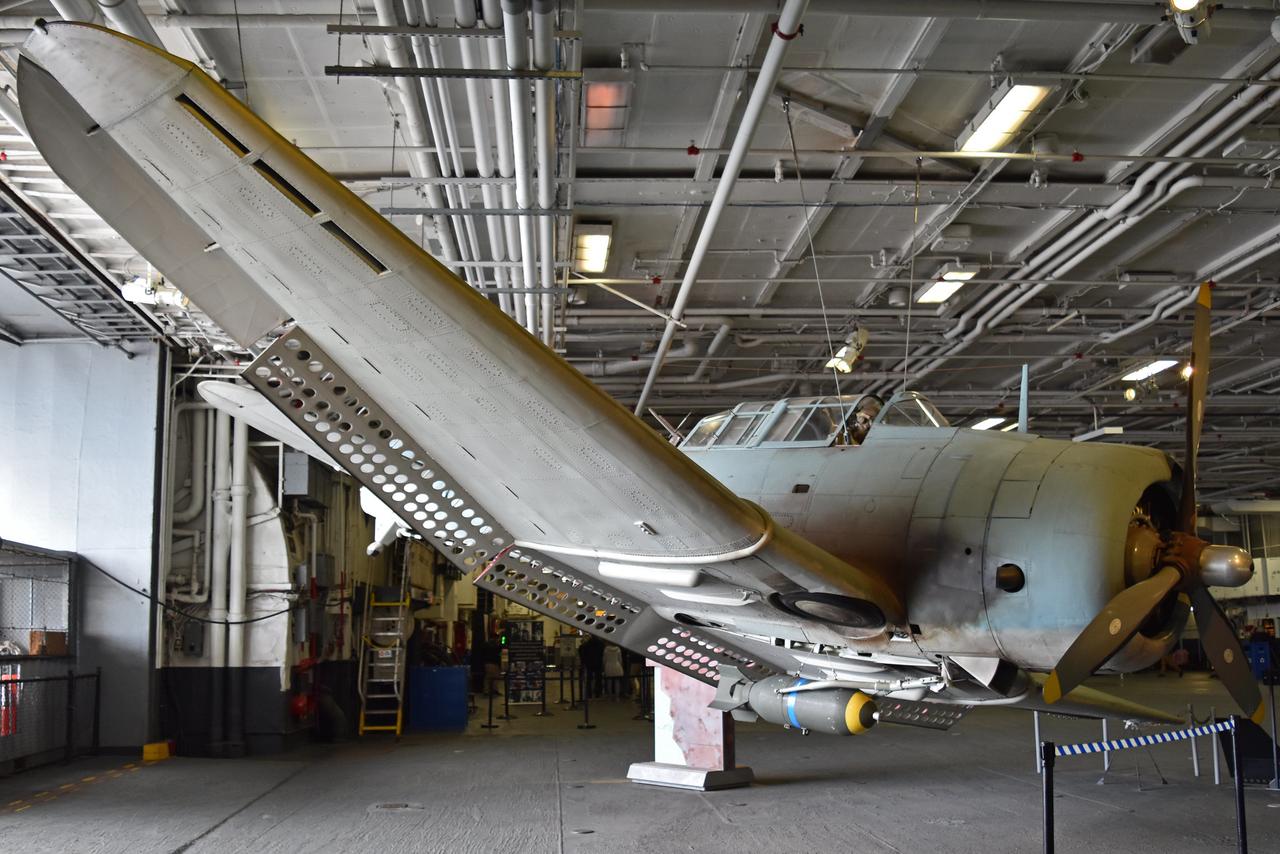
Douglas SBD Dauntless is the primary carrier-based scout/dive bomber used by the United States Navy (US Navy) and the United States Marine Corps (USMC) during World War II. The designation SBD stands for “Scout Bomber Douglas,” but due to its slow speed and effectiveness in combat, crews also referred to it as “Slow But Deadly.”
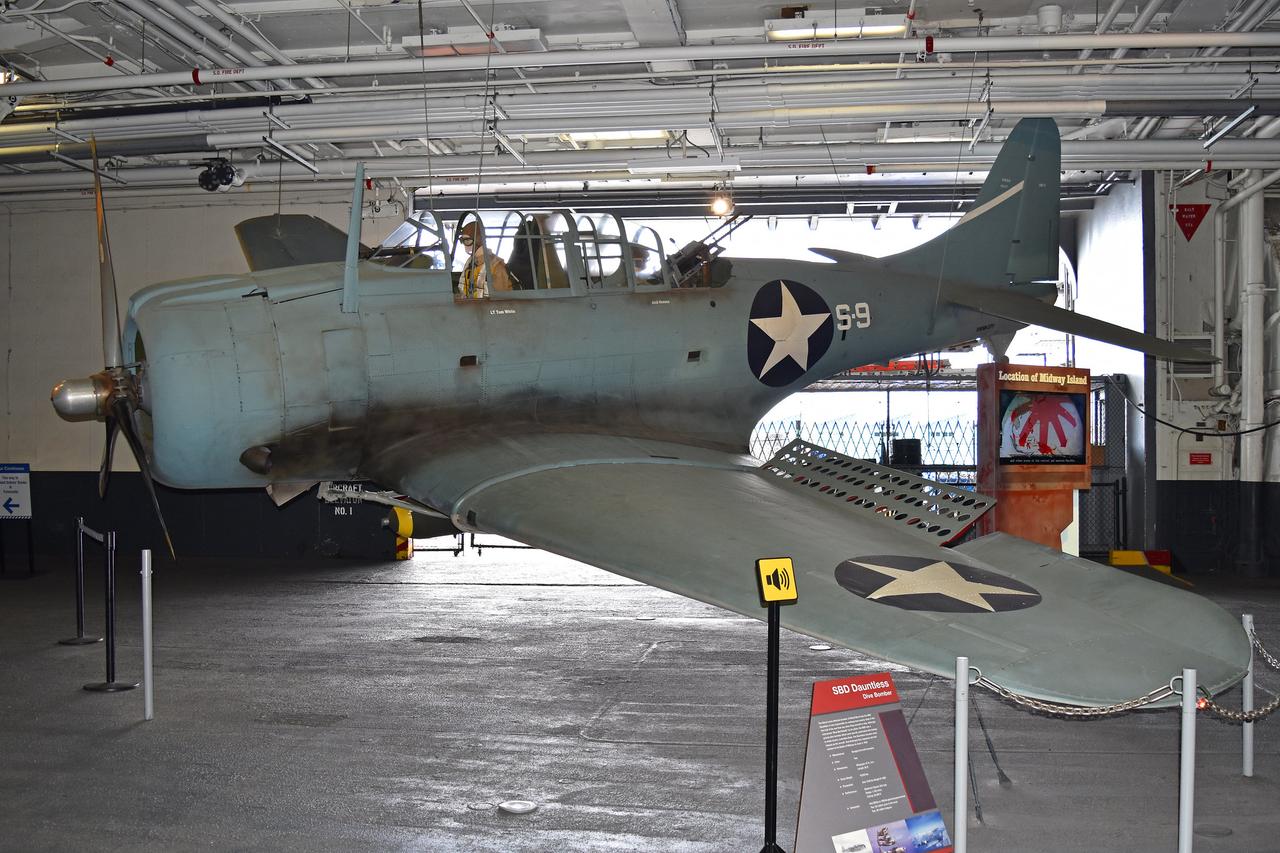
Douglas SBD Dauntless (Alan Wilson)
The origins of the SBD Dauntless trace back to the Northrop BT-1 design initiated by the Northrop Corporation in 1935. After Northrop was acquired by Douglas, the project was developed at Douglas’s El Segundo facility under the leadership of Ed Heinemann, with the first production orders issued in April 1939.
Douglas SBD Dauntless (CAF Media)
The SBD was powered by a Wright R-1820 Cyclone radial engine, with engine power continuously increased throughout the war to compensate for rising weight.
The SBD Dauntless was equipped with a robust armament for both offensive and defensive roles.
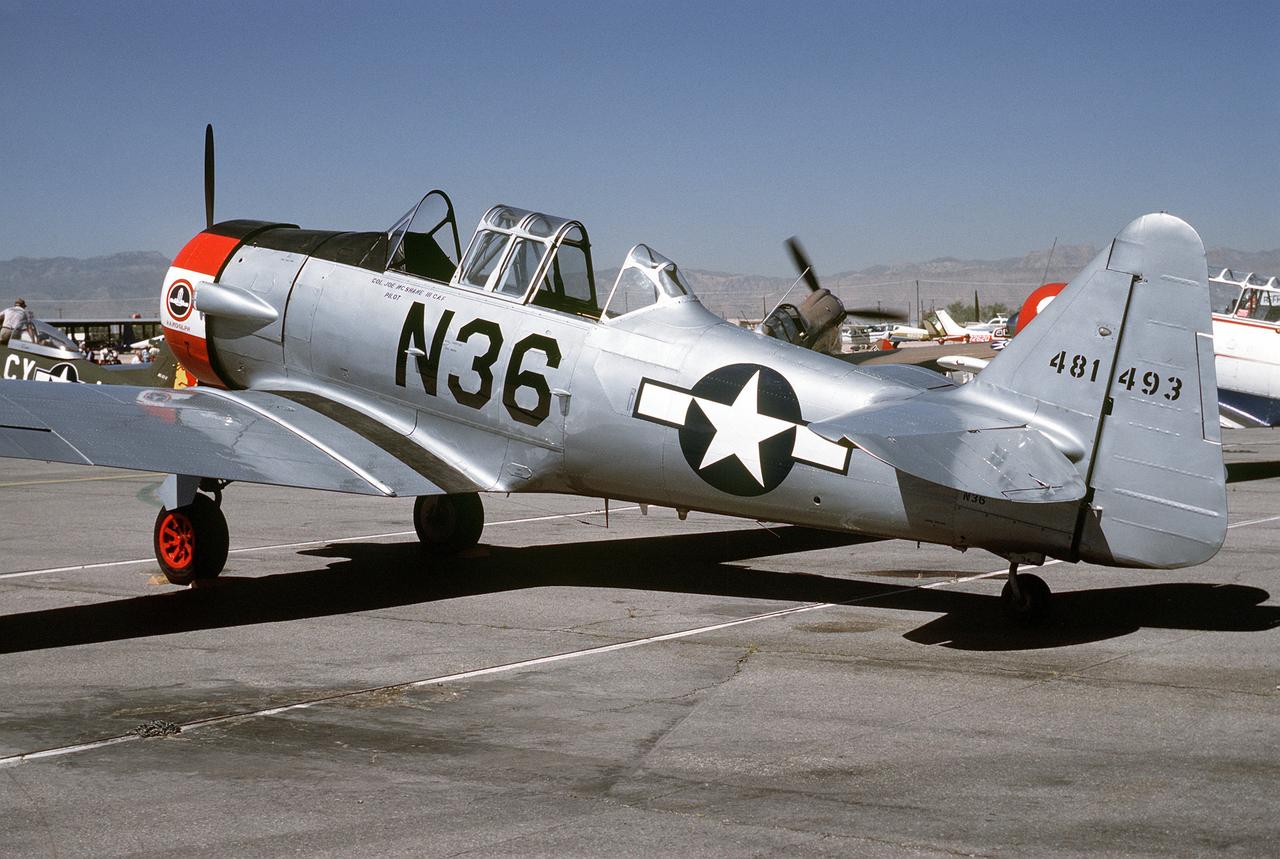
SBD Dauntless (National Archives Catalog)
During the first six months of the Pacific War, the SBD Dauntless was the most effective attack aircraft in the US Navy’s inventory.
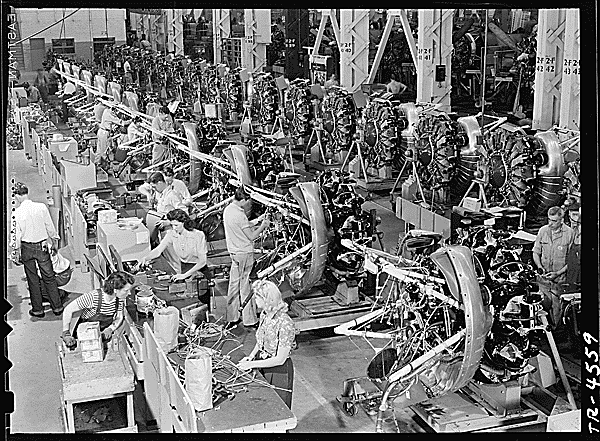
SBD Dauntless Production (National Archives Catalog)
Although the SBD was gradually replaced during the later stages of the war by the faster and larger Curtiss SB2C Helldiver, it retained popularity among pilots due to its reliability, ruggedness, and dive precision. The SBD is historically recognized as the aircraft that contributed the greatest tonnage of Japanese ships sunk by the Allies during World War II.
Abroad, Joel. "Douglas SBD Dauntless fotoğrafı." Flickr. Accessed October 20, 2025. https://www.flickr.com/photos/40295335@N00/5903362220
Air & Space Forces Magazine. "The Last of the Dive-bombers." Accessed October 20, 2025. https://www.airandspaceforces.com/article/1210bombers/
Airpages.ru. "SBD-1 Dauntless, Douglas." Airpages.ru. Accessed October 20, 2025. http://airpages.ru/eng/us/sbd1.shtml
American Heritage Museum. "Douglas SBD-5 Dauntless." American Heritage Museum. Accessed October 20, 2025. https://www.americanheritagemuseum.org/aircrafts/douglas-sbd-5-dauntless/
CAF Media. "The SBD Dauntless - Consistently Slow, Consistently Deadly." YouTube. Accessed October 20, 2025. https://www.youtube.com/watch?v=AYCbhDOFc-A
Douglas SBD Dauntless - Scribd. "Douglas SBD Dauntless." Accessed October 20, 2025. https://www.scribd.com/document/198896825/Douglas-Sbd-Dauntless
History of War. "Douglas SBD Dauntless." Accessed October 20, 2025. https://www.historyofwar.org/articles/weapons_SBD_Dauntless.html
National Air and Space Museum. "Douglas SBD-6 Dauntless." National Air and Space Museum. Accessed October 20, 2025. https://airandspace.si.edu/collection-objects/douglas-sbd-6-dauntless/nasm_A19610109000
National Archives Catalog. "Douglas SBD Dauntless." Accessed October 20, 2025. https://catalog.archives.gov/id/520741
National Archives Catalog. "Douglas SBD Dauntless." Accessed October 20, 2025. https://catalog.archives.gov/id/6506195
National Museum of World War II Aviation. "SBD Dauntless." National Museum of World War II Aviation. Accessed October 20, 2025. https://www.worldwariiaviation.org/aircraft/sbd-dauntless
Naval Gazing. "Air Attack on Ships Part 5 - Early Dive Bombers." *Naval Gazing.* Accessed October 20, 2025. https://www.navalgazing.net/Air-Attack-on-Ships-Part-5
Naval History and Heritage Command. "Douglas-built Dauntless scout dive-bomber." Naval History and Heritage Command. Accessed October 20, 2025. https://www.history.navy.mil/content/dam/nhhc/research/histories/naval-aviation/naval-aircraft/pdfs/sbd-5.pdf
Naval History and Heritage Command. "SBD Dauntless (Sunken Treasure)." Naval History and Heritage Command. Accessed October 20, 2025. https://www.history.navy.mil/content/history/museums/nnam/explore/collections/aircraft/s/sbd-dauntless--sunken-treasure-.html
Naval History and Heritage Command. "The Battle of the Coral Sea." Naval History and Heritage Command. Accessed October 20, 2025. https://www.history.navy.mil/content/dam/nhhc/browse-by-topic/War%20and%20Conflict/WWII-Pacific-Battles/Coral%20Sea%2017504.pdf
Smithsonian Magazine. "The Douglas Dauntless and Other Heroes of Midway." Accessed October 20, 2025. https://www.smithsonianmag.com/air-space-magazine/reversal-midway-180954067/
The National WWII Museum. "Douglas SBD Dauntless." The National WWII Museum. Accessed October 20, 2025. https://www.nationalww2museum.org/visit/museum-campus/us-freedom-pavilion/warbirds/douglas-sbd-dauntless
Warfare History Network. "Why the Douglas SBD Dauntless Had Such a Stunning Combat Record." Accessed October 20, 2025. https://warfarehistorynetwork.com/article/the-stunning-combat-record-of-the-douglas-sbd-dauntless/
Wilson, Alan. "Douglas SBD Dauntless fotoğrafı." Flickr. Accessed October 20, 2025. https://www.flickr.com/photos/ajw1970/51899176192
Wilson, Alan. "Douglas SBD Dauntless fotoğrafı." Flickr. Accessed October 20, 2025. https://www.flickr.com/photos/ajw1970/51899176192/in/photolist-HTjnHv-2oxP8wC-2iBh5kJ-919Fce-5TDzDZ-9ZBpBR-9ZEgVf-X82EmL-2n5i6gM-2n59QWC-7xKbpJ-sMguj9-GEGzgs-2kqp4r9-2kqpAuC-2kqpAzs-2kqpAtf-oEiZiE-2jkSFPy-2iiCE25-2metf9D-2oEFUPZ-2jkSFQW-2ihgtfm-2idDhh9-9HPtXW-2gNLZwh-2ieFXM2-nzcjEV-2hvCHrF-Crbjzo-22QoBud-4PmDxb-oxx3GQ-22QoCcL-8H1FcK-2idDhK3-BRfgeY-24uM1De-HD7tMp-f7jzyj-2kT6GGx-Zoantv-2kyXmCS-83VPEM-Du3xLd-22QoCVE-2kbPwPn-2kT5PFq


Name(s) | Douglas SBD Dauntless | ||||||||
|---|---|---|---|---|---|---|---|---|---|
Category | Dive Bomber | ||||||||
Origin(s) | USA (Douglas Aircraft Company) | ||||||||
Engine(s) | 1 x Pratt & Whitney R-1830-60 Twin Wasp radial engine | ||||||||
First Flight(s) | 4 May 1940 | ||||||||
Crew | 2 (Pilot and Gunner/Bombardier) | ||||||||
Length(s) | 10.2 m | ||||||||
Wingspan | 12.6 m | ||||||||
Maximum Speed | 414 km/h | ||||||||
Maximum Takeoff Weight | 5670 kg | ||||||||
No Discussion Added Yet
Start discussion for "Douglas SBD Dauntless" article
Development and Design Features
Engine and Variant Development
Armament and Combat Performance
Operational History and Key Battles