


This article was automatically translated from the original Turkish version.
+1 More

The term dyscalculia originates from the combination of two ancient Greek words: “dys,” meaning “poor,” and “calculia,” meaning “counting.” In this context, “dyscalculia” is defined as word “poor counting.” Dyscalculia, also described as “Mathematics learning difficulty,” is one of the subcategories of learning disabilities.
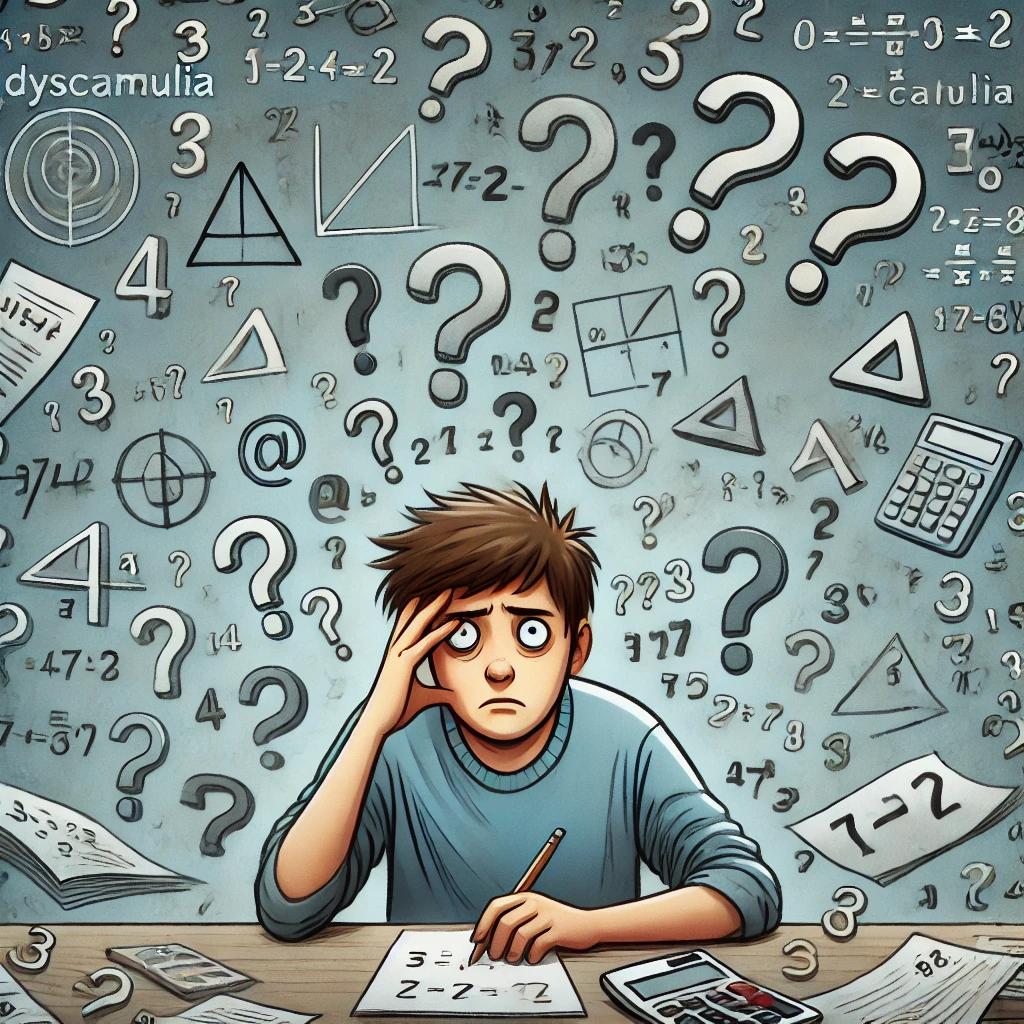
Designed with artificial intelligence.
It is a learning disability that results in deficiencies in establishing mathematical relationships, understanding the concept of numbers and number sense, comprehending and applying operations and concepts, as well as insufficient grasp of coordinate, time and spatial concepts. Today, special education experts address this learning disability. Due to differences in the tests and criteria used to diagnose dyscalculia, it is difficult to determine its exact prevalence. However, research suggests that dyscalculia affects approximately 3 to 6 percent of the general population population.
Learning difficulties may arise from:
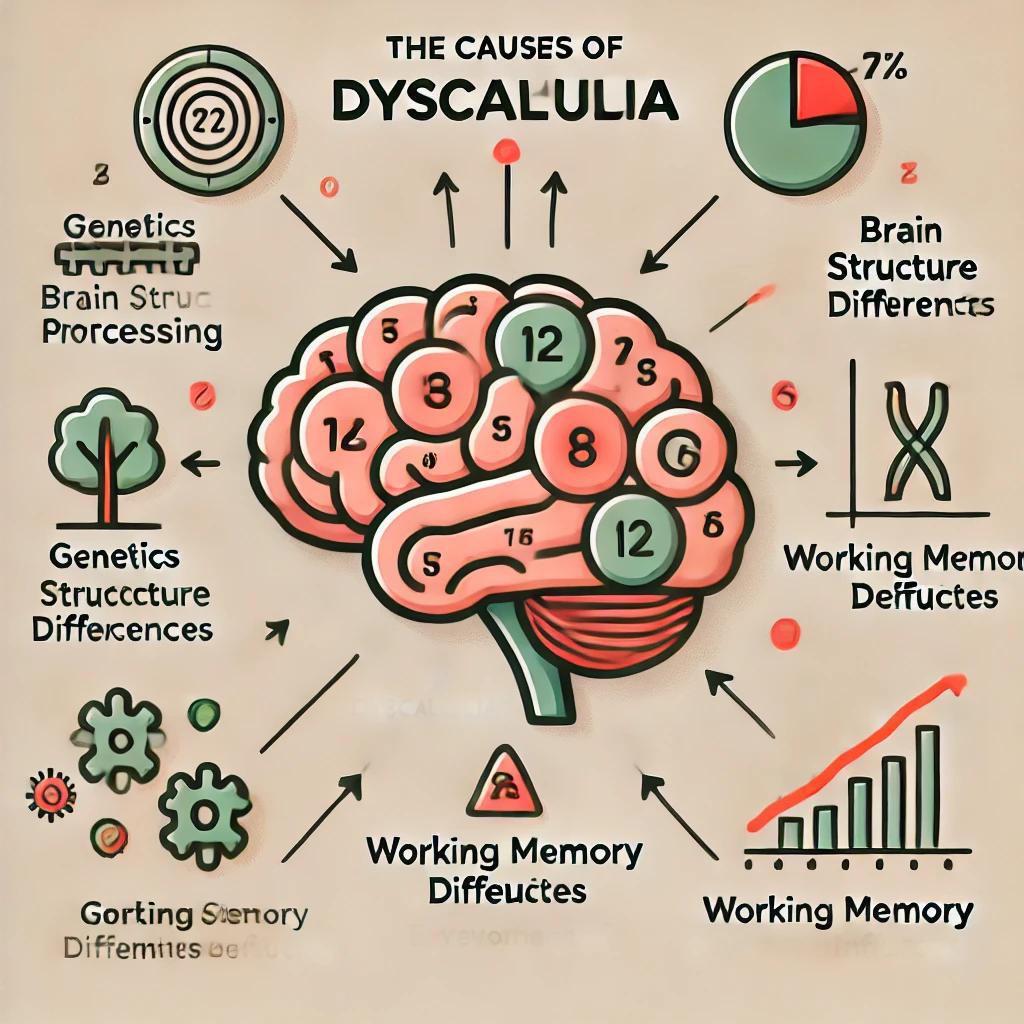
Designed with artificial intelligence.
Although often associated with intellectual disability or inadequate mathematics instruction, mathematical learning difficulties can occur in individuals with normal intelligence due to environmental factors. However, mathematical learning disability cannot be explained solely by environmental influences. It is a distinct and specific learning disability category. Therefore, dyscalculia is a separate situation that cannot be attributed to intellectual disability or inadequate education. Psychological and genetic factors also play significant roles in this learning disability.【1】
[1]
(World Health Organization, 1994)

Causes of Dyscalculia
Some Common Difficulties Experienced