



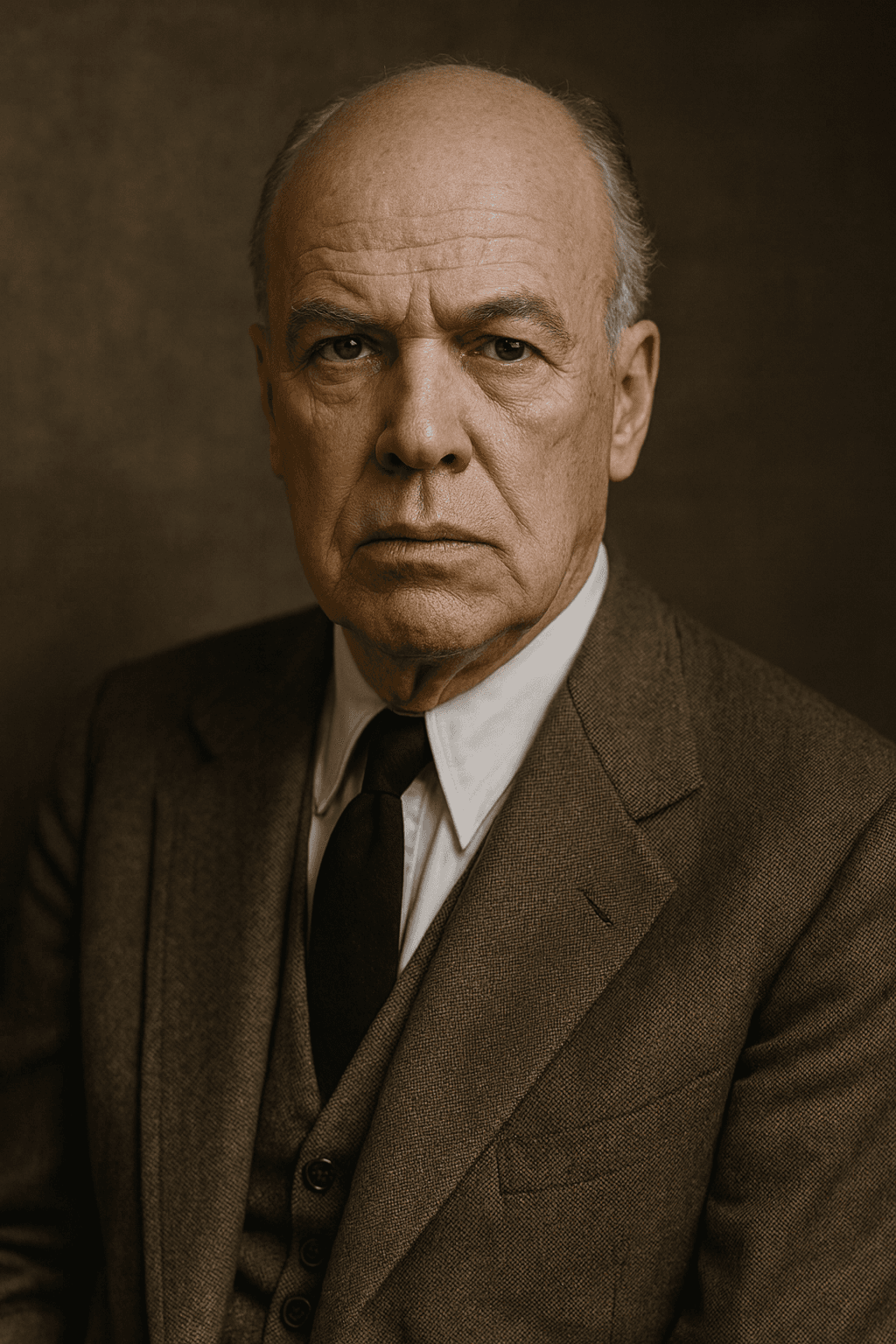
Generated with YZ
Edward Hopper
Name(s) | Edward Hopper | ||||||||
|---|---|---|---|---|---|---|---|---|---|
Birth | 1882, Nyack, New York, USA | ||||||||
Death | 1967, New York, USA | ||||||||
Spouse(s) | Josephine (Jo) Nivison Hopper | ||||||||
Theme(s) | Interior/exterior space construction urban and everyday life scenes structural use of light | ||||||||
Notable Works | Nighthawks (1942), Early Sunday Morning (1930), Gas (1940), Office at Night (1940) | ||||||||
Collections | Whitney Museum of American Art, National Gallery of Art, Smithsonian American Art Museum, Art Institute of Chicago | ||||||||
Edward Hopper (1882–1967) was a painter whose works focused on the visual representation of urban life everyday spaces and the process of modernization in the United States during the first half of the 20th century. His paintings are evaluated through the use of light the framing of architectural elements and the relationship between figures and space. The artist sustained his career over a long period from the 1910s to the 1960s producing visual reflections of urbanization and social transformation during this time.
Hopper received his art education in New York and began working in illustration at a young age. The training he received during his student years established linear simplicity and the composition of light as defining elements. His early travels to Europe particularly his observations in Paris helped develop his interest in the use of light and architectural perception.
After returning to America Hopper supported himself through illustration work while continuing to practice painting. During this period he developed a distinctive style centered on figure space and light.
Hopper’s paintings typically depict figures either alone or in limited interaction within spatial frameworks. Elements such as windows doors columns and display windows emphasize the distance between figure and space. Light serves both technical and narrative functions in his compositions; the contrast between natural daylight in daytime scenes and artificial light in nighttime scenes highlights a sense of time and atmosphere.
Themes include urban landscapes office and workplace interiors suburban facades gas stations and diners. The narratives in his paintings are not explicitly stated; instead the arrangement of space light and figure offers an open structure inviting viewer interpretation.
One of Hopper’s most famous works Nighthawks (1942) depicts the interior of a corner diner with a glass façade opening to the street. The glass surface directs the viewer’s gaze inward while the contrast between the emptiness outside and the intensity of artificial light within is striking. The painting is part of the collection at the Art Institute of Chicago and the museum’s interpretive texts draw attention to its context within the wartime era and its connection to the nocturnal economy of urban life.

Hopper’s Nighthawks (Art Institute of Chicago)
Early Sunday Morning (1930) combines the effect of daylight on a brick façade with closed shops and a rhythmic arrangement of display windows and columns. Architectural repetition is read through the horizontal and soft distribution of light across a figureless urban setting. Gas (1940) addresses the edge of the city the road leading into the countryside and a gas station; the pumps the shop façade and roadside trees establish a composition that tests the transition between artificial and natural light.
In interior scenes such as Office at Night (1940) the effects of overhead and side light sources on paper desks curtains and clothing reveal the layered structure of the composition. In these scenes the movement of the viewer’s gaze aligns with the direction of the light. Institutional catalogues and online collection pages note that numerous sketches and compositional studies were made in the production of these works.
Edward Hopper married the painter Josephine (Jo) Nivison Hopper. Jo Hopper played an active role not only as his wife but also in documenting his works managing exhibition processes and organizing his studio. Throughout his life Hopper lived in and around New York and New England and this geography nourished the recurring spatial themes in his paintings.
Hopper avoided providing narrative explanations for his paintings in interviews and correspondence. This approach ensured that the interpretation of his works remained open to the viewer.
Hopper continued producing work throughout the 1950s and 1960s maintaining his large canvases while also pursuing studies in pattern and sketching. His late paintings can be understood as a reexamination of established motifs through new arrangements of light and framing. Even in this period the opposition between interior and exterior space and the relationship between figure and architecture remained central to his production.
Although Hopper’s public visibility diminished in his final years his connections with museums and galleries persisted. Exhibition catalogues and institutional pages document the circulation sale or donation of works from this period into collections. The continuity in his output allows for the tracing of themes developed in series.
Hopper died in New York in 1967. Subsequently a process was initiated to organize his archives and artworks through museums and foundations. Jo Nivison Hopper’s role was crucial in documenting the legacy and preparing it for institutional transfer; today online archives and catalogues serve as the primary means of ensuring access to this heritage.
Aldoğan, Altay. “Edward Hopper Resimlerinde Amerikan Günlük Hayatının ve Modern Yaşamın İzleri.” *Güzel Sanatlar Enstitüsü Dergisi* (42), 243–253. Accessed October 2, 2025. https://dergipark.org.tr/tr/download/article-file/679514
Art Institute of Chicago. "Nighthawks as a Symbol of Hope." Accessed October 2, 2025. https://www.artic.edu/articles/808/nighthawks-as-a-symbol-of-hope
Art Institute of Chicago. "Nighthawks." Accessed October 2, 2025. https://www.artic.edu/artworks/111628/nighthawks
Arts & Culture Google. "Nighthawks." Accessed October 2, 2025. https://artsandculture.google.com/asset/nighthawks-0098/6AEKkO_F-9wicw?hl=tr
Arts & Culture Google. "Story." Accessed October 2, 2025. https://artsandculture.google.com/story/LQXhjOjYU8gE8A
Arts & Culture Google. “The Art Institute of Chicago.” Accessed October 2, 2025. https://artsandculture.google.com/partner/the-art-institute-of-chicago
Demir, Rabia, and Nazif Gür. “Edward Hopper’ın Kaçış Manevraları: Pencereler.” *İnsanat Sanat Tasarım ve Mimarlık Araştırmaları Dergisi*, 2(2), 61–81. Accessed October 2, 2025. https://dergipark.org.tr/tr/download/article-file/2816175
Edward Hopper Net. "Biography." Accessed October 2, 2025. https://www.edwardhopper.net/biography.jsp
Edward Hopper Net. "Edward Hopper Quotes." Accessed October 2, 2025. https://www.edwardhopper.net/edward-hopper-quotes.jsp
Gür, Nazif. “Edward Hopper’ın Resimlerinde Yok-Yerler.” *Tykhe Sanat ve Tasarım Dergisi*, 8(15), 337–353. Accessed October 2, 2025. https://dergipark.org.tr/en/download/article-file/3293807
National Gallery of Art. “Edward Hopper.” Accessed October 2, 2025. https://www.nga.gov/artists/1404-edward-hopper
National Museum of American Art. “Edward Hopper.” Smithsonian American Art Museum. Accessed October 2, 2025. https://americanart.si.edu/artist/edward-hopper-2297
Whitney Museum of American Art. "Edward Hopper." Accessed October 2, 2025. https://whitney.org/artists/621

Generated with YZ
Edward Hopper
Name(s) | Edward Hopper | ||||||||
|---|---|---|---|---|---|---|---|---|---|
Birth | 1882, Nyack, New York, USA | ||||||||
Death | 1967, New York, USA | ||||||||
Spouse(s) | Josephine (Jo) Nivison Hopper | ||||||||
Theme(s) | Interior/exterior space construction urban and everyday life scenes structural use of light | ||||||||
Notable Works | Nighthawks (1942), Early Sunday Morning (1930), Gas (1940), Office at Night (1940) | ||||||||
Collections | Whitney Museum of American Art, National Gallery of Art, Smithsonian American Art Museum, Art Institute of Chicago | ||||||||
Education and Early Period
Artistic Practice and Themes
Major Works
Private Life
Later Years and Death