This article was automatically translated from the original Turkish version.
+2 More
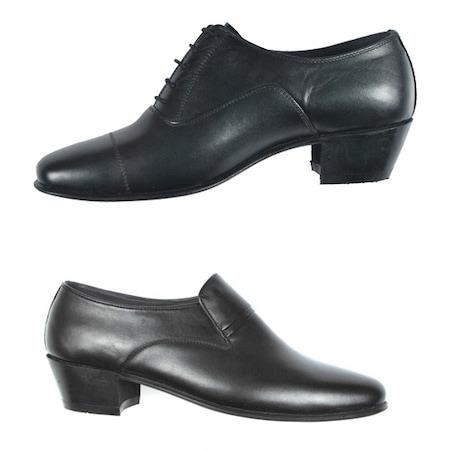
Yumurta Topuk Çarşamba Ayakkabısı is a traditional shoe type produced in the Çarşamba district of Samsun province in Türkiye for over a century, based entirely on craftsmanship. Its earliest production dates back to the 1900s. It gained widespread popularity in the 1930s and became closely identified with the region from the 1950s onward. The term "Yumurta topuk" refers to the shoe’s wooden heel, approximately 35 mm in height, which over time evolved into the defining characteristic that gave the product its identity. 【1】

Yumurta Topuk Çarşamba Ayakkabısı (AA)
The egg-heel design was introduced to Çarşamba in the 1950s by Zileli Osman Usta, inspired by traditional wooden clogs and rubber soles. 【2】 The leather was crafted as a single piece in a slipper-like form and shaped without seams. This seamless, ornament-free, and “flat” design became a cultural symbol aligned with the shoe’s külhanbeyi identity. Production began to be carried out on order from the 1980s, and by the 1990s the term “yumurta topuk” had become firmly established among the public. 【3】
The Çarşamba shoe is entirely handmade. Calfskin or goat leather is preferred, especially for custom orders. The upper is glossy, smooth, and lined. There are no seams on the upper; the toe area is stiffened with a last to create a slender, elongated shape. The shoe is worn by stepping into it; the leather’s ability to stretch and return to its original form enables this wearing method. The heel cap is made of black or brown plastic and is secured with heel nails.

Yumurta Topuk Çarşamba Ayakkabısı (AA)
The production of the Yumurta Topuk Çarşamba Ayakkabısı takes approximately one week and consists of several stages based on skilled manual labor:

Image from the Production Stage (AA)
Both technical tools and structural components are essential in the production of the shoe.
On 09.10.2020, the Çarşamba Municipality officially registered the product with a geographical indication. All stages of production must take place within the boundaries of Çarşamba district, Samsun province. The shoe’s original design, production technique, and cultural context are directly tied to this geographical area.
When worn with white socks, grey trousers, a vest, and an eight-pointed cap, the shoe has become part of the “traditional young man’s identity.” Thanks to the efforts of local producers, the product has also been introduced to European countries.
Monitoring is coordinated by the Çarşamba Municipality with the participation of relevant trade chambers and professional associations. Material quality, production techniques, and geographical indication practices are regularly inspected. Cultural continuity is maintained through a limited number of master artisans.
Anadolu Ajansı. “Hayatını ‘Yumurta Topuk’ Ayakkabıya Adadı.” Accessed July 15, 2025. https://www.aa.com.tr/tr/yasam/hayatini-yumurta-topuk-ayakkabiya-adadi/849179.
Anadolu Ajansı. “‘Yumurta Topuk’ Ayakkabıya Avrupa’dan da Ortadoğu’dan da Talep Var.” Accessed July 15, 2025. https://www.aa.com.tr/tr/yasam/yumurta-topuk-ayakkabiya-avrupadan-da-ortadogudan-da-talep-var/965882.
Dağlı, Ahmet. “Bir Kent İmgesi Olarak Çarşamba Ayakkabısı.” *Korkut Ata Türkiyat Araştırmaları Dergisi*, 1111–1120, December 31, 2023. Accessed July 15, 2025. https://dergipark.org.tr/tr/download/article-file/3629483.
Egg Heel Wednesday Shoe / Wednesday Shoe. "Geographical Indications." Turkish Patent and Trademark Office. Accessed July 15, 2025. https://ci.turkpatent.gov.tr/cografi-isaretler/detay/945.
Samsun İl Directorate of Culture and Tourism. "Yumurta Topuk Ayakkabı." T.C. Kültür veTurizm Bakanlığı. Accessed July 15, 2025. https://samsun.ktb.gov.tr/TR-216930/yumurta-topuk-ayakkabi.html.
[1]
Yumurta Topuk Çarşamba Ayakkabısı / Çarşamba Ayakkabısı, Coğrafi İşaretler, Türk Patent ve Marka Kurumu Sayfa 2. Tescil: 9 Ekim 2020, Erişim 15 Temmuz 2025, https://ci.turkpatent.gov.tr/cografi-isaretler/detay/945.
[2]
Samsun İl Kültür ve Turizm Müdürlüğü, “Yumurta Topuk Ayakkabı,” T.C. Kültür ve Turizm Bakanlığı, erişim 15 Temmuz 2025, https://samsun.ktb.gov.tr/TR-216930/yumurta-topuk-ayakkabi.html.
[3]
Yumurta Topuk Çarşamba Ayakkabısı / Çarşamba Ayakkabısı, Coğrafi İşaretler, Türk Patent ve Marka Kurumu Sayfa 2. Tescil: 9 Ekim 2020, Erişim 15 Temmuz 2025, https://ci.turkpatent.gov.tr/cografi-isaretler/detay/945.

No Discussion Added Yet
Start discussion for "Egg Heeled Wednesday Shoe" article
Historical Development
Technical Features and Construction
Production Process
Materials Used
Geographical Indication and Cultural Value
Symbolic Representations and Dissemination
Monitoring and Sustainability