


This article was automatically translated from the original Turkish version.
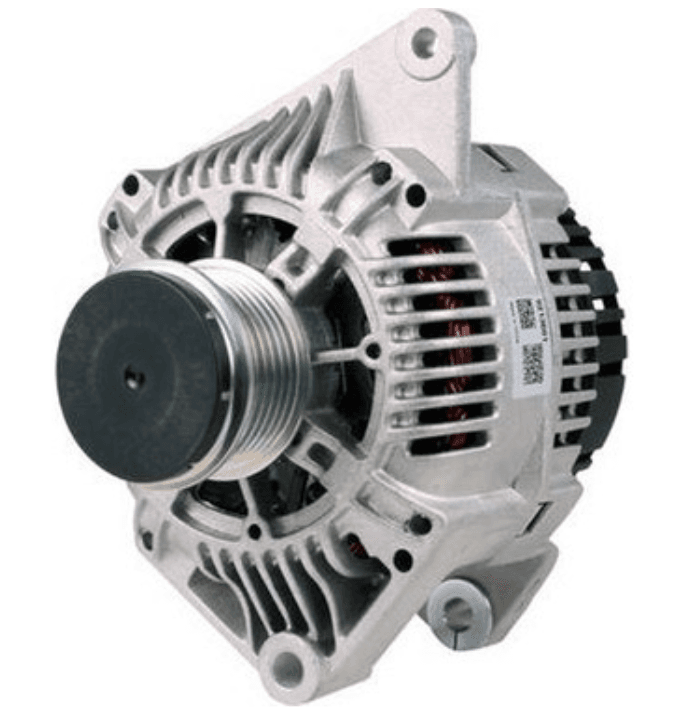
Definition(s) | Electromechanical device that converts mechanical energy into alternating current | ||||||||
|---|---|---|---|---|---|---|---|---|---|
Current Type | Alternating current (AC) | ||||||||
Main Component(s) | Rotor bearings shaft stator | ||||||||
Type(s) | Synchronous automotive type asynchronous | ||||||||
Electromechanical systems that convert mechanical energy into electrical energy. These devices operate based on Faraday’s laws of electromagnetic induction, generating electric current by moving a conductor within a magnetic field. Electric generators are used in a wide range of applications, from power generation plants to portable energy solutions.
The fundamental operating principle of electric generators is based on the law of electromagnetic induction. This law states that an electric current is induced in a conductor when it is moved through a changing magnetic field.
In a generator, this principle functions as follows:
Which components rotate depends on whether the system produces AC or DC and the type of generator involved.
Rotor: The component that generates the magnetic field and is typically the rotating part. It may contain permanent magnets or electromagnets.
Commutator or Rectifier: Used in DC generators to convert alternating current into direct current. This component is not required in AC generators.
Bearings and Frame: Ensure smooth mechanical operation and vibration-free rotation of moving parts.
Cooling and Insulation Systems: Critically important for heat management and electrical safety, especially in high-power generators.
They produce alternating current and are the most common type of generator. Typically used in power plants.

AC Generator Structure (Mega Engineering)
They produce direct current as output, converting AC to DC via a commutator. Typically preferred in laboratory systems, battery charging, and certain specialized applications.

DC Generator Structure (Mega Engineering)
National Institute of Technology. *Ch-37 Alternators*. Accessed June 23, 2025. https://nit-edu.org/wp-content/uploads/2021/09/Ch-37-Alternators.pdf
RealPars. "What Is an Alternator? | Basics, Components & How It Works." RealPars. Accessed June 23, 2025. https://realpars.com/alternator/
The Engineering Mindset. "Car Alternator: How Alternators Work." The Engineering Mindset. Accessed June 23, 2025. https://www.theengineeringmindset.com/car-alternator-how-alternators-work/

Definition(s) | Electromechanical device that converts mechanical energy into alternating current | ||||||||
|---|---|---|---|---|---|---|---|---|---|
Current Type | Alternating current (AC) | ||||||||
Main Component(s) | Rotor bearings shaft stator | ||||||||
Type(s) | Synchronous automotive type asynchronous | ||||||||
No Discussion Added Yet
Start discussion for "Electric Generators" article
Working Principle
Key Components
Types of Generators
1. AC Generators – Alternators
Synchronous Generator
Asynchronous (Induction) Generator
2. DC Generators
Advantages and Disadvantages
Advantages
Disadvantages
Applications