


This article was automatically translated from the original Turkish version.
+2 More
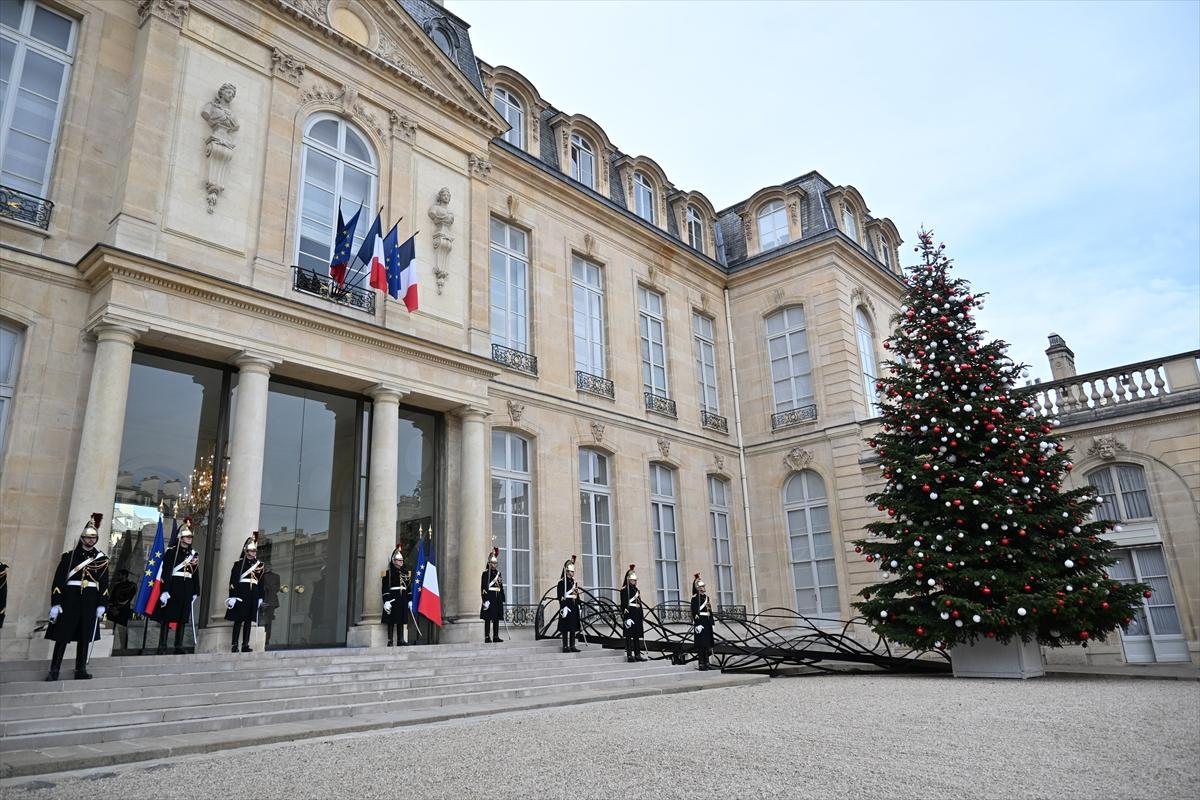
Élysée Palace
Original Name(s) | Hôtel d’Évreux Palais de l’Élysée | ||||||||
|---|---|---|---|---|---|---|---|---|---|
Location | 88 rue du Faubourg Saint-Honoré France 75008 Paris | ||||||||
Type(s) | Official residence and administrative center of the head of state | ||||||||
Construction Date(s) | 1718–1722 | ||||||||
Architect(s) | Armand-Claude Mollet | ||||||||
Total Area | 11.179 m² | ||||||||
Number of Rooms | 365 | ||||||||
Garden Area | 1.5 hectares | ||||||||
Current Function | Official residence and workplace of the President of the French Republic | ||||||||
Date of Official Status Acquisition | 1870 | ||||||||
Affiliated Institution | French Presidency | ||||||||
Related Structure | La Maison Élysée (museum, exhibition space, café and shop) | ||||||||
Élysée Palace is a historic state building located in the 8th arrondissement of Paris, serving as the official residence and workplace of the President of the French Republic. Before attaining its current status, it evolved over approximately three centuries under various names, functions, and owners, becoming a central symbol of continuity in French state tradition through its architecture, interior layouts, gardens, and institutional roles.
History of the Élysée Palace (SLICE Full Doc)
The Élysée Palace is located at 88 rue du Faubourg Saint-Honoré in Paris. The building comprises a large complex including the main structure, service units, ceremonial halls, and gardens. Its total enclosed area amounts to 11,179 m², of which approximately 300 m² is allocated to private apartments. The palace contains 365 rooms, a 1.5-hectare park, approximately 100 species of trees, 12,000 flowers planted annually, 100 hours of archival material, 5,000 pieces of furniture registered in the Mobilier National inventory, and 500 works of art.
The core of the building is the private mansion known as Hôtel d’Évreux, constructed in 1718 on swampy land purchased by Count Louis-Henri de La Tour d’Auvergne. Architectural design was entrusted to Armand-Claude Mollet; the main two-story structure featured a mansard roof, a paved stone courtyard to the north, and a French-style garden to the south. Contemporary sources regarded the building as among the most distinguished residences in the Paris region. After the count’s death in 1753, the property was sold at auction.
In 1753, the building was acquired by Madame de Pompadour, the favorite of King Louis XV; its interior decoration was completed and the garden extended toward the Champs-Élysées. In 1773, Bordeaux-based banker Nicolas Beaujon purchased the property and undertook renovations with architect Étienne-Louis Boullée. Beaujon’s art collection was made available to Parisians at specific times.
In 1786, the property passed to Bathilde d’Orléans, Duchess of Bourbon, and was expanded for large receptions and meetings. During the French Revolution, the palace was confiscated and used for various official purposes; it was returned to the duchess in 1797. Due to lack of funds, the garden was opened to the public as a park, with artificial caves, waterfalls, and mazes added.
At the beginning of the 19th century, the palace came into the ownership of Joachim Murat and Caroline Murat. The grand staircase, ceremonial spaces, and decorative elements were added during this period. After the Murats ascended the throne of Naples in 1808, the property was transferred to Napoléon Bonaparte. On 15 June 1815, Napoléon’s second abdication document was signed in the palace’s Silver Room.
After Napoléon, the building served temporarily as a residence and guest palace. In 1848, it became the official residence of the first President of the French Republic, Louis-Napoléon Bonaparte. Following the coup of 1852 that proclaimed the Empire, the state center moved to the Tuileries Palace; the Élysée was expanded with reception and ballrooms.
Since 1870, the Élysée Palace has been designated as the official residence of the Presidents of the French Republic. Extensive restorations were carried out during the Third Republic; a large ceremonial hall was added for the 1889 World’s Fair. In the 20th century, electricity, central heating, modern kitchens, and security infrastructure were installed. With the presidency of Charles de Gaulle in 1958, the palace became the central seat of executive power. Different presidents introduced changes in furniture design, underground command units, and architectural modifications.
The palace’s architecture is rooted in the 18th-century French townhouse tradition. The main façade is notable for its symmetry and stonework. Interior spaces include the Salon des Ambassadeurs, the Napoléon III Salon, the Silver Room, and ceremonial halls. Elements added over time reflect the building’s layered historical character. Current restoration efforts aim to preserve the original design and decorative intent.
The Élysée gardens are located on the southern side and arranged according to the French garden tradition. Expanded and redesigned in various periods throughout history, the gardens today host both official ceremonies and limited public visits. They feature diverse tree species, seasonal flowers, and walking paths.
The Élysée Palace houses the President’s working offices, official reception rooms, and venues for state ceremonies. As a living institution, it undergoes regular maintenance and restoration while also incorporating contemporary artworks. Accessibility modifications have been implemented, making the ground floor fully accessible.
Opposite the palace, La Maison Élysée is a museum-exhibition, café, and retail complex established to present the history and heritage of the Élysée. Located at 88 rue du Faubourg Saint-Honoré, this space is open free of charge year-round and presents the historical development of the Élysée through exhibitions.
The Élysée Palace holds numerous movable cultural assets recognized as part of the national heritage. In 2025, it was discovered that certain silverware and tableware from the palace inventory had been stolen; legal proceedings were initiated against responsible personnel and associated individuals. The seized items were subsequently returned to the palace. Such incidents underscore the importance of inventory and security controls at the Élysée.
The Élysée Palace archives include sales records, architectural plans, restoration logs, and historical documents. The 1753 sales deed, 1773 transfer documents, and Napoléon’s 1815 abdication document are key components of the palace’s historical memory. These archives enable the tracing of the palace’s history through documentary evidence.
Today, the Élysée Palace maintains its historical identity while serving as the center of France’s political and diplomatic activities. The functions of the presidency, international receptions and meetings, and the preservation of cultural heritage constitute its core roles.
Jacques Chirac Association. “History of the Élysée Palace.” Archives Élysée. Accessed December 23, 2025. https://www.jacqueschirac-asso.fr/archives-elysee.fr/elysee/elysee.fr/anglais/the_elysee_palace/history_of_the_elysee_palace/history_of_the_elysee_palace.20248.html
Napoleon.org. "Élysée Palace." Napoleon.org Magazine. Accessed December 23, 2025. https://www.napoleon.org/en/magazine/places/elysee-palace/
SLICE Full Doc. "The Élysée Palace: 300 Years of French Power and Prestige." YouTube Video. Accessed December 23, 2025. https://www.youtube.com/watch?v=II7JYtjuG-I
TRT Haber. "Paris’te Bu Kez Élysée Sarayı Soyuldu: Gümüşçübaşı Binlerce Euroluk Takımlarla Yakalandı." Accessed December 23, 2025. https://www.trthaber.com/haber/dunya/pariste-bu-kez-elysee-sarayi-soyuldu-gumuscubasi-binlerce-euroluk-takimlarla-yakalandi-929323.html
Élysée Palace. “Official Website.” Élysée. Accessed December 23, 2025. https://www.elysee.fr/en/
Élysée Palace. “Évreux 300: Palais en Chiffres.” Élysée. Accessed December 23, 2025. https://www.elysee.fr/en/cultural-space/evreux-300#palais-en-chiffres


Élysée Palace
Original Name(s) | Hôtel d’Évreux Palais de l’Élysée | ||||||||
|---|---|---|---|---|---|---|---|---|---|
Location | 88 rue du Faubourg Saint-Honoré France 75008 Paris | ||||||||
Type(s) | Official residence and administrative center of the head of state | ||||||||
Construction Date(s) | 1718–1722 | ||||||||
Architect(s) | Armand-Claude Mollet | ||||||||
Total Area | 11.179 m² | ||||||||
Number of Rooms | 365 | ||||||||
Garden Area | 1.5 hectares | ||||||||
Current Function | Official residence and workplace of the President of the French Republic | ||||||||
Date of Official Status Acquisition | 1870 | ||||||||
Affiliated Institution | French Presidency | ||||||||
Related Structure | La Maison Élysée (museum, exhibition space, café and shop) | ||||||||
Location and General Features
History
Hôtel d’Évreux Period (1718–1773)
Madame de Pompadour and Hôtel Beaujon (1753–1786)
Élysée Bourbon and Revolutionary Years (1786–1799)
Élysée-Murat and Élysée-Napoléon (1804–1815)
From Empires to Republic (1815–1870)
Presidential Palace (1870–Present)
Architecture and Interior Spaces
Gardens
Institutional Functions and Current Use
La Maison Élysée
Inventory and Security Incidents
Archives and Documents
The Élysée Palace Today