


This article was automatically translated from the original Turkish version.
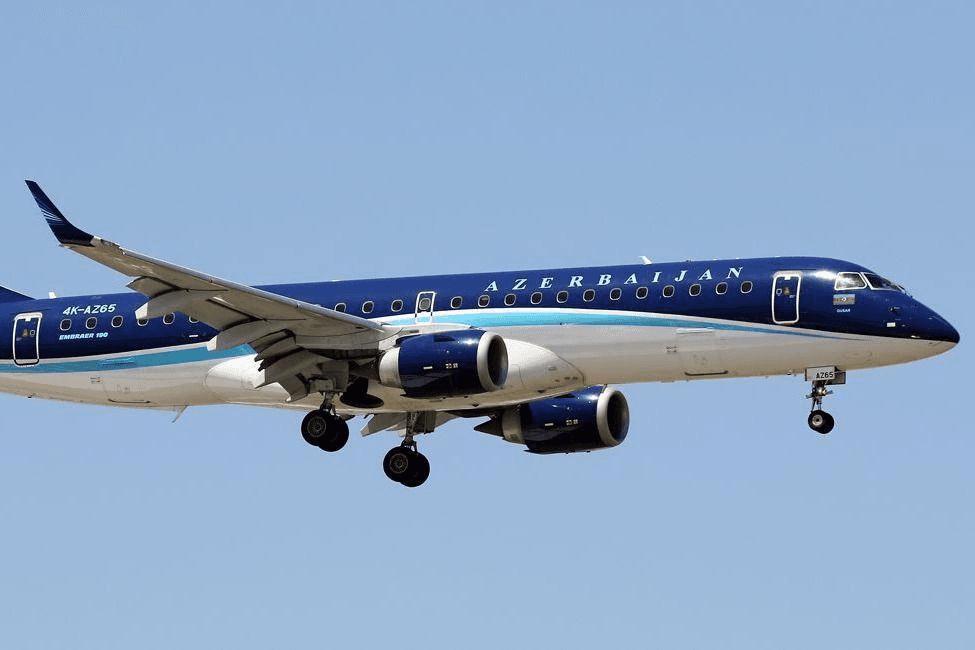
Embraer 190 - AZAL
Producer(s) | Embraer (Brazil) | ||||||||
|---|---|---|---|---|---|---|---|---|---|
First Flight(s) | 12 March 2004 | ||||||||
Aircraft Type(s) | Twin-engine medium-range regional passenger aircraft | ||||||||
Material and Construction | Composite and aluminum alloy fuselage with modern aircraft systems and high-efficiency aerodynamic structure | ||||||||
Designer | Embraer engineering team (developed as part of the Embraer E-Jet family) | ||||||||
First Journey | 6 March 2005 São Paulo (Brazil) → Belo Horizonte (Brazil) | ||||||||
Engine Type | 2× General Electric CF34-10E, each providing 18,500 lbf (82.3 kN) thrust | ||||||||
Capacity | 98 passengers + 2 pilots (total 100 people) | ||||||||
Length(s) | 36.24 m | ||||||||
Wingspan | 28.72 m | ||||||||
Cruising Speed | 829 km/h (Mach 0.78) | ||||||||
Range(s) | 4 537 km (maximum payload) | ||||||||
Ceiling | 12,500 m | ||||||||
Endurance | approximately 5.5 hours | ||||||||
Purpose of Use(s) | military and VIP use with special variants Passenger transport (civil aviation) | ||||||||
Embraer 190 is a narrow-body twin-engine regional jet aircraft designed and manufactured by the Brazilian aerospace company Embraer. As a member of Embraer’s highly successful E-Jet family the E190 was specifically developed for medium-range and high-density regional routes as well as lower-demand mainline routes. Thanks to its spacious cabin passenger-focused design and operational efficiency it has become a popular aircraft favored by numerous airlines worldwide.

Embraer 190 AZAL - Azerbaijan Airlines (Azerbaijan Airlines)
The development of the Embraer 190 was part of Embraer’s E-Jet program launched in the late 1990s. The goal of this program was to fill gaps in both regional and mainline markets by offering aircraft that were larger more comfortable and more efficient than traditional regional jets. As one of the largest members of the E-Jet family the E190 made its first flight in 2004 and entered service in 2005. It quickly gained significant global interest and established itself as a key asset in the fleets of various airlines.
The Embraer 190 stands out with its modern and passenger-friendly design:
Embraer 190 Azerbaijan Airlines (Brazilian Aviation)
The Embraer 190 has been adopted by various airlines due to its flexible operational capabilities and passenger-centric design:
AZAL. "Our Fleet: Embraer E-190." *Azerbaijan Airlines*. Accessed May 26, 2025. https://www.azal.az/az/airline/our-fleet/embraer-e-190/.
Airport Technology. "Embraer 190 Jet, Brazil." Airport Technology. Accessed May 26, 2025. https://www.airport-technology.com/projects/embraer_190/.
Aviation Brazilian. "Decolagem Embraer 190 Azerbaijan Airlines." YouTube. Accessed May 26, 2025. https://www.youtube.com/watch?v=oY3Ct7qWcgA.
Embraer Commercial Aviation. "E190." *Embraer Commercial Aviation*. Accessed May 26, 2025. https://www.embraercommercialaviation.com/commercial-jets/e190/.
KLM Türkiye. "Uçak Tipleri: Embraer 190." KLM Türkiye. Accessed May 26, 2025. https://www.klm.com.tr/tr/information/travel-class-extra-options/aircraft-types/embraer-190.
Qantas. "Our Fleet: QantasLink E190." *Qantas*. Accessed May 26, 2025. https://www.qantas.com/au/en/about-us/our-company/fleet/qantaslink-e190.html.
Rehimov, Ruslan, Dmitri Chirciu, and Meiramgul Kussainova. "Kazakistan'da düşen uçaktan 29 kişi kurtuldu." *Anadolu Ajansı*. Accessed May 26, 2025. https://www.aa.com.tr/tr/dunya/kazakistan-da-dusen-ucaktan-29-kisi-kurtuldu/3433572.
Skybrary. "Aircraft: E195." Skybrary. Accessed May 26, 2025. https://skybrary.aero/aircraft/e195.

Embraer 190 - AZAL
Producer(s) | Embraer (Brazil) | ||||||||
|---|---|---|---|---|---|---|---|---|---|
First Flight(s) | 12 March 2004 | ||||||||
Aircraft Type(s) | Twin-engine medium-range regional passenger aircraft | ||||||||
Material and Construction | Composite and aluminum alloy fuselage with modern aircraft systems and high-efficiency aerodynamic structure | ||||||||
Designer | Embraer engineering team (developed as part of the Embraer E-Jet family) | ||||||||
First Journey | 6 March 2005 São Paulo (Brazil) → Belo Horizonte (Brazil) | ||||||||
Engine Type | 2× General Electric CF34-10E, each providing 18,500 lbf (82.3 kN) thrust | ||||||||
Capacity | 98 passengers + 2 pilots (total 100 people) | ||||||||
Length(s) | 36.24 m | ||||||||
Wingspan | 28.72 m | ||||||||
Cruising Speed | 829 km/h (Mach 0.78) | ||||||||
Range(s) | 4 537 km (maximum payload) | ||||||||
Ceiling | 12,500 m | ||||||||
Endurance | approximately 5.5 hours | ||||||||
Purpose of Use(s) | military and VIP use with special variants Passenger transport (civil aviation) | ||||||||
Development Purpose and History
Design Features
Technical Specifications
Key Features and Applications