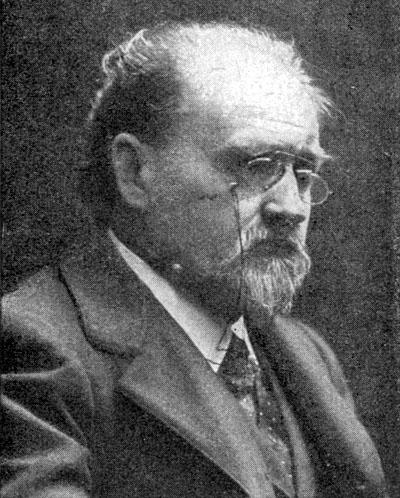
+2 More

Doğum tarihi | 1840-04-02 | ||||||||
|---|---|---|---|---|---|---|---|---|---|
Ölüm tarihi | 1902-09-28 | ||||||||
Babası | François Zola | ||||||||
Annesi | Émilie Aubert | ||||||||
Çocuk | Jacques Zola Denise Zola | ||||||||
Profession(s) | Journalist Novelist Writer | ||||||||
Literary Movement(s) | Naturalism | ||||||||
Place of Death | Paris, France | ||||||||
Place of Birth | Paris, France | ||||||||
Prominent Themes | Naturalist Principles Class Differences Working Class Social Justice | ||||||||
Émile Zola (1840–1902) was a writer who produced significant works in the fields of the novel and journalism during 19th-century French literature. In his literary output, he examined the individual within the framework of heredity, environment, and social conditions, applying this approach systematically especially in the Rougon-Macquart series, which portrays France during the Second Empire. His journalistic activities included the landmark text “I Accuse…” (J’accuse…!), through which he directly intervened in the Dreyfus Affair, establishing this piece as one of the most prominent examples of his public writing.
Émile Zola was born on 2 April 1840 in Paris. His father was an Italian-born civil engineer and his mother came from the Beauce region. Due to his father’s canal project in Aix-en-Provence, the family soon relocated to that city. Zola spent his childhood and early youth in Aix-en-Provence. His education during this period followed the classical curriculum of the time, shaped by literature and language studies. While in Aix, he met Paul Cézanne and formed a lasting friendship. This relationship enabled Zola to engage early with artistic circles.
After his father’s death in 1847, the family faced financial hardship, which directly affected Zola’s educational and living conditions. In 1858 he moved to Paris with his mother and did not complete his formal education; instead, he began working various jobs to support himself. Nevertheless, he continued independent reading in the fields of literature, history and art, expanding his knowledge through non-academic sources. During this period he developed a regular writing practice and turned toward a literary career. This era formed the defining framework of his early adulthood.
Émile Zola moved to Paris at a young age. This period was marked by clear financial difficulties. During his early years in the capital he held irregular jobs and struggled to make ends meet. Yet he did not abandon his literary pursuits and continued writing. In 1862 he began working for the publishing and book distribution house Hachette. His duties involved reviewing manuscripts submitted to the publisher and managing relations with the press. This role gave Zola intimate access to the world of publishing. During the same period he connected with literary and artistic circles and gained visibility in the journalistic sphere.

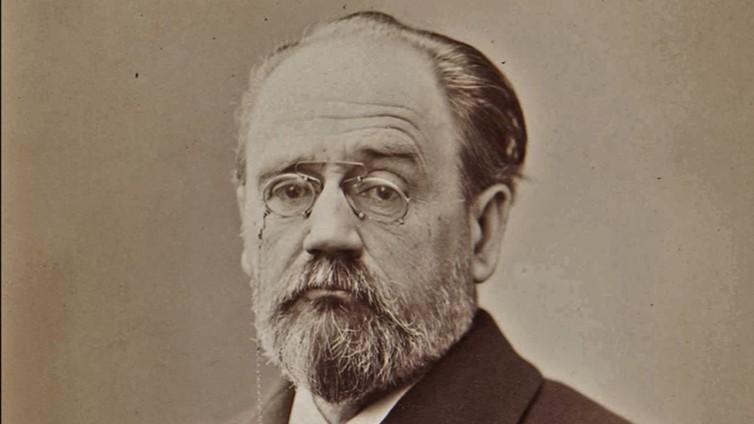
Emile Zola (Flickr)
In addition to his work at Hachette, Zola began writing for various newspapers and magazines. His writings focused largely on book reviews, literary texts, and contemporary cultural topics. Over time his journalistic activities became regular and his literary career became his primary occupation. His work in the press refined his writing style and cultivated a habit of consistent production. The texts he published in newspapers helped establish his reputation in the literary world and laid the groundwork for his later fictional works.
Émile Zola publicly intervened in the Dreyfus Affair, which began in France in 1894. After Jewish officer Alfred Dreyfus was convicted of treason and sentenced to life imprisonment, irregularities in the trial process and the handling of evidence became subjects of public debate. On 13 January 1898, in an open letter published in the newspaper L’Aurore titled “I Accuse…” (J’accuse…!), Zola directly named military and administrative officials involved in the case, accusing them of concealing evidence and reaching a verdict based on antisemitic motives.
Following the publication of this text, Zola was prosecuted and convicted. To avoid imprisonment he fled to England, where he remained for about a year. He returned to France in 1900 after the Dreyfus Affair was reopened and the course of events changed. Zola’s writings and interventions during the affair sparked public debate on the relationship between the press, politics, and the judiciary, playing a decisive role in expanding the social and political impact of the Dreyfus Affair in France.
While continuing his literary output and political engagement, Émile Zola remained an active figure in the literary world during his final years. From 1894 onward he became deeply involved in the Dreyfus Affair, emerging as a major figure in French public opinion and journalism. He completed the novel series Three Cities (Les Trois Villes) and The Four Gospels (Les Quatre Evangiles), but these later works did not generate the same level of acclaim as his earlier successes. Nevertheless, he continued to convey powerful messages about humanity, society, and justice in his writings.
Zola died on 28 September 1902 in his Paris apartment from coal gas poisoning. Initially regarded as an accident, it was later revealed to be a murder orchestrated by opponents of his involvement in the Dreyfus Affair.【1】
Émile Zola had a private relationship with Jeanne Rozerot, with whom he had two children, Jacques and Denise. In his personal life he cultivated close ties with the artistic and literary circles, among whom were painters and writers. Throughout his life he sought to balance familial responsibilities with his literary production; his personal relationships and family bonds subtly reflected the themes of humanity and society that permeated his works.
Zola’s literary identity took shape through the integration of individual life experiences with the social transformations of 19th-century France within the framework of the novel. In his works, urbanization and industrialization, class distinctions, and family structures emerged as prominent themes; his fictional universe was largely built upon the everyday realities of modern society. Through extensive spatial descriptions, crowded social scenes, and numerous characters, he presented the social structure of the era in meticulous detail. The lives of ordinary individuals occupied a central position in his narrative world; bourgeoisie, working class and lower social strata were brought together within a unified fictional structure.
Zola’s language exhibited a direct, explanatory structure grounded in detailed descriptions. The narrator typically occupied an omniscient position; this narrative choice enabled the presentation of characters not only through their individual traits but also through their environments, family relationships, and social conditions. This manner of portraying characters and settings became one of the enduring core elements of Zola’s literary production.
Zola’s naturalism approach was based on a method of narrative grounded in observation, portraying individuals and society through empirical scrutiny. In his works, an individual’s character traits, behaviors, and living conditions were presented in conjunction with heredity, environment, and the social structure of the era. These elements formed a continuous unity within the fictional structure as the primary determinants of characters.
In naturalist narrative, reality was constructed through detailed descriptions and cause-and-effect relationships, making the connection between fiction and social life visible. In Zola’s novels, plotlines were directly linked to the environments in which characters lived; individual experiences were portrayed as natural consequences of social conditions. Different segments of society, particularly the working class and lower social groups, were examined alongside their daily practices and working conditions. In this approach, naturalism was not merely an aesthetic preference but a fundamental organizing principle of the novel, consistently applied throughout the narrative.
The method Zola adopted in writing novels was shaped by an approach based on observation and systematic principles. In his novels, individuals and families were examined within their environments, hereditary traits, and historical conditions; events were constructed according to the relationships among these factors. In this framework, characters’ behaviors were presented not as random occurrences but as natural outcomes of their circumstances. Rougon-Macquart series applied this method systematically. Each novel in the series centered on a different member of the same family; the characters’ lives were presented alongside their social environments and family histories. Thus, a structure of continuity was established across the novels, allowing individual stories to gain meaning within a broader social framework.
While constructing his novels, Zola emphasized detailed descriptions and a coherent plot structure, ensuring consistency between space, time, and character traits. The physical and psychological characteristics of characters were presented in a traceable manner throughout the narrative, and the progression of events unfolded in relation to these traits. This method established a narrative form in the novel that was observational, orderly, and systematic.
Émile Zola produced numerous works throughout his literary career that deeply examined both social realities and human nature. His novels reflect the lives, struggles, and social classes of 19th-century France through careful observation and detailed descriptions. Zola’s works combine naturalistic observation with social critique, foregrounding both the aesthetic and didactic dimensions of literature; they do not merely tell stories but offer readers a comprehensive perspective on humanity and society.
Émile Zola’s Rougon-Macquart series consists of twenty novels set during the Second Empire of France, focusing on the lives of members of the same family. Through narratives centered on the Rougon and Macquart branches, the series explores individual life stories within diverse social environments. Each novel centers on a different family member, presenting their lives alongside hereditary traits, social surroundings, and historical conditions. Although each novel can be read independently, the shared family history and continuous narrative structure create a unified whole.
The twenty novels of the series and their subjects are as follows:
Each novel offers a detailed perspective on both individual life and the social and economic structure of the era. These are the foundational works through which Zola put his naturalist approach into practice.
Zola’s novels and significant literary texts outside the Rougon-Macquart series represent his exploration of naturalism through different themes and individual subjects:
Émile Zola occupies a decisive position in 19th-century French literature for transforming naturalism into a systematic narrative model. In his novels, he constructed literary realism by examining individual behavior within the frameworks of heredity, environment and historical conditions. Through the Rougon-Macquart series, he examined different social classes, economic relations, and family structures, embedding individual lives within a broad narrative network.
Zola’s approach to the novel, his narrative techniques, and his choice of subject matter influenced subsequent generations of novelists. His observational descriptions, expansive social scenes, and layered character structures played a role in shaping the traditions of modern realism and the social novel. By combining his literary output with journalistic activity, Zola became visible not only as a fictional writer but also as a public figure, presenting a profile of the writer as an agent of social responsibility.
BnF Essentiels. "Émile Zola." BnF Essentiels. Accessed February 7, 2026. https://essentiels.bnf.fr/fr/litterature/19e-siecle-1/206ea0be-c9c7-411e-864f-6f2dd3c9b8bd-tous-auteurs-et-autrices-19e-siecle/personnalite/849e1bc9-ba27-43ad-8899-4cc7eeae7303-emile-zola
Fontaine, C. “Émile Zola.” *The Modern Language Notes* 11, no. 5 (1896): 279–284. Accessed February 7, 2026. https://www.jstor.org/stable/2918784?searchText=emile+zola&searchUri=%2Faction%2FdoBasicSearch%3FQuery%3Demile%2Bzola%26so%3Drel&ab_segments=0%2Fbasic_search_gsv2%2Fcontrol&refreqid=fastly-default%3Aa912d9f3b385520dfe47379f8547e6c9&seq=4
Galba. “Félix Vallotton. Emile Zola. 1902.” Flickr, February 28, 2019. Accessed February 7, 2026. https://www.flickr.com/photos/gonzalez-alba/32296033307/
Howells, William Dean. “Émile Zola.” *North American Review* 175, no. 552 (1902): 587–596. Accessed February 7, 2026. https://www.jstor.org/stable/25119324?searchText=emile+zola&searchUri=%2Faction%2FdoBasicSearch%3FQuery%3Demile%2Bzola%26so%3Drel&ab_segments=0%2Fbasic_search_gsv2%2Fcontrol&refreqid=fastly-default%3Aa912d9f3b385520dfe47379f8547e6c9&seq=10
Ministère de la Culture. "Emile Zola : restauration d'un fonds photographique exceptionnel." Culture.gouv.fr. October 21, 2019. Accessed February 7, 2026. https://www.culture.gouv.fr/actualites/Emile-Zola-restauration-d-un-fonds-photographique-exceptionnel
Museum of Photographic Arts. "Émile Zola." Flickr, May 11, 2011. Accessed February 7, 2026. https://www.flickr.com/photos/mopa1/5711510214/
Shuman, R. Baird. "Émile Zola." *Research Starters*. EBSCO Information Services, 2023. Accessed February 7, 2026. https://www.ebsco.com/research-starters/history/emile-zola
Stkone. “Emile Zola.” Flickr. Accessed February 7, 2026. https://www.flickr.com/photos/10983301@N06/55021771647/
Wells, B. W. “Zola and Literary Naturalism.” *The Sewanee Review* 1, no. 4 (1893): 385–401. Accessed February 7, 2026. https://www.jstor.org/stable/27527774?searchText=emile+zola&searchUri=%2Faction%2FdoBasicSearch%3FQuery%3Demile%2Bzola%26so%3Drel&ab_segments=0%2Fbasic_search_gsv2%2Fcontrol&refreqid=fastly-default%3Aa912d9f3b385520dfe47379f8547e6c9&seq=17
[1]
Shuman, R. Baird, "Émile Zola," Research Starters, EBSCO Information Services, 2023, Last Access: 7 February 2026, https://www.ebsco.com/research-starters/history/emile-zola

Doğum tarihi | 1840-04-02 | ||||||||
|---|---|---|---|---|---|---|---|---|---|
Ölüm tarihi | 1902-09-28 | ||||||||
Babası | François Zola | ||||||||
Annesi | Émilie Aubert | ||||||||
Çocuk | Jacques Zola Denise Zola | ||||||||
Profession(s) | Journalist Novelist Writer | ||||||||
Literary Movement(s) | Naturalism | ||||||||
Place of Death | Paris, France | ||||||||
Place of Birth | Paris, France | ||||||||
Prominent Themes | Naturalist Principles Class Differences Working Class Social Justice | ||||||||
Childhood and Education
Paris Years and the Start of Journalism
The Dreyfus Affair and Political Stance
Final Years and Death
Personal Life
Literary Identity
Naturalist Approach
Scientific Method and the Novel
Works
Rougon-Macquart Series
Other Novels and Texts
Place and Influence in Literature