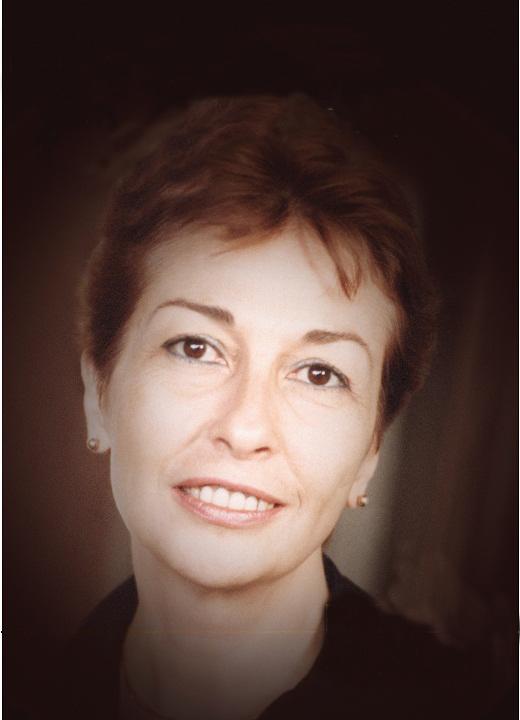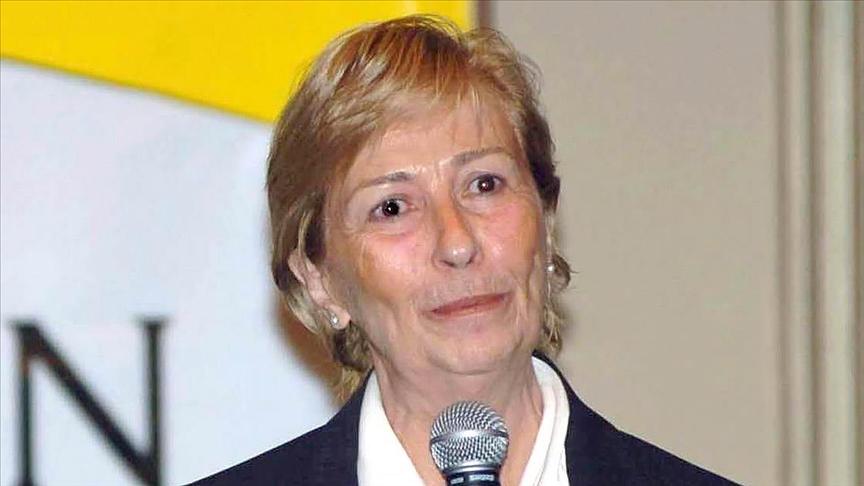

Doğum tarihi | 1938-05-17 | ||||||||
|---|---|---|---|---|---|---|---|---|---|
Eş | İskender Öksüz Erdoğan Cemil Okçu | ||||||||
Place of Birth | Kars | ||||||||
Ölüm tarihi | 2021-05-05 | ||||||||
Place of Death | Ankara | ||||||||
Profession(s) | Poet Writer | ||||||||
Literary Fields | Novel, Poetry, Theater, Essay, Short Story | ||||||||
Annesi | Halide Nusret Zorlutuna | ||||||||
Babası | Aziz Vecihi Zorlutuna | ||||||||
Emine Işınsu was born on 17 May 1938 in Kars, where her father was serving as a division commander. Her father, Aziz Vecihî Zorlutuna, was a retired major general of Bulgarian Turkish origin, and her mother was the renowned poet and writer Halide Nusret Zorlutuna (1901–1984). Due to their parents’ civil service careers, the family lived in various parts of Türkiye. Raised in a literary environment, Işınsu grew up in an atmosphere constantly filled with discussions of literature and recitations of poetry. She passed away on 5 May 2021.
Her childhood was marked by frequent relocations due to her father’s postings. She began her primary education in Urfa, continued in Sarıkamış, and completed it at Alpaslan Primary School in Ankara. She attended secondary school at Ankara Cebeci Secondary School and graduated from TED Ankara College in 1957. During her high school years, she began writing poetry and short stories; her first poem was published in the journal “Eğitim Dergisi.” Her earliest literary attempt was the work “Minko’nun Hatıraları,” written from the perspective of a dog during her primary school years. She collected her poems in her first book, “İki Nokta,” published in 1956.
After high school, at her father’s request, she enrolled in the Department of English Language and Literature at Ankara University’s Faculty of Language, History and Geography, but did not complete her studies. Instead, she went to the United States on an AFS scholarship. After working for six months as a Social Academy Specialist in the U.S., she returned to Türkiye. She left the English Language and Literature department and enrolled in the Business Administration department at Middle East Technical University. However, after marrying architect Erdoğan Okçu, she found it impossible to balance her academic and marital responsibilities and was forced to leave university. Later, she enrolled in the Philosophy department of the Faculty of Language, History and Geography but could not complete her education due to her responsibilities as a wife and mother.
Emine Işınsu continued her experience in magazines and newspapers alongside her mother, co-founding the women’s magazine “Ayşe.” Her major achievement was reviving the magazine after the closure of “Türk Yurdu,” renaming it “Töre.” She also contributed articles on various topics to journals such as Hisar, Yeni Divan, Türk Edebiyatı, and Devlet. Through her writings on Turkish nationalism, she became widely known among young readers as “Emine Abla.”
Although she produced works in poetry, theater, short story, essay, and critique, she primarily identified herself as a novelist. She regarded novel writing as a life purpose bestowed upon her by God. For her, the novel is the inner and outer (spiritual and material) journey of human life. She considered writing her reason for living, stating that after the health and well-being of her children, her most vital life bond was writing novels. She did not view her novels as mere tools but as integral parts of her own existence.
Her only short story collection, “Bir Gece Yıldızlarla”, was published in 1991. Her essay collection, “Dost Diye Diye” (1995), carries Sufi influences and uniquely reflects Quranic verses in relation to cultural and human values. In this work, themes such as unity, sincere love, struggle against the ego, humility, and tolerance are central.
Her theatrical works include “Bir Yürek Satıldı” (1967), which won first prize in TRT’s 1966 radio drama competition, “Bir Milyon İğne” (1967), “Ne Mutlu Türk’üm Diyene” (1969), and “Adsız Kahramanlar” (1975), a collection of radio sketches.
Emine Işınsu holds a significant place in Turkish novel writing of the 1960s.
From primary school onward, her desire to write evolved through continuous exploration and development. Işınsu employed the richness of spoken language, favoring clear and accessible prose over heavy or ornate styles. She drew the subjects of her novels from real life and lived experiences. She used techniques such as dialogue, interior monologue, and stream of consciousness. Her works are compelling and maintain the reader’s engagement. She prioritized the psychological states of her characters over detailed descriptions of settings.
Interior monologue, dialogue, stream of consciousness, flashbacks, and summarization are frequently employed in her novels. She evaluates, from a psychoanalytic perspective, how negative experiences in childhood shaped her characters’ personalities. Her language is rich, incorporating idioms, proverbs, folk expressions, slang, and even vulgar phrases. Sufi concepts, mythological and epic narratives also feature in her works. She frequently uses color symbolism to represent characters’ emotional states.
AA. "Roman ve Oyun Yazarı Emine Işınsu Öksüz Vefat Etti." Anadolu Ajansı, September 15, 2021. Accessed July 3, 2025.
Accessed November 26, 2025.
Accessed November 26, 2025.
Dinçer Atay. "Emine Işınsu." Türk Edebiyatı İsimler Sözlüğü (TEİS), Accessed July 3, 2025.
Emine Işınsu Resmi Web Sitesi. Accessed July 3, 2025.
Karakeçi, Mehmet Nur. Emine Işınsu’nun Romanlarında Yapı ve İzlek. PhD thesis, Ardahan Üniversitesi, 2017. Tez Danışmanı: Prof. Dr. Ramazan Korkmaz. Accessed July 3, 2025.
Koçakoğlu, Bedia. "Emine Işınsu’nun Ankara’sı Yahut Ankara’nın Dar Zamanları." Selçuk Üniversitesi Türkiyat Araştırmaları Dergisi 53 (2021): 105-120. Accessed July 3, 2025.

Doğum tarihi | 1938-05-17 | ||||||||
|---|---|---|---|---|---|---|---|---|---|
Eş | İskender Öksüz Erdoğan Cemil Okçu | ||||||||
Place of Birth | Kars | ||||||||
Ölüm tarihi | 2021-05-05 | ||||||||
Place of Death | Ankara | ||||||||
Profession(s) | Poet Writer | ||||||||
Literary Fields | Novel, Poetry, Theater, Essay, Short Story | ||||||||
Annesi | Halide Nusret Zorlutuna | ||||||||
Babası | Aziz Vecihi Zorlutuna | ||||||||
Educational Life
Publishing and Writing Career
Literary Identity and Works
Novels and Their Themes
Narrative Techniques and Linguistic Features
Awards