


This article was automatically translated from the original Turkish version.
An adjustable wrench is a hand tool with jaws that can be adjusted to tighten or loosen bolts and nuts of various sizes. Designed to replace fixed wrenches by accommodating fasteners of different dimensions, it is commonly preferred in mechanical maintenance, assembly, and repair tasks.
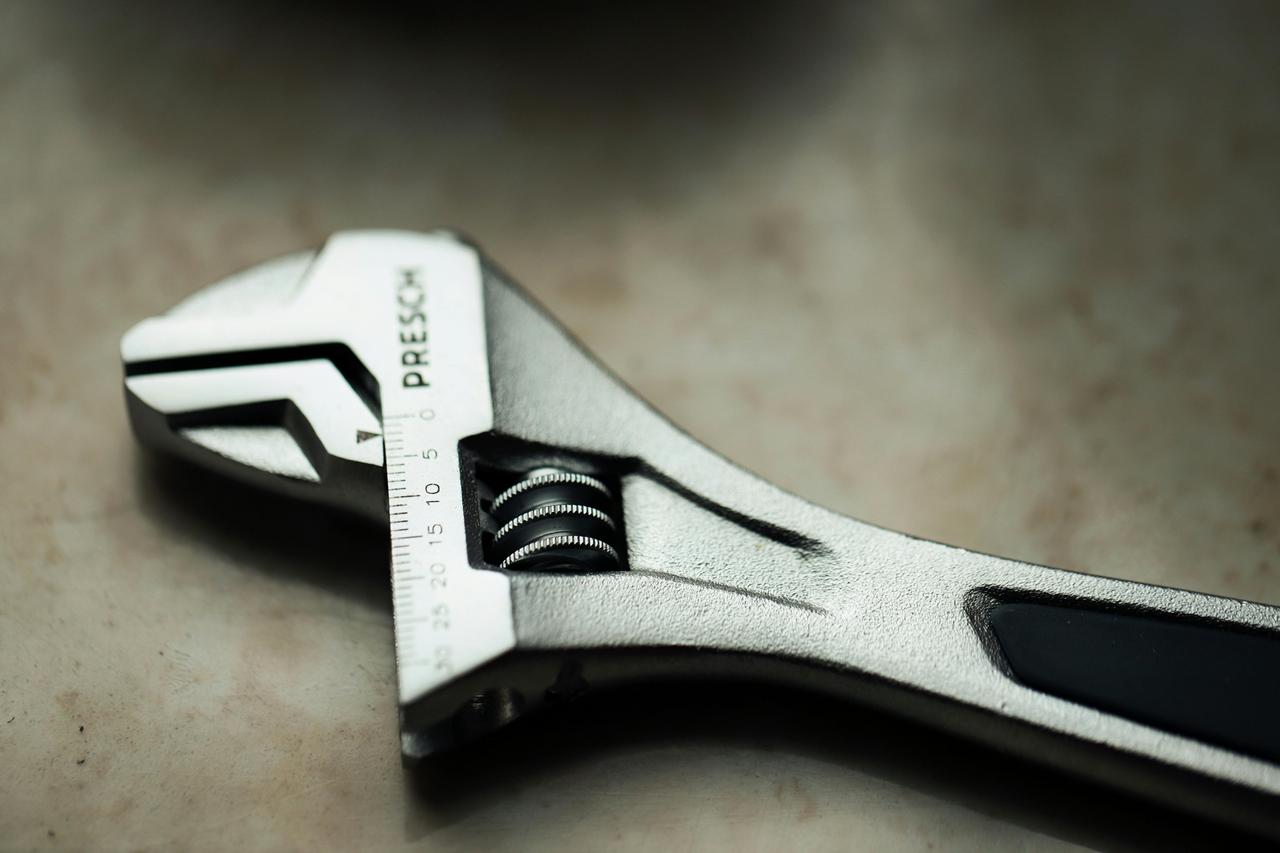
Adjustable Wrench (Pexels)
The basic structure of an adjustable wrench consists of four main components:
The user rotates the shaft mechanism to position the movable jaw at the desired opening width, allowing precise adjustment to fit the fastener. This feature provides flexibility in working with components of varying sizes.
Adjustable wrenches are typically manufactured from steel or chromium-vanadium alloy steel. These tools are produced using heat-treated materials to enhance durability and mechanical strength. Ergonomic handle designs have been developed to improve ease of use and prevent slippage.
In technical literature, the adjustable wrench is known as adjustable wrench in American English and adjustable spanner in British English.
The modern adjustable wrench in widespread use today was invented and patented in 1891 by Swedish inventor Johan Petter Johansson. Today, various variants are produced including models with short handles insulated handles and wide jaw openings.
HowStuffWorks. “How to Use an Adjustable Wrench.” Accessed July 20, 2025. https://home.howstuffworks.com/how-to-use-adjustable-wrench.htm.
Pexels. Accessed July 28, 2025. https://www.pexels.com/photo/close-up-of-an-adjustable-wrench-on-a-surface-30413496/
This Old House. "Adjustable Wrench." Accessed July 20, 2025. https://www.thisoldhouse.com/tools/21015379/adjustable-wrench.

Structural Features
Material and Manufacturing Characteristics
History and Terminology