

This article was automatically translated from the original Turkish version.
+1 More
Author(s) | Erzurumlu Tellibeyzade Hacı Faruk Efendi | ||||||||
|---|---|---|---|---|---|---|---|---|---|
Prepared by | Yunus Zeyrek | ||||||||
Publisher(s) | Dergah Yayınları | ||||||||
Publication Year | 2014 | ||||||||
Number of Pages | 110 | ||||||||
Type(s) | Memoirs / Historical Research | ||||||||
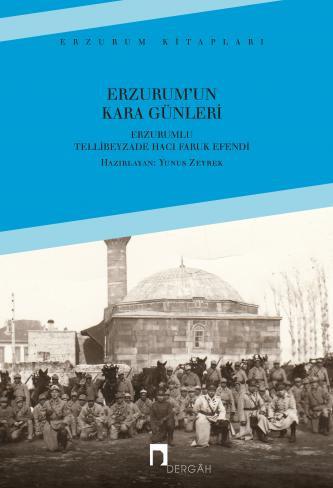
"Erzurum's Black Days" is a memoir and historical research work written by Erzurum-based Tellibeyzade Hacı Faruk Efendi, prepared for publication by Yunus Zeyrek, and published by Dergâh Yayınları. The book contains poignant narratives that recount the catastrophic days experienced by the Turkish people in recent history, particularly during the events known as the "Armenian Question," as told directly by eyewitnesses. Because the accounts were recorded firsthand during the events, the work holds the status of a historical document. The first edition was published in 2014 and consists of 110 pages.
The core content of "Erzurum's Black Days" consists of memoirs by Tellibeyzade Hacı Faruk Efendi and other eyewitnesses detailing the atrocities and oppressions committed by Armenian bands in the region. The book provides detailed accounts of the tragedies, massacres, destructions, and displacements suffered by the civilian population during the war and occupation periods. These narratives lay bare the painful realities of the era: villages burned, people killed, and property looted. The work possesses unique value because it was written by those who directly experienced the events, long before the issue was turned into a tool of political propaganda. In this respect, it distinguishes itself from later texts produced for political purposes by offering a firsthand and original perspective.
The stories in the book convey the suffering and resistance of the Turkish people through personal experience while also shedding light on the socio-political atmosphere of the time. Beyond being a historical record, the work expresses the human drama and the collective anguish of a nation with emotional depth. The book indirectly describes the demographic composition, cultural fabric, and strategic importance of Erzurum and its surroundings, presenting readers with the profound traumas and enduring memories of the people, beyond the official historical narrative of the Armenian Question.
The language and style of "Erzurum's Black Days" reflect the intimate and unadorned characteristics typical of the memoir genre. The texts, relayed through the voices of eyewitnesses, employ a natural, heartfelt, and at times deeply moving tone. The author avoids complex expressions, aiming instead to convey directly the emotional impact of the suffering and tragedies experienced. While maintaining the objectivity of a historical record, the style also incorporates personal observations and emotions. This duality lends the work both documentary value and human depth. By avoiding promotional or laudatory language, the raw truth of what occurred is brought to the forefront.
Tellibeyzade Hacı Faruk Efendi of Erzurum was a direct witness to the events of recent Erzurum history and recorded his experiences. Yunus Zeyrek’s role in preparing the work for publication has ensured that these vital testimonies reach contemporary readers. "Erzurum's Black Days" is an indispensable source for understanding the regional dimensions of the Armenian Question, one of the most painful episodes in the recent history of the Turkish nation. The work also provides important primary data for academic studies on this period. As both a historical document and a testament to a human tragedy, the book constitutes a legacy that must be passed on to future generations.
Tellibeyzade, Hacı Faruk Efendi. *Erzurum'un Kara Günleri*. Prepared by Yunus Zeyrek. İstanbul: Dergah Yayınları, 2014. Accessed July 8, 2025. https://www.dergah.com.tr/kitaplar/erzurumun-kara-gunleri.
Author(s) | Erzurumlu Tellibeyzade Hacı Faruk Efendi | ||||||||
|---|---|---|---|---|---|---|---|---|---|
Prepared by | Yunus Zeyrek | ||||||||
Publisher(s) | Dergah Yayınları | ||||||||
Publication Year | 2014 | ||||||||
Number of Pages | 110 | ||||||||
Type(s) | Memoirs / Historical Research | ||||||||
No Discussion Added Yet
Start discussion for "Erzurum's Black Days (Book)" article
Content and Thematic Structure
Language and Style
The Author’s Position and the Work’s Significance