This article was automatically translated from the original Turkish version.
+1 More
Estergon Castle
Location | Esztergom Hungary | ||||||||
|---|---|---|---|---|---|---|---|---|---|
Construction Period | Medieval period (original construction), Ottoman-era repairs (16th century) | ||||||||
Architectural Feature(s) | Medieval Military Architecture Gothic and Baroque Influences | ||||||||
Castle Type | Military fortress / Palace complex | ||||||||
Estergon Castle (Hungarian: Esztergomi vár) is a multi-layered structure situated on a steep hill overlooking the Danube River in northwestern Hungary, having served throughout history as a military, administrative, religious, and cultural center. During the Middle Ages, Estergon was the political and religious heart of the Kingdom of Hungary. In the 16th century, it was conquered by the Ottoman Empire and incorporated into its administrative system, acquiring a new character in its architecture, military organization, and literary representations. Today, the castle stands as a historical and tourist site bearing traces of both Hungarian and Ottoman heritage.
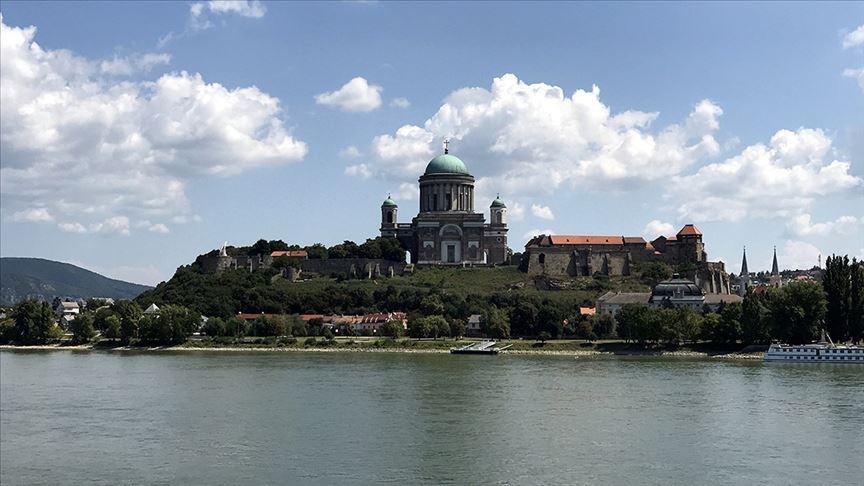
Estergon Castle is built on a steep rocky hill along the right bank of the Danube River. This natural defensive advantage enhanced its military significance and provided strategic control over river transport and land routes. Estergon, one of the first capitals of the Kingdom of Hungary in the 10th century, also served as the highest administrative center of the Catholic Church. The cathedral and religious structures constructed during this period reinforced the town’s ecclesiastical and spiritual identity.
The castle was captured in 1543 by the Ottoman army under Sultan Süleyman the Lawgiver and became the center of a sanjak subordinate to the Budin Eyalet. After the conquest, new military units were stationed there, the walls were repaired, and the fortifications were strengthened. Estergon functioned as an advanced outpost for Ottoman campaigns in Central Europe. Its status as a sanjak center ensured the continuity of Ottoman authority in the region.
Estergon Castle features a multi-layered defense system comprising an inner citadel, outer walls, towers, and bastions. During the Ottoman period, existing structures were restored and new architectural elements were added. Stone inscriptions in Ottoman Turkish written in Arabic script, located on Szenttamás Hill near the castle, document the construction activities of the Ottoman era. These inscriptions serve as epigraphic sources that reveal the names of patrons, construction dates, and functional purposes of the buildings.

Image of the Estergon Basilica. Anadolu Agency
Following the conquest, religious buildings such as mosques, prayer halls, and madrasas were constructed in Estergon. These structures functioned not only as places of worship but also as representatives of Ottoman culture in the countryside. Friday prayers and other communal acts of worship emerged as social and religious ceremonies that reinforced both the administrative hierarchy and community cohesion. Symbolic rituals, such as the first Friday prayer held after the conquest, also signified the formal incorporation of the castle into Ottoman sovereignty.
Estergon Castle appears in Ottoman literature and has been described in various texts. Ömer Derya Bey’s Estergon Fetihnamesi is a notable example, presenting the siege and capture of the castle with literary flair and military detail. Additionally, the folk ballad titled “Estergon Kal’ası” has become an emotional symbol in collective memory, expressing sorrow over the loss of the fortress. These literary works demonstrate that Estergon was not merely a physical structure but also a cultural symbol of enduring significance.
The castle fell out of Ottoman control in 1595 following a siege by Habsburg forces. Although briefly recaptured by the Ottomans in 1605, this control was not sustained. After the failure of the Second Siege of Vienna in 1683 and the subsequent collapse of Ottoman dominance in Central Europe, Estergon permanently remained outside Ottoman borders. From the 17th century onward, as its military importance declined, the castle gradually fell into ruin and underwent various restoration efforts in subsequent periods.
Today, Estergon Castle is open to tourists as a historical site preserving traces of both the Hungarian and Ottoman periods. The historical structures and exhibits within the castle are preserved as elements reflecting the legacy of different eras. The castle’s commanding position atop the hill offers visitors a panoramic view of the Danube River and its surroundings. Moreover, the town of Estergon, which gave its name to the castle, is frequently visited by tourists for other historical monuments such as the Estergon Basilica.
Estergon Castle is regarded as a multi-dimensional historical heritage site due to its geographical location, military functions, architectural fabric, literary representations, and religious structures. During the Ottoman Empire, it transformed into both an administrative center and a cultural symbol, a multifaceted character it has maintained through subsequent centuries. Today, Estergon Castle continues to hold both historical and touristic significance, occupying a central place in cultural heritage studies as a structure embodying the layered traces of the past.
Video Explaining Estergon Castle. WELTHANE
Anadolu Ajansı. “Marslara Konu Olan Kale: Estergon Kalesi.” June 4, 2020. Accessed June 27, 2025. https://www.aa.com.tr/tr/kultur-sanat/marslara-konu-olan-kale-estergon-kalesi/1553327.
Fehérvári, Gábor. “Estergon-Szenttamashegy’deki Yazıtlar.” *BELLETEN* 26, no. 104 (1962): 701–714. Accessed June 27, 2025. https://dergipark.org.tr/tr/pub/ttkbelleten/issue/73649/1217742#article_1217742.
Poyraz, Yavuz, and Semanur Bayraktar. “Ömer Derya Bey’in Estergon Fetihnamesi.” *Akdeniz Havzası ve Afrika Medeniyetleri Dergisi* 2, no. 2 (2020): 142–52. Accessed June 27, 2025. https://dergipark.org.tr/tr/pub/akaf/issue/58349/844197.
WELTHANE. “Marşlara Konu Olan Kale: ESTERGON KALESİ.” YouTube video, 2020. Accessed June 27, 2025. https://youtu.be/3T-_8jejyRo?si=ORzGZb_CK5KqKxbv.
“Estergon.” *İslâm Ansiklopedisi*. Accessed June 27, 2025. https://islamansiklopedisi.org.tr/estergon.

Estergon Castle
Location | Esztergom Hungary | ||||||||
|---|---|---|---|---|---|---|---|---|---|
Construction Period | Medieval period (original construction), Ottoman-era repairs (16th century) | ||||||||
Architectural Feature(s) | Medieval Military Architecture Gothic and Baroque Influences | ||||||||
Castle Type | Military fortress / Palace complex | ||||||||
Geographical Location and Historical Background
Ottoman Conquest and Administrative Reorganization
Architectural Features and Epigraphic Remains
Religious Structures and Ceremonies
Literary Representations
Loss of the Castle and Subsequent Periods
Estergon Castle Today and Tourism