

 Recently Added:
This article was automatically translated from the original Turkish version.
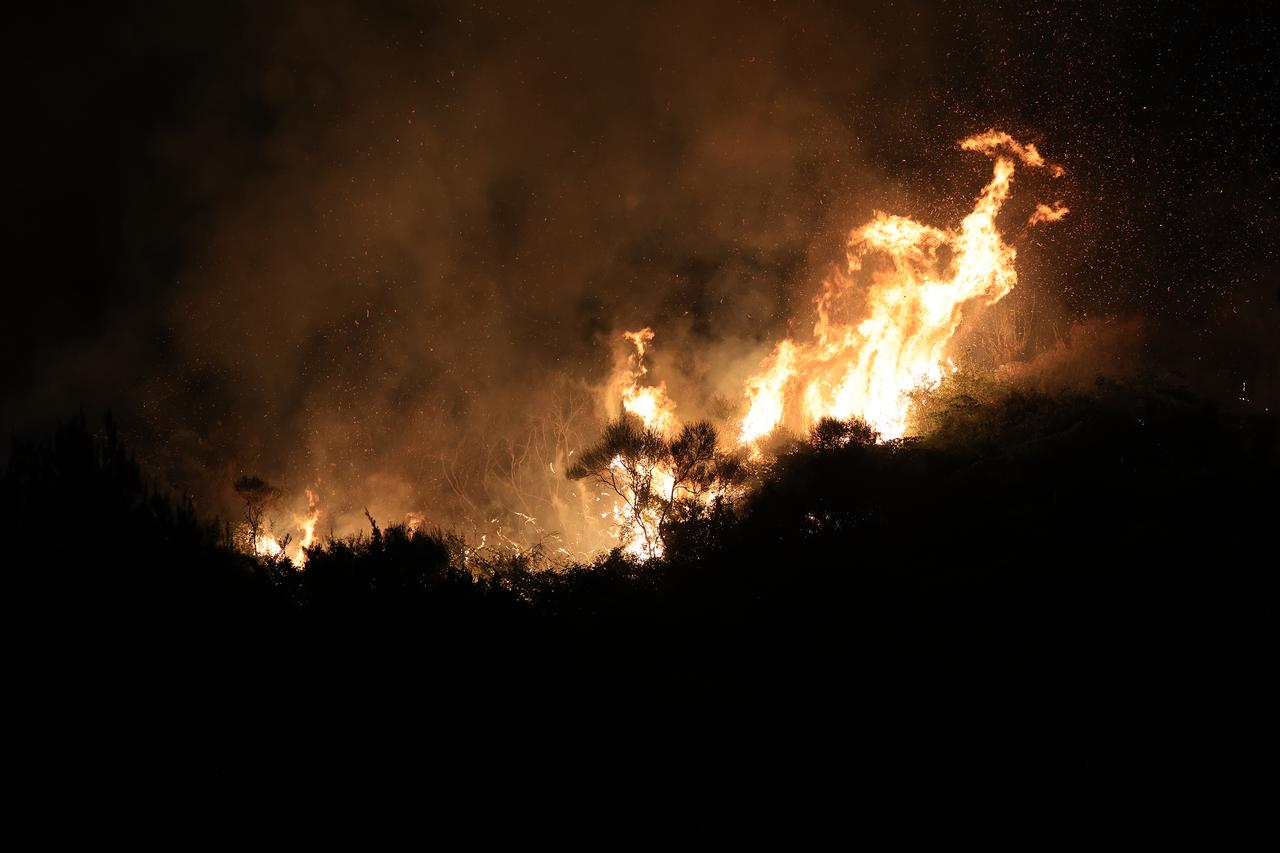
Forest fires that intensified in southern and western Europe in July 2026 caused extensive areas to burn, forced thousands of people to evacuate, and triggered intense emergency responses in many countries, notably France, Spain and Italy. Above-normal temperatures, prolonged drought and strong winds accelerated the rapid spread of fires over large areas. Across Europe, extreme heatwaves during the same period significantly increased fire risk.
According to data from the European Forest Fire Information System (EFFIS), approximately 254,388 hectares of land in the European Union were affected by fires in 2026. This figure is above the long-term average. However, it remained below the 270,449 hectares recorded as burned in 2025. European Union institutions and national authorities assessed that the fire risk would persist throughout the summer, as the fire season had not yet concluded.
France was one of the countries most affected by the fires. A fire that began in the town of Saumos in the Gironde department in southwestern France quickly spread toward Le Porge and Lège-Cap-Ferret, reducing more than 2,000 hectares to ash. As the fire approached the tourist area of the Cap Ferret Peninsula, authorities decided to evacuate residents and tourists by road and boat. In the following hours, officials expanded the evacuation zone, announcing that approximately 40,000 people from coastal areas along the Atlantic were relocated to safe zones.
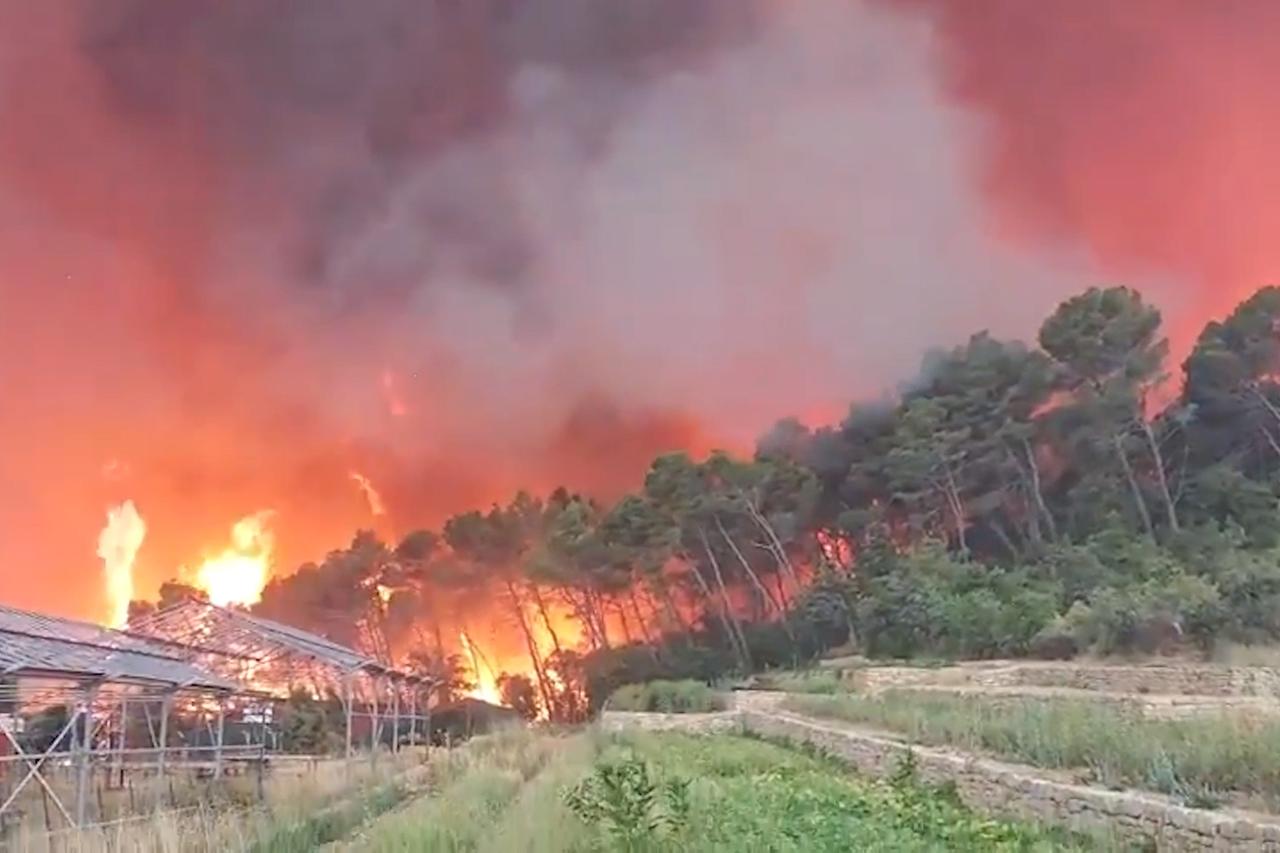
Fires in the Var Department in Southeastern France (July 22, 2026) Anadolu Agency
Two firefighters lost their lives while combating the fires in France. After firefighters stationed in the Mérignac region near Bordeaux died in the line of duty, Interior Minister Laurent Nunez met with their families and paid tribute to the fallen personnel. President Emmanuel Macron requested international assistance under the European Union Civil Protection Mechanism; Croatia, Portugal, the Czech Republic and Slovakia sent fire-fighting aircraft and helicopters to support France. During the same period, Météo-France continued its highest-level forest fire risk warning for many regions in southern France.
A major forest fire that began between Almorox and Villa del Prado southwest of Madrid rapidly spread over a vast area, posing a direct threat to populated settlements. Civil guard units went door to door to carry out evacuations, while dozens of firefighting teams, ground vehicles and aerial assets were deployed to bring the fire under control. The fires occurred immediately after another large fire in the province of Guadalajara, which had previously affected approximately 32,000 hectares.
Due to the widespread geographic reach of the fires, the Spanish government declared a national emergency. Coordination of fire response efforts was subsequently taken over by the Ministry of the Interior. Authorities reported that approximately 10,000 people were evacuated solely due to fires around Madrid, and that more than 100,000 hectares had burned across the country since the beginning of the year. Prime Minister Pedro Sánchez called on political parties to unite in addressing climate change, stating that rising temperatures were making forest fires more frequent and more destructive.
Italy’s Sicily Island also faced numerous forest fires during the same period. Regional authorities reported that approximately 6,000 emergency personnel from firefighting units, forest conservation teams and civil protection services were deployed to combat the fires. Authorities stated that approximately 300 of the 344 fires were brought under control quickly, but fires in Casaboli, Bivona, Alimena, San Cataldo, Galati Mamertino, Madonie Park and around Syracuse continued to require active intervention.
During firefighting operations, firefighter Alessandro Marchi lost his life in the San Cataldo region. Italian Interior Minister Matteo Piantedosi, in a public statement, confirmed that Marchi died while carrying out his public service duties and extended condolences to his family and colleagues. The incident once again highlighted the risks faced by emergency responders combating fires across Europe.
Experts assessed that the consecutive heatwaves affecting Europe in the summer of 2026 deepened drought conditions, increased pressure on water resources and rendered vegetation extremely flammable. According to data from the European Union’s Copernicus Climate Change Service, Europe is warming at nearly twice the global average rate since the 1980s. Scientists have drawn attention to the fact that climate change has increased the frequency and intensity of extreme heat, dry periods and large-scale forest fires, particularly in southern Europe.
Following the fires in France, several countries provided support under the European Union Civil Protection Mechanism by deploying fire-fighting aircraft and helicopters. During the same period, it was reported that more than 5,764 deaths occurred in France during the late June and early July heatwaves, and over 1,028 deaths in Spain during June. Across Europe, excess deaths linked to heatwaves in late June exceeded 10,000. The connection between extreme heat and forest fires has been recognized as a central priority in disaster management and climate policy.
BBC News. "Tens of thousands evacuated from French tourist spot as wildfires spread." July 24, 2026. Accessed July 24, 2026.https://www.bbc.com/news/articles/cdx82rl5g0do
Deutsche Welle (DW). "Wildfires in Europe prompt tens of thousands to evacuate" July 24, 2026. Accessed July 24, 2026.https://www.dw.com/en/europe-wildfires-fires-france-spain-italy/a-78080171
Euronews Türkçe. "Avrupa'da orman yangınları: Fransa'da iki, İtalya'da bir itfaiyeci öldü." July 23, 2026. Accessed July 24, 2026.https://tr.euronews.com/my-europe/2026/07/23/avrupada-orman-yanginlari-fransada-iki-italyada-bir-itfaiyeci-oldu
France 24. "Fires in Europe: Latest developments." July 24, 2026. Accessed July 24, 2026.https://www.france24.com/en/live-news/20260724-fires-in-europe-latest-developments
Sky News. "Europe wildfires latest: French tourist hotspot evacuated as national emergency declared in Spain." July 24, 2026. Accessed July 24, 2026.https://news.sky.com/story/europe-wildfires-latest-french-tourist-hotspot-evacuated-as-national-emergency-declared-in-spain-13566532
The Guardian. "Thousands flee wildfires in France and Spain as temperatures reach extreme levels in southern Europe." July 23, 2026. Accessed July 24, 2026.https://www.theguardian.com/world/2026/jul/23/people-evacuated-intense-wildfire-saumos-france
France and Spain have battled widespread forest fires driven by high temperatures, drought, and adverse meteorological conditions. Particularly hard-hit were the Gironde and Landes departments in southwestern France and the Avila region of Spain, where large-scale firefighting operations were launched involving thousands of personnel, aircraft, and military units. In France, the intense smoke from the fires significantly degraded air quality, while severe storms and hailstorms affecting the southeastern part of the country during the same period created a separate natural disaster scenario.
Forest fires that began in the Gironde and Landes departments of France rapidly expanded over vast areas due to hot weather, drought, and strong winds. Over several days, more than 40,000 hectares of forestland were consumed by flames, prompting large-scale evacuation orders as the fire front approached the outskirts of Bordeaux. Authorities stated that the fire had become one of the largest natural disasters the country has faced in recent years.
Approximately 220,000 people were evacuated for safety reasons, and various reception centers, including the Bordeaux-Lac Exhibition Center in Le Porge, were opened as temporary shelters. Thousands of vehicles, homes, and other structures were damaged by the fire, and infrastructure in many communities suffered significant harm.
France’s Minister of the Interior, Laurent Nunez, announced that around 2,500 firefighters and military personnel were deployed to bring the fires under control. Numerous fire-fighting aircraft and helicopters supported suppression efforts, with teams focusing intensely on halting the advance of flames toward populated areas.
Due to the ongoing fire, sections of roads in the region were closed to traffic, and evacuations in at-risk communities were gradually expanded. Authorities noted that adverse weather conditions complicated intervention efforts and emphasized that operations continued without interruption to achieve full containment of the fires.
The dense smoke from the fires caused air quality in the Gironde, Landes, Dordogne, and Lot-et-Garonne departments of southwestern France to fall to alarm levels. The Nouvelle-Aquitaine Regional Health Agency and air quality monitoring body Atmo reported a significant increase in fine particulate matter concentrations in the atmosphere, warning that this posed serious health risks, particularly for the elderly, children, and individuals with respiratory conditions.
Authorities advised citizens to avoid going outdoors unless necessary, keep windows closed, and wear masks. The French government announced that approximately 2.5 million masks had been dispatched to the region for distribution to vulnerable populations. Health institutions assessed the fires as creating an extraordinary situation not only environmentally but also for public health.
Simultaneously with the fires in France, a large-scale forest fire erupted in Spain’s Avila region. In response, numerous teams, led by Spain’s Military Emergency Unit (UME), were deployed to the area, and firefighting operations were launched both on the ground and from the air.
Authorities confirmed that intensive intervention efforts were underway to bring the flames under control, and protective firebreaks were established to prevent the fire from reaching populated areas. The fire in Spain once again highlighted the increased risk of forest fires across Southern Europe due to prolonged high temperatures and drought.
While battling massive forest fires in the southwest, France also faced significant damage from severe storms and hailstorms in the southeast. In the Auvergne-Rhône-Alpes region, as well as in the departments of Haute-Loire, Isère, Tarn, and Bouches-du-Rhône, heavy rainfall, hail, and strong winds damaged numerous buildings and disrupted daily life.
Météo-France issued an orange alert for Bouches-du-Rhône due to the storm, with reports indicating hailstones reaching up to five centimeters in diameter in some areas. In Isère and Tarn, lightning strikes ignited fires in one home and one commercial building, prompting emergency response teams to intervene. Thus, France experienced a multifaceted natural disaster during this period, simultaneously affected by large-scale forest fires and severe meteorological events.
Anadolu Ajansı. "Fransa'nın güneybatısındaki vilayetlerde yangınlar nedeniyle hava kalitesi alarm seviyesinde." July 27, 2026. Accessed August 27, 2026.https://www.aa.com.tr/tr/dunya/fransanin-guneybatisindaki-vilayetlerde-yanginlar-nedeniyle-hava-kalitesi-alarm-seviyesinde/4010276
Euronews. "Forest Fires Continue in France and Spain: Over 320,000 People Evacuated." July 26, 2026. Accessed August 27, 2026.https://tr.euronews.com/my-europe/2026/07/26/fransa-ve-ispanyada-orman-yanginlari-suruyor-320000den-fazla-kisi-tahliye-edildi

Forest fires, which have increased in impact across many European countries, have caused vast areas to burn in France, Spain and Italy, led to the evacuation of tens of thousands of people and resulted in loss of life. Two firefighters in France and one in Italy lost their lives while fighting the fires, while Spain declared a national emergency due to the large-scale blazes. In response to fires intensified by extreme heat and drought, European Union countries activated cross-border support mechanisms to strengthen firefighting efforts.
No Discussion Added Yet
Start discussion for "European Forest Fires (July 2026)" article
July 24, 2026
Fires, Evacuations and Fatalities in France
July 24, 2026
National Emergency Declared in Spain
July 24, 2026
Firefighting Efforts in Italy
July 24, 2026
Heatwaves Across Europe
July 27, 2026
Spread of Forest Fires in Southwestern France
July 27, 2026
Intensive Intervention and Evacuation Efforts
July 27, 2026
Impact of the Fires on Air Quality and Public Health
July 27, 2026
Forest Fire in Spain’s Avila Region
July 27, 2026
Damage Caused by Storms and Hail in Southeastern France