


This article was automatically translated from the original Turkish version.
+1 More
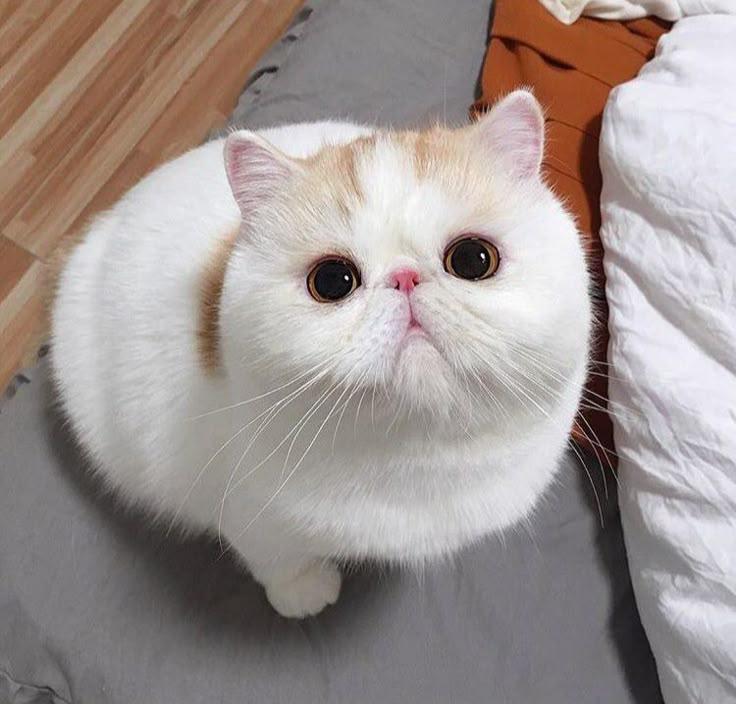
Exotic Shorthair
Family | Felidae | ||||||||
|---|---|---|---|---|---|---|---|---|---|
Country | Developed through crossbreeding between the Iranian cat and the American Shorthair | ||||||||
Average Weight | Males: 4.5 - 7 kg Females: 3.5 - 5.5 kg | ||||||||
Latin Name | Felis catus | ||||||||
Exotic Shorthair is a domestic cat breed that physically resembles the Persian cat but is distinguished by its short and dense feather coat structure. It originated in the United States and was developed as a lower-maintenance alternative to the Persian cat. It is recognized by its brachycephalic (flat-faced) structure, large eyes, and rounded contours.
The Exotic Shorthair was developed in the 1960s in the United States through cat breeding programs. American Shorthair breeders crossed Persian cats with the aim of producing a more robustly built cat with more pronounced facial features. These matings resulted in kittens that retained the Persian’s round facial structure and calm temperament but had short coats. Although the breed’s emergence sparked some debate, the Cat Fanciers’ Association (CFA) recognized the Exotic Shorthair as a distinct breed in 1967. In subsequent years, crossings with Burmese and Russian Blue like short-haired breeds were discontinued, and breeding with Persian cats continued to preserve genetic traits.
Over time the Exotic Shorthair gained popularity among breeders and pet animal owners. This breed has also been referred to as the “pajama Persian” in time times.

Exotic Shorthair Cat Breed, (generated by artificial intelligence.)
Exotic Shorthair cats have a cobby and well-balanced body structure. Their torso is compact and muscular; they possess short thick legs a broad chest and a short tail giving them a cobby type build.
The Exotic Shorthair typically has a calm gentle and easygoing temperament. Like the Persian cat it is quiet but may display slightly more curiosity and playful behavior. It tends to seek interaction with humans but usually expresses itself in soft low tones.
It shows moderate tolerance for solitude but adapts more comfortably in social environments. It can live harmoniously with children other cats and dogs.
Its playfulness level is above average. It may show interest in interactive games. Thanks to its intelligence it can entertain itself with various toys. However it is not as active as high-energy breeds.
Despite its short coat regular grooming is recommended due to its density. Brushing several times a week reduces shedding and helps prevent hairballs. Due to its flat facial structure tear staining may occur around the eyes and may require cleaning with a damp cloth.
Regular care of the ears tooth and nail is also necessary. Exercise needs are moderate; physical and mental stimulation through toys and play is recommended.

Exotic Shorthair Cat Breed, (generated by artificial intelligence.)
Exotic Shorthair cats may be prone to certain genetic health issues:
Regular veterinary checkups and a balanced nutrition diet are important in preventing these health issues.
With proper care and healthy genetics Exotic Shorthair cats typically live between 12 and 15 years. This duration may be longer in some individuals. Regular health checks and appropriate environmental conditions can positively affect lifespan and quality of life.
This breed is particularly regarded as suitable for apartment building lifestyles due to its quiet nature and moderate grooming needs.
The Exotic Shorthair is a calm and adaptable house cat that offers the appearance of the Persian cat with the convenience of a short coat. Its quiet demeanor strong human bonds and moderate energy level allow it to adapt to various lifestyles. It is a favored breed among both new cat owners and experienced breeders.
Cat Fanciers’ Association. *Exotic Breed Standard*. March 2024. Accessed April 18, 2025. chrome-extension://efaidnbmnnnibpcajpcglclefindmkaj/https://cfa.org/wp-content/uploads/2024/03/exotic-standard.pdf
Cat Fanciers’ Association. *Exotic Breed*. Accessed April 18, 2025. https://cfa.org/breed/exotic/
Helgren, J. Anne. Cat Breed Detail: Exotic Shorthair. Telemark Productions / Procter & Gamble, 2006.

Exotic Shorthair
Family | Felidae | ||||||||
|---|---|---|---|---|---|---|---|---|---|
Country | Developed through crossbreeding between the Iranian cat and the American Shorthair | ||||||||
Average Weight | Males: 4.5 - 7 kg Females: 3.5 - 5.5 kg | ||||||||
Latin Name | Felis catus | ||||||||
Origin and History
Physical Characteristics
Temperament and Behavior
Care and Health
Health and Genetic Predispositions
Lifespan
Popularity