


This article was automatically translated from the original Turkish version.
+1 More
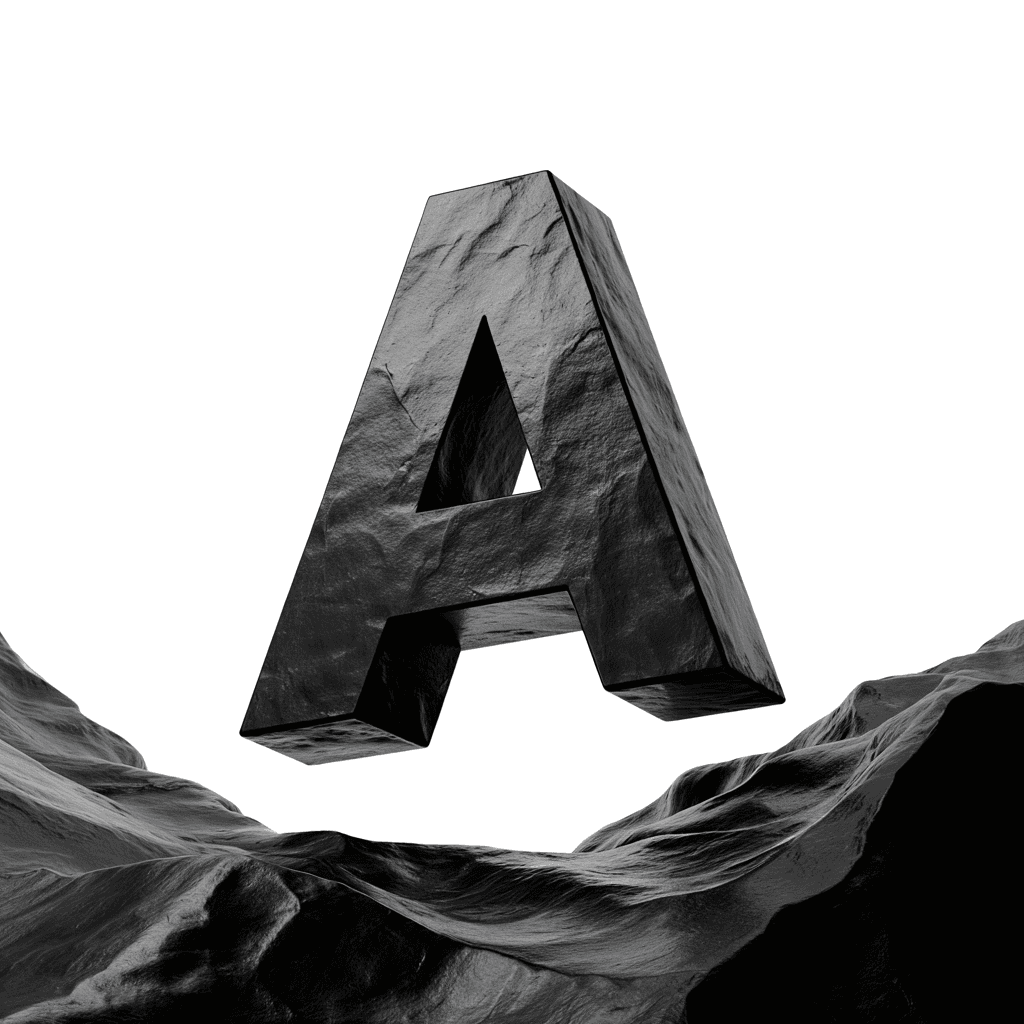
Experimental Typography (Generated with Artificial Intelligence.)
Role of Visual Communication | Visual coding Artistic narrative language Emotional communication | ||||||||
|---|---|---|---|---|---|---|---|---|---|
Application Models | Organic materials, Deconstruction, Collage technique, Ink and chance | ||||||||
Pioneering Figures | Herbert Bayer Jan Tschichold Hendrik Nicolaas Werkman | ||||||||
Experimental typography is a design approach that redefines the form and function of letters by surpassing traditional typographic rules. This approach offers new modes of expression by employing various techniques and forms to enhance the visual potential of text. By its very nature, experimental typography is an application model that does not rely on fundamental rules or principles but instead grants unlimited possibilities for the use of text and other typographic elements in terms of form and context.

Typographic Letter Study (Generated by Artificial Intelligence.)
Experimental typography is a form of graphic design that breaks away from traditional typographic rules by embracing a creative and original approach. Its purpose is to extend textual communication beyond mere information transfer and to offer the viewer an emotional experience and aesthetic perspective. It also seeks to challenge the monotony commonly found in everyday typography. This approach combines letterforms, layouts, colors, and typographic elements in unconventional and innovative ways.
Experimental typography encompasses a groundbreaking set of techniques that embody a conceptual stance or challenge prevailing conditions of a given era. Its fundamental aim is to move beyond legibility and foreground emotional communication, framing this communication as an artistic practice. While experimental design involves research methodologies, it is also emphasized as a form of design play—one that is produced within defined objectives and frameworks.
Experimentation is an approach and methodology aimed at discovering the potential to create original and compelling visual languages by interpretively engaging with the relationship between content and context. Experimental typography plays a crucial role in transforming what may appear as a non-functional structure into a powerful medium of communication by referencing the full spectrum of meanings intended by the chosen words. Typography, by its nature, exists between visual space and linguistic awareness; between aesthetics and grammar; between form and meaning (content and/or context); between the visible and the internal voice.

Typographic Example (Generated by Artificial Intelligence.)
The term experimental typography is associated with avant-garde movements and schools of thought from the 1900s that expressed their philosophies through written forms in posters, manifestos, and other printed materials. These printed expressions, adopted and disseminated by designers, evolved into a new term: experimental typography.
The most significant factor in the emergence of experimental typography was the modernist typographic approach known in Germany as “Die Neue Typographie” / The New Typography Movement. This movement focused on alternative solutions offered by contemporary technologies and marked a pivotal beginning in presenting new and distinct ideas to meet the needs of its time. New Typography is grounded in new production methods that arose from the convergence of social demands.
Futurism assigned conceptual meanings to typography; Constructivism generated new letter structures; Dada revealed the aesthetics of the nonsensical, random, and timeless. These movements tended to arrange texts in energetic, abstract, and experimental ways.
Advances in computer technology during the 1980s led to the emergence of desktop publishing. With the advent of the internet in the 1990s, the computer transformed from a tool into a medium of communication. From the 2000s onward, common platform operating systems propelled the information revolution into the future.
As technology progressed, digital design products gained increasing importance and prevalence. In this context, typography and experimental typography became significant design elements. The design perception that moved beyond physical metal blocks and distanced itself from desktop solutions now offers an unimaginable interaction within entirely new possibilities. The breakdown of traditional rules has directed typographic designs toward experimentation, strengthening them by pushing boundaries.
Experimental typography is frequently found in poster design, book covers, web design, advertising, animation, film credits, and other graphic design projects. Scientific studies examining its applications have identified books, posters, and magazine designs as the most preferred fields. Additionally, typographic applications have been explored in diverse areas such as packaging, advertising, logos, ceramics, and new media.

Bipolar Poster Design (Poster: Melahat Pamuk)
In experimental typography applications, traditional printing techniques (%37.5) are preferred more than digital techniques (%28.13).【1】 Experimental applications can be implemented using either analog or digital methods. The rapidly growing popularity of digital techniques suggests they will find increasing areas of research and application in the future.
Buçukoğlu, Seyit Mehmet. "ÜNİVERSİTELERDE GRAFİK TASARIM EĞİTİMİ VE ÖĞRENME-ÖĞRETME SÜRECİ İÇİNDE “DENEYSEL TİPOGRAFİ” DERSİ". *Türk Çevrimiçi Tasarım Sanatı ve İletişim Dergisi* 10, no. 4 (2020): 573-586. Accessed October 20, 2025. https://dergipark.org.tr/en/pub/tojdac/issue/56985/776096
Güney Türkeç, Aysel, and Uğur Erdoğmuş, Feray. "Görsel Tasarımda Deneysel Tipografi: Sistematik Bir Literatür Taraması". *Sanat Vizyonu* 31, no. 54 (2025): 113–120. Accessed October 20, 2025. https://doi.org/10.32547/artvision.1586045
Kaptan, Serpil. "Grafik tasarım eğitiminde harf estetiği ve deneysel tipografi." *Sanat ve İnsan Dergisi* 4, no. 2 (2020): 121-132. Accessed October 20, 2025. https://sanatveinsan.com/grafik-tasarim-egitiminde-harf-estetigi-ve-deneysel-tipografi/
[1]
Aysel Güney Türkeç, ve Feray Uğur Erdoğmuş, "Görsel Tasarımda Deneysel Tipografi: Sistematik Bir Literatür Taraması", Sanat Vizyonu 31, no. 54 (2025): syf 118, https://doi.org/10.32547/artvision.1586045

Experimental Typography (Generated with Artificial Intelligence.)
Role of Visual Communication | Visual coding Artistic narrative language Emotional communication | ||||||||
|---|---|---|---|---|---|---|---|---|---|
Application Models | Organic materials, Deconstruction, Collage technique, Ink and chance | ||||||||
Pioneering Figures | Herbert Bayer Jan Tschichold Hendrik Nicolaas Werkman | ||||||||
No Discussion Added Yet
Start discussion for "Experimental Typography" article
Conceptual Framework and Significance
Historical Development
The New Typography Movement
Pioneering Figures and Examples
Influence of Movements
Impact of Technology
Application Areas
Techniques
Original Expression Models (In Educational Context)